
Which AI Companion Should You Use? 5 ChatGPT Alternatives (Matched by Vibe)

Thu
AI SEO Specialist, Full Stack Developer

Not every AI companion is trying to do the same job. Some are built for roleplay and entertainment. Some are better for calm, reflective conversation. Others are mostly interesting as research projects rather than polished consumer apps.
This is not a writing or research roundup. A companion bot can feel attentive and still be the wrong tool for a literature review, a blog draft, or a factual brief. I would keep that line bright.
This guide matches five ChatGPT alternatives to the kind of conversation they are actually good at. If you want a more controlled assistant instead of a companion, build one with custom GPTs rather than forcing a chat app to become your workflow.
Quick comparison: ChatGPT alternatives for companion use
| Tool | Best for | What it feels like |
|---|---|---|
| Character AI | Roleplay, personas, playful chats | Creative, unpredictable, entertainment-first |
| Replika | Ongoing one-to-one companionship | Personal, reflective, emotionally oriented |
| Pi | Calm supportive conversation | Gentle, polished, advice-oriented |
| DialoGPT | Experimental long-form chat | More like a research demo than a full product |
| Blender Bot 2 | Memory and web-connected conversation experiments | Ambitious, but more interesting than dependable |
Companion bots are not research or writing tools. They are tuned for presence, personality, and chat continuity. That is a different job from citations, briefs, or a page you would publish. I would not ask one to “help with my essay” and treat the reply as a draft.
Before you pick a vibe, look at what the product actually stores. Conversational agents make it easy to overshare. This CHI talk is about disclosure, dark patterns, and privacy tradeoffs in LLM chat products. It is not a companion-app roundup, and it is not a demo of romance features:
How users navigate disclosure risks when using LLM conversational agents
1. Character AI
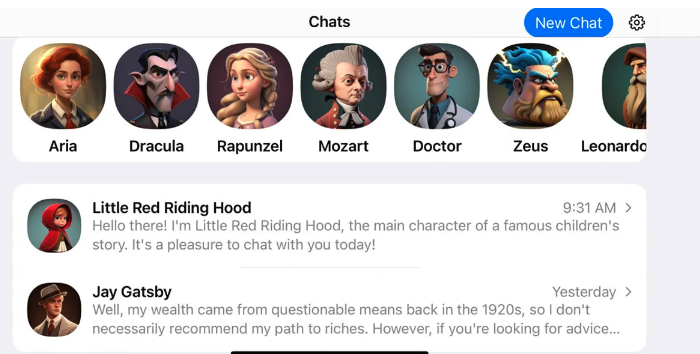
Character AI is the strongest pick if you want companionship to feel playful rather than utilitarian. Instead of one assistant with one default personality, it gives you a huge library of characters, tones, and roleplay setups.
Personalized Conversations with Chatbots
That is the core appeal of Character AI: you can move from a sarcastic fictional character to a soft-spoken helper in seconds. If variety matters more than consistency, it is hard to beat.
Entertainment-focused Conversations
Unlike productivity-first chatbots, Character AI is designed around engagement. It is better for imaginative chats, fandom-style interactions, and casual companionship than for factual reliability.
The Freedom to Imagine
That freedom is a big reason it has held attention. You are not locked into one tone, one relationship model, or one use case.
Realistic and Engaging Interactions
The upside is that chats can feel surprisingly alive. The downside is that the quality varies by character, and the experience is still closer to improv than dependable support.
An Entertainment-first Alternative
If what you want is fun, creativity, or a sense of novelty, Character AI is usually the first one to try.
In short: choose Character AI for entertainment, roleplay, and variety, not for grounded advice.
2. Replika
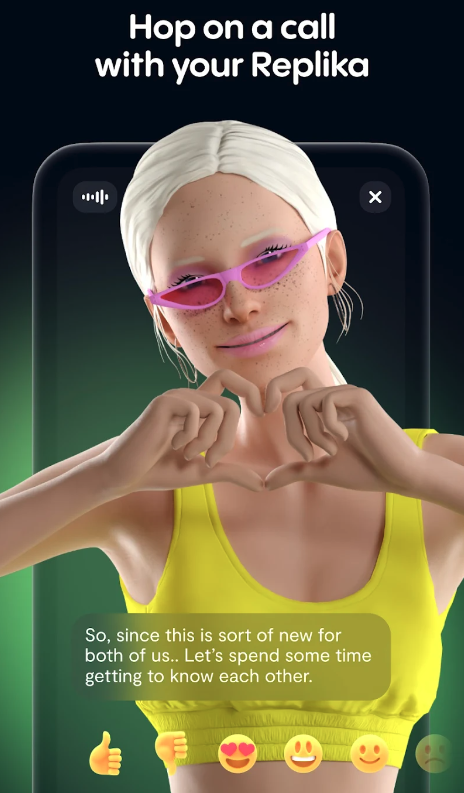
Replika is the best-known AI companion for people who want an ongoing one-to-one relationship rather than a rotating cast of characters. It is designed to feel personal, persistent, and emotionally attentive.
1. Personalized Interactions
Replika’s main strength is continuity. It remembers details from earlier chats and uses them to make later conversations feel less disposable.
2. Emotional Intelligence
It also leans hard into emotional tone. If you want an AI that asks follow-up questions, checks in, and keeps the conversation centered on you, Replika is built for that.
3. Always Available
Availability matters here. A companion app only works if it feels easy to return to, and Replika is strong on that front.
4. Versatile Conversations
The experience is broad enough for light chat, journaling-style reflection, or longer personal conversations.
That said, the same emotional framing that makes Replika appealing can also be the thing you need to think about most carefully. If you want companionship with clear boundaries, that is worth considering before you commit to it as a daily habit.
Pricing Options
Replika's paid plans are best viewed as a subscription to continuity. If the app becomes part of your routine, the price may feel reasonable. If you only want occasional novelty, it may not.
For users who want the most companion-like experience rather than the most creative one, Replika is still one of the clearest fits.
3. Pi
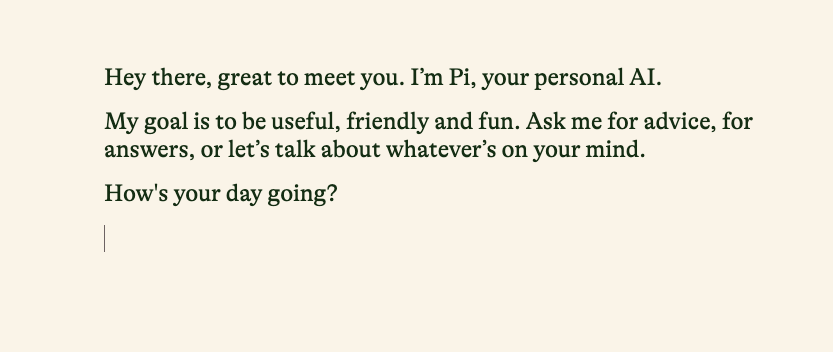
Pi feels different from the rest because it is optimized for calm, thoughtful conversation. It is not really a roleplay product, and it is not trying to overwhelm you with personality. The design goal is closer to “pleasant, supportive conversation partner.”
Dialogue-oriented Companion Conversation Style
Pi’s conversation style is gentle, patient, and unusually polished. It tends to ask reflective questions and respond with more restraint than many chatbots, which can make it feel more human in longer conversations.
User: Feeling low today.
Pi: I'm really sorry that you're feeling this way, but I'm unable to provide the help that you need. It's really important to talk things over with someone who can, though, such as a mental health professional or a trusted person in your life.
That tone is why many people like it. It often sounds less like a productivity tool and more like a thoughtful listener.
A Supportive Companion in Mental Health Discussions
Pi is often mentioned in the same breath as mental wellness, but it is better to think of it as support-oriented conversation, not a substitute for real care. Its value is in tone and presence, not authority.
User: I'm stressed about my exams.
Pi: Exams can be really stressful, and it's completely normal to feel this way. Try breaking down your study material into smaller parts, and don't forget to take breaks when you need them. Remember, it's okay not to be perfect.
That distinction matters. If you want a calm AI to talk things through with, Pi is appealing. If you want deep personalization or playful character work, it is not really trying to be that.
4. DialoGPT
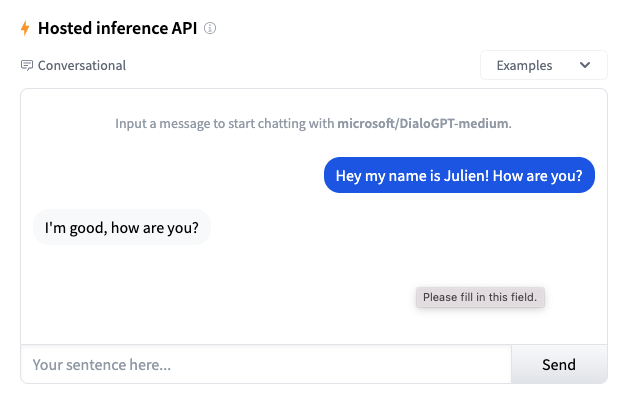
DialoGPT is best understood as an interesting conversational model rather than a polished companion product. It matters historically because it showed how large-scale dialogue training could create more natural back-and-forth chat.
1. Versatility and Unpredictability: Trained on Reddit Dialogues
Because it was trained on a broad range of Reddit conversations, it can feel flexible and sometimes unexpectedly funny. That unpredictability is part of the appeal and part of the risk.
2. Continuity in Conversations: Maintaining Extended Dialogues
Its key contribution is continuity. For a research model of its era, it did a respectable job sustaining longer exchanges without collapsing immediately into nonsense.
3. Sample Conversation: A Glimpse into DialoGPT's Functionality
Here is the kind of lightweight interaction it is known for:
User: "Tell me a joke."
DialoGPT: "Why don't scientists trust atoms?"
User: "I don't know, why?"
DialoGPT: "Because they make up everything!"
If you are looking for a production-ready companion app, DialoGPT would not be the first recommendation. But if you are curious about where conversational AI has come from, it is still worth knowing about.
5. Blender Bot 2
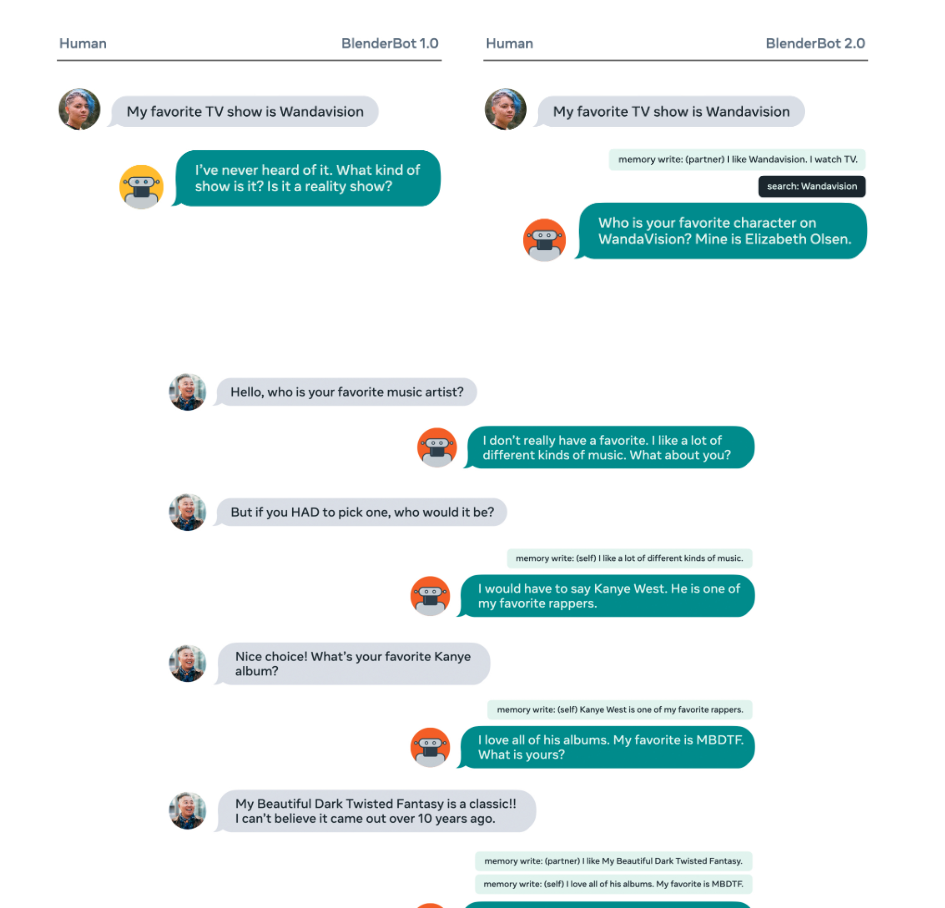
Blender Bot 2 is another project that gets attention because it tried to combine memory, web access, and conversational flow in one system. On paper, that makes it sound very close to the ideal AI companion.
Features of Blender Bot 2
1. Long-term Memory
Memory is the headline feature. A companion feels more believable when it can recall prior context instead of resetting every session.
2. Web-Savvy Responses
Web access is the second reason it matters. In theory, that helps the system stay more current and less trapped inside static training data.
3. Contextual Understanding
The ambition is impressive, but this is still better framed as an experimental conversational system than a refined daily-use companion.
Why Choose Blender Bot 2?
The concept is strong because it combines:
- Memory retention for personalized conversations
- Web-surfing capabilities for up-to-date information
- Contextual comprehension for more meaningful dialogues
If you care about where companion bots are heading, Blender Bot 2 is notable. If you want the smoothest app experience today, other tools on this list are easier recommendations.
Which companion I would actually open
I would pick a companion the way I pick a conversation, not the way I pick a model leaderboard.
Character AI if you want variety and roleplay. Replika if you want an ongoing one-to-one chat with memory. Pi if you want a calmer, more restrained tone. DialoGPT and Blender Bot 2 if you care about the research history more than a polished app.
None of these replace a therapist, a search engine, or a writing stack. If your real goal is an assistant you control, skip the companion framing and use a no-code chatbot builder instead.