
Free Cease and Desist Letter Generator
Generate a structured cease and desist letter for copyright infringement, trademark misuse, harassment, defamation, NDA breaches, debt collection harassment, and other disputes. Add the parties, facts, evidence, demands, deadline, and tone, then review the draft before sending or sharing it with counsel.
Cease and Desist Letter
Your cease and desist letter will appear here...
How the AI Cease and Desist Letter Generator Works
Get results in seconds with a simple workflow.
Describe the Issue and Add Evidence Details
Select the issue type (e.g., copyright, harassment, trademark) and paste the key facts—dates, URLs, usernames, messages, or identifying details—so the letter is specific and actionable.
Set Demands, Deadline, and Response Method
Choose what you want the recipient to do (remove content, stop contacting you, stop using a mark) and set a compliance deadline. Add contact info if you want a written confirmation.
Generate, Review, and Personalize
Generate the letter, then review for accuracy. Add attachments, screenshots, or links to evidence. For sensitive matters, have legal counsel review before sending.
See It in Action
Turn a vague complaint into a structured cease and desist letter with specific demands, deadlines, and professional language.
Stop using my content. If you don’t, I’ll take legal action.
Subject: Cease and Desist – Unauthorized Use of Copyrighted Content
To [Recipient Name]:
I am writing on behalf of [Sender Name] regarding unauthorized use of our copyrighted content. It has come to our attention that content substantially similar to our original work located at: [Original URL] is displayed on your website at: [Infringing URL]. This was first observed on [Date].
Demand
- Immediately remove the infringing content and any copies from your website and related pages.
- Cease any further reproduction, distribution, or display of the content.
- Provide written confirmation of compliance within [X] days of receipt of this letter.
If you do not comply by the deadline, we reserve all rights and remedies available to us, including pursuing further action and contacting relevant platforms/hosts as appropriate.
Sincerely, [Sender Name] [Contact Info]
Why Use Our AI Cease and Desist Letter Generator?
Powered by the latest AI to deliver fast, accurate results.
Multiple Cease and Desist Letter Types
Generate a tailored cease and desist letter for harassment, defamation, copyright infringement, trademark misuse, NDA breaches, debt collection harassment, and more—structured to match common scenarios.
Clear Demands, Deadlines, and Next Steps
Creates a professional demand letter that specifies what must stop, what actions must be taken (e.g., removal, confirmation), a realistic compliance deadline, and escalation options without making improper threats.
Customizable Details for Stronger Specificity
Include key facts like dates, URLs, usernames, and identifying details to make your notice more credible and easier to act on—especially for online misuse and content copying.
Professional Legal-Style Formatting (Plain Language)
Outputs a clean, readable cease and desist letter format with proper subject line, parties, background, demands, reservation of rights, and signature block—without dense legal jargon.
Built-In Safety and Accuracy Guardrails
Avoids defamation, harassment, and guaranteed legal outcomes. Encourages factual phrasing, evidence preservation, and appropriate “reservation of rights” language for safer communication.
Pro Tips for Better Results
Get the most out of the AI Cease and Desist Letter Generator with these expert tips.
Be factual and specific (dates, URLs, screenshots)
The strongest cease and desist letters read like a clear record: what happened, when it happened, where it happened, and what must stop. Include URLs and attach screenshots or copies of relevant messages.
Ask for written confirmation of compliance
Request a short written confirmation by a specific date. This increases accountability and creates a documented response you can reference later.
Use a reasonable deadline and keep it consistent
Deadlines that are too short can look unreasonable; deadlines that are too long can reduce urgency. For online infringement, 3–7 days is common; for broader disputes, 7–14 days may be appropriate.
Avoid absolute legal conclusions
Instead of “you are definitely violating the law,” use factual language like “unauthorized use” and “appears to infringe.” This reduces risk and keeps the focus on compliance.
Preserve evidence before sending
Save copies of webpages, timestamps, message threads, invoices, and screenshots. If the content disappears after you send the letter, you’ll still have records if escalation is needed.
Who Is This For?
Trusted by millions of students, writers, and professionals worldwide.
Draft a Cease and Desist Letter with a Guided Generator
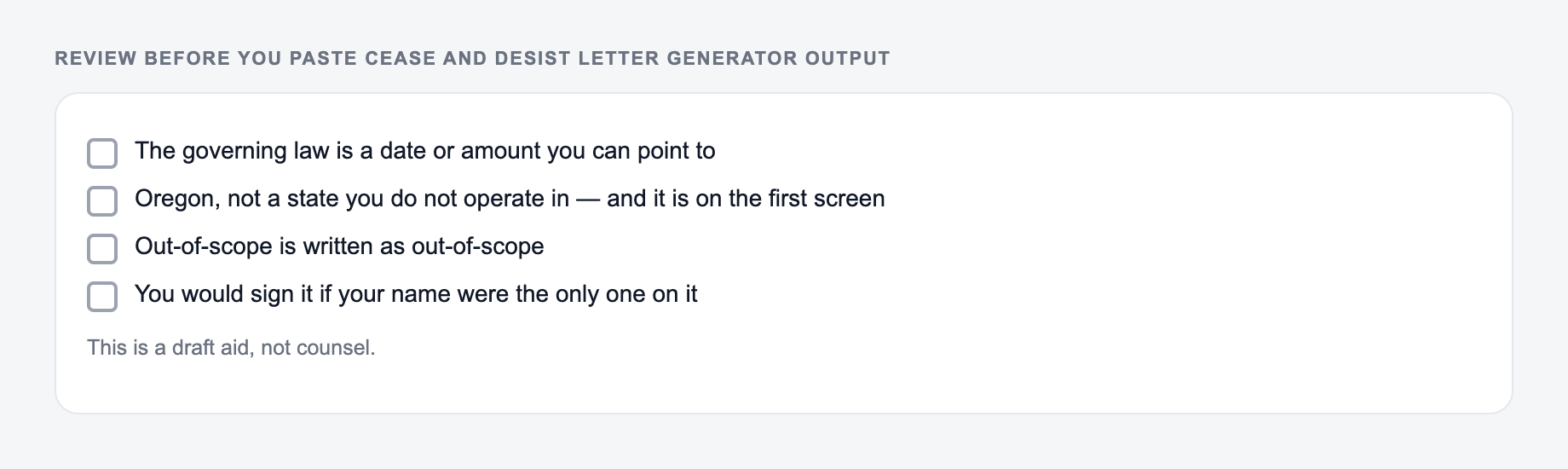
Tick these before the output leaves your machine. A fluent miss is still a miss.
A cease and desist letter generator helps you turn scattered facts into a clear written notice. Instead of starting from a blank page, you enter the parties, issue type, evidence, requested action, deadline, and tone. The tool then creates a structured draft you can review, personalize, and, when needed, send to a lawyer before delivery.
This is useful because cease and desist letters depend on specificity. A vague complaint is easy to ignore. A dated notice with facts, URLs, evidence, demands, and a response deadline creates a cleaner paper trail.
What to Enter Into the Letter Generator
Before generating the letter, gather the details that make the notice credible:
- Your name, company, contact details, and role
- The recipient's name, company, address, email, username, or website
- The type of issue, such as copyright, trademark, harassment, defamation, NDA breach, or debt collection harassment
- Dates, URLs, screenshots, message logs, listings, posts, or other evidence
- The exact action you want the recipient to take
- A deadline and response method
The clearer the input, the more usable the generated draft will be. For online disputes, include both the original location and the infringing or disputed location when you have them.
Choosing the Right Letter Type and Tone
Use Copyright Infringement when someone copied images, articles, videos, product pages, designs, or other creative work. Include original URLs and copied URLs.
Use Trademark Misuse when someone is using a brand name, logo, domain, handle, listing, or ad in a way that may confuse customers. Focus on the confusing use, not broad accusations.
Use Harassment / Unwanted Contact when the request is to stop repeated messages, threats, or boundary violations. Preserve evidence and consider safety or reporting options if there are threats.
Use Defamation / False Statements when the issue is a specific false statement. Quote the statement, identify where it appears, and explain the requested correction, removal, or retraction.
For tone, a polite first notice can work when the issue may be accidental. A firm professional notice is the default for most business and IP disputes. A final notice should only be used when prior contact was ignored or the situation clearly requires a stronger record.
Review the Generated Letter Before Sending
The generator gives you a draft, not legal advice. Review every name, date, URL, claim, and deadline. Remove emotional language, unsupported threats, or statements you cannot document.
Dates and the conduct you can document belong on the form. This is not legal advice.
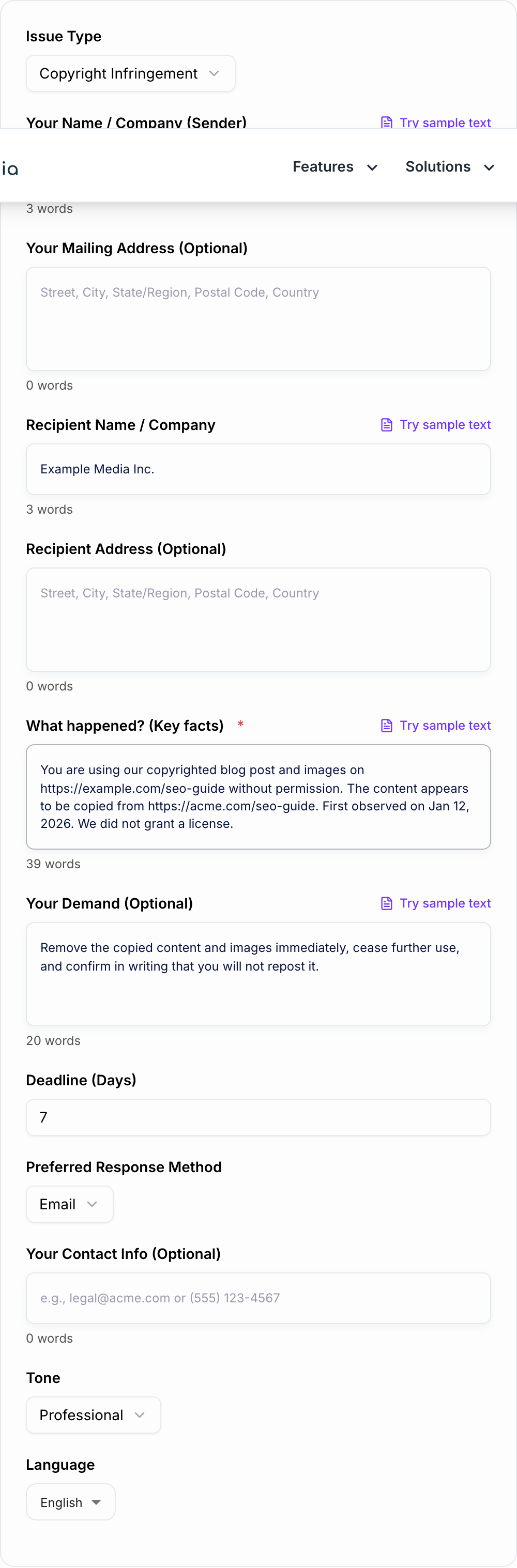
Filled example to imitate
A brief the AI Cease and Desist Letter Generator can use: who it is for, where the output will appear, and what must stay true.
Do not send this shape
A one-line request like “run the cease & desist” with no audience, channel, or constraint.
The first version names a date, a deliverable, and a boundary. The second hopes the reader will infer them.
This is a draft aid, not legal, medical, or financial advice.
If the dispute is high stakes, involves personal safety, crosses jurisdictions, could trigger counterclaims, or affects major revenue or reputation, have a lawyer review the letter before sending it. Broader writing utilities on Junia AI can help keep drafts organized, but legal judgment still belongs in the final review.
Final Checklist Before You Send
Before anything leaves the outbox:
- You can point to the number in a spreadsheet or a contract
- You would sign it if your name were the only one on it
- Compensation, legal effect, and medical content had a human pass
Before copying the generated letter into email or letterhead, confirm that:
- You saved evidence before alerting the recipient
- The recipient and sender details are correct
- The disputed conduct is described with facts, not insults
- The demand is specific and realistic
- The deadline and response method are clear
- The letter does not make legal threats you cannot support
- You got legal review if the matter is serious, risky, or complex
Frequently Asked Questions
Is a cease and desist letter legally binding?+
A cease and desist letter is typically not a court order. It’s a formal notice demanding that certain conduct stop. It can be useful to document your position, request compliance, and create a record before escalating.
Can I use this for copyright infringement or stolen content?+
Yes. Choose a copyright-related issue type and include the original URL, the infringing URL, and dates. The generator will produce a copyright-focused cease and desist letter suitable for contacting the infringer and, if needed, supporting a takedown request.
What should I include to make the letter more effective?+
Add specific facts: who is involved, what happened, where (URLs/usernames/addresses), when (dates/timeframe), what you want them to do, and a clear deadline. Keep wording factual and avoid personal attacks.
What deadline should I set in a cease and desist letter?+
Common deadlines range from 48 hours to 14 days depending on urgency and severity. Online content removal often uses shorter timelines (e.g., 3–7 days). Choose a deadline that’s reasonable for the requested action.
Should I threaten legal action in the letter?+
You can state that you may pursue further remedies if the conduct continues, but avoid aggressive or unlawful threats. The tool uses neutral “reservation of rights” language and suggests escalation steps without guaranteeing outcomes.
Do I need a lawyer to send a cease and desist letter?+
Not always. Many people send a first notice themselves. For high-stakes disputes, complex IP matters, or ongoing harassment, consider having an attorney review the letter for jurisdiction-specific requirements and strategy.