
Free Podcast Introduction Generator
Use the AI Podcast Introduction Generator to create hook-first intro scripts for new episodes, evergreen show openings, trailers, guest segments, and YouTube podcast uploads. Add your show details, listener promise, tone, and CTA to generate an intro that sounds natural when recorded.
Podcast Introduction
Your podcast introduction will appear here...
How the AI Podcast Introduction Generator Works
Get results in seconds with a simple workflow.
Enter Your Podcast Topic (and Optional Details)
Add your show niche, and optionally your podcast name, host name, audience, and what listeners will learn. The more specific you are, the more tailored the intro script becomes.
Choose Intro Type, Length, Tone, and Language
Generate an evergreen show intro, an episode-specific intro, a podcast trailer intro, or a guest introduction—then set the intro length and tone for your format and platform.
Generate, Pick a Version, and Record
Copy the intro into your episode notes, refine a line or two for your speaking style, and record. Optionally generate 2–3 variations to test pacing and clarity.
See It in Action
Example of upgrading a generic opening into a hook-driven podcast introduction with clear audience, outcomes, and a smooth transition.
Hey everyone, welcome to my podcast. Today we’re going to talk about SEO. Let’s get into it.
If you’ve been publishing content but your traffic is stuck, you’re not alone—and you’re not doing everything wrong. Welcome to The Growth Playbook, the show for founders and marketers who want practical SEO and content strategies that actually move the needle. I’m Alex Rivera, and in today’s episode we’re breaking down how to build a keyword strategy from scratch—what to target first, how to find low-competition opportunities, and how to turn keywords into a simple content plan you can execute this week. Let’s dive in.
Why Use Our AI Podcast Introduction Generator?
Powered by the latest AI to deliver fast, accurate results.
Hook-First Podcast Openers That удерж Attention
Generates a strong podcast hook that clarifies the promise fast—ideal for improving listener retention in the first 30 seconds on Spotify, Apple Podcasts, and YouTube.
Evergreen Show Intro + Episode-Specific Options
Create an evergreen podcast intro you can reuse every episode, plus episode intros that preview topics, guests, and takeaways for better flow and clarity.
On-Brand Host and Guest Introductions
Writes natural host bios and guest introductions that build credibility without sounding hypey—great for interview podcasts, expert panels, and educational shows.
CTA and Subscribe Prompts That Don’t Feel Salesy
Adds a smooth call-to-action (follow, review, newsletter, lead magnet) that fits your show’s tone, helping you grow subscribers and downloads over time.
Multi-Language Podcast Intro Generator
Generate podcast introductions in multiple languages to localize your show for international audiences and improve discoverability for multilingual listeners.
Pro Tips for Better Results
Get the most out of the AI Podcast Introduction Generator with these expert tips.
Lead with the listener’s problem (not your bio)
Start with a clear hook that speaks to what your audience wants (results, skills, news, stories). Then introduce the host and format after you’ve earned attention.
Make the promise concrete with outcomes
Phrases like “actionable steps,” “templates,” “real examples,” or “case studies” make your podcast value proposition more specific and easier to trust.
Keep the first 30 seconds tight for retention
Avoid long intros, overly broad mission statements, or multiple CTAs. One clear hook + what they’ll get + a quick transition usually performs best.
Write one evergreen intro, then add a 1–2 sentence episode topper
For consistency, use a reusable show intro and add an episode-specific line or two (topic, guest, takeaway). This keeps production fast and the structure familiar.
Use a natural CTA that fits the episode moment
A good CTA is timely and helpful: “Follow for weekly episodes,” or “Download the checklist” if it genuinely supports the episode topic. Avoid sounding forced.
Who Is This For?
Trusted by millions of students, writers, and professionals worldwide.
Generate Podcast Intro Scripts That Sound Good Out Loud
The podcast introduction generator is built for the first few seconds of an episode, where listeners decide whether to stay. Give it the show name, episode topic, listener promise, tone, and CTA, and it can create a spoken intro that gets to the point faster than a blank-page draft.
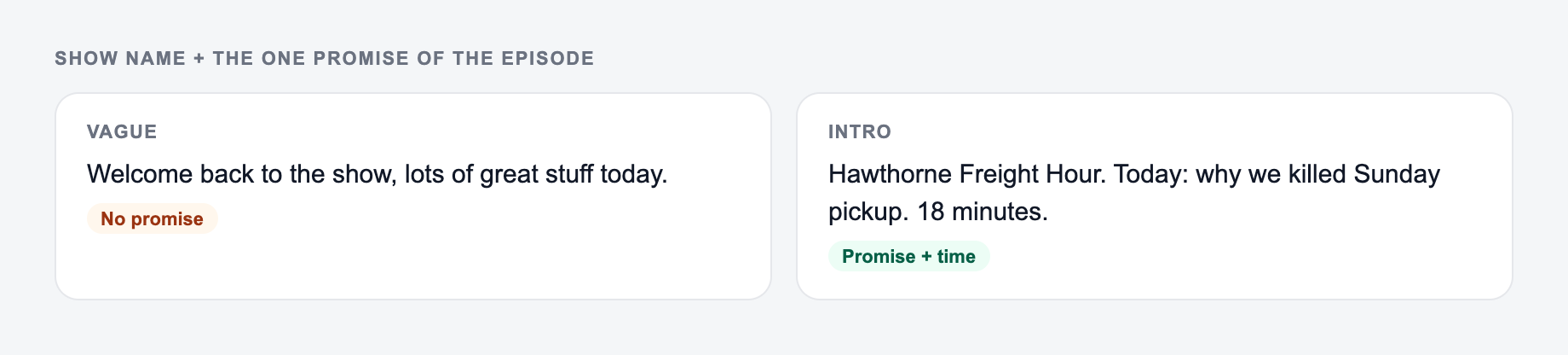
A good podcast intro does not start with a long host bio or a vague mission statement. It starts with why this episode matters now.
What to Enter Into the Podcast Introduction Generator
The best intro scripts come from specific inputs. Instead of entering only "SEO podcast intro," give the generator the context a host would normally know.
Useful details include:
- Podcast name
- Host name
- Episode topic
- Target listener
- Listener problem or desired outcome
- Guest name and credibility, if relevant
- Tone: friendly, sharp, calm, expert, witty, casual
- Intro type: evergreen show intro, episode intro, trailer, guest intro, or YouTube podcast opening
- CTA: follow, subscribe, download, join, book, review
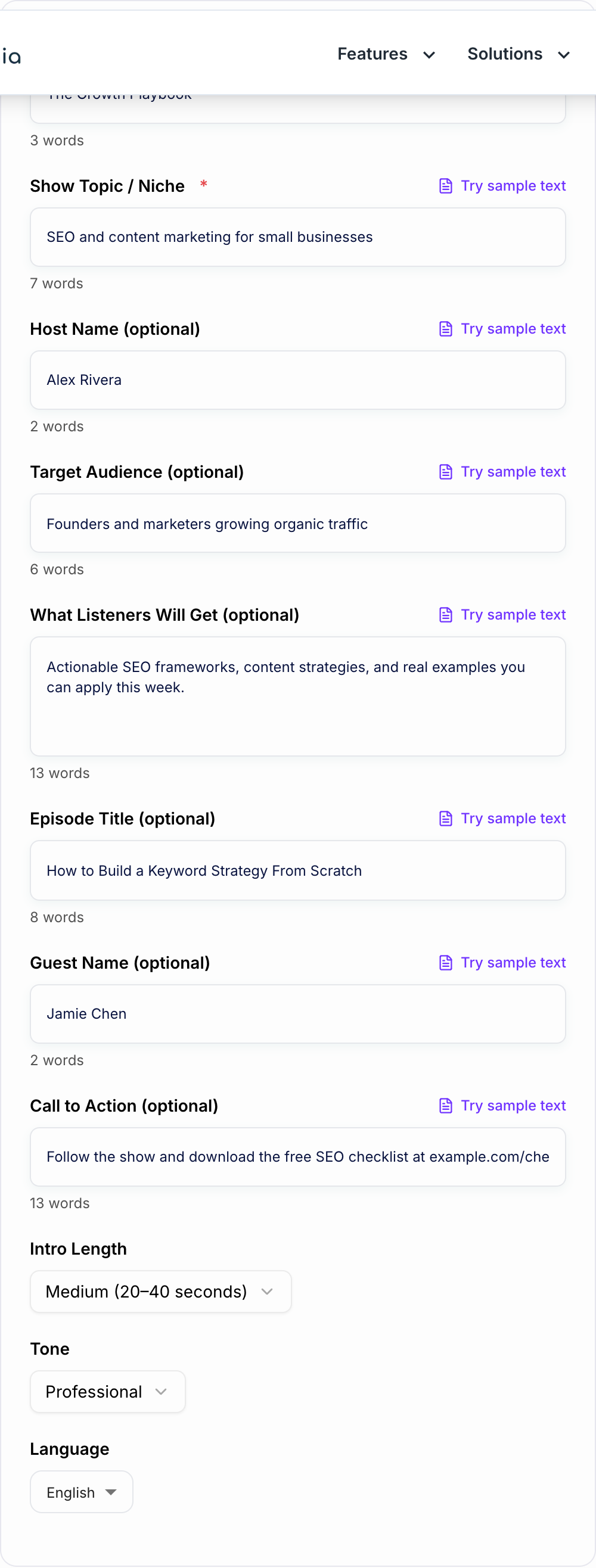
Example input:
Podcast: The Growth Playbook
Audience: founders and marketers
Episode topic: building a keyword strategy from scratch
Promise: choose keywords, map search intent, and turn them into a content plan
Tone: practical, confident, not hypey
CTA: subscribe for weekly SEO workflows
Intro type: episode intro
That gives the generator enough information to write an intro with a real hook instead of generic welcome copy.
Choose the Right Intro Type
Different intros need different structure. Pick the mode before generating.
Evergreen show intro
Use this for a reusable opening that explains the show once and can repeat across episodes.
Good for: weekly shows, branded podcasts, creator-led series.
Episode-specific intro
Use this when you want the opening to preview the exact topic, takeaways, or guest.
Good for: educational episodes, interviews, news analysis, tactical shows.
Guest introduction
Use this when credibility matters, but keep the bio short. The generator should connect the guest to the listener's problem, not list every career detail.
Trailer intro
Use this when launching a new show. The script should explain who the show is for, what it covers, and why someone should follow before episode one.
Example Generated Intro
Input:
Show name and the one promise of the episode belong on the form. Then read the intro out loud.
Use the AI Podcast Introduction Generator when you need volume. Do not use it when you still owe the reader a fact.
- Keep a line you could publish after one edit.
- Reroll a line that only works if the reader already knows your product.
- Throw away a line that invents proof, a guest, a deadline, or a result.
Episode topic: keyword strategy for founders
Listener problem: publishing content but not getting traffic
Show: The Growth Playbook
Host: Alex Rivera
Tone: practical and direct
Length: 25 seconds
Generated intro:
If you have been publishing content but your traffic is not moving, this episode will help you find the gap. Welcome to The Growth Playbook, the show for founders and marketers who want practical SEO systems they can actually use. I am Alex Rivera, and today we are breaking down how to choose keywords, map search intent, and turn one topic into a simple content plan. Let us get into it.
Before recording, read the output once at normal speed. If it feels too polished, swap in a phrase you would actually say.
How to Make the Generated Intro Sound Human
Before you publish podcast introduction generator output:
- A stranger can repeat the promise
- The page can keep that promise today
- No number, guest, or deadline you did not type
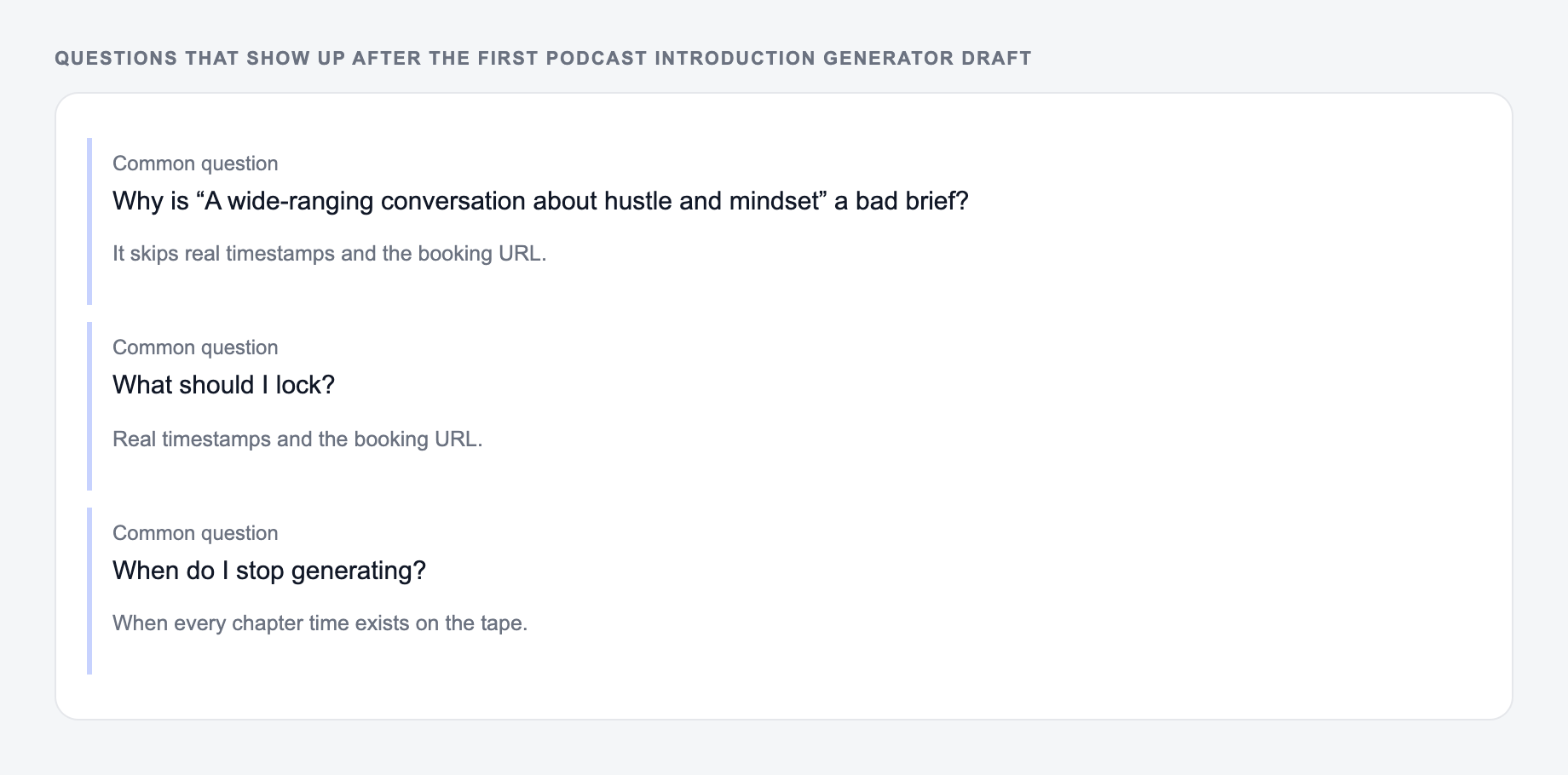
The same three questions show up after people generate once and then stall.
AI can give you structure quickly, but the final intro still needs your voice.
Use this editing pass:
- Cut any line that explains too much before the hook.
- Replace formal words with spoken ones.
- Add one phrase that sounds like your normal hosting style.
- Keep only one CTA unless the intro is for a trailer.
- Make sure the first sentence names the listener's problem or desired outcome.
If the generated intro sounds like a press release, the input was probably too vague. Add the listener promise and regenerate.
Using One Intro Across Podcast Platforms
Your spoken intro can also guide the rest of the episode packaging. Reuse the same promise in the episode description, YouTube description, show notes, and promo copy so the listener sees one clear reason to care.
That consistency is useful when you are producing more than one asset per episode. An AI writing platform like Junia AI can help turn the same episode context into intros, descriptions, CTAs, and supporting copy while keeping the angle consistent.
Final Review Checklist
Before using the generated podcast intro, check:
- Does the first line give listeners a reason to keep listening?
- Is the episode promise specific?
- Does the host or guest intro support the topic instead of delaying it?
- Can you read it naturally without running out of breath?
- Is the CTA short and relevant?
- Does the intro match the tone of the actual episode?
The best generated intro should feel like a clear opening, not a separate announcement. It should move the listener into the episode quickly and make the next segment feel natural.
Frequently Asked Questions
Is this podcast introduction generator free to use?+
Yes. You can generate podcast introductions for free. Some advanced modes (like conversion-optimized CTAs or sponsor-friendly structure) may be marked as premium.
What should a great podcast intro include?+
A strong podcast intro typically includes a hook, the show’s topic, who it’s for, what listeners will get, and a smooth transition into the first segment. Optional elements include a host bio, guest intro, and a brief CTA to follow or subscribe.
Can it write both a show intro and an episode intro?+
Yes. Use the evergreen Show Intro mode for a reusable opening, and the Episode Intro mode for episode-specific scripts that mention the topic, guest, and key takeaways.
How long should a podcast introduction be?+
Most podcasts do best with 10–40 seconds. Short intros get to the content fast, while medium intros allow a clear value proposition. Longer intros can work for narrative formats or when you need context—just keep it tight and listener-focused.
Will it match my tone and brand voice?+
Yes. Select a tone and provide optional context (audience, value proposition, CTA) to shape the writing style. You can also generate multiple variations and choose the best fit for your podcast identity.
Can I use the generated intro as a script to read word-for-word?+
Yes. The output is written as spoken-friendly copy. You can read it as-is, or lightly edit to match your natural speaking rhythm, pacing, and recurring segment structure.