
AI Voice Cloning Protection: What Creators Should Know in 2026

Thu
AI SEO Specialist, Full Stack Developer

A news item floated around Google News this week about a tool meant to hide singers' voices from AI systems that try to copy them.
It sounded niche at first. Music industry drama, right?
But it is not. It is one of the clearest examples of a wider 2026 creator problem: your voice, cadence, and signature phrasing can now be scraped, modeled, and reproduced. Sometimes badly. Sometimes well enough that your audience hesitates. And that hesitation is the real damage.
So this is not a celebrity gossip post. It is a practical guide to what AI voice cloning protection actually means, why it is showing up everywhere, what works, what does not, and what creators should do this year if they want to reduce imitation risk without giving up AI tools entirely.
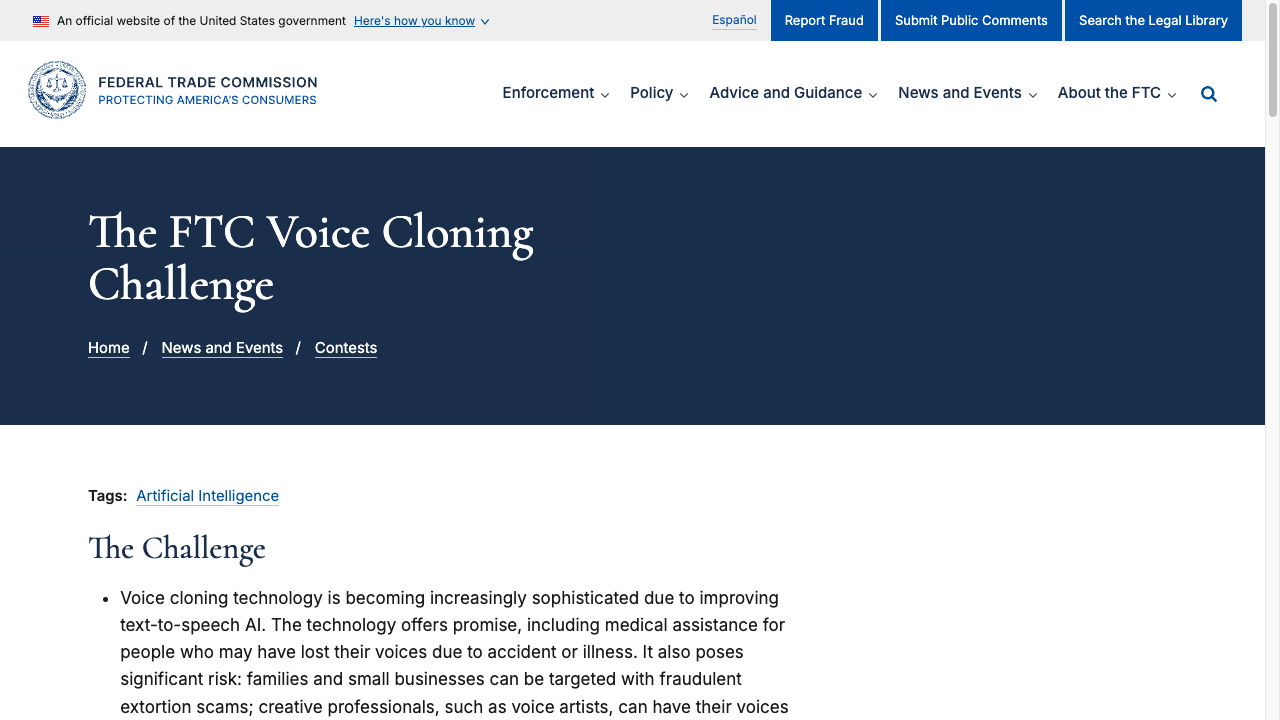
The FTC treated this as a consumer-protection problem, not a niche music issue. Its Voice Cloning Challenge asked for ways to prevent, monitor, and evaluate malicious cloning, including fraud and the misuse of biometric and creative audio.
The creator problem in 2026 is not “AI tools”. It is unauthorized imitation.
Most creators I talk to are not anti AI.
They use AI for outlines, research, editing passes, repurposing. They are fine with that. They are even excited by it.
What they are not fine with is this:
- Someone grabs public audio from a podcast, YouTube channel, course, livestream, interview.
- That audio is turned into a synthetic voice model.
- The model is used to sell a product, push a scam, “endorse” something, or just farm attention.
- The audience cannot immediately tell the difference, and you are the one who has to clean up the mess.
Same story for writers and marketers, too. People are cloning tone and “style authority” to publish lookalike posts, newsletters, LinkedIn threads. It is not just plagiarism. It is identity spoofing.
Voice is just the most visceral version because we are wired to trust it.
What AI voice cloning actually is (no hype, just mechanics)
AI voice cloning is the ability to generate new speech that sounds like a specific person.
Under the hood, modern systems do some combination of:
- Speaker embedding: compressing your voice identity into a representation the model can condition on.
- Text to speech (TTS): generating speech from text, but in your voice.
- Voice conversion: taking one voice performance and converting it to sound like you.
- Prosody and style transfer: copying rhythm, pauses, emphasis, emotional shape. This is the part that makes clones feel “real”.
In 2026, the barrier is low. Not because the tech is “magic” but because:
- there is a lot of clean training data online,
- open source and commercial tools got easier,
- and the market rewards speed over consent.
You do not need a studio. You need minutes of usable audio and a bit of patience.
Why anti cloning tools are emerging now
That singer protection tool in the news is part of a broader wave. These tools exist now because three things converged:
1) Cloning got good enough to fool casual listeners
A few years ago, clones sounded robotic. Now they can pass in a noisy feed, over phone audio, in a short clip. That is all a scammer needs.
2) Creators became “data rich”
Podcasters publish hours. Course creators publish modules. Streamers talk constantly. Founders do interviews. Everyone is leaving behind training material.
3) Platforms are overwhelmed
Reporting a fake clip works sometimes, but takedowns are slow. Copies spread. Mirrors pop up. Even when you win, you lose time and trust.
So the industry is trying to move protection earlier in the pipeline. Not just “remove fakes” but “make cloning harder” or “make fakes detectable”.
What “AI voice cloning protection” can mean (there are a few categories)
People use the term loosely, so let’s define the buckets.
1) Preventative obfuscation (make your audio harder to clone)
This is what the singer tool category tends to aim for.
The idea is simple: add tiny, usually inaudible changes to the audio that do not bother human listeners but reduce the ability of AI systems to learn a stable voice identity.
Think of it like anti scraping noise, but for speaker features.
Where it helps
- You publish songs, voiceovers, paid course audio, podcasts.
- You want a “speed bump” that discourages casual cloning.
- You are okay with a tradeoff: small audio artifacts or processing constraints.
Where it fails
- If attackers can get any unprotected audio from you. Old episodes. Lives. Interviews. Guest spots.
- If your audio gets re recorded in a way that removes the protective signal.
- If the attacker uses a different modeling approach than the one the tool was designed to disrupt.
So. Obfuscation is helpful, but it is not a force field.
2) Detection and watermarking (prove something is real, or flag what is fake)
Some systems attempt to:
- watermark legitimate audio at generation time, or
- detect whether audio is AI generated, or
- match a clip to a known authentic recording chain.
Where it helps
- When platforms and advertisers actually honor the signals.
- When you control the publishing pipeline and can embed authenticity metadata.
- When a dispute happens and you need evidence.
Where it fails
- Watermarks can be stripped or degraded.
- Detectors have false positives and false negatives.
- Audio gets chopped, compressed, remixed, and “chain of custody” breaks.
In practice, detection is strongest as a supporting tool, not the only defense.
3) Access control (reduce what you publish, and how)
Not sexy, but effective. Examples:
- keeping higher quality masters private,
- limiting raw isolated vocal stems,
- putting full resolution course audio behind authentication,
- releasing teaser clips publicly and the rest in gated spaces.
Where it helps
- When you have paid content or premium audio assets.
- When you can tolerate less public material.
Where it fails
- For creators whose whole model is public distribution.
- When attackers can still get enough material from live appearances or archives.
4) Legal and contractual protection (make consequences real)
This is the part many creators skip because it feels slow. But in 2026, it is becoming more standardized.
More on that below.
The uncomfortable truth: protection works best as layers
If you are hoping for one toggle that says “Do not clone me,” it does not exist. Not reliably.
What does exist is layered friction:
- reduce training quality,
- make authenticity easier to prove,
- make infringement easier to punish,
- and make audience confusion less likely.
| Protection layer | What it helps with | Main limitation |
|---|---|---|
| Obfuscation | Makes public audio harder to train on | Fails if clean audio is available elsewhere |
| Detection and watermarking | Supports disputes and authenticity claims | Easy to degrade or strip in some workflows |
| Access control | Limits exposure of your best training data | Hard to apply if your business depends on public content |
| Contracts and policy | Creates consequences for misuse | Slow if enforcement is weak |
| Audience education | Reduces confusion during scams | Only works if people know where to verify you |
The goal is not perfection. It is fewer incidents, faster resolution, and less reputational damage.
Where protection actually works, and where it breaks in real life
Here is the practical breakdown, creator by creator.
For singers and voice actors
- Best defenses: obfuscation on released tracks, careful handling of stems, licensing terms, rapid takedown process, professional monitoring.
- Biggest weakness: old interviews, behind the scenes clips, live performances, fan recordings.
For podcasters
- Best defenses: consistent disclosure practices, audience education, clip monitoring, platform verification where available, and yes sometimes obfuscation on published audio if it does not harm quality.
- Biggest weakness: you publish hours of clean spoken word. That is gold for cloners.
For educators and course creators
- Best defenses: gating full lessons, watermarking, account based access, updated terms, and having a clear policy on AI reuse.
- Biggest weakness: students screen record, or you publish “free modules” that are enough to train on.
For founders and executives
- Best defenses: internal comms policies, voice verification for finance approvals, training staff to treat voice as untrusted, and public statements about official channels.
- Biggest weakness: phone based social engineering. A clone only needs to be convincing for 30 seconds.
Legal safeguards in 2026: better than before, still uneven
Creators keep asking: “Can I sue?”
Sometimes yes. Often yes. But the reality depends on country, platform, and what exactly happened.
Here are the legal concepts that matter most.
Right of publicity and likeness
Many jurisdictions recognize some form of protection against commercial use of your identity. That can include voice in some cases.
But enforcement is slow unless:
- the offender is identifiable,
- they have money,
- and the use is clearly commercial.
Copyright
Your recorded performances are copyrighted works. If someone copies your audio directly, that is straightforward.
If someone generates new audio that merely sounds like you, copyright gets messy fast. It may not be considered a derivative work of any one recording. The claim may shift toward publicity rights, unfair competition, passing off, or false endorsement.
Contracts and licensing
This is where creators have more control than they think.
If you do brand deals, guest appearances, narration, collaborations, you can add clauses like:
- no voice cloning,
- no training models on deliverables,
- no synthetic reuse without explicit approval,
- audit rights,
- and penalties for breach.
Even if you never litigate, contracts change behavior.
Platform policies
In 2026, major platforms have clearer rules against impersonation and deceptive synthetic media. But “clear rules” is not the same as “fast enforcement”.
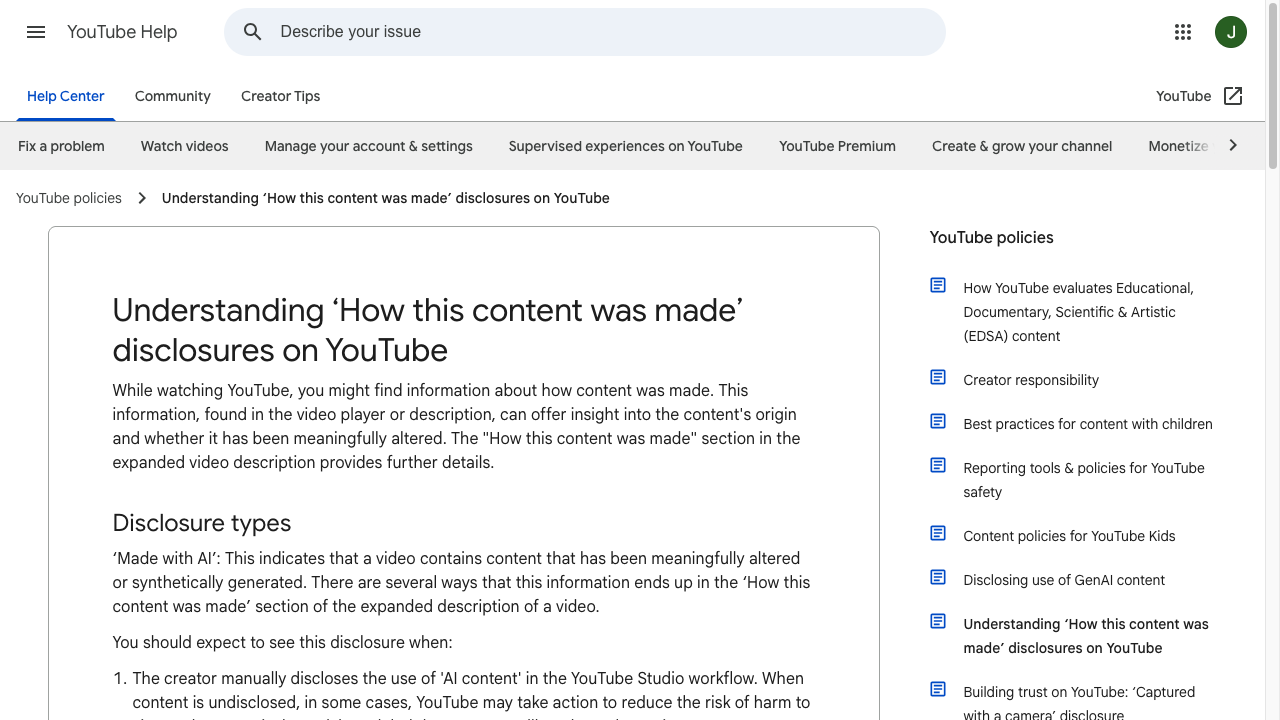
YouTube's “How this content was made” disclosures are a good example of what platforms can actually do: label AI-altered or synthetic media, carry Content Credentials when they are present, and still leave most of the reporting work with the creator.
So build your plan assuming:
- you may need to file multiple reports,
- you may need legal escalation,
- and you should keep documentation ready.
Local news coverage of the FTC warning is a useful reminder of the scam pattern, not a product roundup:
FTC warns scammers can clone voices for high-tech phone scams
Consent is the dividing line between responsible AI and theft
A lot of confusion here comes from people mixing up two very different activities.
Responsible AI assistance
- You use AI to draft.
- You use AI to edit.
- You use AI to brainstorm.
- You publish under your own name, with your own review, and you do not pretend it is raw human output if your audience expects otherwise.
Non consensual imitation
- Someone trains on your voice or style without permission.
- They output content designed to be mistaken for you.
- They benefit from your credibility while you take the risk.
Creators should be blunt about this distinction. Not moral panic. Just clear boundaries.
Practical checklist: how to reduce voice imitation risk in 2026
Not everything here will apply to you. Pick the 6 to 10 actions that fit your work.
No single toggle will “do not clone me.” Obfuscation, watermarks, takedowns, and contracts all leak. I would treat this checklist as layered friction: make cloning harder, make official channels obvious, and never let a voice message authorize money.
1) Do an “audio inventory”
List where your clean voice exists:
- podcasts
- YouTube
- courses
- interviews on other channels
- webinars
- keynote recordings
- audiobook narration
- TikTok and Reels
If you do nothing else, do this. You cannot protect what you forgot you published in 2019.
2) Lock down your highest quality sources
Keep raw WAVs, isolated vocals, uncompressed masters private. If you have to share with editors, use controlled storage and contracts.
3) Consider obfuscation for certain releases
If you release music, voice packs, long narration, or high value audio that is especially cloneable, test a protection tool.
Test it like a skeptic:
- Does it affect listening quality?
- Does it break distribution specs?
- Does it survive compression?
- Does it meaningfully reduce cloning quality in your own experiments?
4) Make official channels extremely obvious
Pin a page that says:
- where you publish
- how you contact
- what you will never ask for
- how you announce sponsorships
- how you handle “urgent requests”
This is boring until it saves you.
5) Add a “voice is not verification” rule to your business
If you have a team, this matters.
No payments, password resets, wire instructions, or contract approvals should be authorized by voice alone. Use callbacks, written confirmation, or internal approval flows.
6) Monitor for clones and impersonation
Set up searches for:
- your name + “AI”
- your name + “voice”
- your brand + “call”
- weird phrases your audience would associate with you
There are also media monitoring tools, but even manual checking on a cadence beats nothing.
7) Prepare a takedown packet in advance
When a fake happens you will be stressed and angry. That is not the moment to start assembling proof.
Create a folder with:
- identity verification
- links to original content
- trademark info if you have it
- a clear statement of harm and impersonation
- a standard message your team can paste into reports
8) Update contracts and collaboration terms
Add AI clauses to:
- sponsorships
- editing agreements
- voiceover and narration deals
- podcast guest releases
- course platform agreements
Make “no training, no cloning, no synthetic reuse” the default unless explicitly negotiated.
9) Educate your audience without freaking them out
A simple statement like:
- “If you hear me endorsing something outside these channels, assume it is fake.” works.
You are not asking them to become forensics experts. You are giving them a quick trust shortcut.
10) Have an authenticity habit
Small ritual. Same opener, same closer, consistent publishing rhythm, signed newsletters, verified social handles.
Clones thrive in ambiguity. Reduce ambiguity.
Audio identity and written brand voice are the same trust problem
Even if you never record audio, you still have an identity people can mimic.
Writers and marketers see this already: copycats pumping out posts “in your style” and attaching your authority to claims you did not make.
This is why brand voice matters. Not just for conversion. For trust.
If you want to go deeper on the written side, start with customizing AI to match your brand voice and adding a human touch to AI-generated content. The same trust problem shows up in AI writing journalism when a byline is easy to fake.
The connection is simple: when style becomes easy to imitate, audiences start doubting authenticity. That pushes everyone to prove who they are, not just say it.
Platform limits: what you should assume going in
Even with better policies, platforms are still reactive. So assume:
- Impersonation will not be caught immediately.
- Short clips will spread faster than corrections.
- You might need to repeat the same report across multiple accounts.
- The burden of proof often sits on you.
That is why prevention and preparation are not optional anymore. They are part of being a public creator in 2026.
How to use AI without turning your identity into a cheap imitation layer
This is the nuance most discussions miss.
The goal is not to “avoid AI”. The goal is to use AI in a way that supports your work without enabling the market for identity knockoffs.
A decent rule of thumb:
- Use AI for drafting, outlining, editing, repurposing.
- Avoid training or releasing assets that let others reproduce “you” as a product.
And if you are a marketer or founder, choose tools that prioritize brand consistency and responsible workflows over “generate 500 posts that sound like this influencer”.
On the writing side, this is where a platform like Junia AI fits naturally. It is built for search-focused long-form content, with features like brand voice training, SEO scoring, and structured publishing workflows. That gives teams a cleaner way to draft, refine, and repurpose content with AI without turning consistency into imitation. If you want to explore that workflow, start at Junia AI.
Not as a magic shield. More like a sane workflow. You still review. You still own the message.
Wrap up (what to actually do this week)
If this topic feels overwhelming, do the simple version:
- Make an inventory of where your voice and style live.
- Lock down high quality assets and update contracts.
- Add a public “official channels” page.
- Prepare a takedown packet.
- Decide whether obfuscation makes sense for your highest risk audio.
- Tighten your internal processes so voice is never treated as proof.
The singer story is just the headline. The real story is that creators are entering a world where identity is copyable.
You cannot stop every attempt. But you can make imitation harder, less profitable, and easier to disprove. And you can keep using AI in a way that helps your work, instead of hollowing it out.