
8 Best AI Image Generators for Blogs in 2026 (Plus Our #1 Pick)

Thu
AI SEO Specialist, Full Stack Developer

You can write a strong blog post and still lose readers if the page looks flat.
That usually happens when the article is one long wall of text with no visuals to guide the eye. A relevant feature image helps set expectations, and supporting images throughout the post make the content easier to scan, understand, and remember.
That matters even more now that Google keeps rewarding content that feels genuinely useful to readers. Strong visuals do not replace strong writing, but they do make good content easier to consume.
The hard part is creating original blog images quickly. Stock photos often feel generic, and custom design work takes time. That is where AI image generators can help. The best ones let you turn a rough idea or prompt into a visual that actually matches your post.
Below, we break down eight AI image generators for blogs that stand out for image quality, ease of use, customization, and workflow fit:
- Junia AI: Best Image Generator for Blog Posts
- ChatGPT Images: Image generation inside ChatGPT with strong text rendering
- OpenArt: Your Creative Vision, Elevated and Realized by AI
- Adobe Photoshop (Firefly): Integrating AI-Generated Images into Photos
- Jasper Art: Creating Images in Different Styles
- Midjourney: Enhancing Blog Visuals with AI-Generated Images
- Google Gemini (Nano Banana): Image editing and consistent series
- Ideogram: Cover images and graphics with readable text
We’ll look at the strengths, trade-offs, and best use cases for each one so you can pick the right tool faster.
Quick comparison of the best AI image generators for blogs
| Tool | Best for | Main strength | Main limitation |
|---|---|---|---|
| Junia AI | Bloggers who want image generation built into a content workflow | Fast blog-focused image creation with captions and SEO support | Best fit if you already work inside the Junia ecosystem |
| ChatGPT Images | Bloggers already using ChatGPT | Strong text rendering and reasoning (GPT Image 2) | Brand consistency across many images takes work |
| OpenArt | Experimenting with styles and open creative workflows | Broad customization and flexible presets | Output quality varies based on input clarity |
| Adobe Photoshop Firefly | Editing and enhancing existing visuals | Powerful AI-assisted image editing inside Adobe workflows | More learning curve than simpler generators |
| Jasper Art | Marketers who want quick branded visuals | Easy style exploration and simple workflow | Inconsistent image quality at times |
| Midjourney | Stylized, eye-catching blog visuals | Distinctive artistic output | Can be less predictable for literal business visuals |
| Google Gemini | Editing and consistent image series | Nano Banana editing and character/product consistency | Best inside Google's apps |
| Ideogram | Cover images and graphics with text | Highly accurate text inside images | Less suited to photorealistic scenes |
1. Junia AI: Best Image Generator for Blog Posts
Junia AI's Blog Images Generator is honestly a top-tier image generator for blog posts. It kind of feels like it came from this cool mix of art and tech, working together. This platform lets bloggers, creatives, and marketers turn their ideas into real visuals, like actually bringing their visions to life in a really stunning visual format.
Features and Capabilities of Junia AI
- AI-Powered Image Generation: At the core of Junia AI you’ve got this powerful artificial intelligence engine. It can create unique images based on whatever specific input you give it, and it kind of keeps learning and getting better every time you use it.
- Customizable Outputs: Want to tweak your generated image a bit? Or a lot? No problem. Junia lets you change things like the color scheme, style, and composition so you can keep adjusting it until you’re honestly happy with the final result.
- SEO-optimized Image Caption(Alt text): Junia AI doesn’t just make cool looking images, it also helps you with search engines. It can generate SEO-friendly captions (also called alt text) that explain what’s in your image, which helps improve visibility and ranking in search engine results.
- User-Friendly Interface: Even if you’re not very tech-savvy, using Junia’s platform is super simple. The interface is pretty intuitive, so you can generate images quickly and without much effort.
Using Junia AI's Blog Images Generator
So now that we've kind of hyped up all its features already, let’s actually walk through how to use Junia AI for blog image generation:
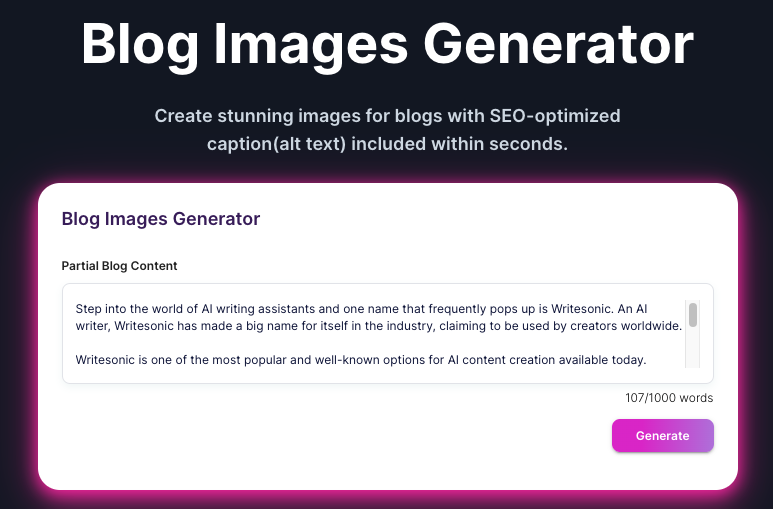
- Input your partial blog content: Start by typing in a part of your blog, like a section or just a short summary, into Junia's input field. This helps the AI figure out what your blog post is about, like the main ideas and the vibe. Then it uses that as the base to come up with images that actually match your content.
- Let the AI work its magic: Click on 'Generate' and just wait a moment while Junia creates a bunch of unique images for you. It’s pretty fast, you can kind of just sit back and watch them appear.
- Download and use: When you find an image you’re happy with, just download it and add it to your blog post. That’s it. Your blog instantly looks more alive and not so plain anymore.
Why Junia AI is our top pick for blog images
Speed is the obvious win. You can generate a usable blog visual in minutes instead of hunting stock libraries or waiting on a designer. The more useful part, in my experience, is that the image is tied to the draft you already wrote, so it usually matches the topic instead of looking like a leftover from a generic photo pack.
Junia also helps with captions and alt text, which is the part most people skip after they get a pretty render. That metadata is what actually supports image and video SEO. A sharp illustration with an empty alt attribute is still a missed ranking opportunity.
You can iterate on style quickly until the image fits the post. That mix of speed, control, and blog-specific workflow support is why it sits at the top of this list.
What actually ranks in Google Images
Pretty is not the ranking system. Google still needs to understand the file: descriptive filenames, alt text that matches what is on the image, nearby copy that explains the point, and a page that is worth ranking in the first place.
A pretty image still needs alt text and nearby copy. I have generated feature images that looked finished and still would not have earned a Google Images click, because the file was named
image-3.pngand the surrounding paragraph never named the subject. Generate the visual. Then write the caption like a human who wants the image to be found.
Google's Search Central guidance on image SEO is the practical reference here:
Google Search Central: image SEO best practices
2. ChatGPT Images (GPT Image 2)
OpenAI retired DALL-E 2 and DALL-E 3 in May 2026. Image generation now lives inside ChatGPT, powered by GPT Image 2, so you can create a blog visual in the same chat where you drafted the post.
For bloggers, the two big improvements over the old DALL-E models are text and reasoning. GPT Image 2 renders text inside images far more reliably, including non-Latin scripts, which matters for cover images with a title on them. It can also reason about the request, search the web for reference, and produce several candidates from one prompt, at up to 2K resolution.
Where it works well:
- Featured images and simple illustrations described in plain language
- Diagrams and visuals with short labels or a headline
- Quick variations of the same idea in different styles
Where to be careful:
- Brand consistency across many images still takes careful prompting.
- Check details in any image showing real products, people, or data.
Best for: bloggers who already use ChatGPT and want images without another subscription.
3. OpenArt
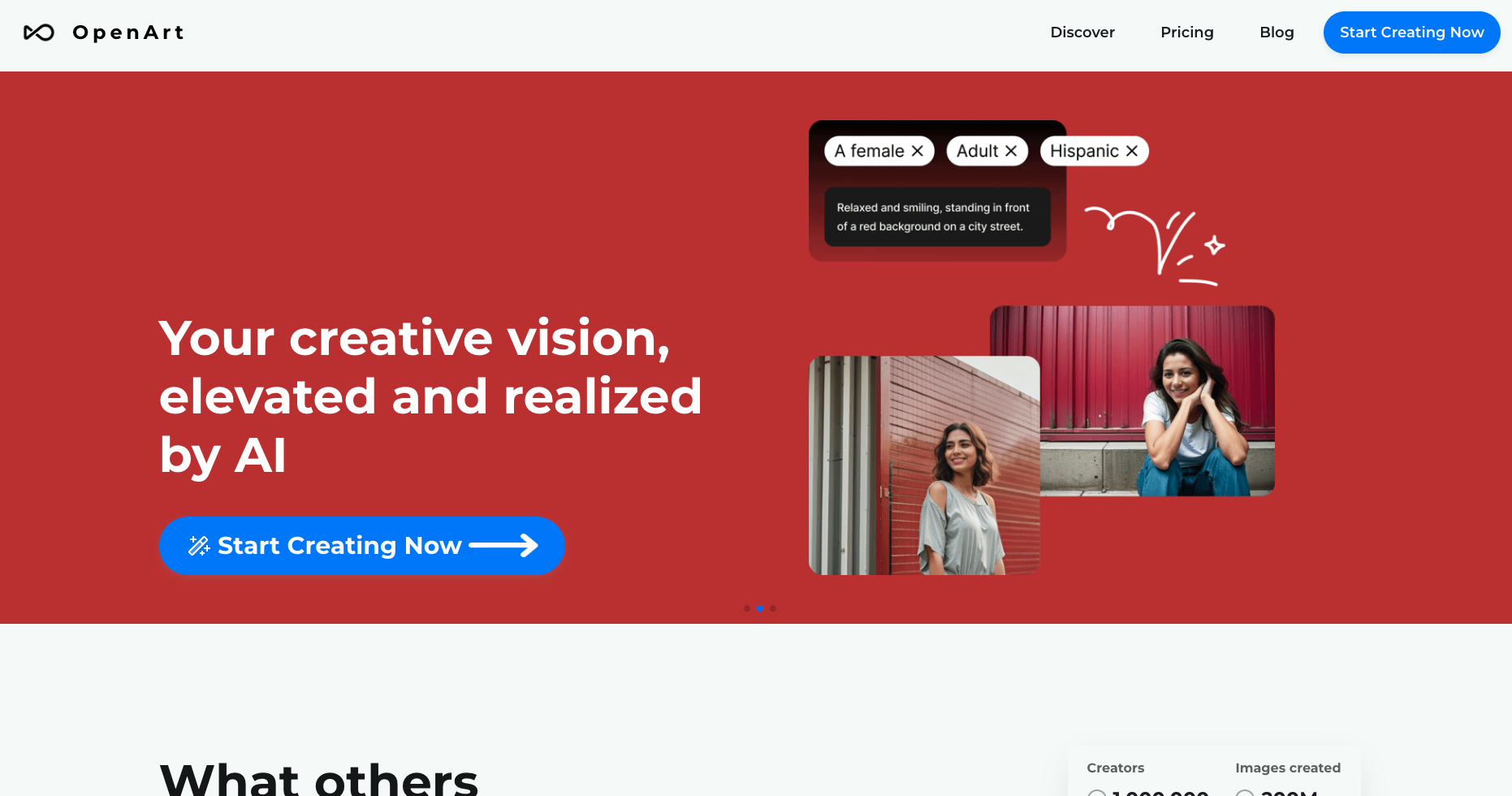
Imagine having an AI that basically takes your creative vision and just levels it up. That’s OpenArt for you. This open-source image generator uses artificial intelligence to turn your rough or abstract ideas into real visual content you can actually use in your blogs.
Key Features and Functionalities of OpenArt
- Customizability: With OpenArt, you’re not stuck using preset templates all the time. You decide how you want your blog images to look, kinda exactly how you picture them in your head, and OpenArt does all the heavy lifting for you.
- Ease of Use: It has a pretty simple, user-friendly interface, so even if you’re not a designer at all, you can still make images that look pretty professional.
- Diverse Image Presets for Various Use Cases: You can turn sketches into images, create different variations, or even convert stock images into something a bit more unique.
Advantages and Limitations of OpenArt as an Image Generator
OpenArt promises a lot of creative freedom, and honestly it delivers a lot of it, but like any tool, it has both strong points and some limits.
Strengths
- Versatility: Whether you need complex infographics or simple blog banners, OpenArt can pretty much handle the whole range.
- Time-Saver: You don’t have to keep searching the web forever for the right image or mess around with super complicated design software.
- Cost-Efficient: Since it’s open-source, it’s free to use, which is always nice.
Limitations
- Even though AI is getting really advanced, it still can’t completely match a human designer’s creativity and style.
- The quality of what you get really depends on what you put in. If your input is vague or unclear, the results might be not that great or just not what you imagined.
During our testing phase, OpenArt really impressed us with how well it understood the input we gave it and how relevant the generated images were. There is a bit of a learning curve though, mostly around how to phrase and give precise inputs. But once you get the hang of it, it can honestly become a blogger’s best friend.
For image quality, OpenArt was able to create high-resolution images that made our blogs look a lot more visually appealing. Just remember, the output is only as good as the input. The more clear, detailed and specific your instructions are, the better the final result you’ll end up with.
OpenArt: It’s where your writing meets art. It’s where your creativity kind of wakes up on the page. And it’s where AI steps in like your personal designer, ready to turn your ideas into actually stunning visuals for your blog posts.
4. Adobe Photoshop (Firefly)
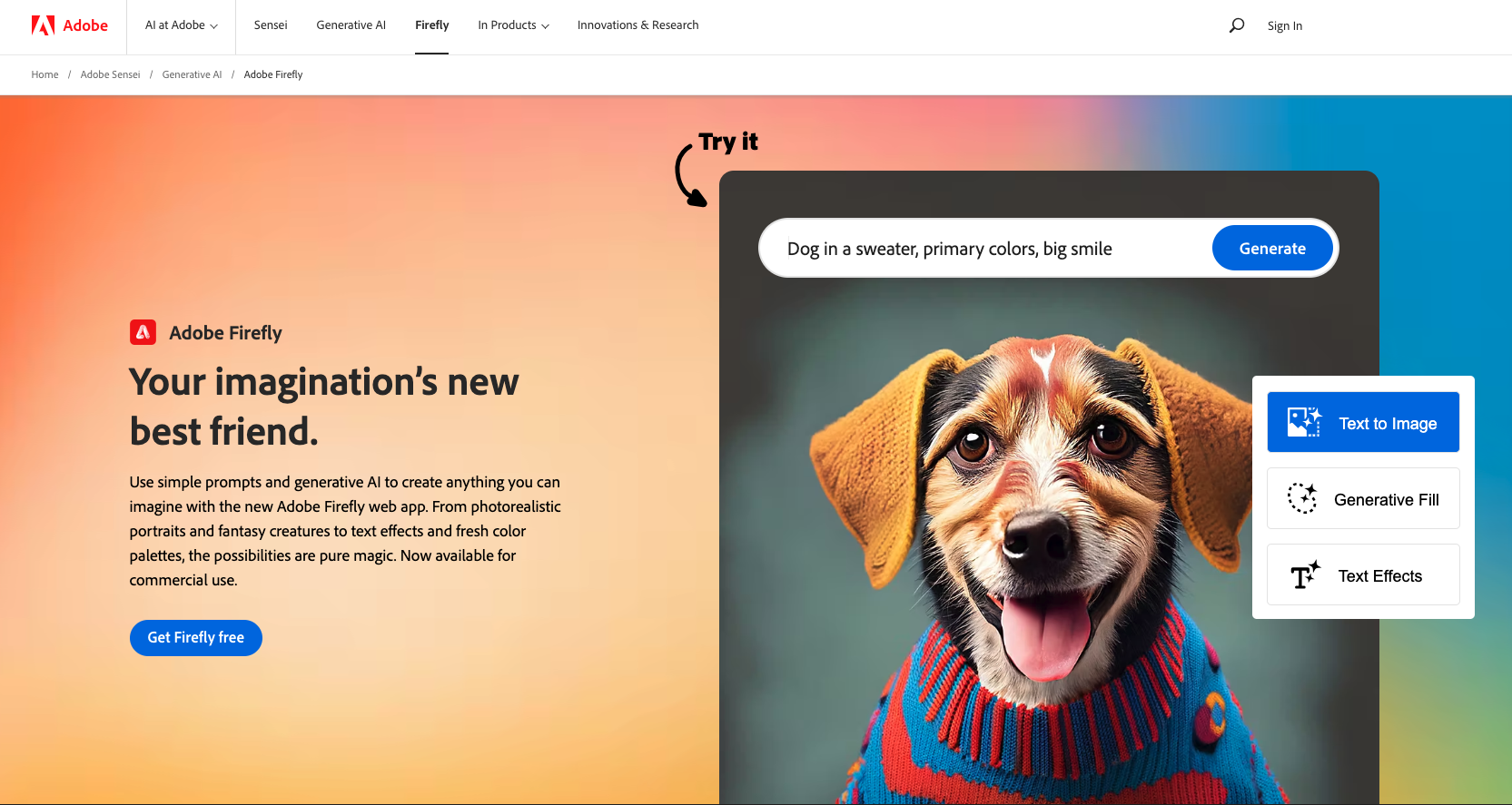
So this is Adobe Photoshop's latest thing, Firefly, and it’s actually pretty cool. It kind of lets you mix AI-generated images right into your photos without a lot of effort. Adobe Photoshop has already been the king of photo editing software for years, everyone knows that, with tons of tools and all that. Now with Firefly, it takes a big step up and uses AI to push your blog visuals to a whole new level.
Just picture being able to change a photo almost any way you want. With Firefly, that idea is basically real. It lets you blend AI-generated images into your blog photos so smoothly that it feels natural. The process is simple but still really powerful. You pick an image for your post, then you jump into Firefly's AI tools and start adding new stuff or tweaking what’s already there. Voila! suddenly you have this upgraded, more personal image ready for your blog.
The real magic is in Firefly's deep learning algorithms. These smart systems go through every part of your image, like colors, textures, styles, patterns, all of it. Then it uses that info to make new images or change the old ones in a way that keeps everything looking consistent in the whole picture, not weird or fake.
Firefly also throws in a bunch of tips and tricks for making your blog visuals better. For example, you can use its Smart Selection tool to quickly find and select specific objects in a photo really accurately. This is super helpful when you want to add new stuff into a picture without messing up the overall layout or composition you already like.
Of course, like any tool, it has its pros and cons, and Adobe Photoshop (Firefly) is no different. Its biggest strength is how it helps you create unique and personalized visuals that can really boost the look and feel of your blog posts. On the other hand, there is a bit of a learning curve. If you’re a total beginner, it might feel a little confusing at first.
When we tested it, Firefly's features honestly surprised us. It not only lets you make really impressive blog visuals, but it also gives you a lot of control over almost every part of the editing process. One of the most impressive things is how well it can generate images that just melt into the original photo, keeping everything looking natural and consistent.
So overall, Adobe Photoshop (Firefly) is a great option if you want to create eye-catching blog visuals. Its advanced AI tools let you edit and play with your photos in ways that used to be pretty much impossible. It might take a little time to get comfortable with, but the results are totally worth it. Go ahead and give your blog posts the visual boost they deserve with Firefly!
5. Jasper Art
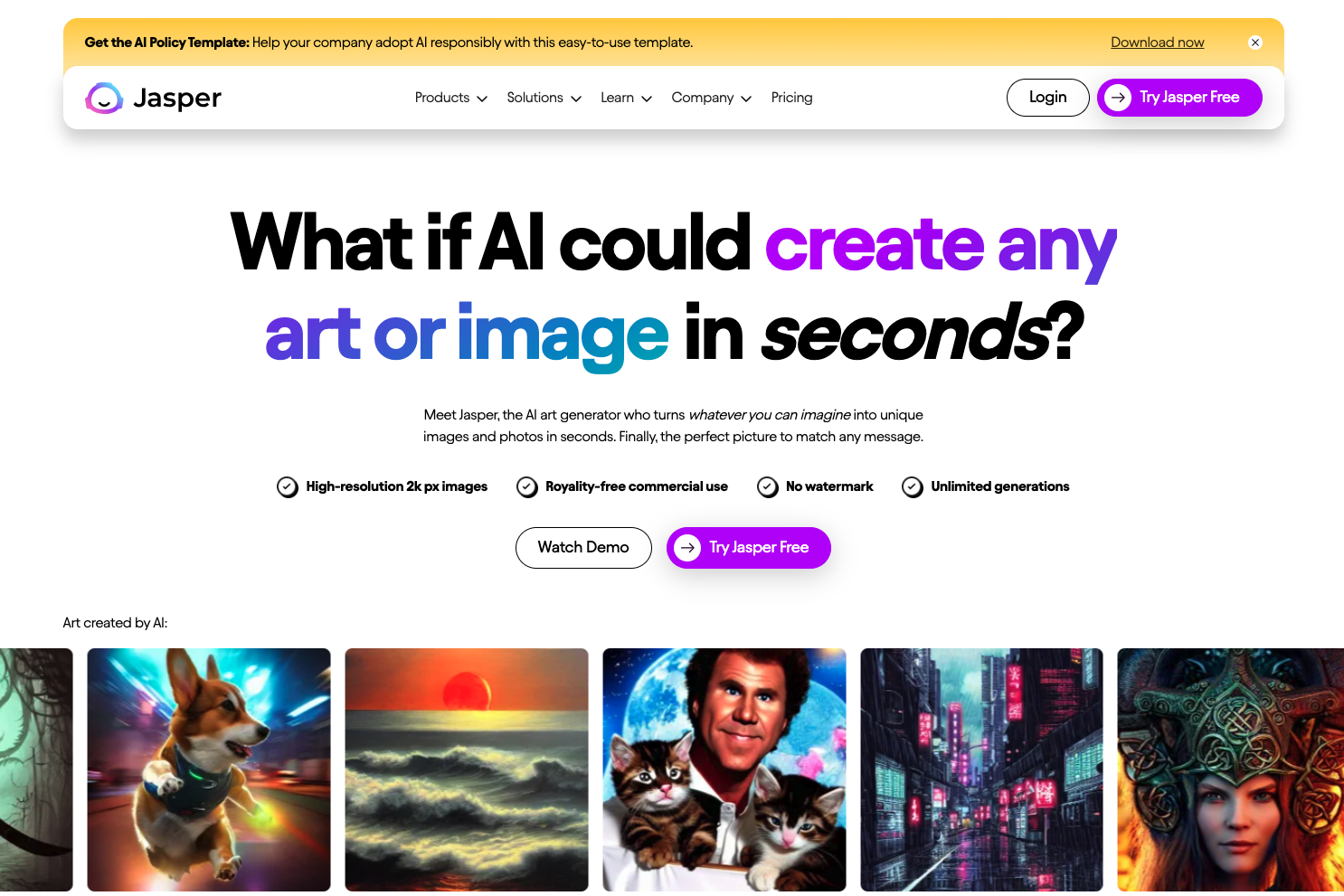
Jasper Art is a tool that’s had a really big impact on the world of blogging. It’s an offering from Jasper AI and it basically gives bloggers a simple way to make eye-catching images for their posts. You don’t really need to be a designer or anything. With its wide range of style options and a pretty user-friendly interface, Jasper Art is kind of leading the pack right now when it comes to creative and, like, really innovative image creation.
Why Use Jasper Art for Blog Images?
If you’re a blogger, you probably already know how important visuals are for keeping people interested. Pictures help break up long walls of text, make things easier to understand, and honestly, they just make your posts more fun to look at. They also help a lot with getting your stuff shared around on social media. That’s where Jasper Art really comes in.
Here are a few reasons why you might want to use Jasper Art for your blog images:
- Unique Styles: Jasper Art has a big collection of different styles, from soft watercolor landscapes to really modern geometric designs. Because there’s such a wide variety, it’s easier to find something that actually matches your content and helps you stand out a bit.
- Easy to Use: Making images with Jasper Art is honestly pretty simple. The interface is straightforward and kind of intuitive, so even if you’re not a designer or anything, you can still create visuals that look professional enough for your blog.
- Tailored Visuals: With Jasper Art, you get full control over how your images look. You can tweak colors, add text overlays, and include your own branding stuff so everything fits your blog’s theme. It’s nice because your visuals don’t feel random, they actually match your style.
Tips for Using Jasper Art in Blog Image Creation
If you want to really get the most out of Jasper Art and actually make some eye catching visuals for your blog, here are a few tips to keep in mind:
- Experiment with Different Styles: Don’t be scared to step out of your comfort zone a bit and play around with the different styles that Jasper Art has. Try random stuff sometimes. You might end up finding some weird but cool combinations that your audience actually loves.
- Consider Your Blog's Aesthetic: Even though it’s fun to test a bunch of styles, you still want to pick ones that fit your blog’s overall vibe and look. Keeping things visually consistent like that helps your readers feel like everything belongs together and makes the whole blog feel more put together.
Pros and Cons of Jasper Art
Like any tool, Jasper Art has its strengths and weaknesses. So yeah, here’s kind of a quick breakdown of what you can expect from it:
Pros:
- Impressive range of style options
- User-friendly interface
- Customization features for personalized visuals
Cons:
- Inconsistent image quality at times
- Overwhelming number of choices for some users
After thorough testing, we can honestly say that Jasper Art is a solid choice for blog image generation. It’s not perfect, but even with its small flaws, it usually creates visually appealing images that really help bring our blog posts to life.
We were especially impressed with the variety of styles available. It let us level up our content visually while still keeping our brand identity in place, which matters a lot. The intuitive layout of the platform also made everything easier and, honestly, pretty fun to use, so making images with Jasper Art ended up being a really smooth experience overall.
6. Midjourney
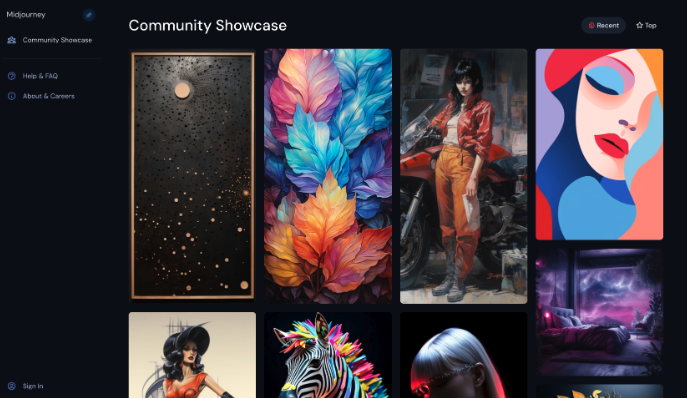
Midjourney is another well-known AI image generator, and it’s really good at boosting blog visuals. It mixes smart technology with a kind of creative touch, so it ends up being a super helpful tool for bloggers who want to enhance their content and just make everything look more interesting.
Visuals that Speak Volumes
Midjourney's strength is really in how it can make these super compelling, eye-catching images that actually connect with readers. Its AI-powered engine creates visuals based on your blog content, so the pictures match what you're talking about really well. Because of that, the text and visuals sort of blend together in this smooth way, which makes your whole blog design feel more cohesive and put together, and it helps keep readers interested from the beginning all the way to the end.
Key Features and Functionalities
Midjourney comes packed with features that help you create really stunning blog images, like seriously nice looking stuff:
- AI-Powered Design: The heart of Midjourney is this advanced AI engine that kind of understands your blog's content and then generates images that actually match what you’re writing about.
- User-Friendly Interface: Even though it has some pretty advanced capabilities, Midjourney still has a simple and intuitive interface. So yeah, it’s pretty easy to use, even if you’re a total beginner and just want to create good looking visuals without overthinking it.
- Customization Options: You get a bunch of customization options to play with, so you can tweak and adjust the generated images until they really fit your blog's aesthetics and overall vibe.
Incorporating Midjourney into Your Blog Design
Adding Midjourney's AI-generated images to your blog is actually pretty simple. You just drop your blog's text into the platform, wait a moment while the AI does its thing, then tweak and customize the generated image however you like. After that, you just pop it into your blog layout. And yeah, that’s it. Suddenly you’ve got this engaging visual that fits with your written content really well, almost like it was planned from the start.
Pros and Cons of Using Midjourney
So, like pretty much every other tool out there, Midjourney has its own mix of good stuff and not so great stuff. On one hand, its advanced AI engine, ease of use, and all the customization options make it a really solid choice for bloggers. It almost completely removes the guesswork from creating nice looking visuals, and honestly, it can save you a lot of time and effort.
But then, on the flip side, Midjourney's AI-generated images sometimes just don’t quite match the blog content perfectly. It doesn’t happen a lot, it’s pretty rare actually, but still, it’s something you should keep in mind when you’re using this platform.
As we keep exploring this whole world of AI-generated imagery, Midjourney really does show up as a pretty reliable companion. Its ability to boost blog visuals not only makes your posts look better, but also helps with reader engagement, which is kind of the main point. So yeah, it’s definitely a tool worth thinking about for your blogging needs.
7. Google Gemini (Nano Banana)
Google's image models inside Gemini, known as Nano Banana, are among the strongest for editing and consistency. Nano Banana Pro, built on Gemini 3, added higher resolutions, more accurate text rendering, and web search, and Nano Banana 2 followed in February 2026.
For blogs, the editing side is the standout: upload an existing image and change the background, style, or details with a sentence, or keep the same character or product consistent across a series of images.
Best for: editing existing visuals and keeping a consistent look across a series of posts.
8. Ideogram
Ideogram is the specialist for images with words in them. Its models render embedded text much more accurately than most image generators, which makes it a strong pick for blog covers with a headline, quote cards, simple infographics, and social images for promoting a post.
Pricing: free tier with a daily limit; paid plans from about $7 to $8 a month.
Best for: cover images and social graphics that need legible text.
What I would actually buy from this list
AI image generators are no longer just nice-to-have extras for bloggers. Used well, they can speed up content production, make posts more engaging, and help you create visuals that feel more specific than generic stock photography.
Our top pick: Junia AI
Out of the tools we reviewed, Junia AI is the best fit for most bloggers because it combines ease of use, solid image quality, and blog-focused workflow features in one place.
It is especially useful if you want to move quickly from draft to publish without juggling multiple tools.
The best tool depends on the job
That said, the right pick depends on what you need:
- Choose Junia AI for a streamlined blogging workflow.
- Choose ChatGPT Images if you already work in ChatGPT and want images in the same place.
- Choose Ideogram if your covers and graphics need readable text.
- Choose Firefly if you want stronger editing control inside Adobe.
- Choose Midjourney if you care most about distinctive visual style.
If you also want the written part of your post to feel stronger, pair better visuals with stronger structure using guides like how to improve readability of a blog post and best AI blog generators.
The main takeaway is simple: the best AI image generator is the one that helps you create useful, relevant visuals without slowing down your publishing workflow.