
Ahrefs Too Expensive? 5 Alternatives That Actually Replace It (2026)

Thu
AI SEO Specialist, Full Stack Developer

Ahrefs is still one of the best SEO platforms for backlink research, keyword data, rank tracking, and competitor analysis. I still trust it when backlink depth is the main job. The problem is the price.
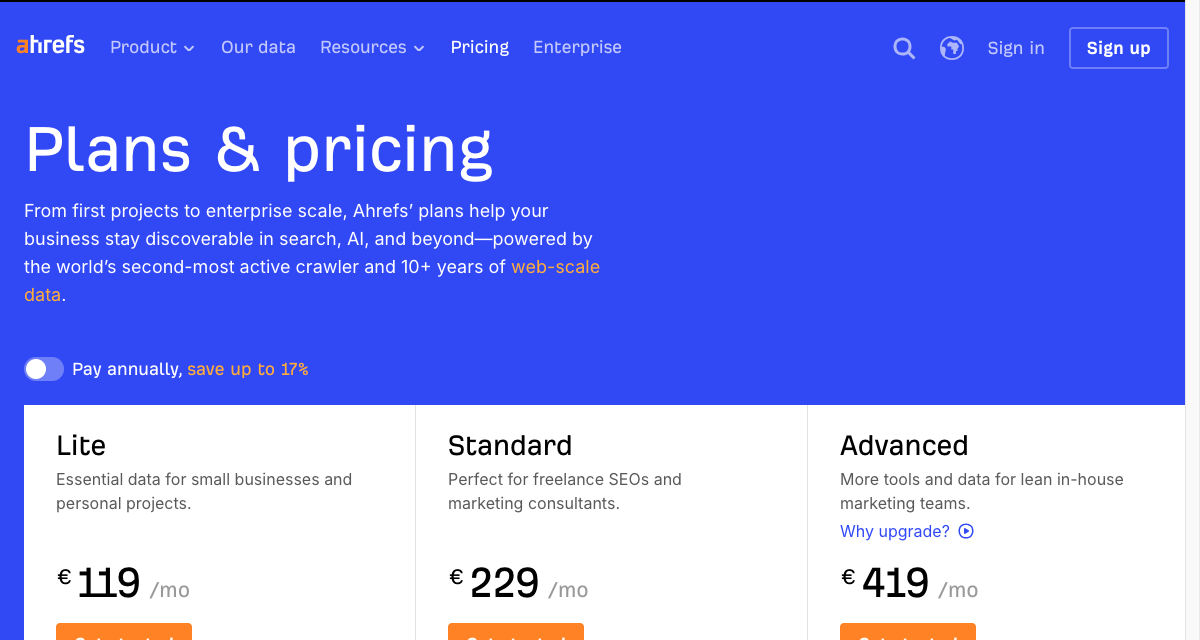
If you only need a few SEO workflows, paying for a full Ahrefs plan can feel wasteful. A blogger may only need keyword research. A content team may care more about briefs and optimization. An agency may need reporting, projects, and client-friendly dashboards. Those are different jobs, and in my experience, Ahrefs starts to feel expensive when it becomes a habit instead of a clearly used workflow.
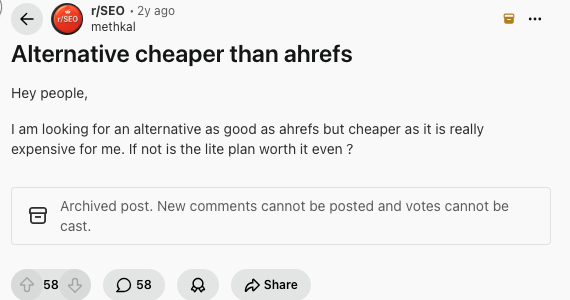
That cost concern shows up in public SEO communities too. In one r/SEO discussion about finding an alternative cheaper than Ahrefs, the question was not whether Ahrefs works. It was whether the price still makes sense for the job.
So this comparison is not about finding a "better Ahrefs" in every category. I do not think that tool exists. It is about choosing the right Ahrefs alternative for the work you actually do.
If you are also comparing backlink analysis tools, use this guide as the shortlist for replacing Ahrefs itself. Broader AI SEO roundups can wait until you know which job is actually expensive.
Quick Verdict: Best Ahrefs Alternatives
| Tool | Best for | Why choose it instead of Ahrefs | Watch out for |
|---|---|---|---|
| Junia AI | SEO content teams | AI-assisted briefs, content optimization, keyword clustering, and competitor research in one workflow | Not a pure backlink database replacement |
| Semrush | Agencies and all-in-one marketing teams | Broad SEO, PPC, content, local, and competitive research tools | Can become expensive with add-ons and extra users |
| SE Ranking | Teams that want strong SEO features for less | Rank tracking, audits, competitor research, backlink monitoring, and reports | Data depth may not match Ahrefs in every market |
| Ubersuggest | Beginners and small businesses | Lower-cost keyword research, simple audits, and easy UI | Backlink and competitor data is more limited |
| Mangools | Bloggers and lean SEO teams | Clean keyword research, SERP checks, rank tracking, and simple link analysis | Best for lightweight workflows, not enterprise SEO |
My short recommendation:
- Choose Semrush if you want the closest all-in-one Ahrefs replacement.
- Choose SE Ranking if you want a practical SEO toolkit at a lower price.
- Choose Junia AI if your SEO workflow is mostly content planning, optimization, and publishing.
- Choose Ubersuggest or Mangools if you are early-stage and need something simple.
What to Look for in an Ahrefs Alternative
Before comparing tools, get clear on what you are replacing.
Ahrefs is especially strong at backlink research, competitor analysis, keyword research, and site audits. If backlink data is your main priority, you need a tool with a serious link index. If content production is the bottleneck, you may get more value from a platform that helps you create briefs, optimize pages, and build topical authority.
The mistake is choosing an alternative only because it is cheaper. I have seen teams save money on the subscription and lose it again in messy workflows, missing exports, or weaker data.
Whatever paid tool you pick, keep Google Search Console. It will not replace a backlink index, but it is the performance data you already have, and it is the first place I check before paying for another keyword database.
Performance reports in Search Console
Cheaper is not a strategy. It is only useful if the tool still covers the job you open every week. If that job is link gaps, a pretty keyword tool will not replace Ahrefs. If that job is publishing, another backlink database will not either.
Look at:
- Keyword research: search volume, difficulty, intent, SERP analysis, and long-tail suggestions.
- Backlink data: referring domains, link quality, anchors, lost links, and competitor link gaps.
- Site audits: crawl depth, issue prioritization, Core Web Vitals support, and reporting.
- Rank tracking: daily updates, locations, devices, SERP features, and competitor tracking.
- Content workflow: briefs, optimization, internal links, topic clusters, and publishing support.
- Pricing limits: users, projects, tracked keywords, exports, crawl credits, and add-ons.
1. Junia AI

Junia AI is the best Ahrefs alternative if your main problem is not "I need more SEO data" but "I need to turn SEO data into content that ranks." That distinction matters more than most comparison posts admit.
Ahrefs is excellent for research. Junia is better when the work continues into briefs, outlines, optimization, internal linking, and content production. That makes it a stronger fit for content-led SEO teams, SaaS companies, affiliate sites, and founders who want fewer disconnected tools.
Use Junia AI if you want to:
- create SEO briefs from keywords and competitors
- cluster keywords by intent
- optimize articles while writing
- improve topical coverage
- generate or refresh content at scale
- connect SEO strategy with publishing workflow
Where Ahrefs is still stronger: deep backlink analysis, historical link data, and competitive link research.
Where Junia AI is stronger: turning keyword and SERP research into actual optimized content.
If you are replacing Ahrefs only for link analysis, Junia should not be your only tool. If you are replacing Ahrefs because your real bottleneck is content execution, Junia is one of the most useful options to test first. Personally, this is where I would rather spend budget before buying another database I only open twice a month.
2. Semrush
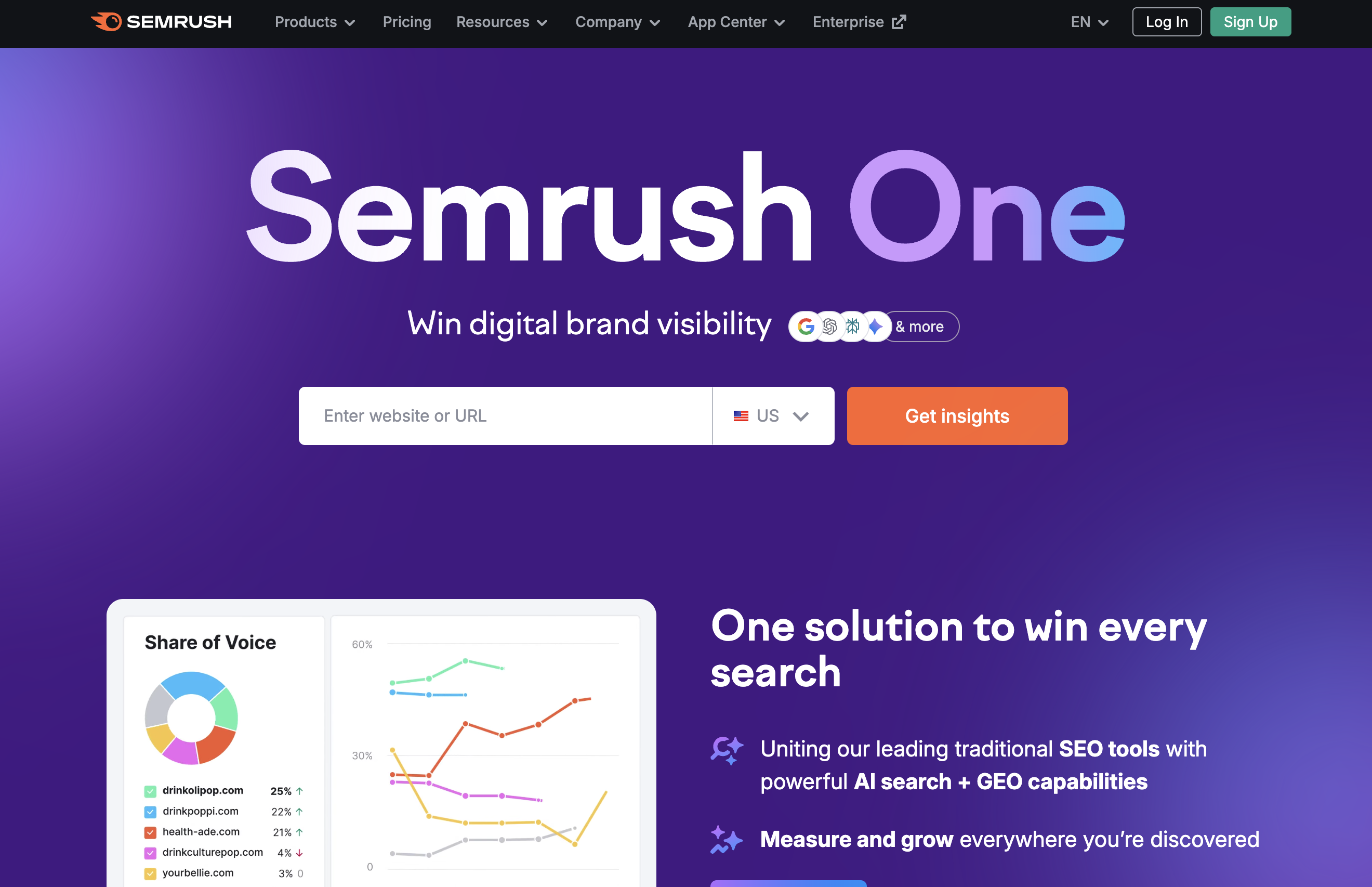
Semrush is the closest full-suite Ahrefs alternative for most SEO teams. It covers keyword research, competitor analysis, backlink research, site audits, rank tracking, PPC data, content tools, local SEO, and reporting.
The biggest reason to choose Semrush is breadth. If your team works across SEO, paid search, content, competitive research, and client reporting, Semrush gives you more areas to work in than Ahrefs. I like it most for teams that need one shared platform rather than the cleanest possible SEO-only experience.
Semrush is especially useful for:
- competitor keyword gap analysis
- PPC and organic research in one place
- content planning and optimization
- client reporting
- rank tracking across locations and devices
- technical site audits
The downside is that Semrush can feel heavy if you only need basic SEO research. Pricing also depends on plan limits, users, projects, and add-ons, so compare the real monthly cost for your team before switching. The sticker price is rarely the whole price.
Choose Semrush over Ahrefs if you want a broader marketing platform, not just a backlink and SEO research tool.
3. Ubersuggest
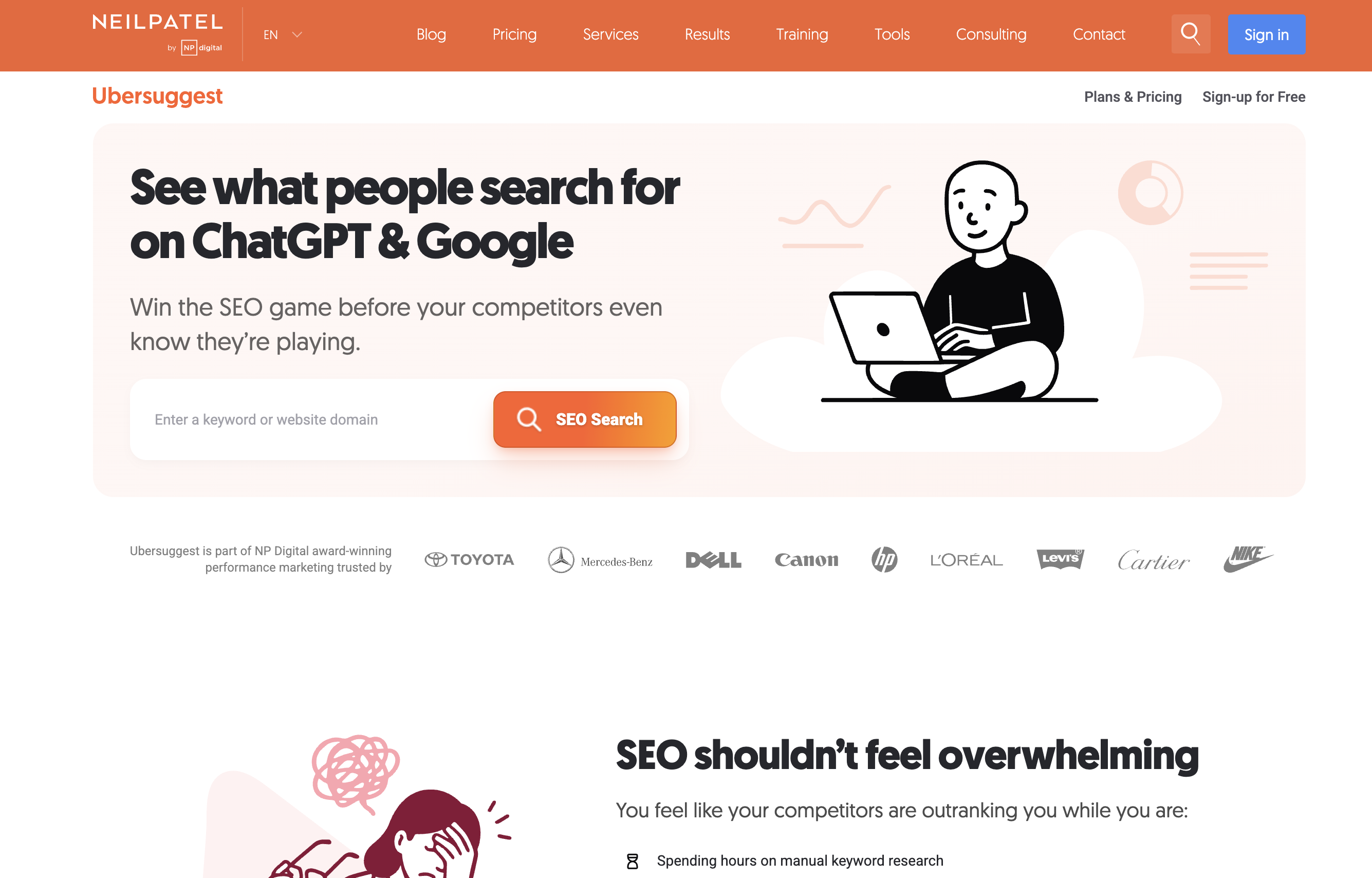
Ubersuggest is the beginner-friendly Ahrefs alternative. It gives you keyword ideas, domain overview data, site audit checks, content ideas, and basic competitor research without the same learning curve.
It is not as deep as Ahrefs. That is the tradeoff, and it is not a small one if links drive your SEO strategy.
You get a simpler tool that is easier for small businesses, creators, and local sites to use. But if you rely heavily on backlink research, historical data, advanced SERP analysis, or large-scale exports, you will probably outgrow it.
Ubersuggest works best for:
- Small business owners
- Bloggers
- Content creators
- Local businesses
- SEO beginners
Use Ubersuggest if you want affordable keyword research and basic SEO checks. I would treat it as a starter tool, not a serious link research replacement.
4. SE Ranking
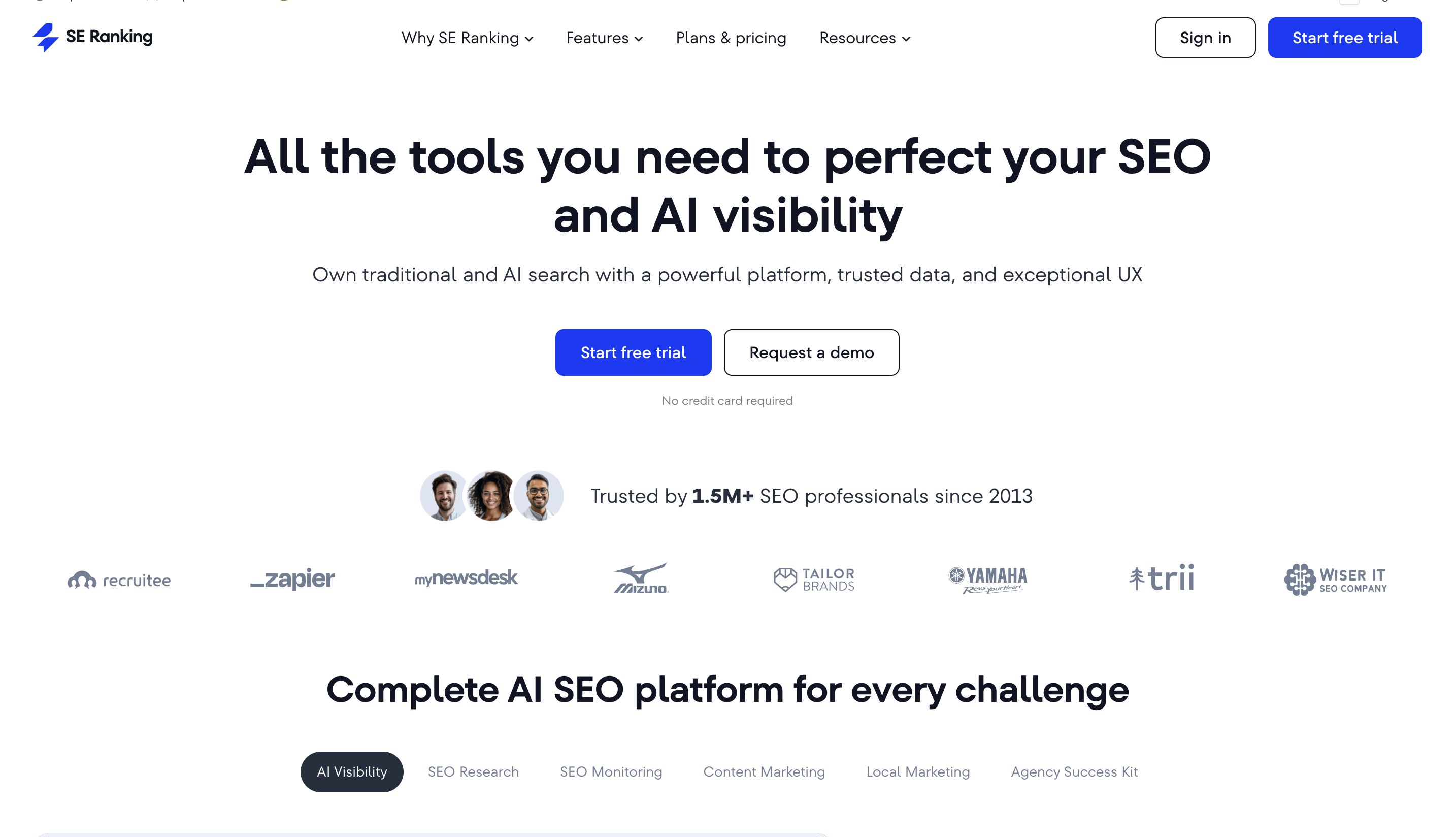
SE Ranking is one of the most practical Ahrefs alternatives for teams that want solid SEO features without paying for the biggest enterprise-style toolkit.
It covers the core jobs well:
- keyword rank tracking
- site audits
- competitor research
- backlink monitoring
- keyword research
- on-page SEO checks
- client reporting
The main reason to test SE Ranking is balance. It is not as lightweight as Ubersuggest or Mangools, but it is usually easier to justify than Ahrefs or Semrush if you are watching budget. If I had to recommend one lower-cost suite for a small SEO team, this would usually be the first trial I would set up.
SE Ranking is a good fit for agencies, consultants, in-house marketers, and small teams that need reliable rank tracking and audits every week.
Where Ahrefs is stronger: backlink database depth and advanced competitive link research.
Where SE Ranking is stronger: price-to-feature value, reporting, and day-to-day campaign management.
5. Mangools
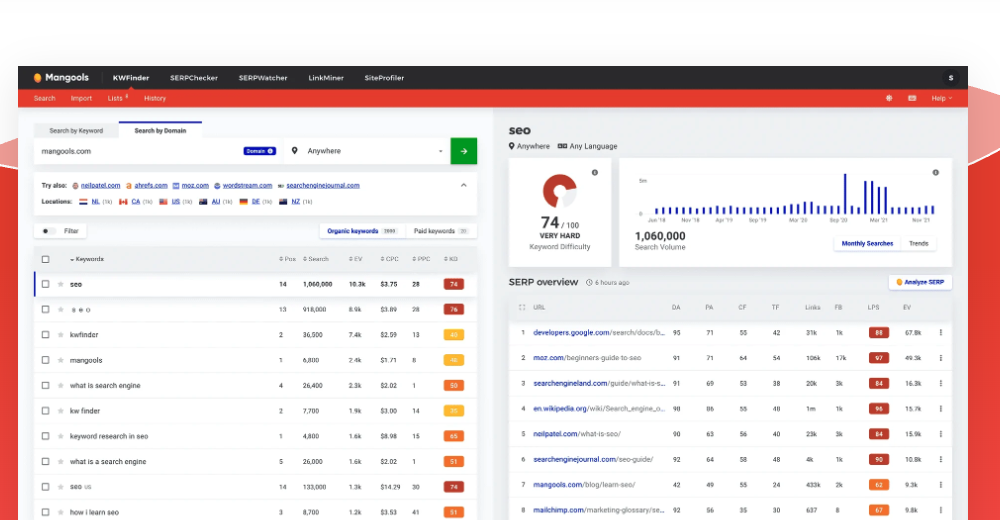
Mangools is the cleanest Ahrefs alternative on this list. It is built around five focused tools:
- KWFinder - Finds long-tail keywords with low competition
- SERPChecker - Analyzes search engine results pages
- SERPWatcher - Tracks your keyword rankings
- LinkMiner - Discovers and analyzes backlinks
- SiteProfiler - Provides comprehensive domain analysis
Mangools is not trying to be the deepest SEO platform. That is the point. It gives you enough data for keyword research, SERP analysis, backlink checks, and rank tracking without making the workflow feel heavy. I have a soft spot for tools like this because they reduce the temptation to overanalyze every keyword.
It is a strong fit for:
- bloggers
- niche site owners
- freelancers
- small businesses
- SEO beginners who still want useful data
Where Ahrefs is stronger: database depth, technical analysis, advanced filters, and competitor link research.
Where Mangools is stronger: simplicity, speed, and ease of use.
If Ahrefs feels like too much tool for the job, Mangools may be the better daily option. The limitation is obvious, but for lean content teams, obvious limitations can be easier to manage than bloated workflows.
What About Moz Pro?
Moz Pro is still worth considering, especially if you like Moz's Domain Authority metric, Link Explorer, Keyword Explorer, and simpler SEO reporting.
I would not put it above Semrush or SE Ranking for most teams replacing Ahrefs in 2026, but it can still work if your workflow is mostly classic SEO research and you prefer Moz's interface.
Moz Pro is best when you want:
- familiar SEO metrics
- simple keyword research
- link profile checks
- page optimization suggestions
- a less aggressive learning curve
It is less compelling if you need the deepest backlink research, modern content workflows, or advanced competitive analysis.
Ahrefs Alternatives by Use Case
| Use case | Best pick |
|---|---|
| Closest all-in-one Ahrefs replacement | Semrush |
| Best lower-cost SEO suite | SE Ranking |
| Best for SEO content workflows | Junia AI |
| Best for beginners | Ubersuggest |
| Best for simple keyword research | Mangools |
| Best if you mostly care about backlinks | Ahrefs or Semrush |
| Best for agencies | Semrush or SE Ranking |
| Best for content-led SaaS SEO | Junia AI plus a backlink tool |
Final Recommendation
If you want the closest direct replacement for Ahrefs, start with Semrush. It gives you the broadest feature coverage and is the easiest switch for teams that need serious SEO data.
If price is the reason you are leaving Ahrefs, test SE Ranking before anything else. It covers the daily SEO work most teams need without feeling too stripped down, and it is the option I would shortlist first for budget-sensitive teams that still need proper reporting.
If your real problem is content execution, not raw SEO data, Junia AI is the better fit. It helps you move from keyword research to briefs, optimization, internal links, and publishing.
And if you are a solo creator or small business owner, do not overbuy. Ubersuggest or Mangools may give you enough SEO data to make better decisions without turning your workflow into tool management. In SEO, paying for more data is only useful when you have the time and process to act on it.
The best Ahrefs alternative is the one that matches your actual bottleneck. Start there, then pay for more data only when you have a clear reason.