
Best Semrush Alternatives for 2026: Cheaper SEO Tools by Use Case

Thu
AI SEO Specialist, Full Stack Developer

Semrush is still one of the strongest SEO platforms you can buy. The problem, in my experience, is that many teams buy more platform than they actually use.
If you mostly care about backlink research, Ahrefs may be a cleaner fit. If you need rank tracking and reports at a lower price, SE Ranking or SpyFu may make more sense. If your SEO work is mostly content planning and optimization, Junia AI or Surfer can be easier to use than a broad enterprise suite.
So the best Semrush alternative is not one universal tool. It depends on the work you do every week, the data you trust, and the parts of Semrush your team actually opens.
TL;DR: best Semrush alternatives by use case
| If you mainly need… | Start with | Skip if… |
|---|---|---|
| Content + SEO drafting | Junia AI | You only need raw rank-tracking data |
| Backlinks + competitors | Ahrefs | Budget is the only constraint |
| Affordable all-in-one | SE Ranking | You need Semrush-depth advertising suites |
| PPC keyword history | SpyFu | You are SEO-only |
If you want the shortest answer, here it is:
| Need | Best Semrush alternative | Why it fits |
|---|---|---|
| Content-led SEO and AI-assisted publishing | Junia AI | Connects keyword research, content briefs, writing, and optimization in one workflow |
| Backlink analysis and competitor SEO research | Ahrefs | Strong link data, deep Site Explorer, and serious competitor research |
| Lower-cost all-in-one SEO | SE Ranking | Rank tracking, audits, competitor analysis, local tracking, and reporting in a more affordable suite |
| PPC and competitor keyword history | SpyFu | Strong for reverse-engineering paid search and competitor keywords |
| Beginner-friendly SEO workflows | Moz Pro | Easier learning curve, trusted metrics, and useful reports |
| Small business SEO on a tight budget | Ubersuggest | Simple keyword research, audits, and content ideas without enterprise complexity |
| On-page content optimization | Surfer | Real-time content scoring and SERP-based optimization |
| Technical SEO crawling | Screaming Frog | Deep site crawling for technical audits, not a full Semrush replacement |
| Local SEO campaigns | BrightLocal | Local rank tracking, citations, reviews, and Google Business Profile workflows |
| Market and traffic intelligence | Similarweb | Competitive traffic and audience research beyond classic SEO |
My practical recommendation: do not look for a perfect Semrush clone. Pick the tool that fixes your main bottleneck, then add a second specialized tool only when the missing feature is costing you real time or revenue.
Why teams look for Semrush alternatives
Most people do not leave Semrush because it is weak. They leave because the fit starts to feel wrong.
The first reason is price. Semrush's official SEO pricing starts in the premium-tool range, and higher tiers or add-ons can become hard to justify for small teams. If your team only uses keyword research, site audits, and rank tracking, paying for a broader suite may feel inefficient.
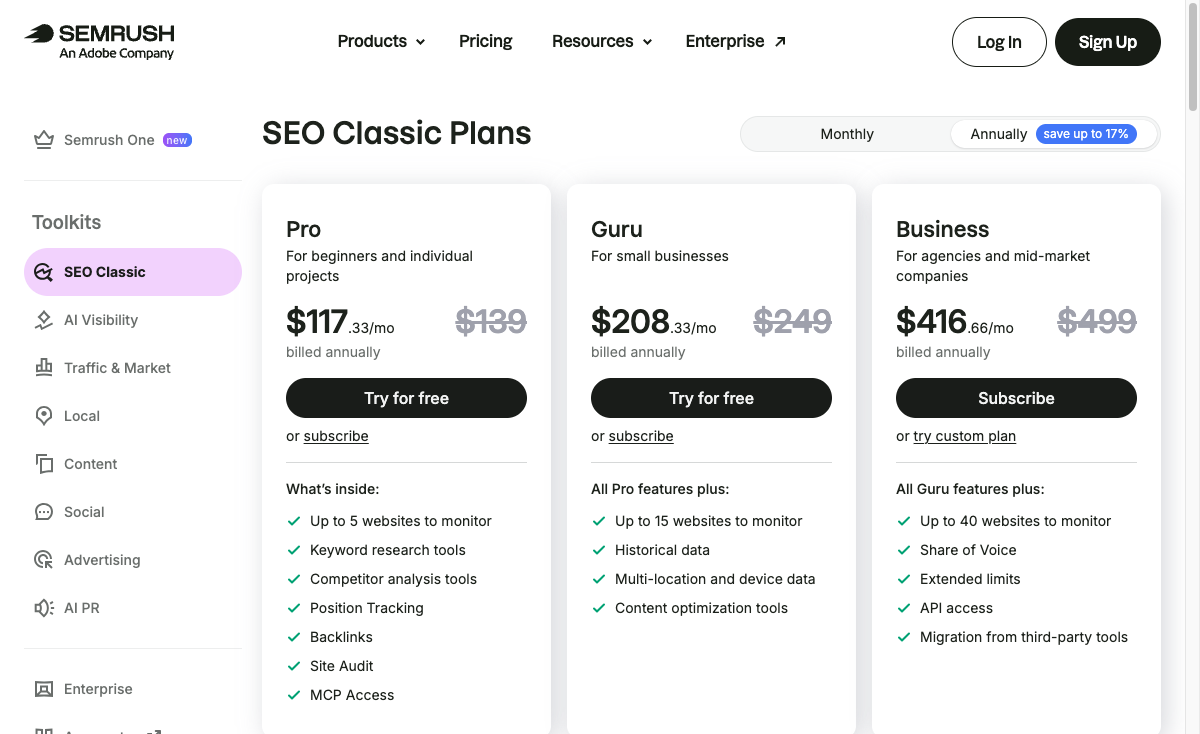
The second reason is workflow complexity. Semrush has a lot inside it: keyword research, backlink analysis, PPC data, content tools, technical audits, market research, local tools, social tools, and AI visibility features. That breadth is useful for mature teams, but it can slow down solo founders, small content teams, and agencies that mainly need fast, repeatable reports.
The third reason is specialization. A tool built mainly for backlinks, local SEO, content optimization, or technical crawling can beat an all-in-one platform at that one job. That is why many teams end up with a smaller stack instead of one large tool.
Before you switch, be honest about the work you do most often. This is where I see buyers make the biggest mistake: they compare feature lists instead of comparing weekly habits.
- Do you need backlink data every week?
- Do you need content briefs and article optimization more than technical reports?
- Do clients mainly pay you for reporting and rank tracking?
- Are you doing local SEO, SaaS SEO, ecommerce SEO, or broad competitive research?
- Do you need AI-search visibility tracking, or are classic SEO workflows enough for now?
That answer matters more than a feature checklist.
Quick comparison: Semrush alternatives for 2026
Prices and plan limits change often, so treat this table as directional and confirm the current plan before buying.
| Tool | Best for | Starting price signal | Main limitation |
|---|---|---|---|
| Junia AI | Content-first SEO workflows | Varies by plan | Not a deep backlink database |
| Ahrefs | Backlinks and competitor research | Official plans list Lite at $129/month | Expensive if you only need basic SEO |
| SE Ranking | Affordable all-in-one SEO | Official pricing now emphasizes Core SEO + GEO plans | AI features and limits vary by plan |
| SpyFu | PPC and competitor keyword research | Official plans start at $39/month monthly, less on annual billing | SEO suite is lighter than Semrush or Ahrefs |
| Moz Pro | Beginner-friendly SEO and reports | Commonly starts around the low paid SEO-suite range | Smaller data depth than Ahrefs/Semrush in some workflows |
| Ubersuggest | Small business SEO | Budget-friendly plans and lifetime offers often available | Data depth is lighter |
| Surfer | Content optimization | Paid content optimization plans | Not a backlink, PPC, or technical SEO suite |
| Screaming Frog | Technical SEO audits | Free version plus paid license | Desktop crawler, not a full marketing platform |
| BrightLocal | Local SEO | Local SEO plans vary by location/workflow | Narrow outside local search |
| Similarweb | Traffic and market intelligence | Premium/custom tiers for deeper data | Not a pure SEO platform |
| SEO PowerSuite | Desktop SEO with high limits | Subscription-style desktop suite pricing | Less cloud-native than modern SaaS tools |
1. Junia AI: best for content-led SEO workflows
Junia AI is the strongest fit if your main reason for replacing Semrush is content production.
Semrush gives you a lot of SEO data, but content teams often need a more direct path from keyword research to a finished article. Junia AI is built closer to that workflow: find the topic, understand the search intent, create the brief, draft the content, optimize it, and publish with a clearer structure.
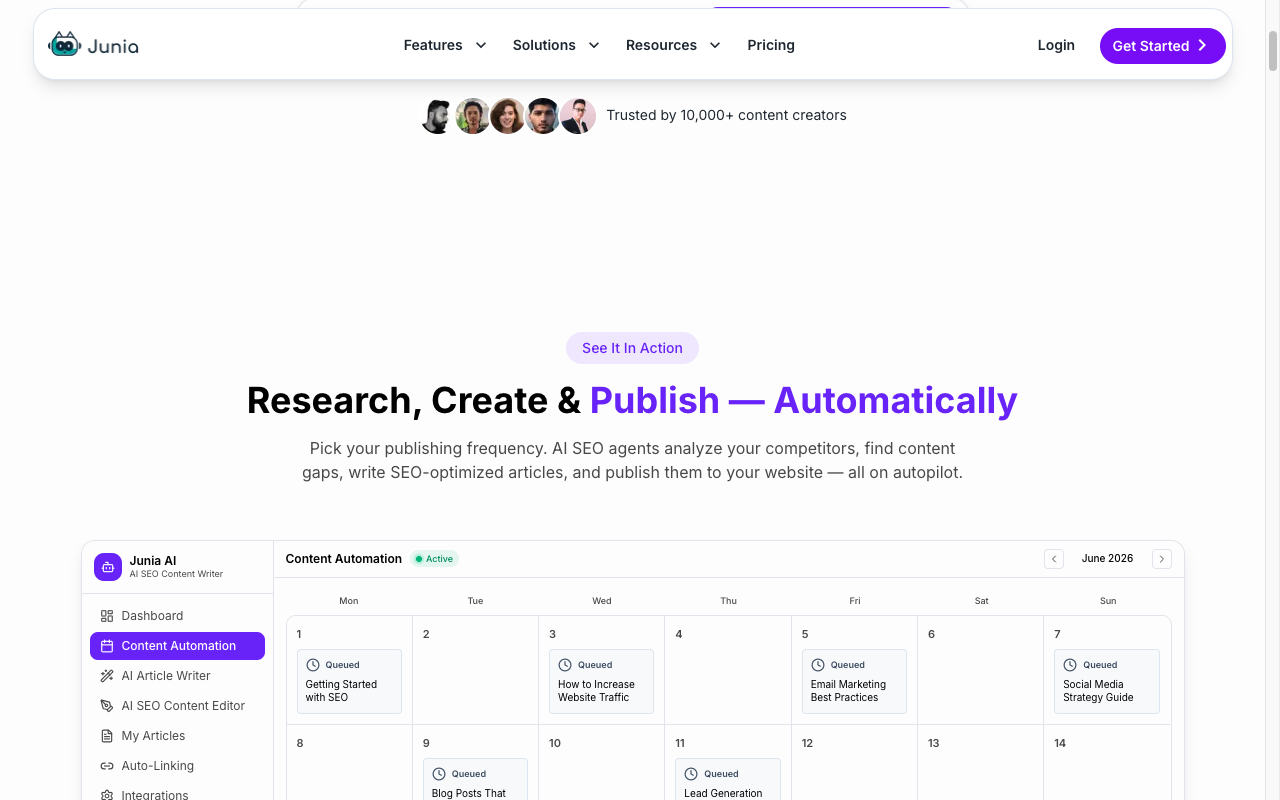
That makes it useful for teams that care about:
- AI-assisted content briefs
- keyword-to-article workflows
- on-page optimization
- content gap analysis
- SEO writing at scale
- keeping articles useful enough for both search engines and AI answer engines
Junia AI is not the right replacement if your whole SEO program depends on deep backlink auditing, massive historical databases, or paid-search intelligence. It is a better choice when the bottleneck is turning research into publishable content. Personally, I would pair it with a separate backlink tool before trying to force one content platform to do every SEO job.
If you are building a content-first stack, compare Junia against broader AI SEO tools, not only classic SEO suites. For teams where drafting volume is the bigger problem, AI content generators are a closer comparison set.
When Junia AI fits
- content marketers, founders, SEO writers, and teams that want keyword research tied tightly to writing and optimization
When to skip it
- you mainly need backlink audits, PPC research, or enterprise-level competitive intelligence
This matters most when you're choosing a tool for content marketers, founders, seo writers, and teams that want keyword research tied tightly to writing and optimization.
2. Ahrefs: best for backlink and competitor SEO research
Ahrefs earns the backlink and competitor research slot here because the link index and Content Explorer are usually what teams miss first when they leave Semrush.
Ahrefs is the Semrush alternative I would look at first if backlinks and competitor research are the core of your SEO work.
Its Site Explorer, backlink reports, keyword tools, content research, and rank tracking are built for people who spend a lot of time investigating why competitors rank. If your weekly work includes link gap analysis, broken link opportunities, competing pages, and SERP research, Ahrefs is hard to replace with a cheaper lightweight tool.
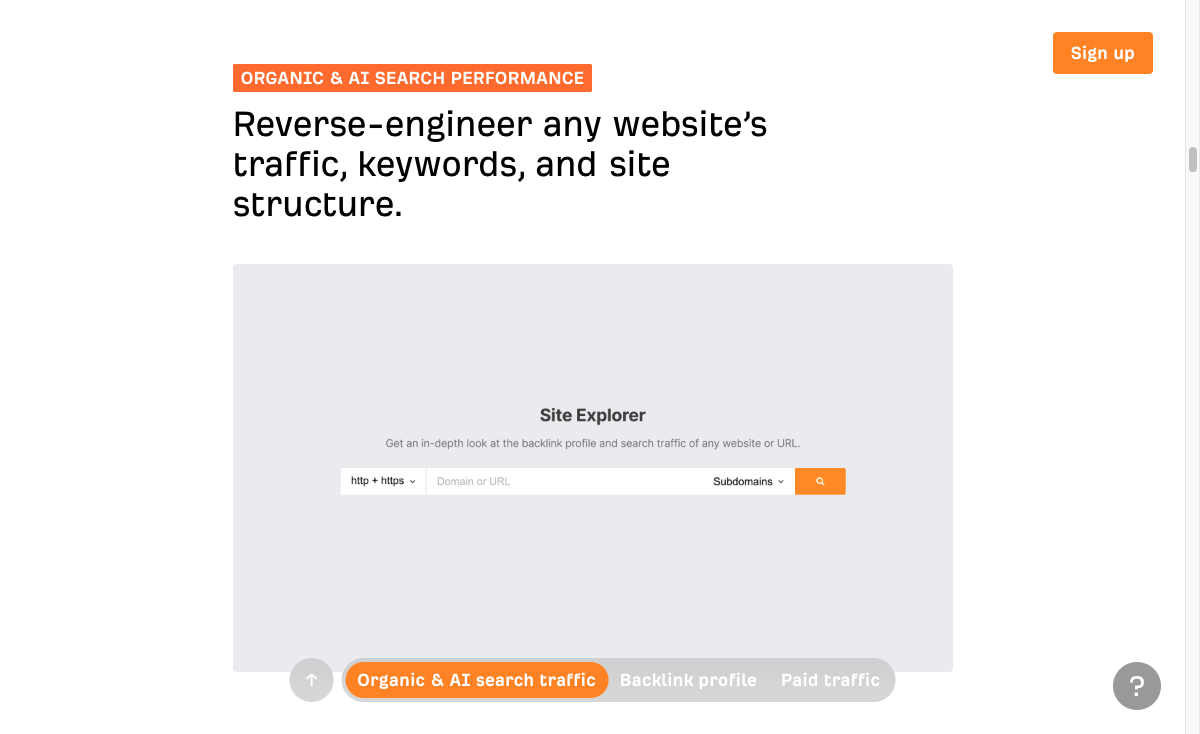
The tradeoff is cost. Ahrefs' official pricing page lists its main paid plans from Lite at $129/month through higher tiers, with additional user costs depending on plan. That can still be cheaper or cleaner than Semrush for some teams, but it is not a budget tool. I would only choose it if the link and competitor data will shape decisions every week.
Ahrefs is strongest when you need:
- backlink analysis
- competitor organic research
- keyword difficulty and SERP analysis
- content gap research
- rank tracking for serious SEO campaigns
It is weaker when you need local SEO management, client-friendly all-channel reports, PPC-heavy competitive intelligence, or a beginner workflow.
If Ahrefs feels close but expensive, compare it with other Ahrefs alternatives before deciding.
Ahrefs is strongest when experienced SEOs, agencies, link builders, and teams where authority research is central. Skip it if you need an inexpensive beginner tool or a content-writing workflow more than raw SEO data.
3. SE Ranking: best affordable all-in-one Semrush alternative
SE Ranking is one of the more practical Semrush alternatives if you want an all-in-one SEO suite without Semrush-level complexity.
It covers the core workflows most teams expect:
- keyword research
- rank tracking
- site audits
- competitor research
- backlink monitoring
- local rank tracking
- white-label reporting
- AI and search visibility features on newer plans
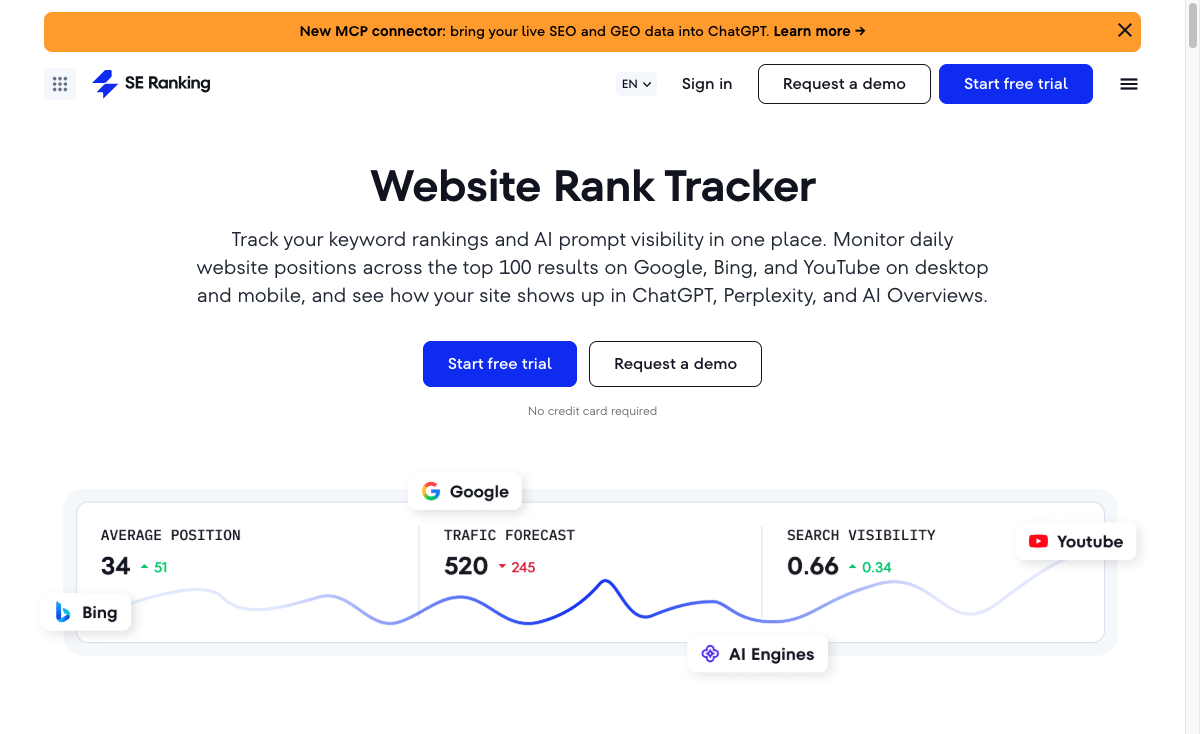
This is why SE Ranking appears so often in competitor articles for this topic. It sits in the middle: more complete than simple beginner tools, cheaper and easier to navigate than many premium suites, and broad enough for agencies that need reports.
Its official pricing now emphasizes SEO + GEO plans, which shows where the market is going. Teams are not only tracking Google rankings anymore; they also want to understand brand visibility across AI answers and newer discovery surfaces.
The limitation is that SE Ranking may not match Ahrefs for backlink depth or Semrush for sheer platform breadth. But for many small agencies and in-house teams, that is an acceptable tradeoff. The reporting workflow matters more than owning the biggest database if clients mainly need reliable rank movement, audits, and next steps.
Good fit
- agencies, freelancers, and in-house SEO teams that need rank tracking, audits, reports, and competitor data in one place
Poor fit
- you need the deepest possible link database or enterprise market intelligence
The biggest mistake I see is choosing SE Ranking when you really needed the deepest possible link database or enterprise market intelligence.
4. SpyFu: best for PPC and competitor keyword history
SpyFu is not a perfect Semrush replacement for every SEO workflow, but it is very good at one thing: competitor intelligence.
If you want to see which keywords competitors have targeted, how paid-search strategies have changed, and where SEO and PPC overlap, SpyFu is worth considering. Its official pricing page shows lower entry pricing than most premium SEO suites, with a Basic monthly plan listed at $39/month and lower annual pricing.
SpyFu is useful for:
- competitor keyword research
- PPC history
- paid-search strategy research
- keyword overlap analysis
- budget-conscious competitive intelligence
The tradeoff is that SpyFu is less compelling for deep technical SEO, backlink auditing, or content optimization. You may still need another tool for those jobs. I like it more as a sharp add-on than as the center of an SEO stack.
Tradeoff
Pick SpyFu when pPC managers, competitive intelligence teams, and budget-conscious marketers who care about competitor keyword strategy. Look elsewhere when your main need is backlink depth, technical audits, or content optimization. I would avoid this approach if a different job is the real bottleneck.
5. Moz Pro: best beginner-friendly SEO suite
Moz Pro is not the newest or flashiest Semrush alternative, but it remains useful because it makes SEO more approachable.
The interface is easier for many beginners than Semrush or Ahrefs. Moz's metrics, especially Domain Authority, are widely recognized. Its keyword research, site crawl, rank tracking, page optimization, and reporting features cover the basics well enough for many small teams.
Moz Pro is strongest when you value:
- a gentler learning curve
- recognizable SEO metrics
- site crawl and page optimization guidance
- keyword research
- client-friendly reporting
Its weakness is depth. If you are doing serious backlink work, large-scale competitor research, or advanced technical SEO, Moz may feel lighter than Ahrefs, Semrush, or Screaming Frog. For beginners, though, that lighter feel can be an advantage rather than a flaw.
When Moz Pro fits
- beginners, small businesses, and agencies that need clear SEO reports without overwhelming clients
When to skip it
- you want the deepest data or fastest-moving AI visibility features
Prefer Moz Pro for beginners, small businesses, and agencies that need clear seo reports without overwhelming clients — not when the deepest data or fastest-moving ai visibility features.
6. Ubersuggest: best for small businesses on a tight budget
Ubersuggest works best when you are early in SEO and do not want to pay for a heavy platform.
It gives you keyword ideas, basic competitor data, content ideas, site audits, and rank tracking in a simple interface. That can be enough for a small business owner, blogger, or founder who needs direction but does not need enterprise data.
The main benefit is simplicity. You can get a quick read on keywords, difficulty, search volume, and content opportunities without learning a complex SEO platform.
The limitation is accuracy and depth. Ubersuggest is not the tool I would choose for a serious agency audit, complex backlink campaign, or high-stakes competitor research. Treat it as a starting point, not the final source of truth.
Ubersuggest is strongest when small businesses, bloggers, and founders testing SEO without a large software budget. Skip it if you make client or revenue decisions from SEO data every day.
7. Surfer: best for on-page content optimization
Surfer is not trying to replace the whole Semrush platform. It is much narrower, and that is the point.
Surfer is strongest when you already know the keyword and need help optimizing the page. Its content editor, SERP analysis, keyword suggestions, and scoring workflow help writers understand what competing pages cover and where their draft may be thin.
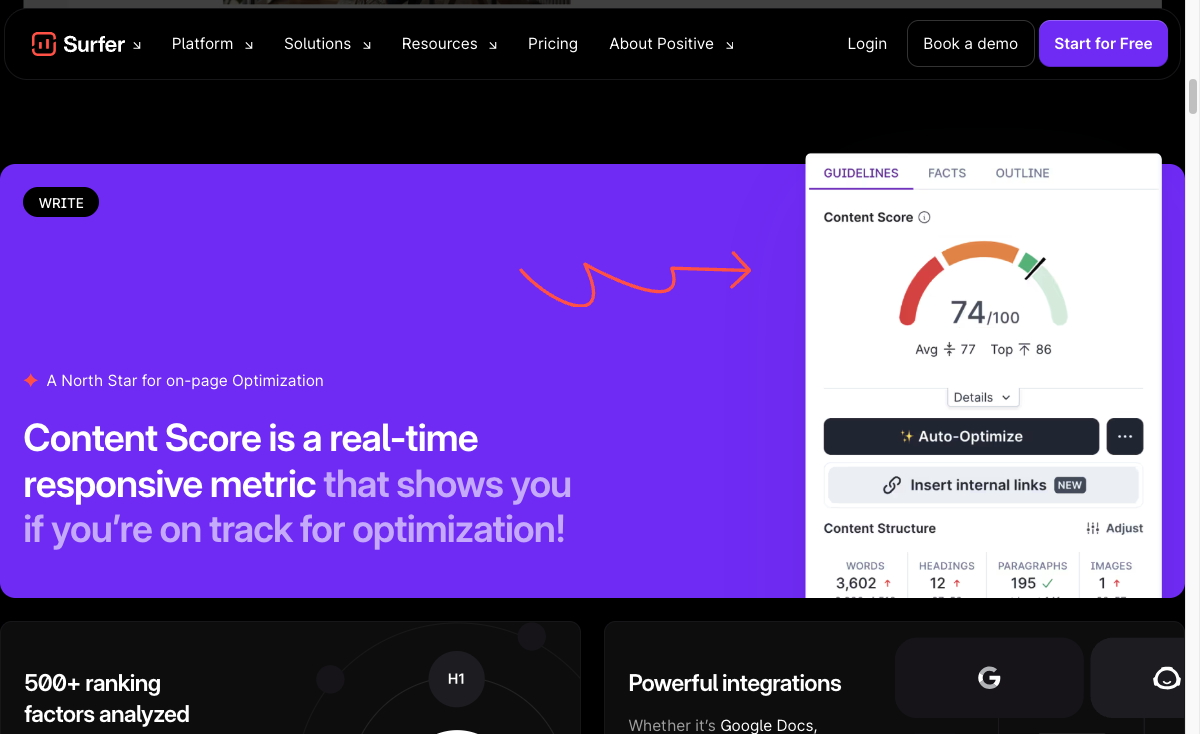
Use Surfer when your main problem is:
- improving existing articles
- building SEO content briefs
- checking topical coverage
- optimizing for on-page relevance
- giving writers clearer SEO guidance
Do not use Surfer as your only SEO tool if you need rank tracking, backlink analysis, technical audits, PPC research, or market intelligence. In content reviews, I find Surfer most useful after the strategy is set, not before it.
If you are comparing this category, Surfer SEO alternatives may help you decide whether Surfer, Junia AI, Frase, Clearscope, or another content tool fits your workflow better.
Good fit
- content teams and agencies optimizing articles at scale
Poor fit
- you need a broad all-in-one SEO platform
This matters most when you're choosing a tool for content teams and agencies optimizing articles at scale.
8. Screaming Frog: best for technical SEO crawling
Screaming Frog belongs on this list because many people use Semrush for site audits, then realize they need a stronger technical crawler.
Screaming Frog can crawl websites deeply, surface technical issues, and help SEOs inspect status codes, canonical tags, metadata, internal links, duplicate pages, directives, JavaScript rendering, and structured data. It is especially useful for larger sites where surface-level audits miss important problems.
The tradeoff is that Screaming Frog is a desktop crawler, not a full SEO platform. It does not replace Semrush's keyword research, backlink tools, PPC data, or market research. It replaces one part of Semrush: technical audit depth. For larger sites, that one part can matter more than a prettier dashboard.
Tradeoff
Pick Screaming Frog when technical SEOs, developers, agencies, and large sites with crawl/indexing issues. Look elsewhere when you want one simple cloud dashboard for every SEO task. The biggest mistake I see is choosing Screaming Frog when you really needed a different job is the real bottleneck.
9. BrightLocal: best for local SEO campaigns
BrightLocal is the better Semrush alternative if your SEO work is mostly local.
Semrush can support local SEO, but BrightLocal is built around the day-to-day work of local search: local rank tracking, citations, reviews, Google Business Profile monitoring, local audits, and multi-location reporting.
That matters if you manage dentists, lawyers, restaurants, home services, clinics, or franchise locations. A broad SEO suite can show organic rankings, but local SEO needs more specific checks: map pack visibility, location-level performance, citation consistency, and review signals.
When BrightLocal fits
- local businesses, franchise marketers, and agencies managing local SEO clients
When to skip it
- you need broad national SEO, backlink research, or content optimization
I would avoid this approach if broad national seo, backlink research, or content optimization.
10. Similarweb: best for traffic and market intelligence
Similarweb is different from most tools here because it is not mainly an SEO platform.
It is better for market research, traffic estimates, competitor benchmarking, audience insights, traffic sources, and high-level digital strategy. If you want to understand how competitors acquire traffic beyond organic search, Similarweb can be more useful than a standard SEO suite.
That makes it a good fit for executives, growth teams, and market researchers. It is less useful if your immediate job is writing content briefs, auditing title tags, or tracking local rankings.
Similarweb is strongest when market intelligence, competitor traffic research, and executive-level digital strategy. Skip it if you need a direct Semrush replacement for SEO execution.
11. SEO PowerSuite: best desktop SEO toolkit
SEO PowerSuite is worth considering if you prefer desktop software and want high limits for crawling, rank tracking, and backlink monitoring.
Its toolkit includes Rank Tracker, Website Auditor, SEO SpyGlass, and LinkAssistant. That gives you a lot of SEO functionality without relying entirely on a browser-based SaaS dashboard.
The upside is control and breadth. The downside is that the workflow feels less modern than cloud-native tools, especially for teams that need shared dashboards, quick client access, and lightweight collaboration.
Good fit
- SEOs who like desktop tools, high tracking limits, and a more self-contained workflow
Poor fit
- your team needs a polished cloud dashboard and easy collaboration
Prefer SEO PowerSuite for seos who like desktop tools, high tracking limits, and a more self-contained workflow — not when your team needs a polished cloud dashboard and easy collaboration.
Best Semrush alternative stacks
Sometimes the best replacement is not one tool. It is a smaller stack.
Here are a few combinations that make sense:
| Stack | Best for | Why it works |
|---|---|---|
| Junia AI + Ahrefs | Content teams that also need backlink research | Junia handles content workflow; Ahrefs handles authority and competitor data |
| SE Ranking + Surfer | Agencies that need reports and content optimization | SE Ranking covers tracking/audits; Surfer supports page-level optimization |
| SpyFu + Screaming Frog | Teams focused on PPC intelligence and technical audits | SpyFu covers competitors; Screaming Frog finds site issues |
| BrightLocal + Junia AI | Local businesses publishing local content | BrightLocal handles local visibility; Junia supports content production |
| Ubersuggest + Google Search Console | Beginners | Low-cost research plus real performance data from Google |
This approach often beats paying for a large suite when your team only uses three or four features. The catch is discipline: a smaller stack only works if each tool has a clear job.
How to choose the right Semrush alternative
Use this decision process before buying anything. It is less exciting than comparing screenshots, but it prevents expensive shelfware.
Start with your weekly workflow
Write down the SEO tasks you actually do every week. Not the tasks you hope to do someday.
If your weekly tasks are keyword research, briefs, and article optimization, choose a content-led tool. If your weekly tasks are link audits and competitor analysis, choose Ahrefs. If your weekly tasks are rank tracking and client reports, choose SE Ranking, Moz Pro, or Raven-style reporting tools.
Check the data source and update frequency
SEO tools do not all collect data the same way. Keyword volumes, backlink counts, traffic estimates, and difficulty scores can vary a lot between platforms.
For important decisions, cross-check tool data against Google Search Console, Google Analytics, manual SERP checks, and actual conversion data. Competitor articles for this topic repeatedly make the same point: experienced SEOs do not trust one dashboard blindly. I would rather see two imperfect sources agree directionally than one tool give a very precise number with no context.
Look at limits, not just price
The cheapest plan is not always cheap in practice.
Check keyword tracking limits, crawl limits, projects, seats, historical data, exports, API access, report limits, and add-ons. A low base price can become frustrating if you hit limits quickly.
Decide whether AI-search tracking matters now
SEO tools are starting to add AI visibility, GEO, and LLM citation tracking. Semrush, SE Ranking, Ubersuggest, and others are moving in this direction.
That does not mean every team needs it immediately. But if your brand depends on being mentioned in AI answers, compare how each platform tracks prompts, citations, sentiment, and visibility across AI search surfaces.
This is also where content structure matters. Clear summaries, comparison tables, concise definitions, and source-backed claims make articles easier for AI systems to understand and cite. A strong SEO AI strategy is not only about tools; it is also about making your pages easier to parse.
Keep process separate from software
An SEO tool will not fix a weak SEO process.
You still need clear keyword selection, useful content, internal links, technical cleanup, and regular refreshes. Keep SEO best practices separate from the software decision so you do not mistake buying a new dashboard for improving the actual work.
Final verdict: which Semrush alternative should you choose?
Choose Junia AI if your SEO work is content-heavy and you want a faster path from keyword research to optimized articles.
Choose Ahrefs if backlinks, competitor research, and authority analysis are your highest priorities.
Choose SE Ranking if you want the closest practical all-in-one Semrush alternative at a more approachable price point.
Choose SpyFu if PPC and competitor keyword history matter more than technical SEO.
Choose Moz Pro or Ubersuggest if you want a simpler beginner-friendly SEO workflow.
Choose Surfer if you mainly need on-page content optimization.
Choose BrightLocal if local SEO is the real job.
Choose Screaming Frog if technical crawling is the gap Semrush is not filling well enough.
The main mistake is shopping by feature count. A smaller tool that fits your real workflow will usually beat a larger platform your team barely uses. If I had to start from scratch, I would choose one primary workflow tool first, then add specialist tools only when the gaps become obvious in real work.