
AI SEO Agent Workflow: From Keyword Research to Publishing

Thu
AI SEO Specialist, Full Stack Developer

An AI SEO agent workflow is the full process of using AI to research, plan, create, optimize, link, and monitor SEO content.
The important word is workflow.
If you only use AI to write a draft, you are still doing most of the SEO thinking manually. A stronger setup uses AI across the whole chain, with human review at the points where judgment matters.
That is where an AI SEO Agent becomes useful. It helps connect the steps that normally live in separate tools: keyword research, briefs, drafting, optimization, internal links, publishing prep, and refresh decisions.
The Short Version
Here is the workflow I would use for most content teams:
- Find keyword opportunities.
- Group them by intent and page type.
- Choose which pages deserve to exist.
- Generate a content brief.
- Draft from real inputs, not vague prompts.
- Optimize the page for clarity and search intent.
- Add internal links before publishing.
- Publish with metadata, FAQs, and clean structure.
- Monitor rankings, clicks, and conversions.
- Refresh the page when the SERP changes.
In practice I collapse that list into eight working steps. Choose-the-page lives in the content map. Monitor and refresh are one loop.
AI can help at every step. But it should not make every decision alone.
- 1 Research
- 2 Content map
- 3 Brief
- 4 Draft
- 5 Optimize
- 6 Internal links
- 7 Publish QA
- 8 Monitor and refresh
View diagram source
flowchart LR
    A[1 Research] --> B[2 Content map]
    B --> C[3 Brief]
    C --> D[4 Draft]
    D --> E[5 Optimize]
    E --> F[6 Internal links]
    F --> G[7 Publish QA]
    G --> H[8 Monitor and refresh]
Drafting without a brief is the usual failure point. I have done it. You save 20 minutes up front and spend two hours cutting sections that belong on another URL. The agent will happily write the overlap. The brief is where you stop it.
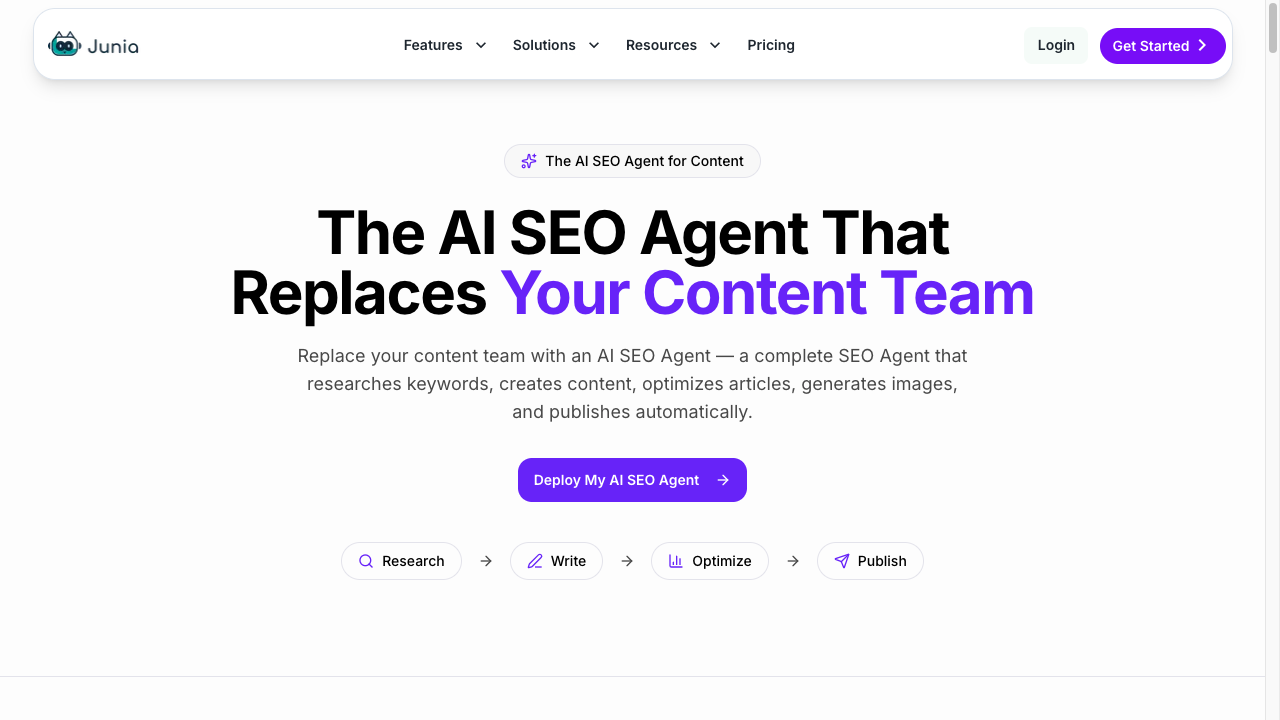
Step 1: Start With Keyword Research
Good SEO workflows start with demand.
Conduct keyword research to collect seed keywords, long-tail variations, question keywords, and related topics. Then slow down and group them by intent.
For example, these queries may all look related:
| Keyword | Likely intent | Best page type |
|---|---|---|
| ai seo agent | Product/commercial | Product page or comparison |
| what is an ai seo agent | Learn the concept | Beginner guide |
| ai seo agent workflow | Learn the process | Step-by-step guide |
| ai seo agents vs ai seo tools | Compare options | Comparison article |
This prevents one of the most common AI SEO mistakes: creating separate pages for keywords that should live together, or stuffing different intents into one page.
If you only need the keyword pass, a point AI SEO tool is enough. An agent starts to matter when those rows have to become briefs, drafts, and links without a new kickoff each time.
| Step | Agent can prepare | Human checkpoint |
|---|---|---|
| Keyword research | Clusters, questions, volume-ish groupings | Which intents get a page, which get a section |
| Content map | Suggested pillar and supporting URLs | Cannibalization and product-page overlap |
| Brief | Outline, SERP gaps, link targets | Angle, claims, examples, what not to cover |
| Draft | First pass from the brief | Facts, voice, and whether the page should exist |
| Optimize | Coverage and heading cleanup | Did the structure get clearer, or just denser? |
| Internal links | Candidates in both directions | Links a reader would actually click |
| Publish QA | Metadata, FAQ drafts, checklist | Title, CTA, and go/no-go |
| Refresh | SERP and performance flags | What to rewrite vs leave alone |
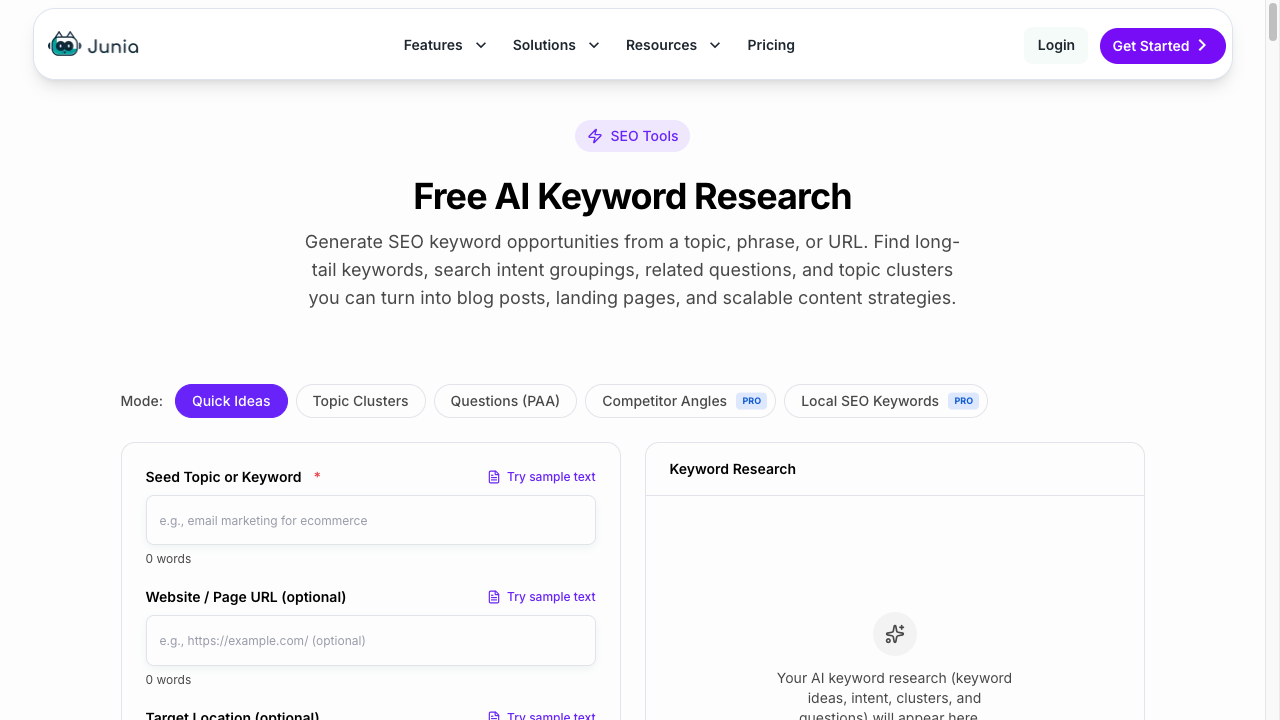
Step 2: Build the Content Map
Once the keyword groups are clear, decide how the pages should support each other.
A clean AI SEO agent cluster might include:
- a core product page for people ready to evaluate the solution
- a definition guide for beginners
- a workflow article for practical implementation
- a comparison article for buyers choosing between tools and agents
- use-case pages for agencies, SaaS teams, ecommerce brands, and content teams
- supporting tools for keyword research, briefs, internal links, and link equity
This map matters because internal links should be planned before writing. If you add them later, they often feel random. This is also where you decide a use-case page is a use-case page, not a second workflow article.
Step 3: Generate the Brief
Before drafting, create a real brief.
A useful brief should include:
- target reader
- search intent
- page angle
- recommended sections
- subtopics to cover
- claims that need evidence
- internal links to include
- sections to avoid because they overlap with other pages
- CTA or next step
This is where a content brief generator fits naturally. It turns research into instructions the writer or AI drafting step can follow.
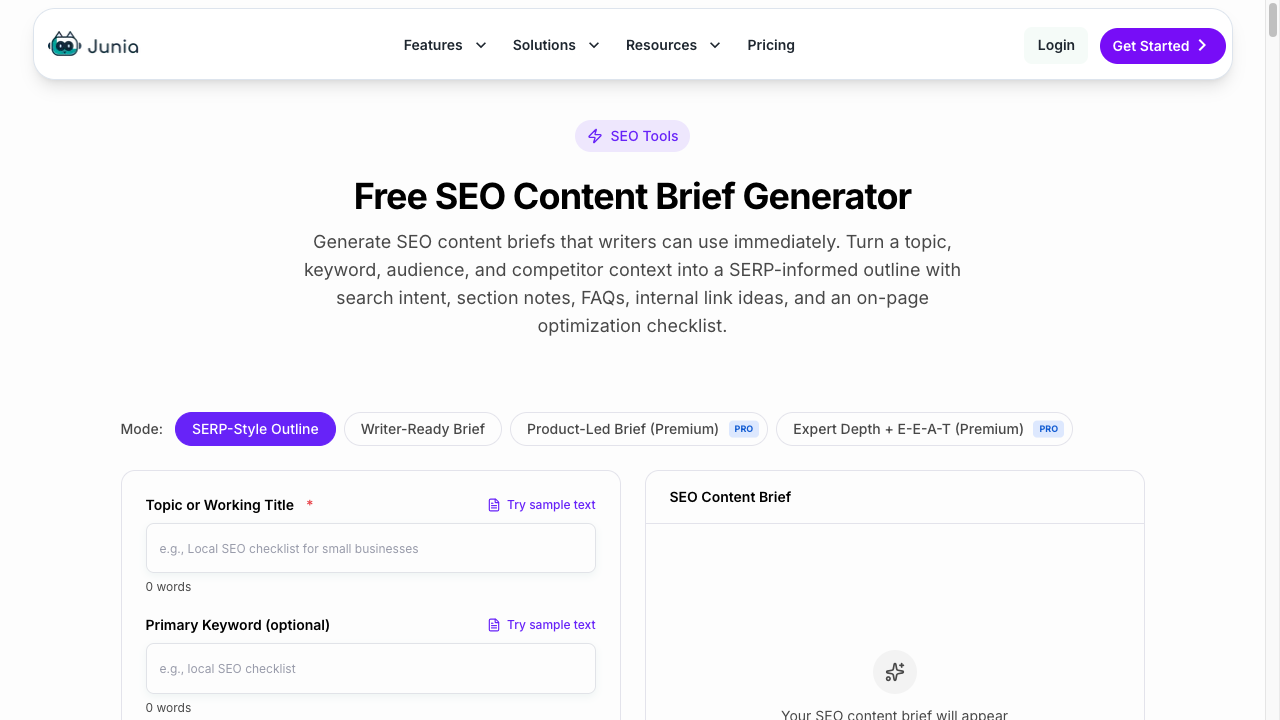
The brief is also where you prevent cannibalization. If your "AI SEO agent workflow" page starts explaining every AI SEO tool category in detail, it will drift into the job of your tools article. The brief keeps the page focused.
Step 4: Draft From Real Inputs
AI drafts are only as good as the inputs behind them.
Do not ask the agent to "write a complete SEO article about AI SEO workflows" and hope for the best. That prompt is how you get a page that also tries to be the AI SEO agent vs tools article. Give it:
- the brief
- product notes
- competitor gaps
- existing internal links
- brand tone
- examples from your real workflow
- any claims or stats that must be cited
The goal is not to produce the longest draft. The goal is to produce a draft that already understands the page's job.
Step 5: Optimize the Draft
Optimization should make the page clearer, not more robotic.
Check:
- Does the intro answer the query quickly?
- Are the headings specific?
- Does each section move the reader forward?
- Are there examples where the topic gets abstract?
- Are keywords used naturally?
- Is the page different from competing results?
- Are there internal links where the reader would actually want a next step?
If the answer is no, fix the structure before polishing sentences. Optimization that only adds keywords is how a decent draft becomes harder to cite.
Step 6: Add Internal Links
Internal links are part of the workflow, not a cleanup task.
For an AI SEO agent workflow page, the natural links are the tools used at each stage:
- keyword discovery with the AI keyword research tool
- brief creation with the SEO content brief generator
- link planning with the AI internal linking tool
- authority flow checks with the Page Rank Improver
Those links help the reader act on the workflow. They also help search engines understand how the cluster is connected.
Step 7: Publish With QA
Before publishing, run a basic QA pass:
- title and meta description are written for the actual page
- H1 matches the article topic
- URL is clean
- FAQs answer real follow-up questions
- images or screenshots have useful alt text
- internal links are not duplicated
- external claims have credible support
- the CTA matches the reader's stage
This is a good point for human approval. The agent can prepare the page, but an editor should still check whether it deserves to go live. If you would not put your name on the H1, do not publish it.
Step 8: Monitor and Refresh
Publishing is not the end of the workflow.
After the page has data, check:
- impressions
- clicks
- average position
- queries the page is unexpectedly showing for
- conversions or assisted conversions
- internal link clicks
- SERP changes
Then refresh based on evidence. Maybe the page needs a clearer comparison table. Maybe a section should become its own article. Maybe a new internal link should point to a page that did not exist when the article was first published.
That feedback loop is where agentic SEO becomes more valuable than one-off AI writing.
A practical refresh pass looks like this: open the live URL, find the thin or outdated section, and rewrite that part against current search intent. This over-the-shoulder demo is the useful version of Step 8, not another "build a quarter of content in an hour" workflow.
How to Update Old Blog Posts for SEO
Final Takeaway
The best AI SEO agent workflow is not "generate and publish."
It is research, decide, brief, draft, optimize, link, publish, measure, and refresh.
If you want the catalog of jobs this workflow supports, see the AI SEO agent use cases.
If you still need the definition, start with what an AI SEO agent is.
AI speeds up the repetitive parts. Human judgment keeps the workflow honest. Put both together, and you get a process that can scale without losing the editorial control that SEO content still needs.