
Free Case Study Generator
Transform raw project details into structured case studies with problem framing, solution breakdowns, measurable results, quotes, and clear storytelling. Useful for agencies, consultants, SaaS companies, freelancers, and B2B marketing teams building trust with proof-driven content.
Generated Case Study
Your case study will appear here...
How the AI Case Study Generator Works
Get results in seconds with a simple workflow.
Add the Project Details
Enter the goal, challenge, and solution. Include constraints, deliverables, tools, and any real metrics or a client quote to increase credibility and conversion impact.
Choose Format, Tone, and Language
Pick a case study format (short, standard, landing page, or interview-style) and set the tone. The generator will match structure and writing style to your audience.
Generate, Verify, and Publish
Review for factual accuracy, confirm numbers and proper nouns, and add finishing touches like visuals, internal links, and a CTA to turn the case study into a lead-generating asset.
See It in Action
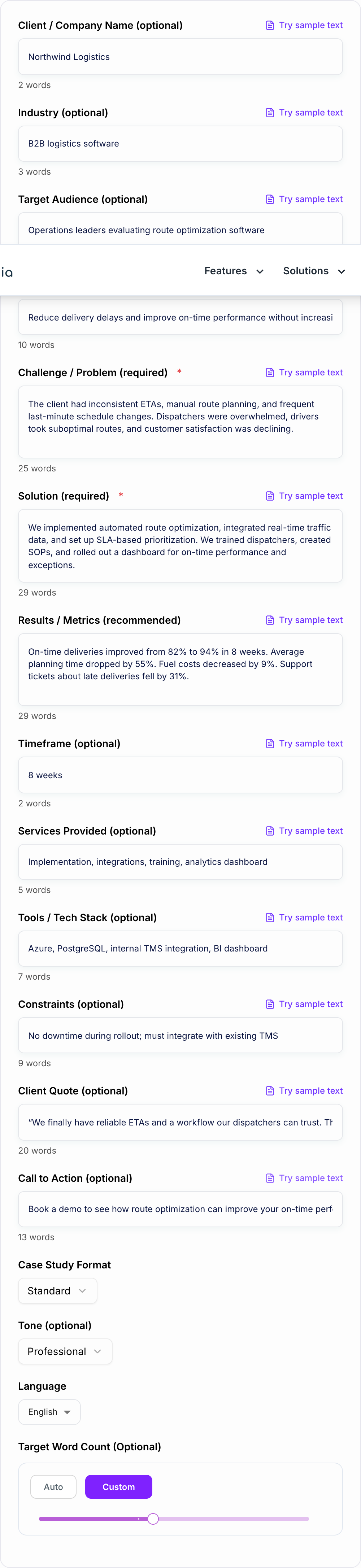
Example of transforming rough project notes into a structured, results-driven case study summary.
We helped a logistics company improve deliveries by optimizing routes and building a dashboard. Dispatch was manual and customers complained about late shipments. After rollout, things improved a lot.
A B2B logistics company struggled with manual dispatching, inconsistent ETAs, and rising customer complaints about late shipments. We implemented automated route optimization, integrated real-time traffic signals, and launched an on-time performance dashboard for exception handling. Within 8 weeks, on-time deliveries increased from 82% to 94%, route planning time fell by 55%, and late-delivery support tickets dropped by 31%.
Why Use Our AI Case Study Generator?
Powered by the latest AI to deliver fast, accurate results.
Case Study Structure That Converts (Problem → Solution → Results)
Generates a proven case study format with clear sections (overview, challenge, approach, implementation, results, and takeaway) to build trust and drive leads.
Metrics-First Storytelling (ROI, time saved, growth)
Highlights the most persuasive outcomes—percent improvements, revenue impact, cost savings, and operational wins—without exaggeration or inventing numbers.
B2B & SaaS Friendly Copy (credible, skimmable, sales-ready)
Produces professional case study writing that works for B2B decision-makers: scannable headings, tight paragraphs, and a clear narrative that supports sales conversations.
SEO-Friendly Case Studies (keyword-aware, publish-ready)
Creates content that’s easy to rank and easy to read: descriptive headings, natural keyword placement, and a structure that fits case study pages and blog posts.
Flexible Formats (short, landing page, interview-style)
Choose the best case study format for your website: concise proof pages, detailed stories, conversion-focused landing pages, or customer interview Q&A.
Pro Tips for Better Results
Get the most out of the AI Case Study Generator with these expert tips.
Lead with a measurable outcome
Put your strongest metric near the top (ROI, conversion rate lift, time saved). Readers scan case studies for proof—make the result easy to find.
Use specific constraints to boost credibility
Mention deadlines, limited budgets, technical requirements, or compliance considerations. Constraints make the story feel real and increase trust.
Add a real quote (or a verified testimonial)
A short, authentic quote improves conversion rate and makes your case study feel human. Avoid generic praise—use a quote tied to outcomes.
Optimize for SEO with a clear angle
Target a theme like “{service} case study” + “{industry}” or a specific problem (e.g., onboarding, churn reduction, page speed). Use descriptive headings that reflect that intent.
Add proof assets after generation
Improve E-E-A-T by including screenshots, dashboards, before/after charts, or a short methodology section. Proof turns good writing into a compelling sales asset.
Who Is This For?
Trusted by millions of students, writers, and professionals worldwide.
How to Write a Case Study That Wins Trust (And Drives Leads)
A strong case study is one of the highest-converting assets on a B2B website. It’s proof, not promises. It shows potential customers what you did, how you did it, and what changed because of it.
This Case Study Generator helps you turn project notes into a publish-ready customer story—structured, credible, and easy to scan.
What a High-Converting Case Study Includes
Great case studies follow a simple logic:
- Context: who the customer is (and what “normal” looked like)
- Problem: the challenge, constraints, and why it mattered
- Solution: what you implemented and how you approached it
- Proof: measurable results (or clearly stated qualitative outcomes)
- Takeaways: what the reader should learn and why it’s repeatable
When these elements are clear, case studies reduce buyer risk, shorten sales cycles, and improve conversion rates on service pages.
The Best Case Study Structure (Problem → Solution → Results)
Most readers scan. That’s why structure matters.
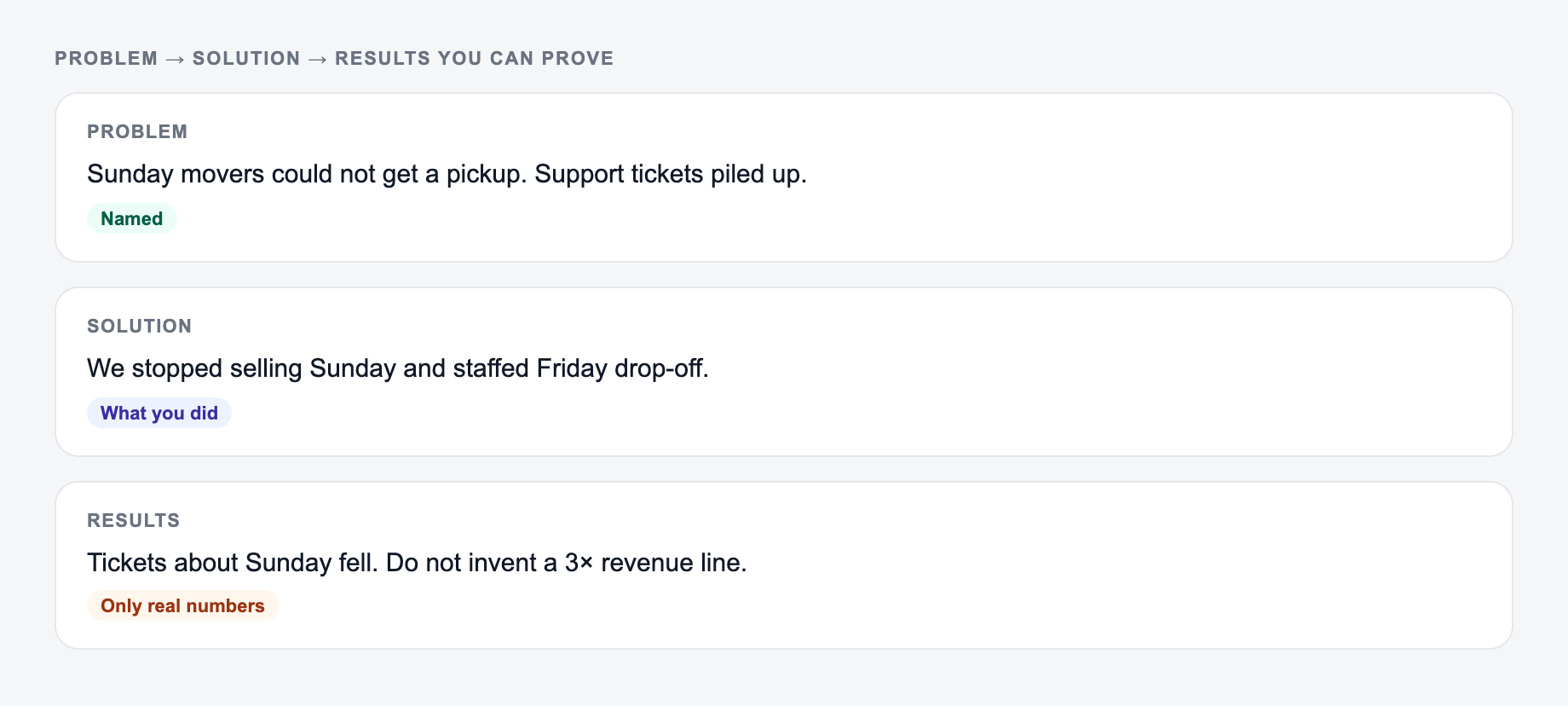
Problem, what you did, and numbers you can prove belong on the form.
Framework: write the uncomfortable sentence first (fee, last day, exclusion, jurisdiction). Then generate. If the AI Case Study Generator output buries that sentence, put it back in the first screen.
This is a draft aid, not legal, medical, or financial advice.
A reliable format:
- Overview / Snapshot — quick context and top result
- Challenge — what was broken, what was at stake
- Solution — what you delivered, what changed
- Implementation — steps, timeline, constraints
- Results — metrics, outcomes, ROI (no exaggeration)
- Key Takeaways — what made it work
- CTA — next step for the reader
Case Study Metrics That Make the Biggest Difference
If you have numbers, use them. They’re the fastest way to build trust.
Common high-impact metrics:
- conversion rate lift
- revenue growth or pipeline influenced
- cost reduction
- time saved (hours/week)
- performance improvements (speed, uptime, on-time delivery)
- churn reduction or retention gains
- support volume decrease
If you don’t have exact metrics, don’t guess. Use qualitative outcomes and add placeholders you can replace later.
SEO Tips: How to Make Case Studies Rank
Case studies can attract search traffic when they target intent-driven queries.
Practical SEO angles:
- “{service} case study” (e.g., SEO case study, web design case study)
- “{industry} success story” (e.g., SaaS success story, eCommerce case study)
- problem-led queries (e.g., reduce churn case study, improve conversion rate case study)
To improve rankings without keyword stuffing:
- use descriptive headings (Challenge, Solution, Results)
- mention the industry and use case naturally
- include real details (tools, constraints, timeframe)
- add internal links to relevant services, features, or blog posts
What to Do Before You Publish
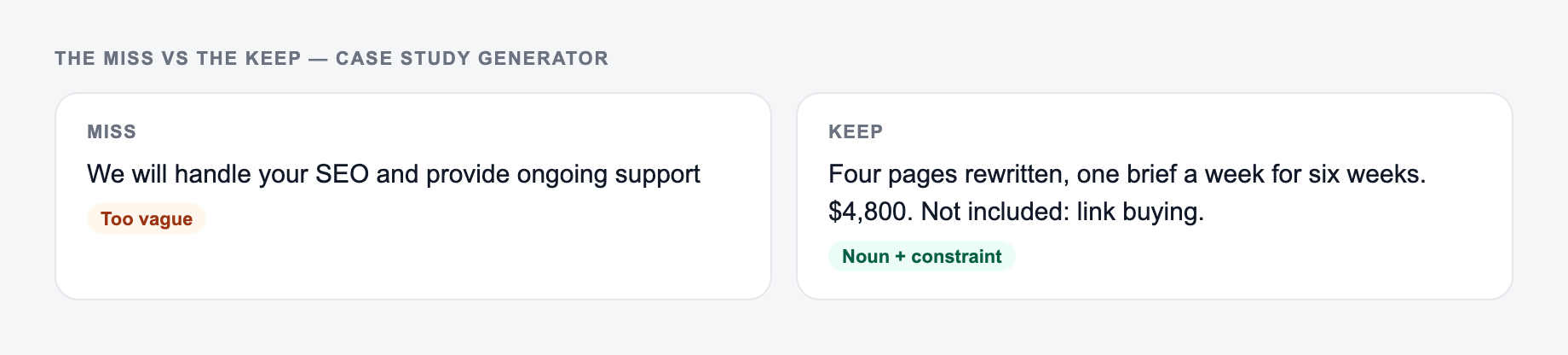
Walk the Case Study Generator like a template, not a finished filing. Names, dates, and amounts have to be ones you can prove.
If your input looks like the miss, do not judge the tool yet — add the noun and the constraint first.
- Verify all metrics, dates, and claims
- Keep client names and quotes consistent with approvals
- Add visuals (charts, screenshots, dashboards)
- Include a clear CTA (book a call, request a demo, get a quote)
If you need a fast starting point, this tool gives you a clean draft you can polish and ship—without spending hours outlining and rewriting.
Frequently Asked Questions
What is a case study in marketing?+
A marketing case study is a proof-based story that explains how a product or service solved a real problem for a customer. It typically includes the challenge, the solution, and measurable results (like ROI, time saved, or growth).
What information do I need to generate a good case study?+
At minimum, provide the goal, the challenge, and the solution. For stronger credibility, add results/metrics, timeframe, key deliverables, and a real client quote. The more specific your inputs, the more persuasive the case study will be.
Will the case study generator invent results or quotes?+
No. It should not fabricate numbers, claims, or testimonials. If you don’t provide metrics, it will describe outcomes qualitatively and may suggest placeholders you can replace with real data.
How long should a case study be?+
Many high-converting case studies are 600–1,400 words. Use shorter versions for landing pages and detailed versions when you need deeper proof, process, and implementation specifics.
Are case studies good for SEO?+
Yes—case studies can rank for intent-driven queries like “{service} case study,” “{industry} success story,” and problem-led searches. They also build topical authority and trust when they include specific context and outcomes.
Can I use the generated case study on my website?+
Yes. Review it for accuracy, confirm metrics and client approvals, and then publish. For best results, add visuals (charts, screenshots), internal links, and a strong CTA.