
Free Client Proposal Generator
Generate client-ready business proposals with clear deliverables, timelines, pricing structures, assumptions, and next steps. Built for freelancers, consultants, agencies, and service providers who want professional proposals without starting from scratch.
Client Proposal
Your client proposal will appear here...
How the AI Client Proposal Generator Works
Get results in seconds with a simple workflow.
Describe the Goal and Scope
Add the client’s objective and (optionally) list deliverables. The more specific your scope, the clearer the proposal and the fewer revisions later.
Choose Pricing Model and Terms
Select fixed price, retainer, or hourly. Add your price/rate and payment terms to set expectations and reduce back-and-forth.
Generate, Customize, and Send
Generate a client-ready proposal, then quickly review assumptions, out-of-scope items, and dates. Customize branding, then send for approval.
See It in Action
Example of turning rough notes into a structured, client-ready proposal section (scope + timeline + pricing).
We’ll help with SEO. Do keyword research, write some blog posts, and optimize pages. Probably take about a month. Price is around $3k.
Scope & Deliverables:
- Keyword research + topic cluster for 1 core product category
- Content briefs for 8 SEO blog posts (search intent, outline, internal links)
- Write & optimize 8 blog posts (1,200–1,800 words each)
- On-page optimization for 5 priority pages (titles, meta descriptions, headings, internal linking)
- Monthly performance report (traffic, rankings, conversions)
Timeline:
- Week 1: Research + strategy + briefs
- Weeks 2–3: Writing + optimization + reviews
- Week 4: Final revisions + on-page updates + reporting setup
Pricing:
- Fixed project fee: $3,200
- Payment terms: 50% upfront, 50% on completion
Why Use Our AI Client Proposal Generator?
Powered by the latest AI to deliver fast, accurate results.
Client-Ready Proposal Structure (Scope, Deliverables, Timeline, Pricing)
Generates a polished proposal with clear project scope, deliverables, milestones, timeline, pricing, and next steps—so clients can approve faster.
Works for Freelancers, Agencies, and Consultants
Create proposals for marketing services, SEO projects, web design, development, consulting, and retainers—tailored to common service business workflows.
Built-In Assumptions, Out-of-Scope, and Change Requests
Includes professional guardrails like assumptions, exclusions, revision limits, and a change-request process to reduce scope creep and protect margins.
Flexible Pricing Models (Fixed, Retainer, Hourly)
Supports fixed bids, monthly retainers, and time-and-materials with clear payment terms and billing expectations.
Brand-Voice Tone + Multilingual Output
Generate proposals in your preferred tone and language, helping you match the client’s expectations and local market context.
Pro Tips for Better Results
Get the most out of the AI Client Proposal Generator with these expert tips.
Write deliverables as outcomes + artifacts
Combine business outcomes (e.g., “increase qualified leads”) with concrete deliverables (e.g., “8 SEO articles + on-page optimization”) so clients see value and clarity.
Add a clear out-of-scope section
A short exclusions list prevents scope creep. Mention what is not included (extra revisions, additional pages, new features, rushed timelines).
Use milestones to reduce risk
Break work into phases with milestone payments or approvals (kickoff, strategy, draft delivery, final delivery). It improves cash flow and keeps projects on track.
Make next steps obvious
End with 2–3 simple steps: approve proposal, pay deposit/first invoice, schedule kickoff. Fewer steps usually means faster closes.
Align on success metrics early
Include measurable targets when possible (traffic, leads, conversion rate, deliverable counts) and clarify what you control vs what depends on the client.
Who Is This For?
Trusted by millions of students, writers, and professionals worldwide.
Write client proposals that actually get approved (without spending your whole afternoon)
A good proposal is basically your sales call, your scope document, and your “please don’t scope creep me” policy… all rolled into one. And yeah, that’s why writing one from scratch feels heavy.
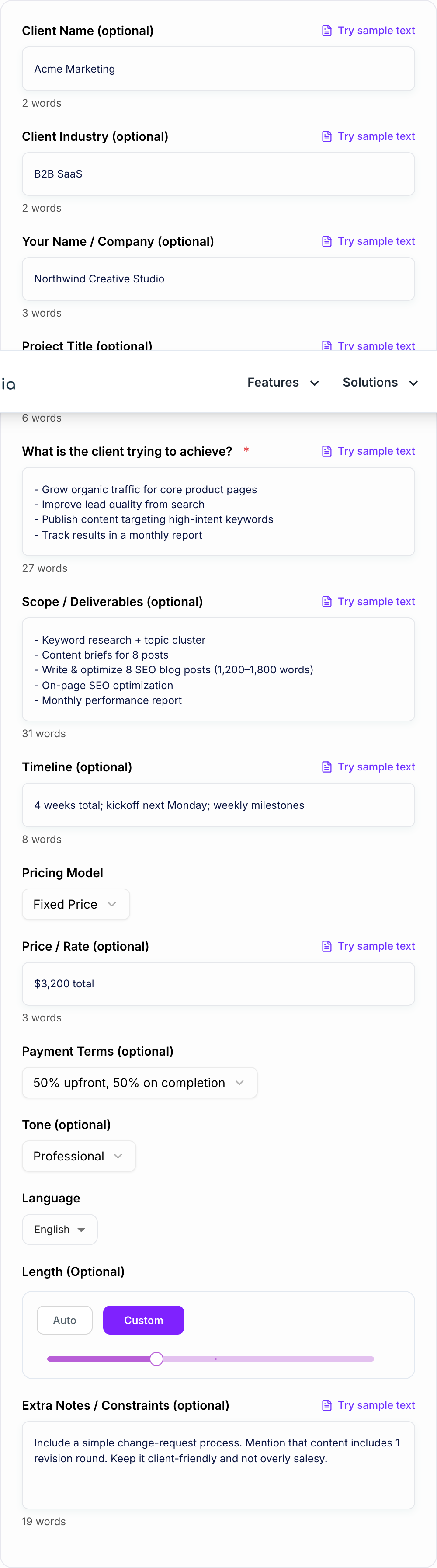
This AI Client Proposal Generator helps you produce a clean, client ready proposal with the pieces clients look for when they’re deciding fast:
- what you’re doing (scope)
- what they’re getting (deliverables)
- how long it’ll take (timeline and milestones)
- what it costs (pricing model plus payment terms)
- what’s not included (assumptions and out of scope)
- what happens next (approval, deposit, kickoff)
If you already use Junia AI for writing and client work, this template fits right in. It’s the same idea: less blank page, more momentum.
What to include in a strong client proposal (the sections clients expect)
Not every proposal needs to be long. But most winning proposals are structured. Clients want to scan and feel confident.
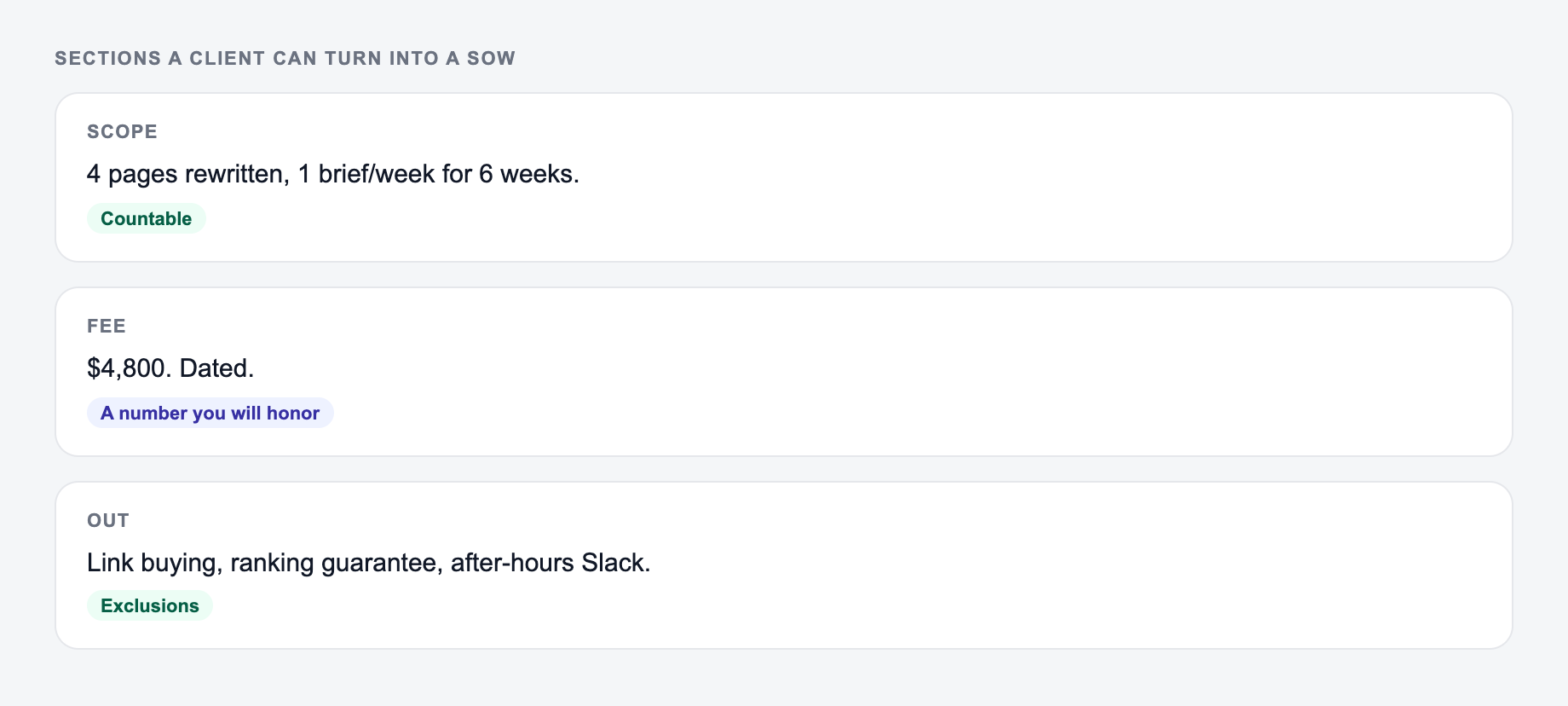
Countable deliverables and a fee you will honor belong on the form.
Framework: write the uncomfortable sentence first (fee, last day, exclusion, jurisdiction). Then generate. If the AI Client Proposal Generator output buries that sentence, put it back in the first screen.
This is a draft aid, not legal, medical, or financial advice.
1) A quick summary of the goal
Write this like you understand their world. One short paragraph is enough. Then a few bullets for success criteria if you can.
Examples of goal framing:
- “Increase qualified demo requests from organic traffic.”
- “Launch a new site that loads faster and converts better on mobile.”
- “Build a repeatable content system the team can run monthly.”
2) Scope and deliverables that are specific
Vague scope sounds risky. Specific scope sounds safe.
Instead of:
- “SEO improvements”
Use:
- “On page optimization for 5 priority pages (titles, meta descriptions, headings, internal linking)”
- “8 SEO blog posts (1,200 to 1,800 words) with 1 revision round”
- “Monthly report covering traffic, rankings, and conversions”
3) Timeline with milestones (so it feels real)
Clients love a timeline that answers “when do we see progress” not just “when is it done.”
A simple milestone format:
- Week 1: kickoff, access, research
- Week 2: drafts or initial build
- Week 3: revisions, implementation
- Week 4: final delivery, handoff, reporting setup
4) Pricing model that matches the work
Different projects need different pricing logic. This generator supports:
- Fixed price: best when scope is stable and deliverables are clear
- Retainer: best for ongoing content, SEO, design support, or marketing ops
- Hourly or time and materials: best when discovery is still happening or requirements may shift
Tip: even with hourly, clients want guardrails. Give an estimate range and a weekly cadence.
5) Assumptions, exclusions, and change requests (aka scope creep prevention)
This is the part that saves you later. Keep it calm, not aggressive.
Include things like:
- what you need from the client (access, approvals, feedback timelines)
- what’s not included (extra revisions, additional pages, new features)
- what happens if scope changes (written change request, updated quote, timeline adjustment)
6) Clear next steps
Make approval frictionless. Literally write the steps.
For example:
- Approve this proposal (reply with “approved” or sign)
- Pay deposit or first invoice
- Schedule kickoff call
Proposal tips for freelancers, agencies, and consultants (small tweaks that matter)
- Use outcomes plus artifacts. Clients buy results, but they approve specifics. Give both.
- Keep the deliverables measurable. Counts, dates, pages, revision rounds, cadence.
- Add a simple acceptance criteria line. What does “done” mean, exactly.
- Match the tone to the client. Some want warm and collaborative. Others want tight and corporate. That’s why tone selection helps more than people think.
- If you can, offer options. One good, better, best set can increase close rate without feeling pushy.
When this proposal generator is especially useful
You’ll get the most value when you need to move quickly but still look polished:
- responding to inbound leads and you want to send something the same day
- turning messy call notes into a structured scope and timeline
- standardizing proposals across a team so they all look consistent
- packaging a retainer with monthly inclusions and boundaries
- converting “we can do a lot of things” into a clear, sellable offer
Walk the Client Proposal Generator like a template, not a finished filing. Names, dates, and amounts have to be ones you can prove.
A quick reminder about terms and legal language
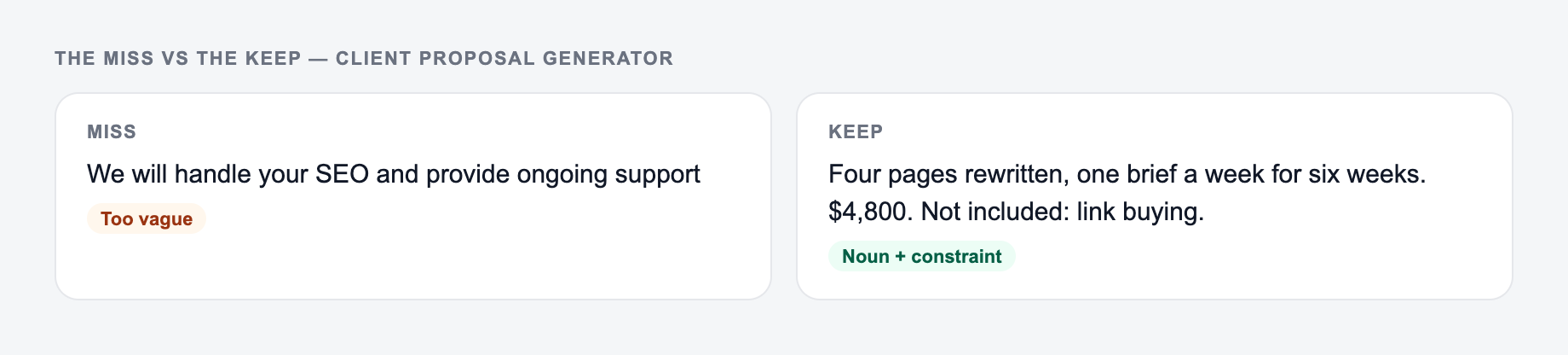
If your input looks like the miss, do not judge the tool yet — add the noun and the constraint first.
This tool can generate common, practical proposal terms (payments, scope boundaries, timelines). It’s not legal advice. If you need clauses around IP, confidentiality, liability, or jurisdiction specific requirements, treat the output as a draft and have it reviewed.
If you want the proposal to feel more “yours”, add a short brand line, a signature block, and a consistent payment policy. That tiny bit of consistency makes you look established, even if you’re solo.
Frequently Asked Questions
What is a client proposal?+
A client proposal is a document that explains your understanding of the client’s goals, your recommended approach, project scope, deliverables, timeline, pricing, and terms—so the client can confidently approve and move forward.
Does this proposal generator include scope and deliverables?+
Yes. It can generate a clear scope of work and deliverables section based on what you provide, plus helpful additions like assumptions, exclusions, and revision limits to reduce misunderstandings.
Can I generate proposals for SEO or marketing services?+
Yes. It works well for SEO proposals, content strategy, link building (if applicable), on-page optimization, reporting cadence, and marketing retainers—while keeping the language client-friendly and outcome-focused.
Can I choose fixed price vs retainer vs hourly?+
Yes. Select a pricing model and optionally provide your price or rate. The proposal will frame pricing and payment terms appropriately for that model.
Will it create legal terms for my business?+
It generates common proposal terms (payments, timelines, scope boundaries), but it’s not legal advice. For compliance-sensitive clauses (liability, IP, confidentiality), review with a professional and adapt to your jurisdiction.
How do I make the proposal more likely to get approved?+
Add clear success criteria, keep deliverables specific, include a simple timeline, present 1–3 package options when relevant, and make next steps frictionless (signature, invoice deposit, kickoff date).