
Free Privacy Policy Generator
Create a tailored privacy policy for websites, ecommerce stores, apps, and SaaS businesses. Include sections covering cookies, analytics tools, payments, email marketing, user rights, data retention, and GDPR/CCPA compliance requirements.
Privacy Policy
Your privacy policy will appear here...
How the AI Privacy Policy Generator Works
Get results in seconds with a simple workflow.
Enter Your Site Details
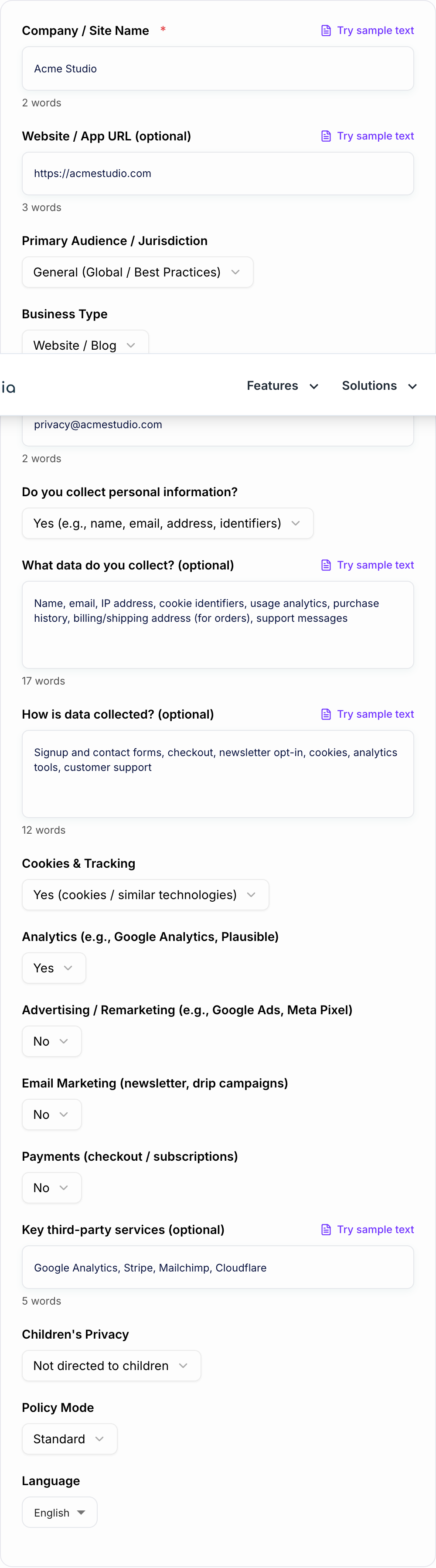
Provide your company/site name and (optionally) your URL and contact email so visitors know who controls the data and how to reach you.
Select Data Practices
Choose whether you use cookies, analytics, advertising pixels, email marketing, or payments. Add third-party tools to generate more accurate disclosures.
Generate, Review, and Publish
Generate your privacy policy, then review for accuracy (data collected, sharing, retention, user rights). Publish it on your site and update it whenever tools or practices change.
See It in Action
Example of turning basic business details into a structured, publish-ready privacy policy section.
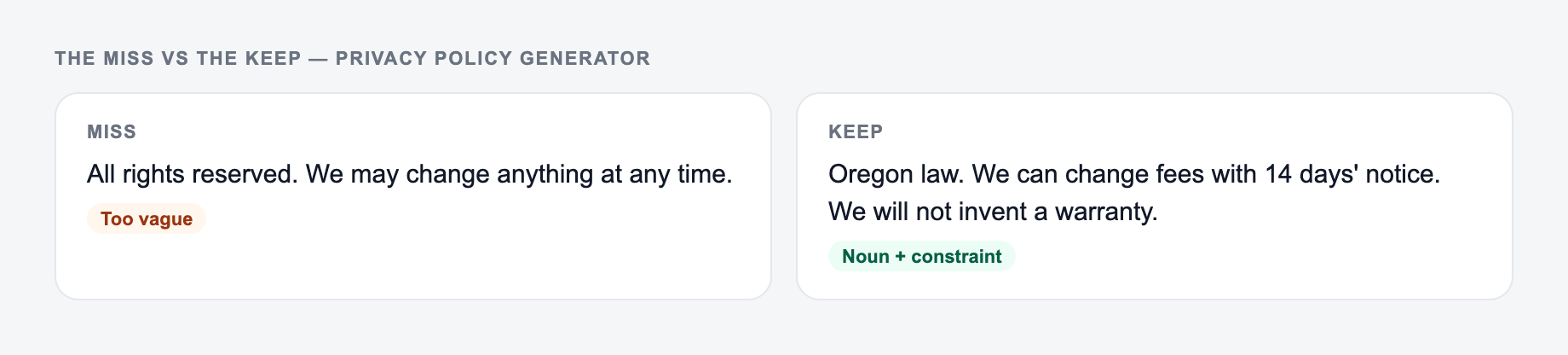
We respect your privacy. We may collect information when you use our website. We use cookies and may share information with third parties.
Acme Studio (“we”, “us”) values your privacy. This Privacy Policy explains how we collect, use, and share information when you visit https://acmestudio.com (the “Service”).
We collect information you provide (such as your name and email when you contact us) and information collected automatically (such as IP address, device information, and cookie identifiers). We use cookies and similar technologies to operate the Service, understand usage through analytics, and improve performance.
We may share information with trusted service providers (for example, analytics and hosting providers) who process data on our behalf. We do not sell personal information in exchange for money, and we provide options to exercise privacy rights where required by applicable law.
Why Use Our AI Privacy Policy Generator?
Powered by the latest AI to deliver fast, accurate results.
Privacy Policy Tailored to Your Website or App
Generate a privacy policy that matches your business type (website, SaaS, ecommerce, mobile app) and your data practices—so your policy is relevant and publish-ready.
Covers Cookies, Analytics, Ads, Email Marketing, and Payments
Includes the key disclosures many sites need: cookies and tracking technologies, analytics providers, advertising/remarketing pixels, newsletters, and payment processing.
GDPR & CCPA/CPRA-Friendly Options
Choose GDPR-focused or CCPA/CPRA-focused modes to include common compliance language such as user rights, request processes, and data sharing disclosures (based on your inputs).
Third-Party Services Disclosure
Add common tools like Google Analytics, Stripe, PayPal, Mailchimp, Intercom, or Cloudflare to help users understand what vendors may process data on your behalf.
Copy-Paste Output (Clean Sections + Headings)
Outputs a structured policy with clear headings you can paste into your website, app, or legal pages—without extra commentary or formatting issues.
Pro Tips for Better Results
Get the most out of the AI Privacy Policy Generator with these expert tips.
Match the policy to your actual tracking setup
If you use analytics, ads pixels, or session recording, your privacy policy and consent banner should reflect that. Accuracy matters more than length.
List the biggest vendors you rely on
Payment processors, email providers, analytics tools, hosting/CDN, and support chat are common. Naming them improves transparency and reduces ambiguity.
Add a clear user-request process
If you serve EU/UK/California users, include a simple method for privacy requests (email address, form, verification steps, response time).
Keep a change log and update date
Add an “Effective date” and update it when you change tools or practices. It’s a simple signal of trust and good governance.
Get legal review for regulated industries
If you handle health, financial, children’s data, biometrics, or sensitive categories, consult a qualified professional to ensure proper disclosures and safeguards.
Who Is This For?
Trusted by millions of students, writers, and professionals worldwide.
Privacy Policy Generator: How to Create a Website or App Privacy Policy That Matches Your Data Practices
A privacy policy isn’t just a legal checkbox—it’s a trust page.
Visitors want to know what data you collect, why you collect it, who you share it with, and what choices they have. Search engines and app platforms also expect transparency, especially if you use cookies, analytics, advertising pixels, email marketing, or payment processors.
This Free Privacy Policy Generator helps you create a publish-ready policy fast, while keeping it aligned with the real tools you use.
What a Good Privacy Policy Should Include (Core Sections)
A strong website privacy policy usually covers:
- Who you are (the site/app owner) and how to contact you
- What information you collect (personal data, usage data, cookies)
- How you collect it (forms, accounts, checkout, cookies, SDKs)
- How you use it (service delivery, analytics, marketing, support)
- Cookies and tracking technologies (and why they exist)
- Sharing and third parties (vendors like analytics, email, payments, hosting)
- Data retention (how long you keep data, in general terms)
- Security (reasonable safeguards, without overpromising)
- User rights (GDPR/UK GDPR or CCPA/CPRA, depending on audience)
- Children’s privacy (especially if your product could be used by minors)
- Changes to the policy (effective date and updates)
GDPR vs CCPA/CPRA: Which Mode Should You Choose?
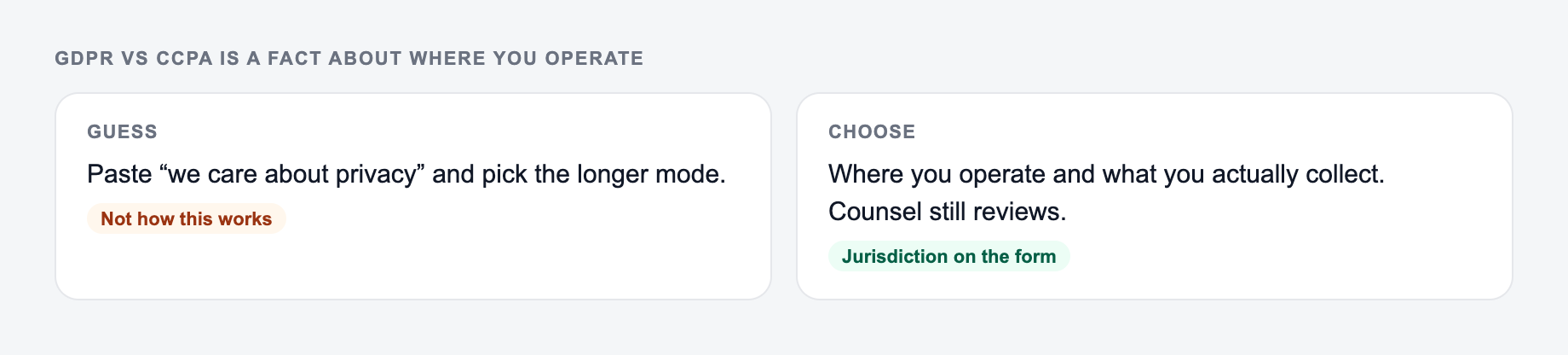
If your visitors include the European Union (or you target EU customers), choose GDPR-Focused. It emphasizes user rights and common GDPR disclosures.
List the data you actually collect. This is a draft, not legal advice.
If your audience includes California, choose CCPA/CPRA-Focused. It emphasizes disclosures around categories of information and consumer privacy rights.
If your site is simple and you want a shorter policy, choose Minimal.
Cookies, Analytics, and Ads: The Most Common Privacy Policy Gaps
Most privacy policies become inaccurate when a site adds new tools over time.
Common examples:
- Adding Google Analytics (or an alternative) without updating the cookies/analytics section
- Installing the Meta Pixel or Google Ads remarketing tags without updating advertising disclosures
- Starting a newsletter without describing email collection and unsubscribe options
- Adding Stripe/PayPal and not explaining payment processing and transaction records
If you’re unsure which tools you use, check your tag manager, your analytics dashboard, and your ecommerce/payment settings.
Where to Put Your Privacy Policy (Best Practices)
- Link it in your footer across the site
- Link it near signup, contact, and checkout forms
- For mobile apps, include it in App Store / Google Play listings
Keep the page public and easy to find.
Important Reminder
This generator helps you draft a privacy policy, but you should review it for accuracy and update it whenever your data collection, cookies, vendors, or marketing practices change.
If you operate in regulated industries, process sensitive data, or have complex tracking/advertising setups, consider a professional review.
Frequently Asked Questions
Is this privacy policy generator free?+
Yes. You can generate a privacy policy for free using the inputs you provide. Review and customize it for your specific business and legal requirements before publishing.
Does this generate a GDPR-compliant privacy policy?+
It can generate GDPR-focused language (e.g., user rights and common disclosures), but compliance depends on your actual data practices, cookie consent setup, lawful bases, vendor contracts, and implementation. Use it as a starting point and consult counsel if needed.
Does this cover CCPA/CPRA for California?+
Yes, in CCPA/CPRA-focused mode it can include common disclosures such as categories of personal information, purposes, and consumer rights requests. Final accuracy depends on how your business collects and shares data.
Should I list my third-party services (like Google Analytics or Stripe)?+
Often yes. Disclosing third-party processors and service providers can improve transparency. Add the key tools you use so the policy better reflects your setup.
Do I need a cookie policy too?+
Many sites pair a privacy policy with a cookie policy (or a cookie section) and a consent banner, especially for EU/UK audiences. If you use cookies for analytics or ads, consider adding a dedicated cookie policy page.
Where should I put my privacy policy on my website?+
Common placements include the website footer, checkout/signup pages, and app store listings (for mobile apps). Ensure it’s easy to access and kept up to date when your data practices change.