
The 9 Best Long-Form AI Writing Tools (Ranked After Testing)

Thu
AI SEO Specialist, Full Stack Developer

Most long-form AI writing tools can produce 1,500 words. That does not mean they can produce a useful article.
The real test is what happens after the draft appears. Does the tool understand search intent? Can it build a coherent outline? Does it help with internal links, readability, and editing? Or does it give you a long block of fluent but generic text that still needs an experienced writer to rescue it?
For long-form blog posts, I would start with Junia AI if you want an SEO-focused writing workflow, Jasper if you need brand campaign support, Writer if you need enterprise governance, and SurgeGraph or GrowthBar if you want heavier SERP optimization. If you only need flexible drafting, ChatGPT or Claude can still be useful, but they are not full publishing workflows by themselves.
Here is the short version.
| Rank | Tool | Best for | Main strength | Watch out for |
|---|---|---|---|---|
| 1 | Junia AI | SEO blog posts and content teams | Long-form drafting plus SEO workflow | More controls to learn at first |
| 2 | Jasper | Marketing teams | Brand voice and campaign assets | Can be expensive if you only write blogs |
| 3 | Writer | Enterprises | Governance, style rules, and security | Setup is heavier |
| 4 | Writesonic | Fast content production | Versatile drafts across formats | Needs editing for depth |
| 5 | SurgeGraph | SEO-driven long-form articles | SERP-informed outlines and optimization | Can encourage over-optimized writing |
| 6 | Copy.ai | Ideation and short-to-mid-form support | Templates and quick generation | Long-form depth is inconsistent |
| 7 | Content at Scale | Volume publishing workflows | Article-level production and WordPress flow | Best value only at higher volume |
| 8 | Bramework | Bloggers using Semrush | Blog workflow plus keyword support | Interface can feel crowded |
| 9 | GrowthBar | Lightweight SEO content | Simple SEO writing workflow | Less control than deeper SEO suites |
How I judged the tools
For long-form writing, I care less about whether a tool can generate a clean paragraph and more about whether it helps you publish something worth reading.
These were the practical checks:
- Search intent: Can it shape the article around what the reader actually wants?
- Structure: Does it create a useful outline, not just stacked headings?
- Depth: Does it help add examples, comparison points, and missing subtopics?
- Editing load: How much human cleanup is needed before publishing?
- SEO support: Does it help with keywords, topical coverage, briefs, internal links, or optimization?
- Workflow fit: Can a blogger, marketer, agency, or team realistically use it every week?
- Trust: Does it support fact-checking, brand voice, and review instead of encouraging blind publishing?
That last point matters. Google's own guidance on helpful, reliable, people-first content is clear that the method of production is less important than whether the content is useful, original, and made for people. AI can help you write long-form content faster, but it does not remove the need for judgment.
1. Junia AI
.webp?token=eyJhbGciOiJIUzI1NiIsInR5cCI6IkpXVCJ9.eyJ1cmwiOiJ1c2VyLWdlbmVyYXRlZC1pbWFnZXMvZjJmOThkNWUtNjNjNC00MTJiLTkyY2QtZjgyNDI5NTE3YWRkLzFfTlM4Vm9hU0VmaGp5bGs5REZQcUVVQSAoMikud2VicCIsImlhdCI6MTY5NjgwOTE1NCwiZXhwIjoxODU0NDg5MTU0fQ.MnVE7_5gS1z8i8Z_icZ-kVrcqUAvr-2MxJUsOiybLF0)
Junia AI is the best fit here if your main goal is publishing SEO-focused long-form articles, not just generating a first draft.
The difference is workflow. A generic chatbot can help you write paragraphs, but Junia is built around the steps that make a blog post publishable: topic planning, article generation, SEO structure, editing, and content improvement. That makes it especially useful for marketers, niche site owners, and teams producing articles at a steady pace.
Junia also fits well when you need more than one article. Start with the AI article writer when you need a guided draft from keyword, outline, and search intent.
For repeatable blog production, the blog post generator is better suited to recurring formats. When the bottleneck is volume across many related pages, bulk content creation makes more sense than treating every draft as a one-off project.
When Junia AI fits
- SEO articles, product-led blog posts, listicles, comparison pages, content refreshes, and multi-article campaigns
This matters most when you're choosing a tool for seo articles, product-led blog posts, listicles, comparison pages, content refreshes, and multi-article campaigns.
What I like:
- It treats long-form content as a workflow instead of a blank text box.
- The SEO features are built close to the writing process.
- You can use it for content planning, drafting, editing, and optimization in one place.
- It works well with related tasks like AI keyword research, SEO content briefs, and AI internal linking.
Where it needs human help: You still need to check facts, tighten examples, add product knowledge, and make sure the article has a real point of view. That is true for every tool on this list.
2. Jasper
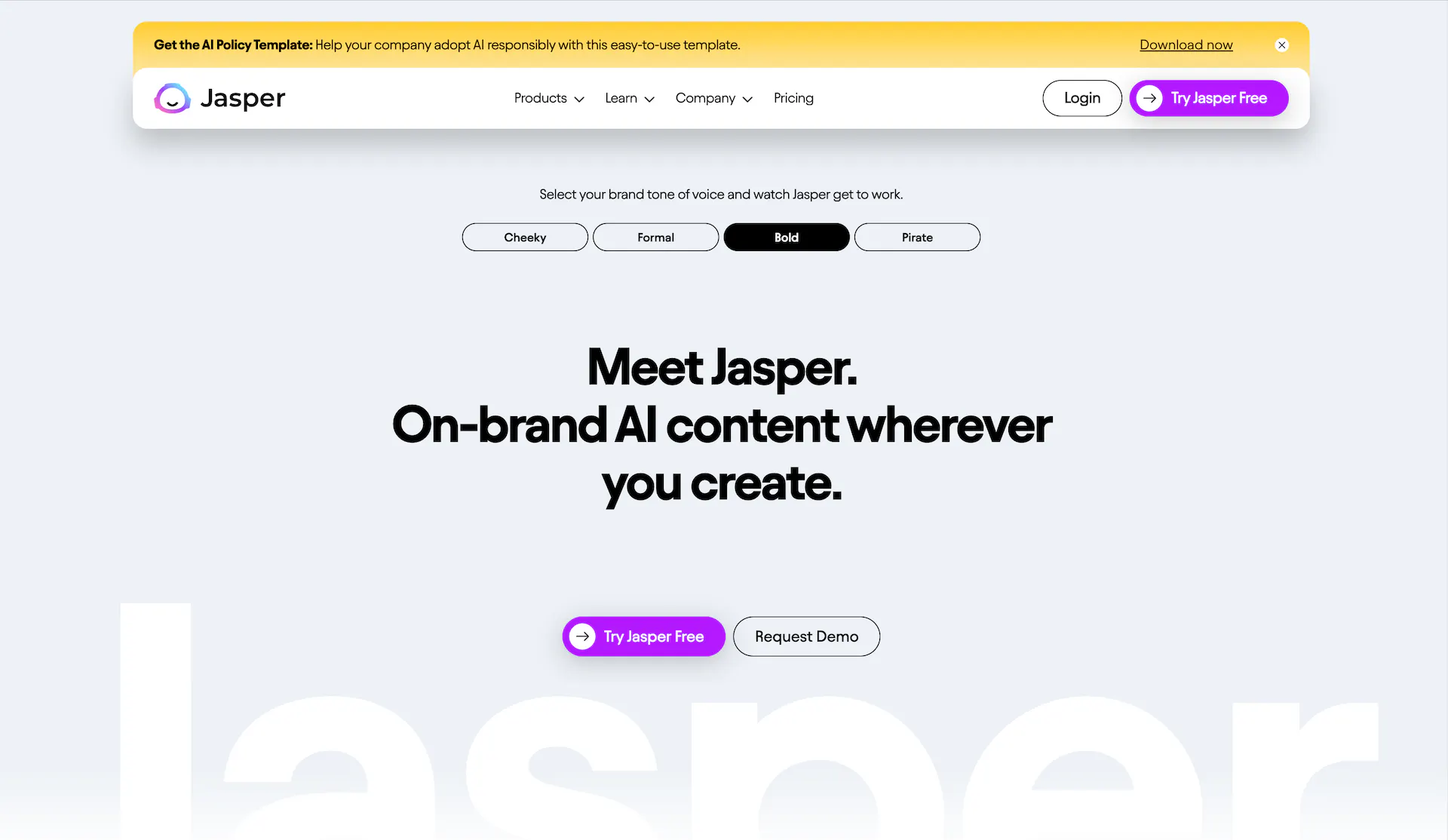
Jasper is still one of the stronger AI writing tools for marketing teams that need more than blog posts.
It works best when content has to follow a brand voice across landing pages, ads, email, social posts, and long-form articles. If your team is producing campaign assets around a product launch, Jasper can keep the messaging more consistent than a loose collection of prompts.
For long-form blog writing, Jasper can create outlines, sections, rewrites, intros, and supporting copy. The quality depends heavily on the brief you give it. With a thin prompt, the output can drift into familiar AI phrasing. With a specific brief, audience, angle, and examples, it becomes much more useful.
When Jasper fits
- Marketing teams, brand campaigns, cross-channel content, and writers who want more guided AI assistance than a chatbot
What I like:
- Strong brand voice and campaign positioning features.
- Useful for repurposing a long-form article into shorter assets.
- Good option for teams that want repeatable workflows.
When to skip it
- If you only need SEO blog posts, you may pay for more platform than you actually use. It also still needs a strong editor, especially on technical or opinionated topics
The biggest mistake I see is choosing Jasper when you really needed seo blog posts, you may pay for more platform than you actually use.
3. Writer
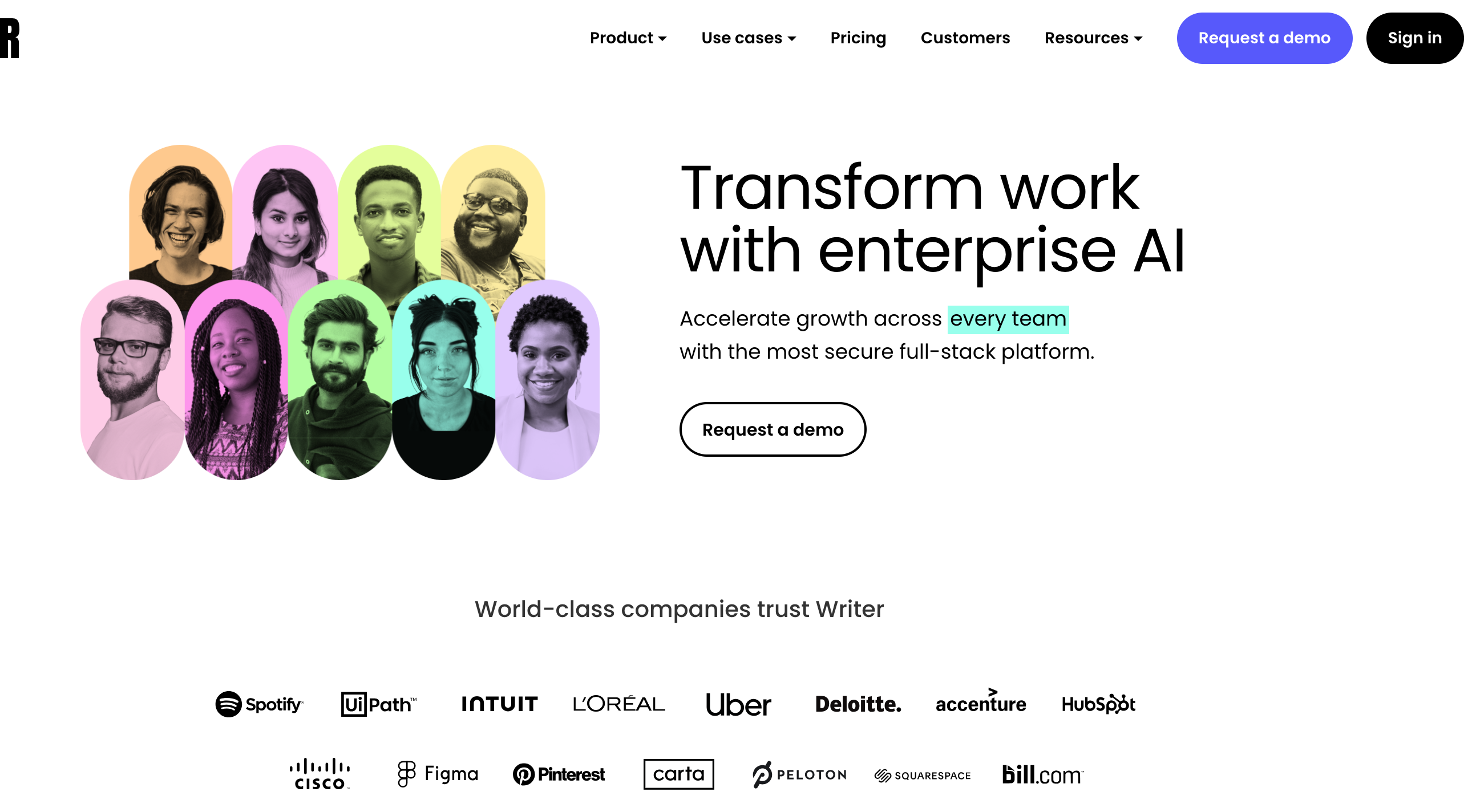
Writer is the tool I would look at when long-form content has to pass through serious brand, legal, security, or compliance expectations.
It is not the simplest option for a solo blogger. That is not really the point. Writer is built for organizations that need style rules, approved language, team controls, and safer AI usage across departments.
For long-form content, that can be valuable. Enterprise blogs often struggle less with "can we write 2,000 words?" and more with "can we keep this accurate, on-brand, and approved without slowing everything down?" Writer is designed for that second problem.
Writer works best for enterprises, regulated industries, internal content teams, and brands with strict voice or governance requirements.
What I like:
- Strong fit for teams with formal content standards.
- Better governance than lightweight AI writers.
- Useful when brand consistency matters across many writers.
Limits
- It is heavier than most bloggers need. If you want a quick article writer, this will feel like too much setup
I would avoid this approach if it is heavier than most bloggers need.
4. Writesonic

Writesonic is a versatile AI writing platform for people who want one tool for blog posts, ads, landing pages, product descriptions, and other marketing copy.
For long-form articles, the biggest benefit is speed. Writesonic can help you move from topic to outline to draft quickly, especially when you already know the angle. It is also useful when a blog post is only one part of a broader marketing workflow.
The tradeoff is depth. Writesonic can produce clean drafts, but on more competitive topics, the article still needs human structure, examples, and source checking. Otherwise it can read like a polished overview instead of an article with real authority.
Good fit
- Marketers who need fast first drafts across several content formats
What I like:
- Fast generation across many formats.
- Good for getting unstuck before a heavier edit.
- Helpful when long-form content supports ads, landing pages, and social copy.
Poor fit
- It is not the tool I would trust to handle the whole article strategy by itself. Use it for acceleration, then edit hard
Prefer Writesonic when the job is marketers who need fast first drafts across several content formats — not when it is not the tool i would trust to handle the whole article strategy by itself.
5. SurgeGraph
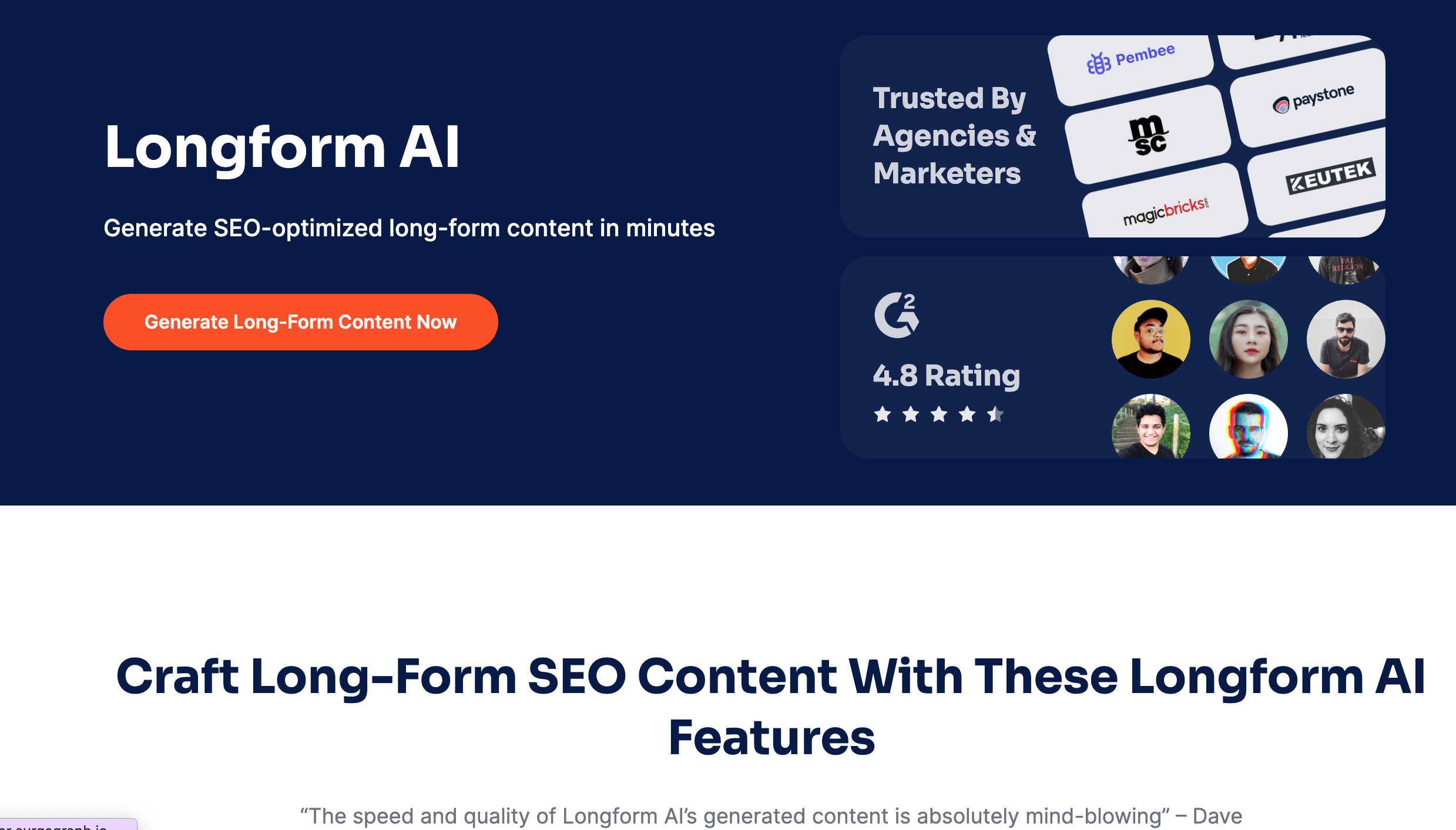
SurgeGraph is built for SEO-heavy long-form content. It combines keyword research, content planning, outline generation, writing, and optimization in one workflow.
That makes it useful if you are targeting search traffic and want the tool to think about topical coverage before drafting. The competitor research for this article also made one thing obvious: pages ranking for this query often win by showing a clear workflow, not just listing features. SurgeGraph fits that expectation because it is designed around research, outline, draft, edit, and optimize.
Tradeoff
Use SurgeGraph for sEO bloggers and affiliate publishers who want SERP-informed articles. Watch for: sEO tools can tempt writers into chasing coverage scores instead of clarity. The best output still needs a human editor to cut repetition and avoid keyword-heavy prose. This matters most when this is the main bottleneck.
What I like:
- Strong focus on topical coverage and article completeness.
- Good fit for product roundups, how-to posts, and SEO articles.
- Helpful outline controls before generating the final draft.
6. Copy.ai
Copy.ai is strongest as a fast ideation and marketing copy tool, with long-form writing as one part of the workflow.
It can help you brainstorm angles, generate titles, expand sections, rewrite paragraphs, and produce supporting copy around an article. That makes it useful for marketers who need lots of variations before choosing the best one.
For full long-form articles, I would use Copy.ai more carefully. It is good at getting words on the page, but longer outputs can become broad unless the brief is very specific.
When Copy.ai fits
- Ideation, outlines, rewrites, campaign copy, and lighter long-form drafts
What I like:
- Easy to use.
- Strong template library.
- Useful for generating several angles quickly.
When to skip it
- It can lose depth over longer articles. If the topic requires original examples, research, or product expertise, plan on a serious edit
The biggest mistake I see is choosing Copy.ai when you really needed it can lose depth over longer articles.
7. Content at Scale

Content at Scale is worth considering if your priority is publishing long-form posts at volume.
The appeal is not that it magically removes editing. It is that the workflow is designed around producing complete article drafts, checking optimization, and moving content toward publishing. For teams managing several sites or a large editorial calendar, that can be more useful than a flexible but manual writing assistant.
Content at Scale works best for agencies, publishers, and site owners producing many long-form articles.
What I like:
- Built around full article production.
- Useful WordPress-oriented publishing workflow.
- Better suited to repeatable content operations than occasional writing.
Limits
- If you only publish a few high-touch articles each month, the value is less obvious. You may be better off using a more hands-on writing and editing workflow
I would avoid this approach if you only publish a few high-touch articles each month, the value is less obvious.
8. Bramework
Bramework is a practical option for bloggers who want AI writing support, keyword help, and a more guided article workflow.
Its value is in combining the pieces many solo bloggers already use separately: topic ideas, outlines, blog drafting, keyword support, and optimization. The Semrush integration is especially useful if your research process already depends on Semrush data.
Good fit
- Bloggers, small teams, and site owners who want a guided blog writing process
What I like:
- Good fit for blog-specific workflows.
- Helpful for outlines, titles, introductions, and SEO structure.
- Semrush integration can reduce tool switching.
Poor fit
- The feature set can feel busy if you only need a clean writing assistant. Beginners may need time to understand which recommendations matter
Prefer Bramework for bloggers, small teams, and site owners who want a guided blog writing process — not when the feature set can feel busy if you only need a clean writing assistant.
9. GrowthBar
GrowthBar is a lighter SEO writing tool for people who want keyword research, outlines, and AI drafting without the weight of a full enterprise platform.
It is especially useful for marketers who want to move quickly from keyword to outline to article draft. The interface is more approachable than deeper SEO suites, which makes it easier to use consistently.
GrowthBar also has enough public user discussion around it that you can compare how agencies and small teams describe the day-to-day experience before committing.
When GrowthBar fits
- Small teams, SEO freelancers, and bloggers who want a simple SEO writing workflow
What I like:
- Easy to understand.
- Useful for quick SEO article planning.
- Good balance of research and writing support for smaller teams.
When to skip it
- It is not as deep as more advanced SEO platforms. If you need detailed content operations, internal linking, and multi-step editorial workflows, you may outgrow it
This matters most when you're choosing a tool for small teams, seo freelancers, and bloggers who want a simple seo writing workflow.
The long-form AI writing workflow that works best
The best results usually come from treating AI as a writing partner, not a publishing button.
- Choose the search intent
- Build a content brief
- Generate or draft the outline
- Write the first draft
- Add examples, sources, and product knowledge
- Improve readability and internal links
- Fact-check, edit, and publish
View diagram source
flowchart TD
    A[Choose the search intent] --> B[Build a content brief]
    B --> C[Generate or draft the outline]
    C --> D[Write the first draft]
    D --> E[Add examples, sources, and product knowledge]
    E --> F[Improve readability and internal links]
    F --> G[Fact-check, edit, and publish]
For SEO content, I would also run the article through a final review pass:
| Review area | What to check |
|---|---|
| Search intent | Does the article answer the query early? |
| Originality | Does it include examples, judgments, or experience competitors do not have? |
| Structure | Can readers scan the recommendations and choose quickly? |
| Evidence | Are important claims supported without citation stuffing? |
| Links | Are internal links useful and natural? |
| Editing | Does the article sound like a human editor shaped it? |
This is where many AI-generated articles fail. They are grammatically clean, but they do not help the reader make a decision.
How to choose the right tool
If you are a solo blogger, start with the tool that reduces the most friction. That may be Junia for SEO articles, Bramework for a guided blog workflow, or GrowthBar for lighter SEO planning.
If you run a content team, look at collaboration, brand voice, review controls, and repeatability. Jasper and Writer are stronger here, depending on whether your biggest need is marketing output or enterprise governance.
If your main problem is publishing volume, Content at Scale and SurgeGraph are worth testing because they think in terms of full articles and optimization workflows.
If you already like writing but need help with specific steps, you may not need a dedicated long-form AI writer for everything. An AI ghostwriter can help turn notes into a rough draft when the blank page is the problem.
After the draft exists, use a readability improver to catch clunky phrasing and long sentences. An AI text detector can be one imperfect review signal, but do not treat any detector as final proof; use your own judgment.
Common mistakes to avoid
The first mistake is publishing the first draft. Long-form AI content almost always needs editing for specificity, rhythm, and accuracy.
The second mistake is asking the tool for "a comprehensive article" without giving it an angle. That is how you get the same generic sections everyone else has.
The third mistake is optimizing for word count instead of usefulness. Long-form content helps when the topic needs depth. It does not help if the article says the same thing five different ways.
The fourth mistake is skipping internal links. A strong long-form article should guide readers deeper into the next useful resource, not drop a cluster of links at the end.
For example, a software comparison can point readers to AI article writers when they need full-draft tools. If they care about recurring blog workflows, AI blog generators are the more relevant next step.
When the reader only needs short-form output, AI text generators fit better than long-form platforms. If the article is about strategy, a link explaining how long-form content helps with SEO is more useful than another tool roundup.
The fifth mistake is believing AI-written content is automatically safe or unsafe for SEO. The practical question is simpler: is the article helpful, accurate, original, and clearly made for the reader? Stanford HAI's 2026 AI Index shows how quickly generative AI adoption is growing, which makes editorial judgment more important, not less.
Final recommendation
If I had to choose one long-form AI writing tool for SEO-focused blog content, I would start with Junia AI. It gives you the best balance of article generation, SEO workflow, editing support, and content operations.
If you are running a larger marketing team, test Jasper and Writer. If your focus is SERP-led publishing, test SurgeGraph, GrowthBar, or Content at Scale. If you mainly need flexible brainstorming and drafting, a general AI assistant can still help, but it will not replace a dedicated publishing workflow.
The tool matters, but the editor matters more. The best long-form AI content still needs a strong brief, real examples, useful links, accurate claims, and a final human pass before it deserves to rank.