
What Is AI Autoblogging? Meaning, Examples, Benefits, and SEO Risks

Thu
AI SEO Specialist, Full Stack Developer

AI autoblogging means using AI to plan, write, optimize, schedule, and sometimes publish blog posts with much less manual work than a traditional editorial workflow.
That does not mean you press one button and publish whatever comes out. At least, not if you care about SEO.
Good autoblogging is closer to a controlled production system. You choose topics, map search intent, generate drafts, review quality, add internal links, and publish on a schedule that your site can realistically support. The AI handles the repetitive work, but the strategy still needs human judgment.
That is the difference between useful automation and a pile of thin AI pages.
Quick answer: AI autoblogging is useful when it helps a team produce reviewed, search-focused content faster. It is risky when it turns into mass publishing generic AI posts with no original value, no fact-checking, and no editorial control.
What AI Autoblogging Actually Means
In simple terms, AI autoblogging turns a blog idea into a repeatable publishing workflow.
A basic AI autoblogging setup might look like this:
- choose keywords or topics
- group them into a content plan
- generate article briefs
- create first drafts with AI
- add images, metadata, and internal links
- review the draft for quality
- publish or schedule the post
More advanced systems can also update older posts, create multilingual versions, suggest internal links, and keep articles aligned with a brand voice.
This is why AI autoblogging software is different from a simple AI writer. A writer helps you create one draft. Autoblogging software helps you run the whole blog production process.
For example, a site could use AI autoblogging to build a cluster of articles around "CRM for real estate agents." The system might suggest long-tail topics, draft briefs, create first drafts, add internal links to the main CRM page, and queue each article for review. A human editor still needs to check examples, claims, screenshots, product details, and whether each page deserves to exist.
AI Autoblogging vs Regular AI Blog Writing
| Autoblogging | Regular AI blog writing |
|---|---|
| Pipeline publishes on a schedule | Human-triggered drafts |
| Templates + data feeds | One brief at a time |
| Risk: scaled thin pages | Risk: slow shipping |
Regular AI blog writing is usually draft focused. You give the tool a topic, prompt, or outline, and it creates a blog post.
AI autoblogging is workflow focused. It is built around repeatable publishing, not just one-off writing.
For example, if you only need one article, a blog post generator may be enough. But if you want to publish a full topic cluster, refresh old articles, or produce content for several markets, you need a more structured system.
That structure matters because search performance rarely comes from isolated posts. It comes from useful coverage, clean internal links, consistent quality, and a publishing rhythm that does not overwhelm your review process.
The Main Benefits of AI Autoblogging
The biggest benefit is speed. AI can turn keyword lists and briefs into drafts much faster than a manual process.
But speed is not the only reason teams use it.
AI autoblogging can also help with:
- consistent publishing when your team is small
- faster topical coverage across a cluster
- repeatable briefs and article structures
- multilingual or location-based content expansion
- more consistent metadata and internal linking
- easier refreshes for old blog posts
It is especially useful when you already know what you want to publish, but the production work is slowing you down.
For example, a SaaS company might have 80 long-tail comparison, integration, and how-to topics sitting in a spreadsheet. AI autoblogging can help turn that plan into drafts, schedules, and review queues instead of leaving it stuck in planning.
The Risks You Need to Take Seriously
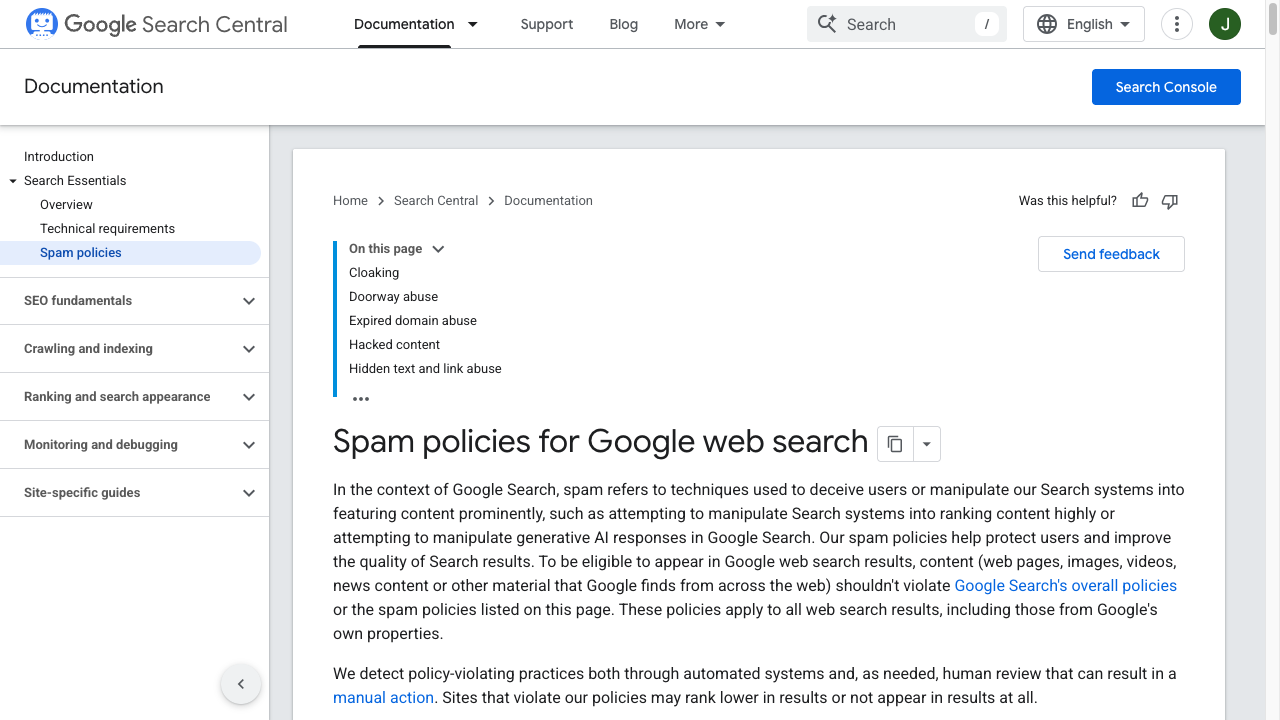
Autoblogging is fine when each URL has unique value and a human quality gate. It becomes spam risk when you mass-produce interchangeable pages.
The risk is not simply that the content is AI-generated. The real risk is publishing weak content at scale.
Autoblogging can go wrong when you publish articles that are generic, repetitive, inaccurate, or created only to capture keywords. That is where automation becomes a liability.
Common risks include:
- thin posts that do not answer the search intent
- repeated introductions and conclusions across many pages
- factual errors that no one reviewed
- weak examples that make the content feel generic
- internal links added without context
- publishing too many pages before the site has enough authority
If you are planning bulk AI content generation, you need a quality system before you scale. Otherwise, the workflow only helps you publish mistakes faster.
SEO Use Cases Where AI Autoblogging Makes Sense
AI autoblogging works best when the content pattern is repeatable but still needs useful human direction.
Good use cases include:
- building supporting articles around a pillar page
- publishing long-tail keyword articles from a content map
- creating location or use-case pages with unique inputs
- turning product documentation into helpful blog content
- generating drafts for multilingual SEO workflows
- refreshing old posts with new sections and internal links
It is weaker for topics that require original reporting, legal or medical expertise, deep product testing, or strong personal experience unless a human adds that substance.
A practical rule: if the article needs trust, examples, or judgment, AI can help draft it, but a human should improve it before publishing.
What a Good Autoblogging Setup Includes
A good setup has more than a writing model.
At minimum, you want:
- keyword and topic selection
- content briefs
- brand voice controls
- on-page SEO checks
- internal link suggestions
- duplicate content checks
- a human review stage
- a controlled publishing schedule
The review stage is where many teams cut corners. But this is also where the content becomes useful. Someone needs to check whether the article actually answers the query, makes accurate claims, and gives the reader a reason to trust it.
If you are building this process now, compare AI autoblogging tools based on workflow depth, not just word count.
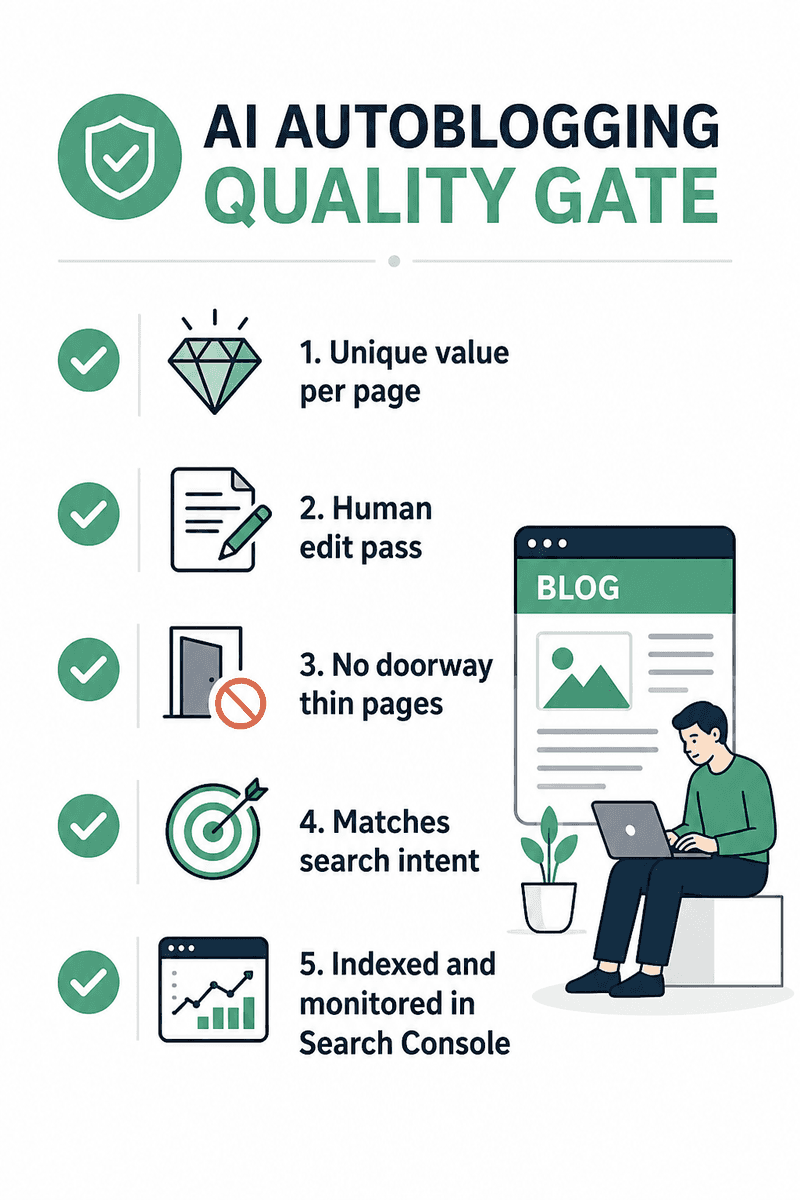
A Simple Quality Rule
Do not publish an AI-generated post just because it exists.
Publish it only after it passes a clear review:
- Does it answer the main query quickly?
- Does it add something useful beyond generic advice?
- Are the examples specific enough?
- Are the links relevant?
- Is the page part of a larger content cluster?
- Would you be comfortable showing it to a real customer?
That last question is useful because it cuts through the SEO language. If the post would embarrass your brand, it is not ready.
Final Takeaway
AI autoblogging is not a shortcut around content quality. It is a way to make a strong content process faster.
Use it when you have a clear keyword strategy, a repeatable workflow, and enough review discipline to keep the output useful. Avoid it if the plan is simply to publish hundreds of generic posts and hope Google sorts it out.
The safest approach is simple: automate the repetitive parts, keep humans in charge of judgment, and use an AI autoblogging SEO quality checklist before anything goes live.