
Best AI Autoblogging Tools for Automated Blog Publishing

Thu
AI SEO Specialist, Full Stack Developer

The best AI autoblogging tool is not just the one that writes the longest article.
For automated blog publishing, you need more than a draft generator. You need keyword planning, content briefs, brand voice control, SEO checks, internal linking, scheduling, and a review workflow that keeps low-quality posts from going live.
That is why choosing an autoblogging tool is different from choosing a general AI writer. In my experience, the teams that get the most value from automation are not trying to remove editors from the process. They are trying to remove repetitive setup work so editors can spend more time on judgment.
If you only need a single post, a regular blog generator may be enough. If you want to publish consistently across a content cluster, you need a system built for repeatable production. If the term itself is still fuzzy, what AI autoblogging is is the short definition I would start with.
What to Look For in an AI Autoblogging Tool
When choosing an AI autoblogging tool, teams often focus on the same practical concern: automation is useful only if it still preserves quality, relevance, integrations, and control. This is why the best AI autoblogging tool is not just the one that writes the longest article. It is the one that helps you publish better content faster.
Before comparing tools, get clear on the job.
A strong autoblogging tool should help you with:
- keyword and topic discovery
- article briefs
- long-form draft generation
- metadata creation
- internal linking
- brand voice consistency
- publishing or export workflows
- quality control before publishing
- content updates after publishing
The weaker tools focus only on output volume. They promise dozens or hundreds of posts, but do not give you enough control over quality.
Volume without review is the failure mode. Autoblogging that queues ten posts overnight is not a content engine. It is a delayed quality incident. I would rather miss a publish date than let an unedited batch hit the site. If review is slipping, cut cadence before you cut the quality control checklist.
That is risky. A slower tool with stronger review controls is usually better than a faster one that floods a site with thin drafts. Automated publishing only works when the system helps you publish better content faster, not just more content.
1. Junia AI
Junia AI is the best fit if you want an autoblogging workflow built around SEO content production, not just generic AI writing.
With Junia AI autoblogging software, you can move from topic planning to article creation with SEO controls, internal linking, and workflow structure. That makes it useful for teams that want to publish consistently without losing the editorial checks that protect search performance.
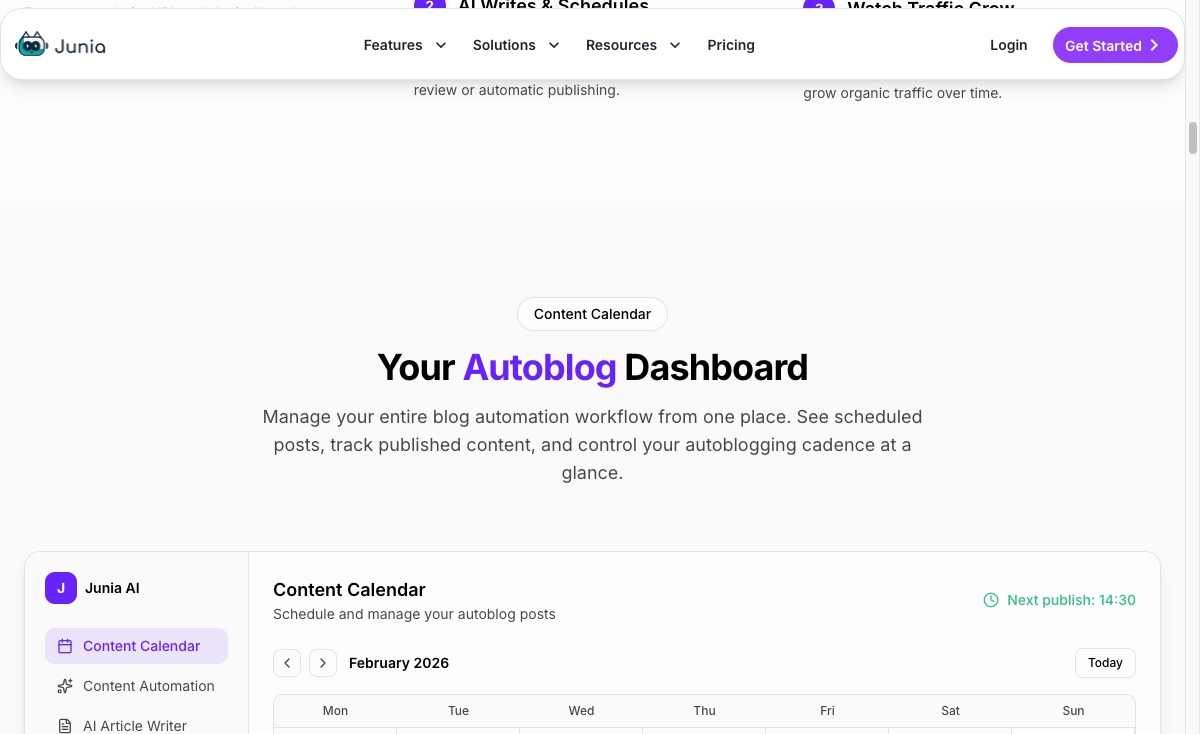
Where Junia stands out:
- SEO-focused article generation
- blog automation workflows
- support for internal linking
- brand voice and content consistency
- useful fit for topic clusters and scaled blog production
It is especially useful when your goal is to build a content engine around search. For example, a SaaS team can create supporting articles around a core product page, connect them with internal links, and keep the workflow organized instead of generating drafts one by one.
Personally, this is the category where I think Junia makes the strongest case: not "write me a blog post," but "help me run a repeatable SEO publishing system." Junia is also a good choice if your autoblogging process overlaps with a programmatic SEO tool, because both workflows depend on structure, templates, and quality control at scale.
2. A Dedicated AI Article Writer
Some teams do not need full autoblogging yet. They need strong long-form drafts first.
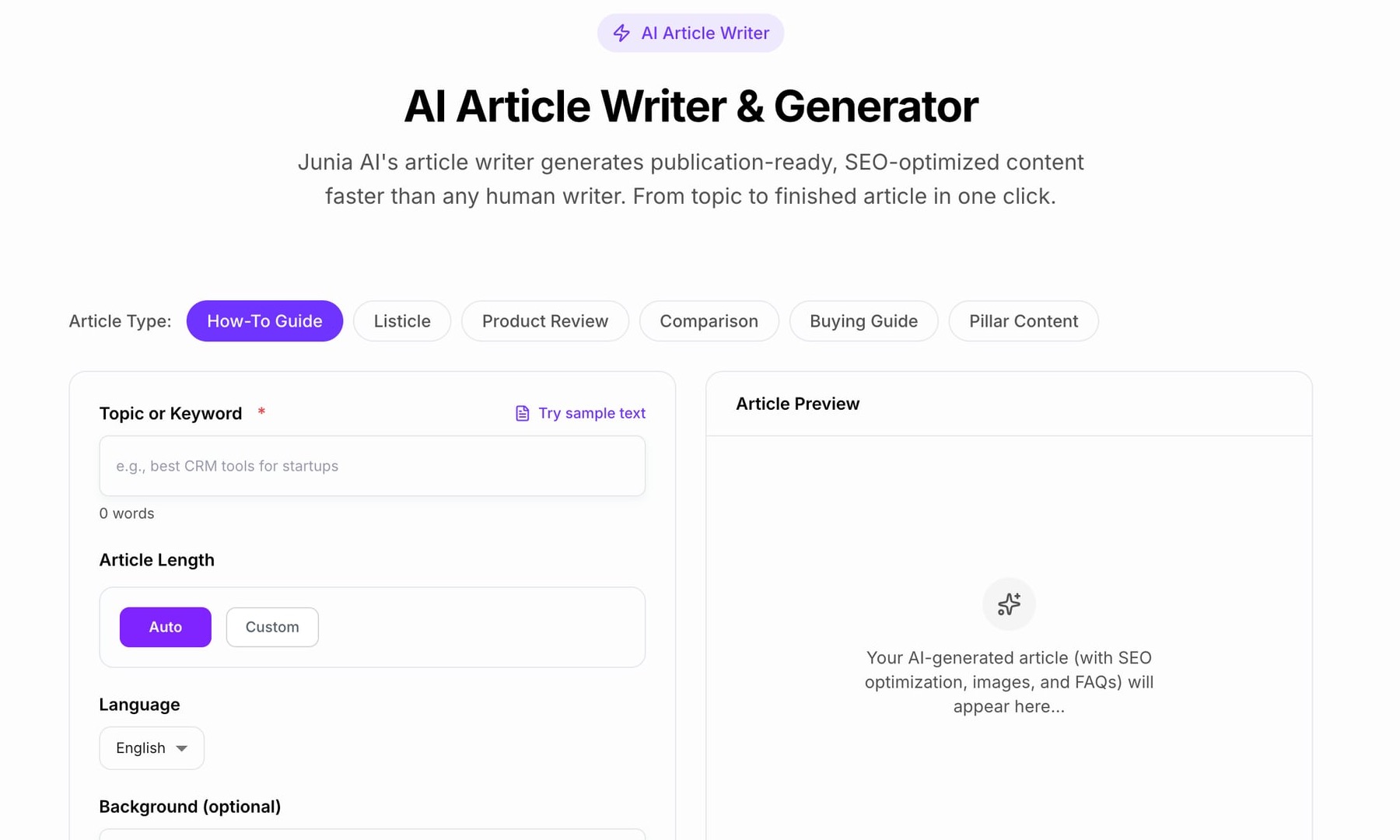
In that case, an AI article writer can be enough. It helps create individual blog posts from keywords, prompts, or outlines. You still handle the calendar, linking, publishing, and review manually.
This setup is best for:
- solo creators
- small blogs
- teams publishing a few posts per month
- writers who want draft support but not full automation
The limitation is that it does not manage the whole workflow. Once your content plan grows, you will probably need more automation around briefs, links, and publishing.
I have seen this setup work well when publishing volume is modest. It starts to feel brittle when every new article needs manual keyword mapping, manual internal links, and manual handoff tracking.
3. Blog Post Generators
Blog post generators are simple and useful for one-off content.
They usually ask for a topic, keyword, tone, and format, then create a draft. Some can also create outlines, titles, FAQs, and meta descriptions.
These tools are good when you want speed without building a full publishing system. They are useful assistants, not real autoblogging platforms. They are less useful when you need a repeatable process for dozens of connected articles.
If you are still comparing general writing options, look at how a blog generator handles outlines and metadata, not how many words it dumps in one pass.
4. Content Calendar and Planning Tools
A publishing schedule is a quiet but important part of autoblogging.
A calendar tool helps you decide what to publish, when to publish it, and how each post supports the larger cluster. Without that, AI makes it easy to create too many drafts with no clear priority. I have used everything from a Google Calendar with color-coded clusters to CoSchedule when several people needed status, owners, and a shared queue. The product matters less than whether the calendar can say "this draft is blocked on review."
This is one of the less glamorous parts of the workflow, but it matters more than most people expect. A mediocre calendar creates mediocre automation, even if the writing tool is strong.
Look for planning tools that support:
- topic clusters
- keyword intent
- publishing cadence
- content status
- reviewer ownership
- refresh dates
This is especially important if you have multiple writers, editors, or sites.
If you need a concrete walkthrough of building an SEO calendar, this is a useful model. Steal the cadence and ownership, not the topic list:
Watch Me Build a 6-Month SEO Content Calendar (Step by Step)
5. Internal Linking Tools
Autoblogging creates a second problem: once you publish more posts, you need to connect them.
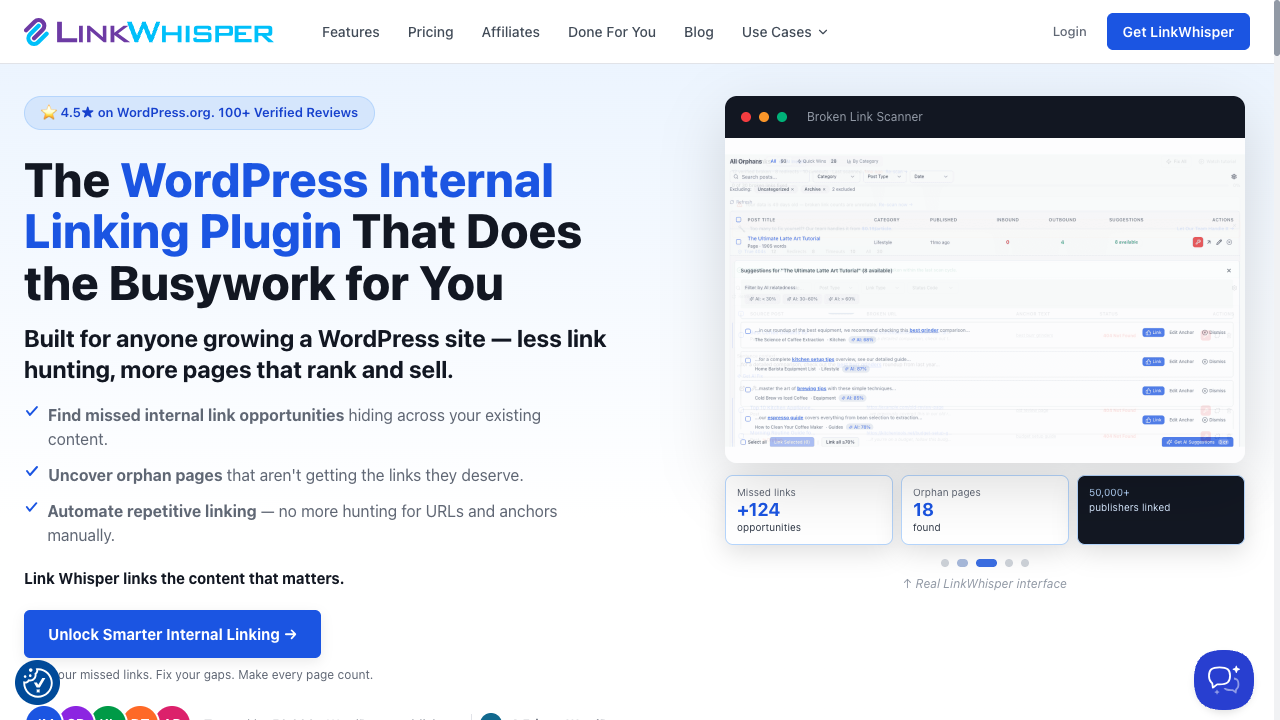
An internal linking tool such as Link Whisper helps identify where new articles should link and which older pages should link back. This improves crawlability, distributes authority, and helps readers move through related topics.
For SEO, this can matter as much as the article itself. A strong post with no internal links is easier to miss.
My rule of thumb is simple: if a tool helps you publish more pages but does not help those pages connect to the rest of the site, it is only solving half the problem. I would not auto-accept every suggested anchor. Review the sentence, then click accept.
How to Choose the Right Tool
Use this simple filter:
| Your current bottleneck | Best fit | Why it works |
|---|---|---|
| You need a full SEO publishing workflow | Junia AI | It connects planning, article generation, internal links, and publishing controls. |
| You mainly need stronger long-form drafts | AI article writer | It helps with article creation while you keep the calendar and review process manual. |
| You need a quick one-off post | Blog post generator | It is faster and simpler than setting up a complete autoblogging system. |
| Your writing process works but operations are messy | Calendar and internal linking tools | They improve scheduling, ownership, and site structure without changing your writer stack. |
The best tool depends on how much of the workflow you want to automate.
Do not start by asking, "Which tool writes the best article?" Start with, "Where does our publishing process break down after the draft exists?"
What I would actually set up
If you are serious about automated publishing, start by mapping the AI autoblogging workflow you can actually staff. Then choose the tool that supports that workflow, not the one that promises the most posts per week.
Do not choose based only on word count, templates, or how fast the tool can create articles. Those things matter, but they are not enough.
For SEO, the real question is: can this tool help you publish useful, connected, reviewable content at scale?
If the answer is yes, it is worth considering. If it only generates more drafts, I would pass. That is not really an autoblogging tool. It is just a faster blank-page assistant.