
Free AI Content Detector
The AI Content Detector scans text for common AI-writing signals and provides practical feedback to improve naturalness and readability. Review highlighted passages, AI-likelihood scoring, and rewrite suggestions for blogs, academic work, SEO content, and editorial reviews.
AI Detection Report
Your AI detection report will appear here (score, signals, highlights, and improvement tips)...
How the AI Content Detector Works
Get results in seconds with a simple workflow.
Paste Your Text
Add the content you want to check—blog posts, essays, landing pages, emails, or paragraphs. Longer samples typically produce a more reliable analysis.
Choose Content Type and Goal (Optional)
Select the content type (blog, landing page, academic, etc.) and your goal (sound more natural, improve SEO/E-E-A-T, clarity). This tailors the detection signals and recommendations.
Get a Report + Fixes
Receive an AI-likelihood score, key signals, highlighted passages, and practical edits to make the writing more original, specific, and human.
See It in Action
Example of turning generic, AI-sounding text into more specific, experience-driven writing that reads more human and SEO-helpful.
SEO is important for businesses because it helps websites rank higher and get more traffic. There are many strategies you can use to improve SEO, such as keyword research and creating quality content.
For most small business sites, SEO matters because it can bring consistent leads without paying for every click. Start by picking one primary keyword per page (based on search intent), then update the page to answer the top questions people ask—like pricing, timelines, and common mistakes. On service pages, add proof (photos, case examples, FAQs, and clear next steps) so the content isn’t just “optimized,” but genuinely helpful.
Why Use Our AI Content Detector?
Powered by the latest AI to deliver fast, accurate results.
AI-Likelihood Score + Confidence Notes
Get a clear AI probability estimate with context on what the score means, so you can decide whether edits are needed for authenticity, editorial standards, or SEO quality.
Signal-Based Analysis (Not Guesswork)
Detects common AI-writing signals like repetitive phrasing, generic transitions, low-specificity claims, over-uniform sentence structure, and template-like paragraphs—then explains why they matter.
Highlighted Passages With Reasons
Flags sections that read overly generic or patterned and tells you exactly what triggered the detection (e.g., vague statements, unnatural keyword stuffing, or boilerplate conclusions).
Humanization Recommendations That Preserve Meaning
Provides targeted rewrite tactics—add specifics, examples, constraints, unique perspective, and concrete details—while preserving the original intent and key points.
SEO + E-E-A-T Guidance (Helpfulness Upgrade)
For content marketing and SEO pages, get improvement suggestions to strengthen helpfulness: specificity, experience signals, internal linking ideas, clearer angles, and reduced “generic AI tone.”
Pro Tips for Better Results
Get the most out of the AI Content Detector with these expert tips.
Use longer samples for a better read
If possible, paste 200–800+ words. Very short text can look “AI-like” simply because it lacks context and specificity.
Replace generic claims with specific proof
Swap phrases like “it’s important” or “many businesses” with concrete details: who, what, when, constraints, examples, and outcomes you can defend.
Add experience signals for E-E-A-T
Include what you tried, what worked, what didn’t, and why. Practical steps, real considerations, and trade-offs make content feel human and more helpful for SEO.
Vary structure and reduce template sections
Detectors often flag repeated patterns (same transitions, same sentence lengths). Mix short and long sentences, and ensure each paragraph has a distinct purpose.
Edit conclusions and intros first
AI-generated content often has generic openers/closers. Rewrite those to match your audience, your unique angle, and your real recommendation.
Who Is This For?
Trusted by millions of students, writers, and professionals worldwide.
What an AI Content Detector Actually Checks (And Why It Matters)
AI detectors do not magically know where your text came from. They look for patterns that often show up in generated writing. The same stuff editors notice in 10 seconds.
That matters because readers bounce when content feels vague or templated, and SEO teams end up with pages that look “fine” but do not earn trust. A good AI detection report is basically an editing roadmap: what feels off, where it happens, and what to change without rewriting everything from scratch.
Common “AI-Written” Signals This Tool Looks For
Here are the usual giveaways, both for detectors and for humans reading your page:
1) Low specificity and safe, broad claims
If your writing could apply to any company, any industry, any situation, it will read generic.
Examples of generic phrasing:
- “SEO is important for businesses.”
- “There are many strategies you can use.”
- “In today’s digital world…”
What to do instead: add constraints, numbers you can verify, a specific scenario, or an opinion with reasoning.
2) Repetitive transitions and predictable paragraph rhythm
AI text loves the same connectors over and over. “Additionally”, “Moreover”, “In conclusion”. And paragraphs that all feel the same length and shape.
What to do instead: vary sentence length, cut filler transitions, and give each paragraph a job. One paragraph, one point.
3) Template intros and conclusions
This is a big one. A lot of AI generated content starts with a broad definition and ends with a polite wrap up that says nothing.
What to do instead: rewrite the first and last 10 percent in your own voice. Mention the audience, the stakes, and what you actually recommend.
4) Too much polish, not enough lived detail
Perfectly neutral, balanced writing can feel suspicious. Real writing has trade offs, preferences, little imperfections, and specific examples.
What to add:
- what you tried
- what surprised you
- what failed
- what you would do differently next time
5) Keyword stuffing that feels unnatural
Sometimes content gets “SEO optimized” in a way that sounds robotic. Repeating the exact same keyword in every other sentence is a fast way to get flagged by readers.
What to do instead: use natural variants, answer the query better, and structure the page so it is actually helpful.
How to Use the AI Score Without Overreacting
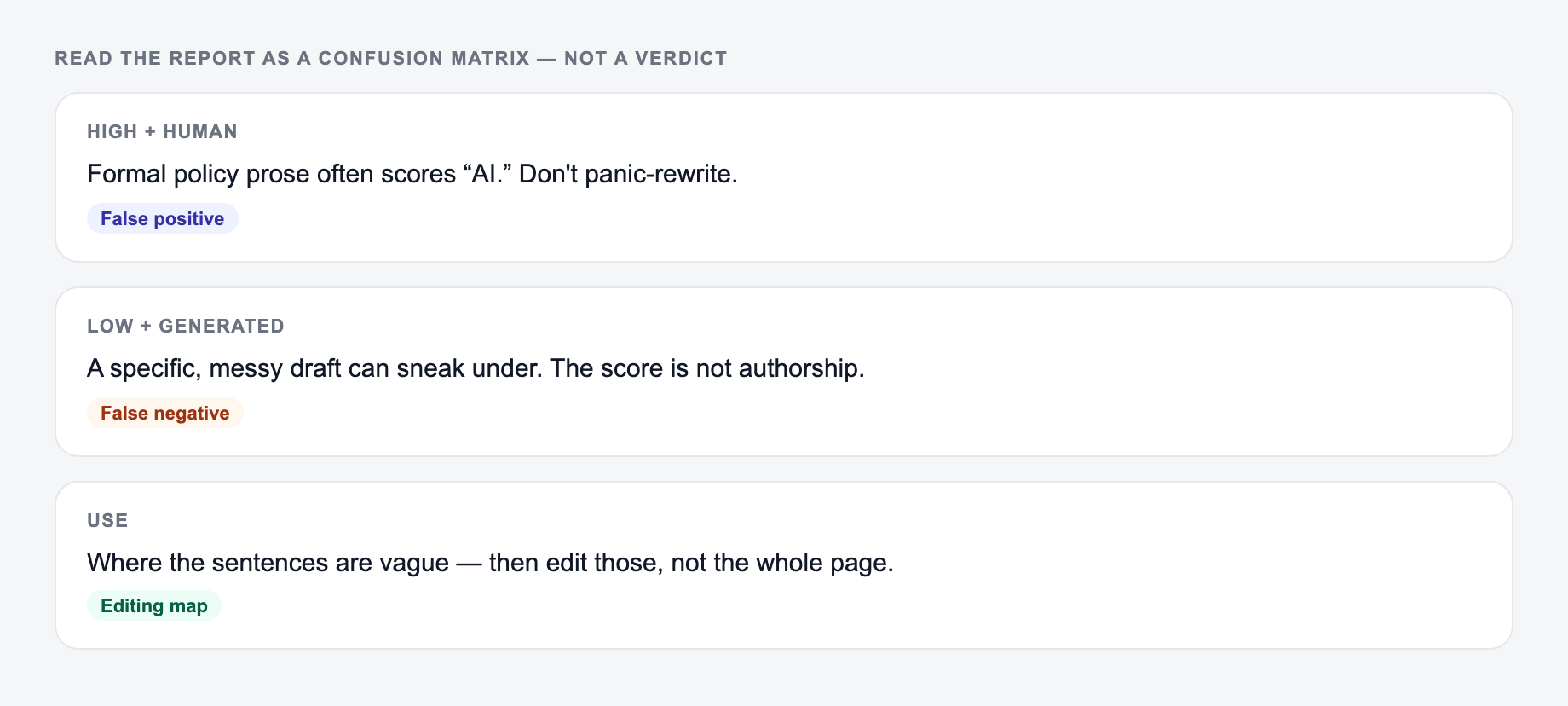
The score is a signal, not a verdict.
- High score usually means the text is generic, repetitive, or overly uniform. Even if a human wrote it, it probably needs stronger specificity.
- Medium score often means it is mostly fine but has a few templated sections (usually intro, conclusion, or list heavy areas).
- Low score does not automatically mean “great content”. It just means fewer AI like patterns were detected.
If you are using this for editorial QA or SEO, treat the score like a priority indicator. Where should you edit first to improve trust and clarity?
A Simple “Humanization” Checklist That Keeps Meaning Intact
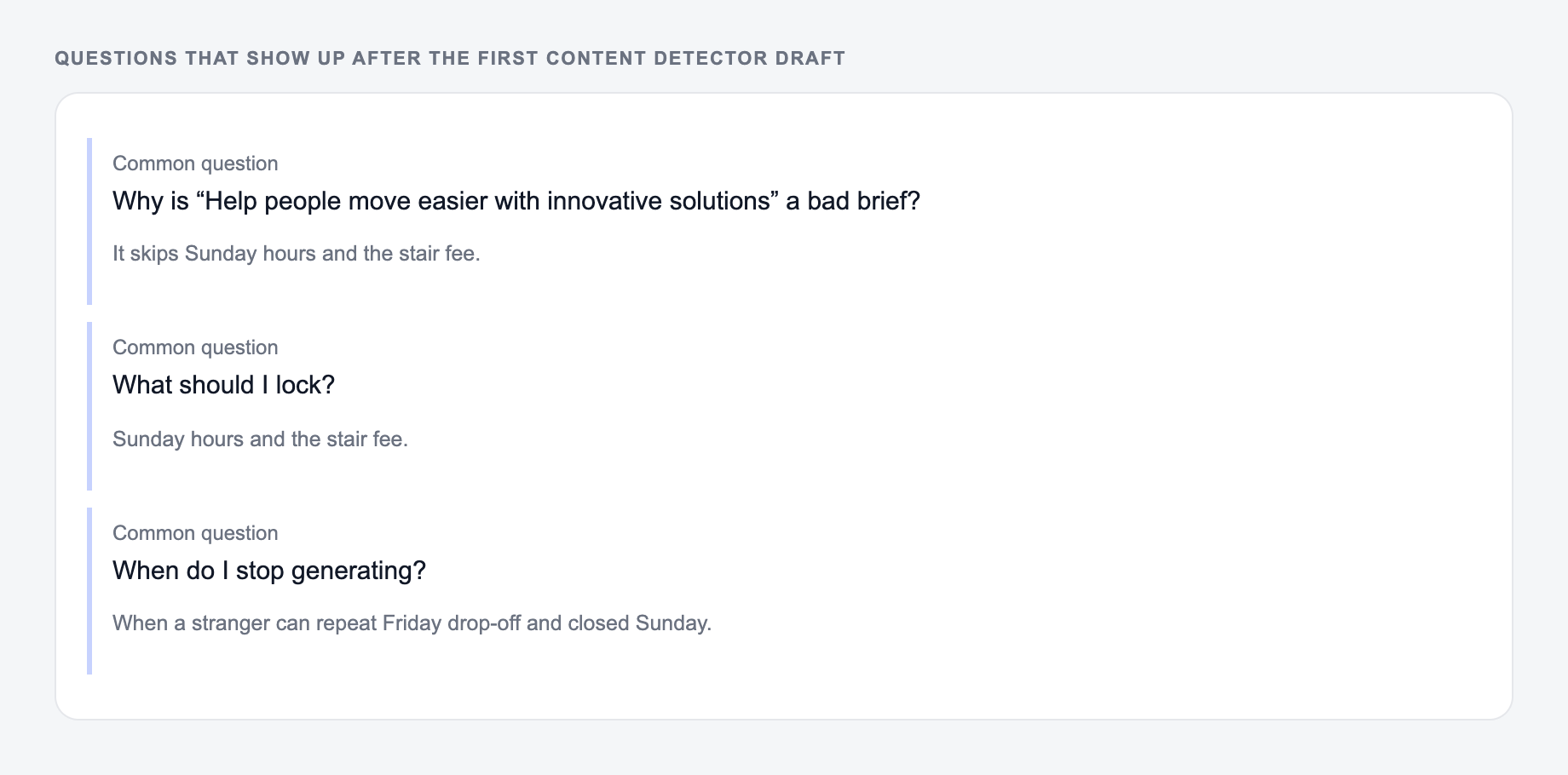
Answer these before you generate a second batch. A reroll will not fix a vague brief.
If you want quick edits that do not change your core message, run through this:
-
Add one concrete example per section
A real scenario, a small case, a specific workflow, anything. -
Replace vague nouns with real nouns
“Businesses” becomes “local roofers”, “B2B SaaS teams”, “new Shopify stores”. -
Introduce a mild opinion or trade off
“This works best when…” or “Avoid this if…” instantly feels more human. -
Cut filler sentences
If a line only restates the heading, delete it. -
Rewrite the intro and conclusion in your natural voice
Even two small edits there can change how the whole piece feels.
If you need a faster workflow, you can pair detection with a rewrite tool and then re check the revised version. On Junia AI, most teams do this in one loop: detect patterns, apply targeted edits, then run it again until the writing feels genuinely specific.
AI Detection for SEO and E-E-A-T: What to Fix First
If your goal is SEO helpfulness (not just “lower AI score”), focus on these areas first:
- Experience signals: add what you did, what you learned, what you would recommend now
- Proof and specificity: examples, screenshots, numbers, constraints, definitions that match your audience
- Original angle: one unique takeaway that is not in every other article
- Clear next steps: a reader should know exactly what to do after finishing the page
- Reduce boilerplate: intros, outro summaries, and “benefits of X” paragraphs that say nothing new
Google does not rank content because it looks human. It ranks content that is helpful and trustworthy. “Sounding human” is usually just the surface level symptom of being specific and useful.
Quick FAQ: Can AI Detectors Be Wrong?
Yes, and it happens a lot.
Short text, overly formal writing, non native English, or highly structured academic style can trigger false positives. On the flip side, a lightly edited AI draft can sometimes slip by. That is why the most valuable part of the report is not the number. It is the highlighted sections and the reasons.
Use the report like an editor would. Fix what is genuinely weak. The score will usually follow.
If the text is clearly too uniform, it often helps to humanize AI text before you run another check. And if you want the bigger picture behind those results, this guide on are AI detectors accurate plus this walkthrough on how to add a human touch to AI-generated content will help you interpret the score more realistically.
Edge cases worth one run:
- Empty or two-word input — it should ask for a noun, not invent a project.
- Mixed lists — one delimiter per run.
- Protected terms — lock them before you generate.
Interpret the Report With a Confusion Matrix
A detector result is not authorship proof. Evaluate it against known-origin samples using four buckets: human text labeled human, human text labeled AI, AI-assisted text labeled AI, and AI-assisted text labeled human. The false-positive bucket matters especially in education and employment, where an automated label can unfairly affect a person. Do not use a score alone for discipline, grading, hiring, or accusations; follow applicable policy and provide human review and an appeal path.
The form is just the text under review. The report is a signal, not proof of who wrote it.
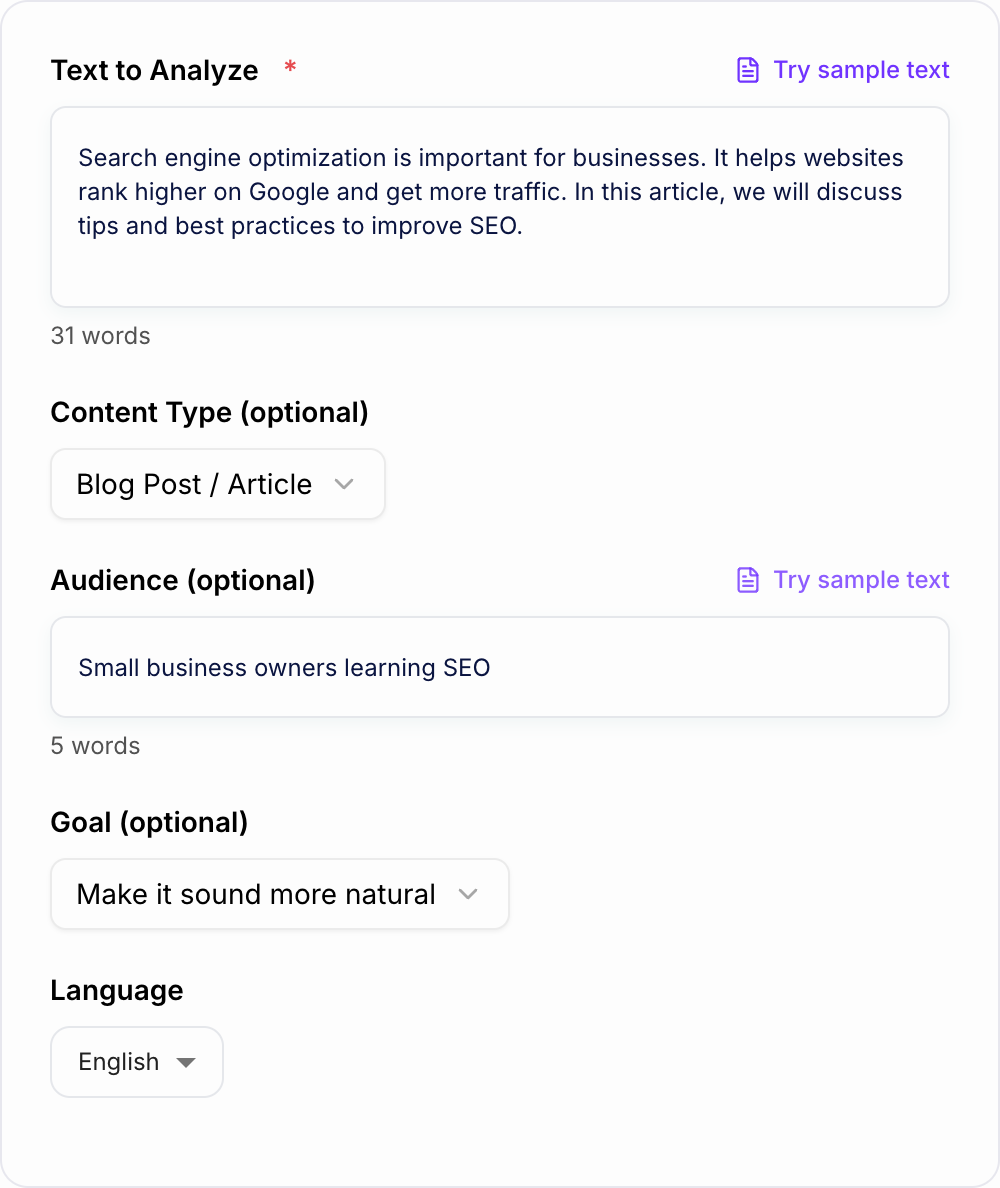
Input / output pair to copy:
IN: A one-line request like “run the ai detector” with no audience, channel, or constraint.
OUT: A brief the AI Content Detector can use: who it is for, where the output will appear, and what must stay true.
If your real run diverges from that shape — extra claims, missing names — change the input, not the hope.
Length, genre, editing, language background, quotations, formulaic technical prose, and model/version changes can affect outputs. A score from one passage, one detector, or one date does not establish a general accuracy rate. Preserve the original text and settings when investigating a result, and avoid repeatedly rewriting solely to move a number. Instead, inspect highlighted passages for actual editorial problems such as unsupported claims or repetition.
A useful report note reads: “The tool highlighted three repetitive transitions; the editor removed two because they impaired flow. The authorship score was not used as evidence.” That separates a valid writing edit from an unsupported provenance conclusion.
Frequently Asked Questions
How does this AI content detector work?+
It analyzes your text for patterns often associated with AI-generated writing—such as generic claims, repetitive transitions, uniform sentence rhythm, low-specificity wording, and templated structure—then returns a score and a breakdown of detected signals.
Is the AI detection score 100% accurate?+
No. AI detection is probabilistic. A score indicates likelihood based on signals in the text, but it can produce false positives or negatives. Use the report as a practical editing guide rather than a definitive verdict.
What makes content look “AI-written” to detectors and readers?+
Common causes include vague statements without examples, repetitive phrasing, overly balanced sentences, generic intros/conclusions, excessive hedging, and “template” paragraphs. Adding specifics, constraints, and real details typically improves perceived authenticity.
Will this help with SEO and Google rankings?+
It can help you improve content quality signals by making writing more specific, helpful, and experience-driven (E-E-A-T). Rankings depend on many factors, but reducing generic AI tone and increasing helpfulness can strengthen on-page quality.
How can I reduce AI-like patterns without changing the meaning?+
Keep your core points, then add concrete examples, unique insights, numbers you can verify, clearer claims, and real steps. Vary sentence structure, remove filler, and replace generic transitions with specific context.
Can I check content in other languages?+
Yes. Choose your output language, and the report will be generated accordingly. The tool focuses on universal writing signals (specificity, repetition, structure) while respecting language differences.