
AI Writing for Small Businesses: Publish 3x More Content Without Hiring

Yi
SEO Expert & AI Consultant

AI writing tools can give small businesses a real advantage, but not because they magically replace a team. Their real value is speed: they help you publish more useful content, test ideas faster, and keep marketing moving when time and budget are tight.
For most small businesses, the bottleneck is not a lack of ideas. It is limited capacity. Founders and lean teams still need landing pages, blog posts, emails, product copy, and SEO content, but they rarely have enough time to produce all of it consistently.
That is where AI writing tools help most:
- They reduce first-draft time for blogs, emails, product pages, and campaign copy.
- They make editing faster by catching structure, clarity, and tone issues early.
- They support SEO workflows by helping teams build outlines, optimize drafts, and repurpose content.
- They lower production costs compared with outsourcing every piece from scratch.
That does not mean you should publish everything AI generates. In fact, if you rely on bulk output without review, you can easily end up with thin or repetitive pages. This is exactly why it helps to understand when bulk content generation is ruining your website.
Used well, AI helps small businesses publish more high-quality content without hiring a full editorial team. Used badly, it just helps them publish more mediocre pages faster.
1. Leveraging AI to Compete with Larger Organizations
Small businesses do not usually lose to bigger competitors because they lack ideas. They lose because larger teams can publish more, test faster, and cover more channels at once.
AI helps close that gap when you use it to increase output in the right places:
- Validate ideas before investing heavily: Use AI to analyze market demand, spot content gaps, and compare competitor positioning before launching a campaign or product page.
- Personalize customer communication: AI can turn the same core offer into different messages for repeat buyers, first-time visitors, or local audiences.
- Scale marketing without adding headcount: Small teams can draft landing pages, email variations, ad copy, and blog outlines much faster than they could manually.
Examples of where AI creates an edge
- E-commerce store: Draft product descriptions, FAQ answers, and abandoned-cart emails without writing each asset from scratch.
- Local restaurant: Turn one seasonal campaign into a landing page, email, Instagram captions, and Google Business updates.
- Boutique brand: Use AI to organize product information, improve merchandising copy, and speed up campaign planning.
The practical advantage is not "doing everything with AI." It is using AI to remove the slowest parts of content production so your team can spend more time on offers, positioning, and customer insight.
2. Boosting Online Visibility with AI for Better SEO Optimization
AI can improve SEO workflows, but it works best when it supports a clear strategy rather than replacing one.
Where AI actually helps
1. Keyword and topic discovery
AI tools can surface patterns in search queries, related topics, and competitor coverage. That makes it easier to spot useful content opportunities before you start writing.
2. Faster content briefs and outlines
Instead of starting from a blank page, you can generate outlines, subtopics, and draft angles in minutes. That is especially useful for teams trying to write more content in less time without sacrificing structure.
3. Readability and on-page improvement
Many AI tools help tighten introductions, improve transitions, and catch weak phrasing. Some also support on-page SEO tasks like keyword placement, heading structure, and internal links.
4. Content repurposing
A single article can become email copy, social posts, landing page snippets, and FAQ blocks. For small teams, this is often one of the highest-impact use cases.
A simple workflow small businesses can follow
| Stage | What AI helps with | What humans still need to do |
|---|---|---|
| Research | Topic ideas, SERP patterns, keyword clustering | Choose priorities based on business goals |
| Drafting | First drafts, outlines, summaries | Add expertise, examples, and differentiation |
| Editing | Clarity, tone, grammar, structure | Fact-check, remove fluff, improve trust |
| Optimization | Titles, meta descriptions, internal link suggestions | Make final SEO and brand decisions |
| Repurposing | Social posts, email variants, FAQ extraction | Tailor for channel and audience |
| Do this with AI | Don’t do this |
|---|---|
| Briefs, outlines, first drafts | Publish unedited pages at volume |
| Repurpose one strong post | Clone the same thin post across keywords |
| Fix readability after you add examples | Treat “humanizer” as the whole edit |
3x publishing only helps if quality keeps up. Competitors lose when you ship useful specifics, not when you ship more filler.
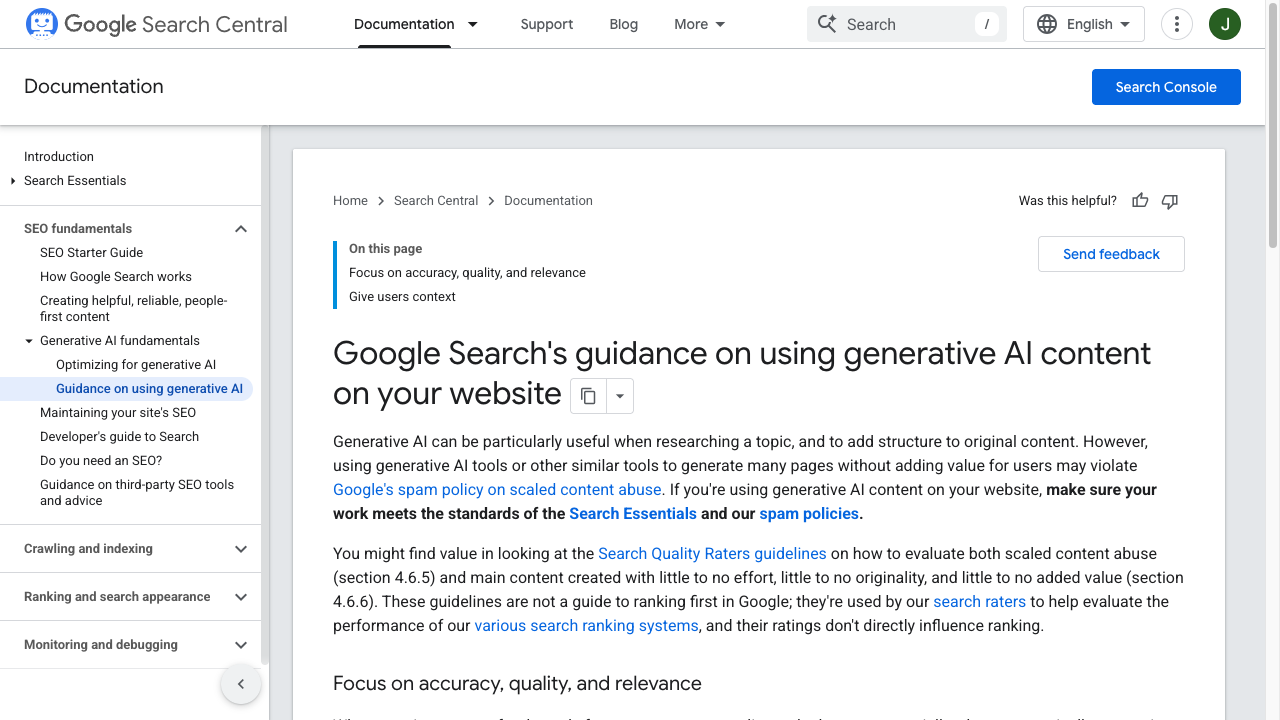
Does Google see automatically generated content as a bad thing?
If your goal is SEO growth, it also helps to compare tools through the lens of choosing AI writing tools for SEO, not just raw generation speed.
3. Automation and Advanced Analytics with AI Writing Tools
One of the most practical reasons small businesses adopt AI is simple: it removes repetitive work that slows marketing down.
What to automate first
Start with the tasks that are high-frequency but low-leverage:
- Blog outlines and first drafts
- Product descriptions and page variations
- Email subject lines and campaign variants
- Basic proofreading and cleanup
- Repurposing one article into social posts or FAQs
Where analytics become useful
The second advantage is visibility. Many AI-supported workflows make it easier to connect content production with performance signals such as:
- Search impressions and click-through rate
- Landing page conversions
- Email engagement
- On-page behavior and drop-off points
That matters because small businesses do not just need to publish more. They need to learn faster. If one topic, offer angle, or CTA consistently performs better, AI helps teams spot that pattern early and produce follow-up assets faster.
Personalization without overcomplication
AI can also help tailor messaging by audience segment. For example, one campaign can be adapted into:
- a benefit-led version for first-time visitors,
- a feature-led version for returning users, and
- a trust-led version for higher-intent buyers.
That kind of personalization is difficult to scale manually. With AI, it becomes much more realistic for a lean team.
4. Enhancing Video Production with AI
AI does not just help with blog posts. It can also make video production more realistic for small teams that need visual content but do not have an in-house editor or a large production budget.
The best use case is not cinematic brand storytelling. It is faster production of practical marketing assets such as:
- product explainers
- short social clips
- testimonial edits
- tutorial videos
- ad variations for testing
What AI video tools actually help with
- Faster first cuts: AI tools can turn scripts, blog content, or bullet points into a rough video draft much faster than editing from scratch.
- Template-based production: Many platforms make it easy to apply brand colors, logos, captions, and layouts consistently.
- Repurposing existing content: One article or webinar can become several short-form clips, which fits well with a broader strategy for how to repurpose content using AI.
- Lower production overhead: Small teams can test more video ideas before committing time or budget to full-scale production.
The key is to use AI video tools where speed matters most. For routine marketing assets, automation can save hours. For high-stakes brand videos, human review still matters more.
5. Building Business Rationales, Case Studies, and Content Marketing Strategies with AI
AI writing tools are especially useful when a small business already knows its offer, but needs help explaining that offer clearly and consistently.
That shows up in three common content types:
- Business rationales: why a product, service, or initiative matters
- Case studies: what problem was solved, how it was solved, and what changed
- Content plans: which topics to publish, for whom, and in what order
Used well, AI helps teams turn rough internal knowledge into clearer customer-facing content. That is particularly useful for founders who have strong subject knowledge but limited time to write. It also pairs well with a broader process for integrating AI into your marketing strategy.
Where AI helps most
Compelling business rationales
AI can help shape messy notes into a clearer argument. That might mean turning founder knowledge into a sharper positioning statement, a benefits-led landing page section, or a more persuasive internal proposal.
Stronger case studies
Case studies often stall because the raw ingredients are scattered across emails, call notes, and dashboards. AI can help organize that material into a cleaner narrative: challenge, solution, and result.
Better content planning
Instead of publishing random topics, teams can use AI to cluster related themes, identify customer questions, and map ideas to the funnel stages that matter most.
A practical example
Imagine a small software agency that wants to win more mobile app projects.
With AI support, the team could:
- Turn its rough pitch into a clearer business rationale for why its development process reduces launch risk.
- Convert past client outcomes into two or three focused case studies.
- Build a content plan around high-intent topics that potential buyers actually search for.
That kind of workflow does not replace strategic thinking. It just helps a small team document expertise faster and publish it more consistently.
6. Enhancing Productivity and Workflow with AI Writing Tools
The biggest productivity gain from AI is not that it writes everything for you. It is that it removes friction from the parts of content work that slow teams down.
Where the workflow gets faster
1. Repetitive drafts
Product descriptions, email variants, ad copy, and FAQ entries are often necessary but time-consuming. AI can produce a useful first pass so the team starts from something editable instead of a blank page.
2. Research and synthesis
AI can summarize notes, extract themes from customer feedback, and group related ideas. That makes it easier to move from messy inputs to a usable brief.
3. Editing support
For many teams, the draft is not the real bottleneck. The bottleneck is cleanup. AI can help tighten structure, smooth transitions, and improve readability before a human does the final pass.
4. Repurposing
One webinar, article, or sales call transcript can be turned into several smaller assets for email, social, support, or sales enablement.
The practical rule
Use AI where consistency and speed matter most. Keep humans focused on judgment, accuracy, and brand voice.
That division of labor is what improves workflow without sacrificing quality. It is also why small teams often get the best results when they optimize AI-generated content for different platforms instead of publishing the same draft everywhere.
The Future of Content Creation: Human-AI Collaboration
The strongest small-business content teams do not treat AI as a replacement for human judgment. They use it to remove repetitive work, speed up drafts, and free up time for the parts that actually create differentiation.
Here is the practical model:
- Use AI for leverage: outlines, first drafts, summaries, repurposing, and editing support.
- Use humans for quality control: positioning, examples, customer insight, fact-checking, and final judgment.
- Use both for scale: AI increases output; humans keep that output useful and credible.
That last part matters. If every brand publishes generic AI copy, the businesses that stand out will be the ones that add experience, opinion, and specificity. That is also why the long-term conversation is not really AI vs. human writers. The better question is how to combine both well.
When small businesses build a workflow around collaboration instead of replacement, AI becomes a practical growth tool rather than a shortcut that creates cleanup work later.
Conclusion
AI writing can help small businesses publish more consistently, move faster, and compete more effectively with larger teams. But the win does not come from pressing a button and publishing whatever comes out.
It comes from using AI to speed up the parts of content production that are slow, repetitive, or hard to scale, while keeping human review where it matters most.
If you approach it that way, AI becomes a practical advantage: faster drafts, better SEO workflows, more repurposing opportunities, and a steadier publishing cadence without hiring a full content team.
The businesses that benefit most are not the ones publishing the most AI text. They are the ones building a better process around it.