
How AI Writing Software Helps Solopreneurs Publish More Without Sounding Generic

Yi
SEO Expert & AI Consultant

If you run the business alone, content is usually not one task. It is research, planning, writing, editing, SEO, repurposing, publishing, and performance review.
That is why AI writing software can be so useful for solopreneurs. Not because it replaces your judgment, but because it takes pressure off the slowest parts of the content process. A good AI workflow can help you turn one idea into a brief, a blog draft, a LinkedIn post, an email, a landing page section, and a short video script without starting from zero every time.
The risk is just as real. If you use AI as a one-click publisher, your content will sound like everyone else's. If you use it as a writing assistant, editor, research organizer, and repurposing partner, it can help you publish more while keeping the voice, examples, and opinions that make a solo business worth following.
The Short Answer
AI writing software helps solopreneurs by reducing the blank-page work around content creation. It can help with:
| Content job | How AI helps | What you still need to do |
|---|---|---|
| Topic research | Finds angles, questions, keywords, and content gaps | Choose the angle that fits your offer and audience |
| Content planning | Turns ideas into briefs, outlines, and calendars | Prioritize based on business goals, not volume |
| Drafting | Creates a first version faster than writing from scratch | Add experience, examples, proof, and judgment |
| Editing | Improves clarity, grammar, structure, and readability | Remove generic claims and check accuracy |
| SEO | Suggests keywords, titles, FAQs, and internal link opportunities | Match search intent and avoid over-optimization |
| Repurposing | Converts long-form content into posts, emails, scripts, and captions | Adapt each format instead of copying the same text everywhere |
For most solopreneurs, the biggest win is not "write 5x more content." It is building a repeatable content system that does not depend on your energy level on a random Tuesday.
Why AI Writing Software Fits Solopreneurs So Well
Solopreneurs have the same marketing needs as larger companies, but without the team behind them. You still need traffic, trust, email nurture, launch content, customer education, and social proof. You just do not have a content strategist, writer, editor, SEO specialist, and social media manager sitting in the next room.
The solo business category is not small either. The U.S. Census Bureau tracks nonemployer businesses as firms with no paid employees through its Nonemployer Statistics program, and a 2025 Census story on nonemployer business growth reported that nonemployers grew faster than employer businesses from 2012 to 2023.
That matters because content has become one of the few channels a small operator can compound over time. A useful article can bring search traffic for months. A good email can sell without a live call. A clear comparison page can answer objections before a prospect contacts you.
AI writing software gives solopreneurs leverage in exactly those places. It helps you move from "I should post more" to "I have a repeatable process for turning ideas into assets."
The Best Use Cases for AI Writing Software
The mistake is treating AI as one big writing button. The better approach is to assign it specific jobs inside your workflow.
1. Turn scattered ideas into a content plan
Most solo founders already have ideas. They are sitting in notes, customer calls, DMs, support emails, podcast transcripts, and half-written outlines.
AI can turn that messy material into a usable plan. You can paste in raw notes and ask for:
- recurring themes
- customer objections
- blog post angles
- newsletter topics
- comparison page ideas
- social post hooks
- common questions worth answering
A content calendar generator is useful when it groups ideas around business goals instead of filling 90 days with random topics. The plan should help you attract the right audience, explain your offer, answer objections, and keep existing customers engaged.
2. Create SEO briefs before you write
If you are publishing blog content, the brief matters more than the draft. A weak brief produces a weak article, even if the sentences sound polished.
Before writing, use AI to define:
- the primary search intent
- the reader's likely level of knowledge
- related questions
- examples the article should include
- internal links that would genuinely help
- claims that need evidence
- sections that competitors usually miss
For SEO-led posts, an SEO content brief generator can help you get the structure right before the writing starts. That prevents the common solopreneur problem where you spend three hours writing and then realize the article does not match what searchers wanted.
3. Draft faster without outsourcing your voice
AI is good at producing a first draft. It is not good at knowing what you actually believe, what your customer said last week, or where your product is strongest.
So use AI for the first 60% of the draft, not the final 100%.
A practical prompt might look like this:
Write a first draft for a solopreneur audience. Use short paragraphs, plain language, and concrete examples. Do not make exaggerated claims. Leave placeholders where I should add personal examples, customer stories, data, or screenshots.
That last sentence is important. It trains the tool to make room for your expertise instead of pretending it already has it.
For blog posts, a dedicated blog post generator can help you move quickly from outline to draft. But the draft should still go through a human pass for examples, opinion, product fit, and accuracy.
4. Keep your brand voice consistent
When you write everything yourself, your tone can change depending on time, mood, and deadline pressure. One day your content is sharp and direct. The next day it sounds like a corporate brochure because you were tired and accepted the AI draft too quickly.
That is where brand memory helps. If your AI writing software can learn from your best pages, emails, and posts, it can produce drafts that start closer to your natural style. Junia's brand voice workflow is useful here because it gives the tool a pattern to follow instead of relying on vague instructions like "make it sound human."
Still, do not confuse consistent voice with personality on autopilot. A brand voice setting can guide sentence style, vocabulary, and tone. It cannot decide what you should say.
5. Repurpose one good idea into many useful assets
This is one of the clearest wins for solopreneurs.
You can take one strong article and turn it into:
- a short email
- three LinkedIn posts
- a Twitter/X thread
- a YouTube outline
- a webinar intro
- a landing page section
- a sales call follow-up
- a lead magnet outline
The key is to adapt the idea to each channel. A LinkedIn post should not read like a chopped-up blog paragraph. An email should feel more direct. A video script needs pacing and spoken rhythm.
AI can create the variants quickly. Your job is to choose the versions that still sound like you and still fit the channel.
A Practical AI Content Workflow for Solopreneurs
Here is a simple workflow I would use if I were running content alone.
| Step | Solo-friendly time box | Done when… |
|---|---|---|
| Brief | 15–20 min | Intent, outline, links, constraints exist |
| Draft | 30–45 min | Sections filled, not polished |
| Edit | 30–60 min | Claims checked; voice sounds like you |
| Ship | 15 min | Meta, links, CTA, schedule |
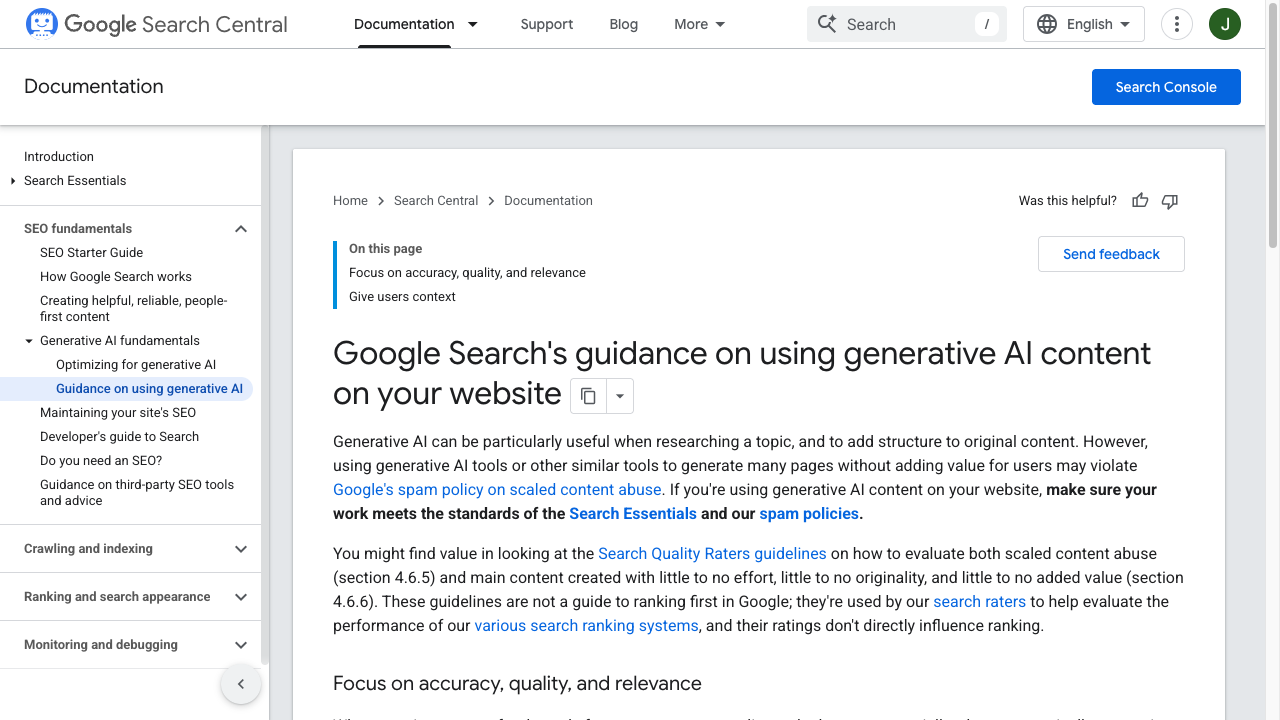
Don’t buy AI to skip editing. Buy it to skip the blank page. The publish bar still belongs to you.
Does Google see automatically generated content as a bad thing?
Step 1: Collect raw material once a week
Do not start with a blank document. Start with what your business already knows.
Pull from:
- customer questions
- sales call notes
- support tickets
- reviews and testimonials
- competitor comparison questions
- analytics from your top pages
- personal observations from client work
- product updates or feature releases
Ask AI to group the material into themes. Then choose the ideas that connect directly to your offer or audience pain points.
Step 2: Pick the content format before drafting
Not every idea deserves a blog post. Some ideas are better as short social posts, email sequences, onboarding docs, or comparison pages.
Use this decision rule:
| If the idea is... | Best format |
|---|---|
| Search-driven and evergreen | Blog post or guide |
| Timely or opinionated | Social post or newsletter |
| Objection-heavy | Landing page section or sales email |
| Process-based | Checklist, SOP, or tutorial |
| Visual or demo-friendly | Video script or carousel |
This prevents you from forcing every thought into the same content shape.
Step 3: Build the brief
Ask AI for a brief that includes the reader, goal, search intent, outline, likely objections, examples, and sources to verify.
For SEO content, add keyword research. A tool like Junia's AI keyword research can help you find the language people already use instead of guessing from inside your own head.
Step 4: Draft in sections
Long AI drafts often drift. A better approach is to draft one section at a time.
For each section, give the AI:
- the section goal
- the audience
- examples to include
- claims to avoid
- tone instructions
- the previous section for context
This keeps the draft more controlled and makes editing easier.
Step 5: Edit for trust, not just grammar
Editing AI content is not just about fixing awkward sentences. You are checking whether the piece deserves to be published under your name.
Look for:
- claims without evidence
- examples that feel invented
- repeated phrases
- empty statements like "AI is changing the game"
- generic advice that could apply to any business
- missing caveats
- paragraphs that sound confident but say very little
Treat editing AI-generated text as a separate workflow, not an afterthought. The edit is where the content becomes yours.
Step 6: Improve readability and flow
Once the substance is right, use AI for a line edit. Ask it to shorten sentences, remove repetition, clarify transitions, and flag confusing paragraphs.
A readability improver is useful here because solopreneur content usually needs to be easy to scan. Your reader may be checking the article between client calls, not studying it like a textbook.
Step 7: Repurpose and schedule
After publishing, ask AI to create channel-specific versions. Then edit each version for the platform.
For example:
- Turn the article's strongest point into a LinkedIn post.
- Turn the checklist into an email.
- Turn the comparison table into a carousel.
- Turn the intro into a short video script.
- Turn the FAQ into a sales call prep note.
This is how AI helps you publish more without forcing you to invent new ideas every day.
Where AI Writing Software Saves the Most Time
AI saves the most time on repeatable content work, not on strategy.
| Task | Good AI use | Bad AI use |
|---|---|---|
| Blog drafting | Create a structured first draft from a strong brief | Publish the first output without edits |
| Social posts | Generate multiple angles from one idea | Post generic motivational content |
| Draft variations for different segments | Send claims the AI invented | |
| SEO | Suggest search questions and structure | Stuff keywords into every heading |
| Editing | Tighten copy and flag weak sections | Make every sentence sound overly polished |
| Research | Summarize sources and extract questions | Trust unsourced facts |
This is also consistent with how marketing teams are using AI more broadly. HubSpot's 2026 State of Marketing report says AI is now a core part of marketing workflows, with many marketers using it for content creation and media production.
For solopreneurs, the takeaway is simple: AI is already part of modern content work. The advantage comes from using it with more discipline than competitors who only use it to generate volume.
What AI Should Not Do for You
AI writing software should not own your positioning, opinions, customer understanding, or final approval.
Be careful when using AI for:
- legal, medical, financial, or technical claims
- original research interpretation
- strong opinions you do not actually hold
- customer stories that need permission
- competitor claims that need verification
- pricing, feature, or product comparisons that change often
The same applies to tone. A humanizer can smooth robotic phrasing, but it cannot add real experience by itself. If the underlying draft has no opinion, no examples, and no useful proof, making it sound more casual will not fix the problem.
For important pages, I would also run an AI-assisted quality check. An AI text detector can be a useful signal when a page feels too synthetic, but do not treat detector scores as absolute truth. Use them as a prompt to reread the article and ask: would a real customer trust this?
How to Choose AI Writing Software as a Solopreneur
The best AI writing tool is the one that fits your workflow. Do not choose based only on the model name or the longest feature list.
Look for these capabilities:
| Feature | Why it matters for solopreneurs |
|---|---|
| Brand voice | Keeps drafts closer to your actual tone |
| SEO briefs | Helps content match search intent before writing |
| Templates | Speeds up repeatable formats like blogs, emails, and product pages |
| Content calendar | Turns ideas into a publishing rhythm |
| Editing tools | Improves clarity without needing a separate editor |
| Repurposing | Extends one idea across multiple channels |
| Bulk workflows | Helps when you need many drafts, updates, or variations |
If your main problem is output volume, bulk content creation can help. If your main problem is voice, prioritize brand memory and editing. If your main problem is search traffic, prioritize briefs, keyword research, and optimization.
The wrong tool is the one that creates more review work than it saves.
A Simple Weekly Content System
Here is a realistic weekly system for a solo operator:
Monday: Plan
Review customer questions, analytics, and business priorities. Pick one core idea for the week.
Tuesday: Brief
Use AI to create a brief, outline, SEO notes, and examples to include.
Wednesday: Draft
Generate the first draft section by section. Add your own examples and product knowledge as you go.
Thursday: Edit
Check claims, cut filler, improve structure, add internal links, and make the piece easier to scan.
Friday: Repurpose
Turn the article into social posts, an email, and one short script. Schedule the best versions.
This rhythm is simple, but that is the point. A complicated AI system usually breaks as soon as client work gets busy. A light weekly workflow is easier to keep.
Common Mistakes to Avoid
Publishing AI drafts too quickly
The first draft is usually too smooth and too shallow. Add examples, remove broad claims, and make the advice more specific before publishing.
Chasing every new AI tool
One competitor article on this topic made a good point: the best AI tools solve specific problems. That is the right lens. You do not need ten writing apps. You need a stack that solves your actual bottlenecks.
Forgetting distribution
Publishing is not the finish line. AI can help you turn one piece into multiple channel-specific assets, but you still need to distribute them.
Optimizing for output instead of trust
More content only helps if it builds confidence. If your AI content sounds vague, repetitive, or unsupported, it can weaken your brand faster than silence.
Skipping the human edit
The final pass should add what AI cannot know: your taste, your judgment, your customer stories, your product context, and your point of view.
Final Takeaway
AI writing software helps solopreneurs most when it becomes part of a clear content workflow.
Use it to plan, brief, draft, edit, optimize, and repurpose. Do not use it to replace your thinking. The solopreneurs who get the most from AI are not the ones who publish the most raw output. They are the ones who use AI to protect their time while making their own expertise easier to share.
That is the real advantage: not sounding like a larger team, but operating with some of the leverage of one.