
WordPress SEO with AI: The Step-by-Step Workflow

Thu
AI SEO Specialist, Full Stack Developer

WordPress SEO with AI works best when AI is used as a workflow assistant, not as a publish button. I have seen the biggest gains when AI handles the repetitive parts of SEO and a human still makes the calls that affect trust: intent, examples, structure, and whether the advice is actually useful.
The useful flow is simple:
- Find a keyword you can realistically target.
- Build a search-intent brief.
- Draft with AI, but add human judgment, examples, links, and facts.
- Optimize the WordPress page before publishing.
- Track the page and refresh it when the SERP changes.
That may sound basic, but it is where most AI SEO attempts fail. They generate a long article, paste it into WordPress, run a plugin score, and hope the green light means the page deserves to rank. It usually does not. In my experience, plugin scores are good at catching omissions; they are much worse at judging whether a page deserves the reader's attention.
Google's own SEO Starter Guide is clear that SEO is about helping search engines understand your content and helping users decide whether to visit your site. Google also says its systems focus on quality rather than whether content was made by a human or AI, as long as the page is helpful, reliable, and people-first. So the real question is not "Can I use AI for WordPress SEO?" It is "Can I use AI without making the page generic?"
This guide walks through the workflow I would use for a WordPress site: keyword research, content briefs, drafting, internal linking, metadata, schema, publishing checks, and post-publish updates. The order matters. If the brief is weak, every later optimization step becomes cleanup.
The Best AI WordPress SEO Stack
If you want a quick answer, use one WordPress SEO plugin, one AI content workflow, and one analytics source. More tools usually create more noise. I would rather have three tools that fit together cleanly than seven tools producing overlapping recommendations nobody has time to review.
| Need | Best fit | Why it helps |
|---|---|---|
| Keyword research and SERP analysis | Junia AI Keyword Research, Semrush, Ahrefs, or Google Search Console | Finds topics, intent, competitor gaps, and pages worth updating |
| Content brief | Junia SEO Content Brief Generator, Frase, Surfer SEO, or Clearscope | Turns SERP research into headings, questions, entities, and internal link targets |
| AI drafting | Junia AI Article Writer, ChatGPT, Jasper, or Writesonic | Speeds up first drafts, outlines, examples, and rewrites |
| WordPress SEO plugin | Rank Math, Yoast SEO, AIOSEO, or SEOPress | Handles titles, descriptions, canonicals, XML sitemaps, schema, and on-page checks |
| Internal links | Junia AI Internal Linking, Link Whisper, AIOSEO Link Assistant, or manual review | Connects new posts to existing topical authority |
| Metadata | Meta title generator, meta description generator, or plugin AI tools | Improves click appeal without stuffing keywords |
| Images and alt text | Blog image generator, media library compression, and clear alt text | Supports UX, visual search, and accessibility |
The exact brands matter less than the workflow. For example, a small blog can do well with Rank Math, Google Search Console, and Junia. An agency managing many sites may need Semrush, Surfer, Clearscope, or Frase because the reporting and SERP comparison features save time at scale. My bias is to add a tool only when it removes a real bottleneck, not because it promises a more "complete" SEO stack.
What AI Should Actually Do in WordPress SEO
| AI should do | You should still do |
|---|---|
| Keyword shortlists + briefs | Pick the business priority |
| First draft + outline | Fact-check and add proof |
| Meta title / description options | Choose the one that matches intent |
| Internal link suggestions | Verify destination pages exist |
AI is strongest when it reduces repetitive SEO work:
- Clustering keywords by intent.
- Summarizing competitor headings.
- Turning research into a content brief.
- Drafting title and meta description variations.
- Suggesting internal links.
- Generating FAQ ideas.
- Writing image alt text drafts.
- Finding thin sections in existing posts.
- Rewriting unclear paragraphs.
AI is weakest when it is asked to replace editorial judgment. It can invent details, flatten voice, overuse obvious advice, and make every section sound equally important. That last problem is easy to miss: a draft can look comprehensive while still failing to tell the reader what matters most.
That is why the workflow below uses AI for speed, but keeps the final decisions human.
Step 1: Pick Keywords AI Can Help You Win
Start with a keyword that matches the page type you can actually create.
For a WordPress blog, a practical keyword target should have:
- Clear intent.
- A realistic difficulty level.
- Enough search demand to justify the work.
- A page format you can match or improve.
- Internal pages you can link from and to.
Use an AI keyword research tool to build the first list, then check the SERP manually. AI can group keywords quickly, but the live results tell you what Google is rewarding. I would not skip this step, even for a low-volume keyword, because the SERP often reveals a different page format than the keyword alone suggests.
For example, "WordPress SEO with AI" can mean a few different things:
| Query angle | Likely reader intent | Best content type |
|---|---|---|
| AI SEO tools for WordPress | Compare plugin and SaaS options | Tool roundup or comparison |
| WordPress SEO with AI | Learn the workflow | Step-by-step guide |
| AI content WordPress plugin | Find a plugin | Product comparison |
| how to use AI for SEO blog posts | Improve content creation | Tutorial with examples |
This article is built around the workflow intent, not just a list of tools. That is important because readers searching for a guide do not only want software names. They want to know what to do first, what to automate, and what still needs manual review. A tool list might get clicks, but a workflow is what helps someone make a better page.
If you are new to SEO basics, start with a broader grounding in SEO in 2026, then come back to the WordPress-specific process.
Step 2: Create a Search-Intent Brief Before Drafting
Do not ask AI to write the article first. Ask it to help build the brief. This is probably the strongest opinion I have about AI SEO: most bad AI content starts before the draft, when the prompt is asked to solve a research problem it was never given enough context to solve.
A good WordPress SEO brief should include:
- Primary keyword.
- Secondary keywords and natural variants.
- Search intent.
- Suggested H2s and H3s.
- Questions the article should answer.
- Internal links to include.
- External sources worth citing.
- Required examples, tables, screenshots, or templates.
- What the article should avoid.
Junia's SEO content brief generator can speed this up, especially if you pair it with a manual SERP review. If you want to build briefs by hand, this guide on how to create an SEO content brief covers the process in more depth.
Here is a simple brief template you can reuse:
| Brief field | Example for this topic |
|---|---|
| Primary keyword | WordPress SEO with AI |
| Reader problem | Wants to use AI without hurting quality or rankings |
| Page format | Step-by-step workflow with tool guidance |
| Must include | Keyword research, content brief, drafting, metadata, internal links, schema, publishing checklist |
| Internal links | AI keyword research, AI article writer, WordPress writing assistants, internal linking, meta tools |
| External evidence | Google Search Central AI content guidance, SEO Starter Guide, WordPress permalinks documentation |
| Avoid | "AI will revolutionize SEO" filler, tool-name stuffing, unsupported ranking claims |
This is also where you decide whether the page needs visuals. For a workflow article, tables and checklists are more useful than decorative images. For a product review, real screenshots usually matter more. I tend to decide this in the brief, not after the draft, because visuals added at the end often feel like decoration instead of evidence.
Step 3: Draft the Article With AI, Then Edit for Usefulness
AI can create a first draft faster than a human. That does not mean the first draft is good.
The safest way to draft is to give AI the brief and ask for one section at a time. That keeps the article from drifting and makes it easier to fact-check. When I work this way, the draft usually needs fewer structural repairs because each section has a clear job before it is written. You can use Junia's blog post generator, the AI article writer, ChatGPT, Jasper, or another assistant, but use the same editorial rules:
- Add first-hand context where possible.
- Replace vague claims with concrete examples.
- Remove repeated definitions.
- Check every tool feature, price, and platform claim.
- Make the intro answer the search intent quickly.
- Keep paragraphs short enough to scan.
- Link to relevant internal resources naturally.
Google's guidance on using generative AI content on your website is a useful guardrail here: AI content is not automatically a problem, but scaled content made mainly to manipulate rankings is. The finished page still needs original value.
That means your edit should add things AI would not know by default:
- Your actual process.
- Your product screenshots.
- Your examples.
- Your internal links.
- Your mistakes and tradeoffs.
- Your reason for recommending one path over another.
If the draft sounds like it could appear on any SEO blog, it is not finished. That is the simplest test I use: would this page still be useful if the reader removed the tool names? If not, the article probably needs more process, examples, or opinion.
Step 4: Optimize WordPress Before You Publish
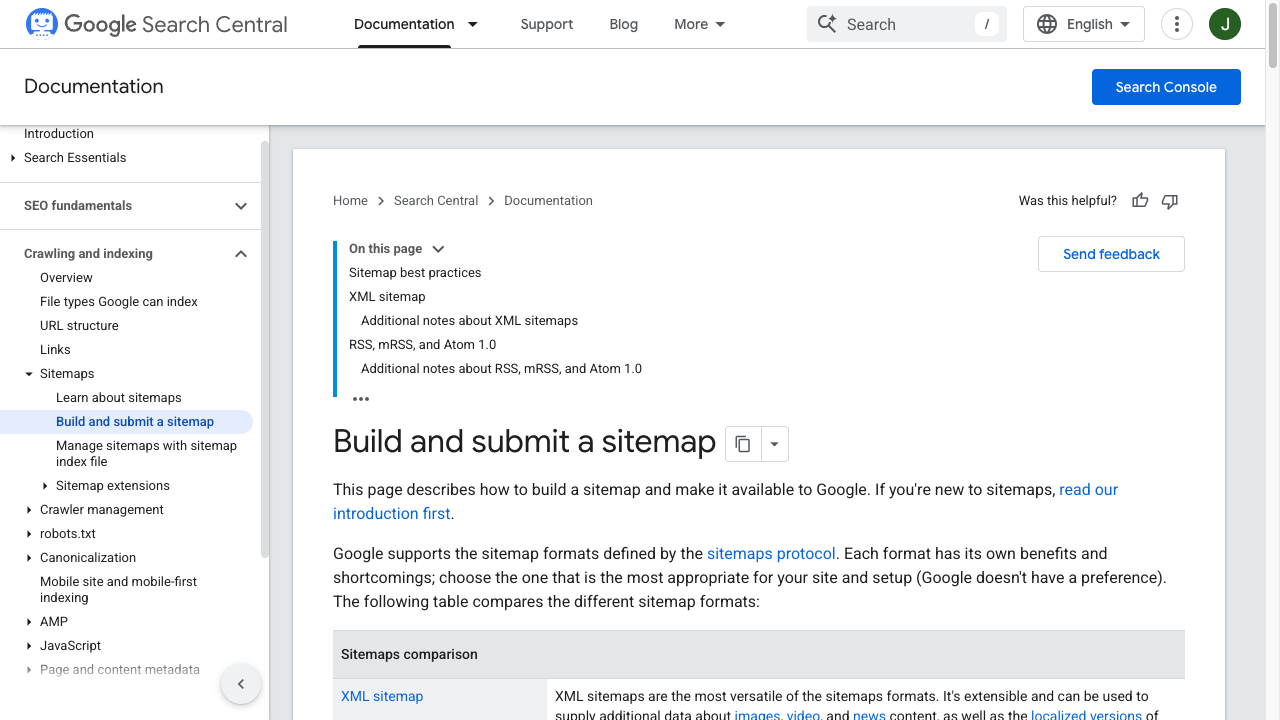
Grow your WordPress site with Site Kit — Google Search Central
AI drafts help. WordPress still needs clean slugs, titles, internal links, and a sitemap Google can fetch.
Once the draft is ready, move into WordPress and optimize the page itself. This is where a good article can still lose quality if the publishing pass is rushed.
Set the URL slug
WordPress calls permanent URLs "permalinks." The WordPress documentation on permalinks explains that readable URLs help humans and search engines understand and share pages.
For this article, a clean slug is better than a long one:
- Good:
/blog/wordpress-seo-with-ai - Too long:
/blog/the-ultimate-guide-to-wordpress-seo-with-ai-tools-step-by-step - Too vague:
/blog/ai-seo
If you need help making a shorter URL, use a slug generator, then edit the result manually.
Write the title and meta description
Your SEO title should make the page's promise obvious. Your meta description should explain what the reader gets.
For example:
| Element | Example |
|---|---|
| SEO title | WordPress SEO With AI: Workflow, Tools, Checklist |
| Meta description | Learn how to use AI for WordPress SEO with a practical workflow for keywords, briefs, drafting, metadata, internal links, schema, and publishing checks. |
If you are stuck, generate 10 options with a meta title generator and meta description generator, then choose the clearest version. I usually ignore the most dramatic option in the batch. Click appeal matters, but AI often confuses clarity with hype.
For a deeper pass, use these guides on writing meta titles for SEO and writing the perfect meta description.
Check headings
Your H1 should match the page's main topic. Your H2s should map to the reader's next questions.
For this topic, the natural heading flow is:
- What AI should do in WordPress SEO.
- How to research keywords.
- How to build a brief.
- How to draft and edit.
- How to optimize WordPress settings.
- How to add links, schema, images, and metadata.
- How to publish and refresh.
Avoid generic headings like "The Power of AI" or "The Future of WordPress SEO." They add no decision value.
Add internal links
Internal links help users find the next useful page and help search engines understand topical relationships. Google's SEO Starter Guide also notes that links connect users and search engines to relevant pages and resources.
For WordPress SEO with AI, useful internal links include:
- AI SEO tools for WordPress
- AI writing assistants with WordPress integration
- AI internal linking tool
- AI structured data SEO
- How to boost SEO without backlinks
Do not add links just because a keyword appears. Add them when the next page genuinely helps the reader. I would rather miss one internal link opportunity than turn a useful paragraph into a link farm.
Step 5: Use AI for On-Page SEO Checks
This is where WordPress SEO plugins are useful.
Yoast SEO, Rank Math, AIOSEO, and SEOPress can all help check common on-page issues: title length, meta description, focus keyword usage, readability, canonicals, schema, XML sitemaps, and index settings. Some also include AI-assisted metadata, content suggestions, or internal link recommendations.
The plugin score is a diagnostic, not a verdict. A green score does not mean the page is useful. A lower score does not automatically mean the page is bad. I treat these scores like a preflight checklist: helpful for catching obvious misses, dangerous when they start driving the editorial decisions.
Use the plugin to catch:
- Missing title or meta description.
- Weak slug.
- Missing image alt text.
- No internal links.
- Accidental noindex settings.
- Duplicate focus keyword targets.
- Missing canonical.
- Schema mismatch.
Then use your own judgment for the parts a plugin cannot understand well: whether the advice is original, whether the examples are strong, whether the article deserves to exist, and whether it answers the search intent better than the pages already ranking. That final question is uncomfortable, but it is the one that usually improves the page the most.
Step 6: Add Schema, Sitemaps, and Technical Basics
AI will not save a technically messy WordPress site. I have seen otherwise useful content underperform because the basics were neglected: noindex mistakes, bloated images, mismatched schema, or pages buried with no internal links.
Before publishing, check these basics:
| Item | What to check | Why it matters |
|---|---|---|
| XML sitemap | The post is included in the sitemap | Helps search engines discover important URLs |
| Index status | The page is not accidentally set to noindex | Prevents invisible content |
| Canonical URL | The canonical points to the correct page | Reduces duplicate URL confusion |
| Schema | Article, Breadcrumb, FAQ, or HowTo schema fits the page | Helps Google understand page structure |
| Images | Compressed, descriptive, placed near relevant text | Improves UX and image understanding |
| Internal links | Links point to and from related posts | Builds topic clusters |
| Page speed | Theme, plugins, and images are not slowing the page | Supports user experience |
Google's structured data documentation explains that structured data helps Google understand page content and can make pages eligible for richer search result features. For WordPress, you can usually handle this through your SEO plugin instead of writing JSON-LD by hand.
If you are using schema as part of an AI SEO workflow, read this guide on AI structured data SEO. AI can draft schema, but you still need to validate it and make sure it matches visible page content.
Step 7: Optimize Images and Media
Images should make the article easier to understand, not just make the page look busier.
For a WordPress SEO article, useful image types include:
- A workflow diagram.
- A screenshot of a content brief.
- A WordPress plugin settings screenshot.
- A before-and-after metadata example.
- A table or checklist graphic.
.png?token=eyJhbGciOiJIUzI1NiIsInR5cCI6IkpXVCJ9.eyJ1cmwiOiJ1c2VyLWdlbmVyYXRlZC1pbWFnZXMvMThkMzIyMTQtYWZlNC00YmVjLTg2NTItOGU2ZDFiMDYyZTE5L1NjcmVlbnNob3QgMjAyMy0xMi0xNiBhdCAyMi4yMi40MCAoMSkucG5nIiwiaWF0IjoxNzA5OTM5NTk5LCJleHAiOjIwMjUyOTk1OTl9.TNuRt6V6Ye13bjRHHmMop7T2THaG5114lhWA8CC14rU)
Use AI to draft alt text, but edit it so it describes the image plainly. If you need help, an alt text generator can produce a first pass. The goal is not to squeeze the keyword into every image; it is to describe what the reader would miss if the image did not load.
Good alt text is specific:
- Weak: "AI SEO image"
- Better: "WordPress SEO workflow showing keyword research, AI draft, on-page checks, and publishing"
Step 8: Build Internal Links Before and After Publishing
A new WordPress article should not sit alone.
Before publishing, add internal links from the new article to related pages. After publishing, go back to older articles and link to the new one where it fits naturally.
For this topic, a sensible internal linking path might look like this:
| From this article | Link to | Anchor idea |
|---|---|---|
| Keyword research section | Junia AI keyword research tool | AI keyword research |
| Brief section | SEO content brief generator | SEO content brief |
| Drafting section | AI article writer | AI article writer |
| Metadata section | Meta title and meta description tools | generate title and description options |
| Schema section | AI structured data SEO guide | structured data for AI search |
| Link building section | Ranking without backlinks guide | rank without backlinks |
An AI internal linking tool can find opportunities faster, especially on larger WordPress sites. Still, review every suggestion. The best internal link is the one a reader would actually click. My rule is simple: if I would not click the link while reading the paragraph, I do not add it.
Step 9: Publish With a Human QA Pass
Before you publish an AI-assisted WordPress SEO article, run this checklist:
| Check | Pass standard |
|---|---|
| Intent | The intro answers the query directly |
| Original value | The page includes examples, process, opinions, or data not found in a generic AI draft |
| Facts | Tool features, dates, and claims are checked |
| Links | Internal links are relevant and not stuffed |
| Metadata | Title and description are clear, not clickbait |
| Images | Images are useful, compressed, and have alt text |
| Schema | Schema matches visible content |
| Indexing | The page is indexable and in the sitemap |
| Readability | Sections are short, specific, and easy to scan |
| CTA | The next step is clear without being pushy |
This is also the point where you should remove anything that sounds impressive but says nothing. Phrases like "revolutionize your digital strategy" usually belong in the trash. A final QA pass should make the article plainer where it needs to be plain and sharper where it needs to make a decision.
Step 10: Track Rankings and Refresh the Page
SEO does not end when the WordPress post goes live. This is where many teams lose the advantage AI gave them: they publish faster, but they do not refresh smarter.
After publishing, track:
- Indexing status in Google Search Console.
- Queries the page starts appearing for.
- Click-through rate.
- Average position.
- Internal links pointing to the page.
- Competitor pages that moved above or below it.
- Sections that users skip or leave from.
Use AI to summarize Search Console data, spot query clusters, and suggest refresh ideas. For example, if the article starts getting impressions for "best AI SEO plugin for WordPress," you may need a stronger plugin comparison section. If it gets impressions for "AI meta description WordPress," improve the metadata section. I like using AI here because it can scan query patterns quickly, but I would still choose the refresh angle manually.
For larger content programs, AI autoblogging can help scale publishing, but the same rule applies: automation should support quality control, not replace it.
Common Mistakes With AI WordPress SEO
The most common mistake is treating AI as the strategist. It is better as the assistant. Personally, I think this distinction matters more than the specific tool you choose.
Here are the issues I would watch for:
| Mistake | Why it hurts | Better approach |
|---|---|---|
| Publishing raw AI drafts | They often repeat generic advice and miss facts | Edit for examples, accuracy, and reader decisions |
| Chasing plugin scores | A score can reward keyword repetition over usefulness | Use scores as checks, not goals |
| Ignoring search intent | The article may answer the wrong question | Review the live SERP before drafting |
| Stuffing internal links | It weakens trust and readability | Link only where the next page helps |
| Adding unsupported claims | AI may invent benefits or statistics | Cite sources or remove the claim |
| Skipping technical SEO | Good writing still needs indexable pages | Check sitemap, canonicals, schema, and speed |
| Overusing AI images | Decorative visuals rarely help SEO | Use screenshots, diagrams, and examples |
If you avoid these mistakes, AI can make WordPress SEO faster without making your content weaker. The tradeoff is discipline: AI removes some production friction, but it also makes it easier to publish work that has not earned its place.
Final Word
AI can help with almost every part of WordPress SEO: keyword research, briefs, drafts, metadata, internal links, schema, and refresh planning.
But the winning pages still come from editorial judgment. You need to know what the reader wants, what the SERP already covers, what your site can add, and where AI suggestions should be ignored. After testing AI-assisted workflows across different article types, my view is that the best use of AI is not "write this for me." It is "help me make better decisions faster."
Start with one workflow:
- Research the keyword.
- Build the brief.
- Draft with AI.
- Edit for usefulness.
- Optimize in WordPress.
- Add links and schema.
- Publish, track, and refresh.
That is how AI becomes useful for WordPress SEO: not as a shortcut around quality, but as a faster way to produce pages worth publishing. Used well, it gives editors and site owners more time for the parts that actually separate a good WordPress SEO page from a forgettable one.