
The AI SEO Stack for Startups (Tool List + 7-Day Setup)

Thu
AI SEO Specialist, Full Stack Developer

What a startup should buy first
Startups rarely have time for slow, manual SEO. You need faster research, clearer priorities, and content that has a real chance to rank. If nobody on the team can own SEO yet, we recommend trying a managed SEO service for the first few months. You get research, writing, and publishing done while you learn which topics actually bring signups.
That is where AI SEO tools help. Used well, they speed up keyword research, surface content opportunities, and improve on-page SEO without hiring a large content team. The mistake I see most often is buying three overlapping subscriptions in week one. Buy coverage for one bottleneck. Then add the next tool only if that bottleneck is gone.
If I were setting this up for an early-stage team, I would buy in this order:
| Buy first | When it is the right first spend | Skip it until |
|---|---|---|
| Search Console (free) | Always. You need a baseline before you pay for anything. | Never. This is the control panel. |
| An AI content/SEO workspace such as Junia AI | You need to publish useful pages and you do not have a writer plus an SEO. | You already have a strong editor and only need on-page scoring. |
| One on-page optimizer (Surfer, Frase, or Clearscope) | You have drafts that stall in the SERP and need a clearer coverage target. | You are still guessing the keyword. Optimization will not save the wrong page. |
| A keyword/competitor database (Semrush, Serpstat) | You are competing in a crowded category and need ranking and gap data every week. | You have fewer than 20 pages and no idea what to write next. Research tools will sit unused. |
| Link-building software | You have pages that already attract impressions and a story worth citing. | You are still shipping thin posts. Outreach will not fix a weak library. |
Buy Search Console and a publishing workflow before you buy a dashboard. I have watched startups pay for a keyword suite they opened twice, while the blog still had no title tags and no internal links. The 7-day plan below is the useful part of this article. Use it before you expand the stack.
Why AI SEO tools matter for lean teams
They help you focus on the highest-impact work first.
- Save time on repeatable tasks: research, outlining, optimization, and reporting.
- Surface better decisions: they turn large datasets into clearer recommendations so you can prioritize pages and keywords.
- Help small teams compete: predictive analysis and workflow automation let you move faster without a large SEO team.
The growth impact usually shows up in three places: more qualified traffic, better content performance when humans still edit, and more conversions from existing traffic when the page matches intent.
AI should support strategy, not replace it. The strongest startup SEO programs use AI to remove busywork while humans handle positioning, messaging, and quality control.
Where AI actually helps startup SEO
The useful jobs are narrow. Keyword clustering. Drafting a first outline. Spotting on-page gaps. Finding outreach prospects. AI is not a substitute for a product story, and it will not fix a slow site.
Four jobs worth automating
- Keyword analysis. AI keyword research tools can surface high-intent topics, clustering opportunities, and lower-competition terms faster than a spreadsheet. I still pick the keyword myself. The tool is there to shrink the list, not to choose the bet.
- Content optimization. AI can tighten structure, improve readability, and draft on-page elements such as meta descriptions and title tags. Use a meta description generator as a starting point, then rewrite the line so a human would actually click it.
- Link building research. AI can support prospecting so you spend less time on irrelevant sites. Outreach still has to sound like a person.
- User experience signals. Machine learning tools can highlight friction in navigation and engagement. Treat those as clues, not as a redesign brief.
If long-form pages are already working for you, double down on long-form content instead of spinning out ten thin posts. The point of AI here is more useful pages, not more URLs.
Write pages a buyer would bookmark

A startup blog only helps SEO if the pages answer a search a buyer already has. Making content for your startup should mean one cluster you can finish, not a calendar of generic posts.
Fix the site before you scale publishing
If crawlers cannot fetch the page, AI drafts will not save you. The usual startup misses:
- Messy URLs. Keep them short and readable. A slug stuffed with IDs and leftover words looks untrustworthy to people and is harder to reuse in links.
- Duplicate posts. Two near-identical articles split signals. Pick a canonical page and redirect or merge the rest.
- A sitemap that does not match the live site. If Search Console cannot find the URLs you care about, publishing more will not help.
Speed and mobile layout matter more than another plugin. Compress images, drop unused scripts, and cache static files. I would not spend a week on AMP. Google does not require it, and most startups just need a fast theme.
7-Day AI SEO Setup for Startups
If you want a practical place to start, use this lightweight rollout plan:
| Day | Focus | Outcome |
|---|---|---|
| 1 | Benchmark rankings, traffic, and conversions | Clear starting point |
| 2 | Build a keyword list by funnel stage | Better topic targeting |
| 3 | Audit existing pages for gaps | Prioritized fixes |
| 4 | Improve metadata and internal links | Stronger on-page signals |
| 5 | Refresh one high-potential article | Faster ranking gains |
| 6 | Fix technical issues affecting crawlability or speed | Cleaner site foundation |
| 7 | Review results and create the next 30-day backlog | More consistent execution |
This sprint works especially well for early-stage teams. It keeps the process manageable while still covering research, content, technical SEO, and conversion basics.
Day 1 and Day 7 live in Search Console. I would not skip that even if you already bought an AI tool. The Performance report is how you know whether the week moved anything.
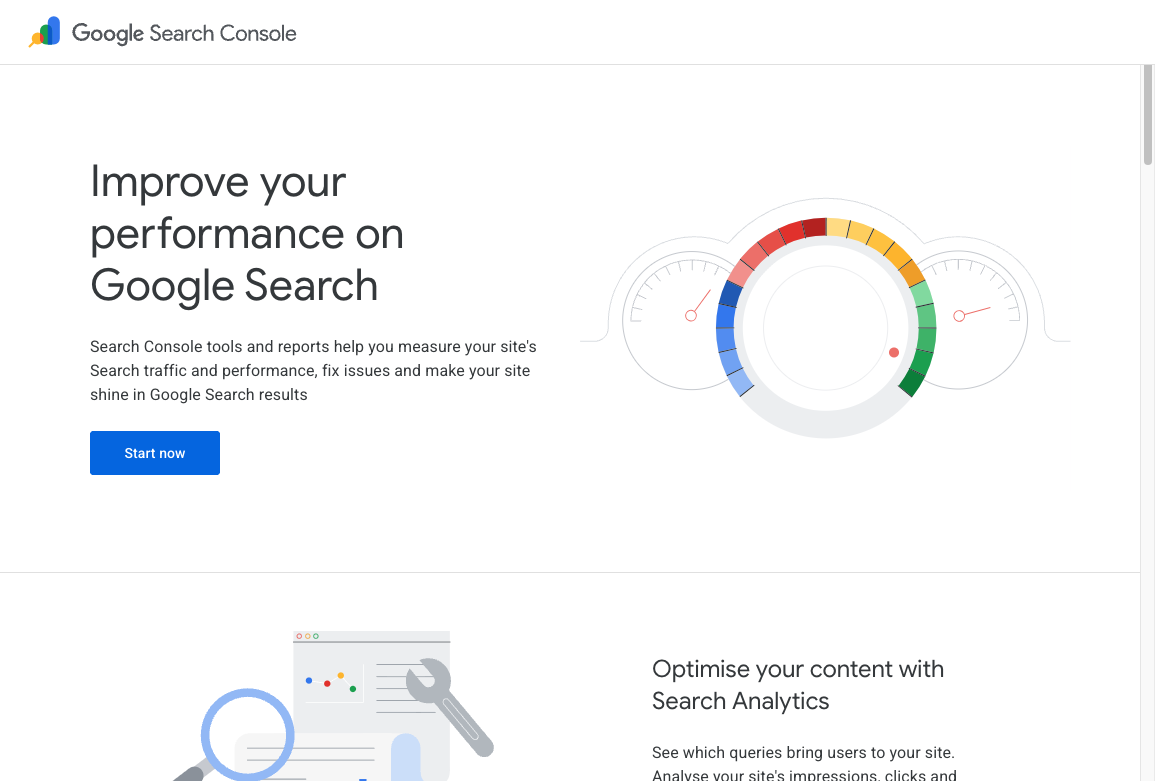
If you have never used the Performance report, this Search Console training walkthrough is the one I would watch before you start Day 1:
Performance reports in Search Console
Pick commercial terms, then the long-tail questions
Keyword research is how you decide which pages deserve a week of work. Start with terms a buyer would type when they are close to choosing a product. For an AI project management tool, that might be:
- AI project management software
- Best AI tools for project management
Do not only chase commercial keywords. Add long-tail questions a buyer would ask before they compare products. Those queries usually have less competition and clearer intent:
- How to use AI for project management
- Benefits of AI in managing projects
Who you are actually writing for
Keyword research without a reader is just a volume list. Before you lock a cluster, answer three questions:
- Who is this for? What job are they trying to finish, and what would make them bounce?
- What niche angle can you own? A trend, a comparison, or a problem nobody explains clearly.
- What did competitors skip? Not "more words." A missing example, a pricing caveat, or a setup step.
I treat this as ongoing work. When the product changes, the keyword list should change with it. ChatGPT, Claude, and Gemini can speed up clustering. They should not pick your commercial terms for you.
Why a cluster beats a pile of posts
Clear structure is not a UX garnish. If a reader can follow a topic from a definition page to a comparison page to a how-to, they stay. Search engines notice that path because it looks like topical coverage, not a one-off post.
Linked posts on the same subject also make it easier to demonstrate expertise. That is closer to how E-E-A-T shows up in practice than a generic "we are experts" paragraph.
How to build the cluster
- Pick one main topic your buyers actually search, not an internal product name.
- Plan 3–5 supporting posts that each do a different job: definition, comparison, setup, objection.
- Write titles that name the job. "What is CRM" and "How AI scores leads in a CRM" are different intents. Do not mash them.
- Link them as a path, not as a footer dump. The next page should answer the next question.
- Add metadata last. Title tags, descriptions, and structured data should describe the page you already wrote.
Example: an AI-powered CRM startup
- Post 1: "What is CRM?" A plain explanation so a first-time buyer is not lost.
- Post 2: "How AI improves CRM" Specific jobs: scoring, routing, support summaries.
- Post 3: "Using AI CRM for lead scoring" One workflow, with numbers or a screenshot if you have them.
That series teaches the product and targets searches from people who are already in the market. It is more useful than ten disconnected "benefits of AI" posts.
Backlinks startups can actually earn
A backlink is a vote. One link from a site your buyers already trust usually beats twenty directory listings. Domain Authority from Moz is a third-party score from 1 to 100. It is a rough proxy, not a Google ranking factor. Treat it as a trend line, not a target.
I would not start link building in week one. Ship the 7-day setup first. Then earn links with work other people want to cite:
- Publish something original. A small dataset, a teardown, or a setup guide that saves someone an hour.
- Guest posts with a point. One useful article on a site in your niche, not a round of "10 tips" on expired blogs.
- Skip most press-release SEO. Unless you have real news, the links are usually weak.
- Partner where the audience already is. A founder interview or a co-authored comparison will outperform a cold pitch.
AI for link building can speed up prospecting. It cannot invent a reason to link. If the page is thin, outreach is wasted motion.
What to protect after the first week
AI SEO is most useful when it helps you run the fundamentals more consistently. The goal is not to automate everything. It is to find the right opportunities sooner, improve pages faster, and compound the results.
Four areas that actually move a startup site
1. What AI can do, and what it cannot
AI can cluster keywords, draft outlines, and flag on-page gaps. It cannot decide your positioning. If the tool output could sit on a competitor's blog unchanged, keep editing.
2. Technical basics
A slow or unusable mobile site will waste the content work. Fix load speed and mobile layout before you scale publishing.
3. Keyword focus
Commercial terms plus a few specific long-tail questions beat a giant keyword dump. Pick a cluster you can finish.
4. Authority, later
Guest posts and citations matter once you have pages worth linking to. Do not buy a link tool to cover for an empty blog.
Start with one content audit, one technical cleanup pass, and one article refresh. From there, expand into content clustering and competitor research as the library grows.