
Free Recipe Generator
Create personalized recipes from ingredients you already have, a dish idea, diet, cuisine, servings, time limit, and skill level. Get practical measurements, step-by-step instructions, substitutions, variations, storage tips, and optional nutrition estimates for weeknight meals, meal prep, and pantry cooking.
Recipe
Your custom recipe will appear here...
How the AI Recipe Generator Works
Get results in seconds with a simple workflow.
Describe the Dish (or Add Ingredients)
Enter what you want to eat or paste ingredients you already have. You can keep it broad (e.g., “healthy dinner”) or specific (e.g., “chickpeas + spinach”).
Set Diet, Cuisine, and Time
Choose dietary needs, preferred cuisine, servings, and how much time you have so the recipe matches your schedule and preferences.
Generate, Cook, and Customize
Get a complete recipe with measurements and steps. Use the substitutions and variations to match what’s in your kitchen and your taste.
See It in Action
See how a simple request turns into a complete, cookable recipe with measurements, steps, and substitutions.
I have chickpeas and spinach. Make something quick for dinner.
Title: Lemon-Garlic Chickpea & Spinach Pasta (30 Minutes)
Servings: 2 Time: 30 minutes
Ingredients:
- 6 oz pasta (or gluten-free pasta)
- 1 tbsp olive oil
- 3 cloves garlic, minced
- 1/2 tsp red pepper flakes (optional)
- 1 can chickpeas, drained and rinsed
- 3–4 cups fresh spinach
- 1 lemon (zest + 2 tbsp juice)
- 1/3 cup pasta water (as needed)
- Salt and black pepper
- Optional: grated Parmesan (or nutritional yeast for vegan)
Instructions:
- Boil pasta in salted water. Reserve 1/2 cup pasta water, then drain.
- Heat olive oil in a skillet over medium. Add garlic and red pepper flakes; cook 30–45 seconds until fragrant.
- Add chickpeas, season with salt/pepper, and sauté 4–5 minutes until lightly golden.
- Add spinach and cook 1–2 minutes until wilted.
- Add pasta, lemon zest, lemon juice, and a splash of pasta water. Toss until glossy and lightly saucy.
- Taste and adjust salt, pepper, and lemon. Top with Parmesan or nutritional yeast.
Substitutions:
- No lemon: use 1–2 tsp vinegar.
- No spinach: use kale (cook 2–3 minutes longer) or arugula (add at the end).
Serving tip: Add cherry tomatoes or a spoon of pesto for extra flavor.
Why Use Our AI Recipe Generator?
Powered by the latest AI to deliver fast, accurate results.
Ingredient-Based Recipe Ideas (Use What You Have)
Turn pantry and fridge ingredients into a complete recipe with realistic measurements, substitutions, and tips—perfect for reducing food waste and planning quick meals.
Diet & Allergen-Friendly Options
Generate recipes that match common dietary preferences (vegan, gluten-free, keto, dairy-free) with clear ingredient swaps to keep the recipe safe and satisfying.
Step-by-Step Instructions That Actually Cook Well
Get structured steps with timing, heat levels, and doneness cues so the recipe is easy to follow—especially helpful for beginners and busy weeknights.
Flexible Serving Sizes and Time Constraints
Adjust recipes for your servings and schedule (15-minute dinners, 30-minute lunches, meal-prep batches) while keeping proportions and steps consistent.
Smart Substitutions, Variations, and Optional Nutrition Estimates
Includes practical ingredient substitutions, flavor variations, and optional nutrition estimates (clearly labeled as approximate) to help you cook confidently and meet your goals.
Pro Tips for Better Results
Get the most out of the AI Recipe Generator with these expert tips.
List 1–2 “must-use” ingredients first
If you want to use something before it goes bad (spinach, chicken, tofu), put it at the top of your ingredients list to anchor the recipe around it.
Use time limits to force simpler techniques
Set 15–25 minutes for genuinely quick meals—this nudges recipes toward fewer steps, faster-cooking proteins, and one-pan methods.
Ask for substitutions if you’re missing one key item
If you don’t have an ingredient (cream, eggs, soy sauce), the generator can suggest realistic swaps that keep texture and flavor close.
Meal-prep wins: choose sauces that hold up
For leftovers, pick oil-based, tomato-based, or yogurt-based sauces (dairy-free if needed) and store components separately for better texture.
Improve results with one preference keyword
Add a single constraint like “spicy,” “one-pot,” “air fryer,” or “high-protein” to get recipes that better match how you like to cook.
Who Is This For?
Trusted by millions of students, writers, and professionals worldwide.
Generate Cookable Recipes from Ingredients You Already Have
A useful recipe generator should do more than suggest a fun dinner idea. It should turn your ingredients, time limit, diet, cuisine, servings, and skill level into a recipe you can actually cook.
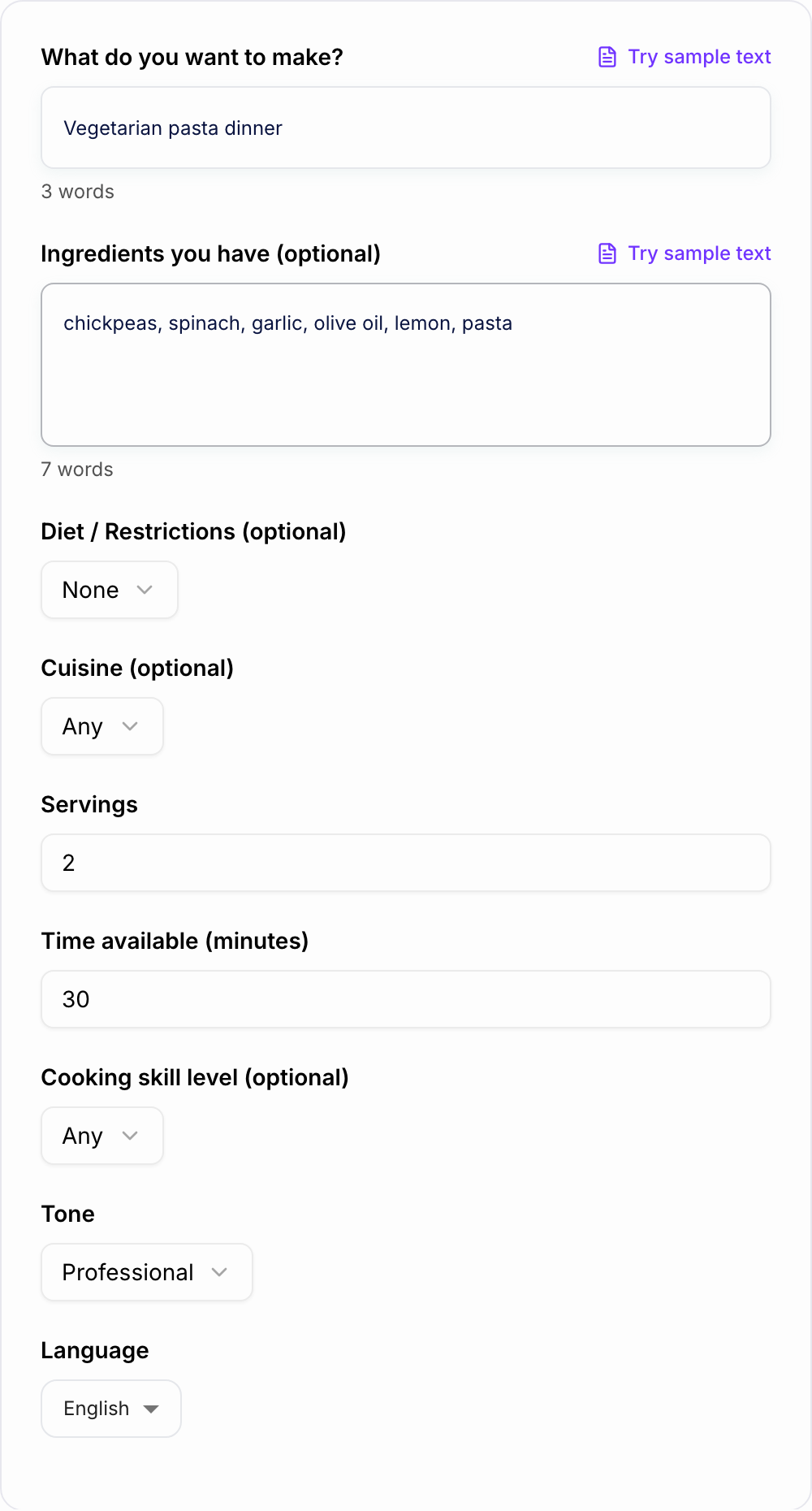
This AI Recipe Generator creates complete recipes with measurements, step order, timing cues, substitutions, variations, and optional storage or nutrition notes. It works whether you start with a dish idea or with the random ingredients already sitting in your fridge.
What to Enter into the Recipe Generator
You can keep the prompt short, but a few details make the output much more practical.
Add:
- Ingredients you want to use, especially anything that needs to be used soon
- Ingredients you do not want or cannot eat
- Diet needs, such as vegan, gluten-free, keto, dairy-free, low-sodium, or nut-free
- Cuisine or flavor direction, such as Mediterranean, Thai, smoky, spicy, lemony, or creamy
- Time available and servings
- Skill level or equipment limits, such as beginner, one pot, air fryer, no oven, or microwave-friendly
“Chicken dinner” will work. “Chicken thighs, rice, frozen peas, soy sauce, 30 minutes, one pan, not spicy” will work much better.
Choose the Right Recipe Mode
Use Quick Meal when you need fewer steps, faster cooking methods, and ingredients that do not require a long prep session.
Use Healthy when you want lighter swaps, more whole foods, balanced macros, or less sugar, sodium, or saturated fat. Review the output against your own dietary needs.
Use Meal Prep when you need a batch recipe that holds up for several days. Ask for storage, reheating notes, and toppings or sauces to keep separate.
Use Budget-Friendly when cost matters. The generator will lean toward pantry staples, affordable proteins, frozen vegetables, and flexible substitutions.
Use Restaurant-Style when you want more technique, sauces, garnishes, or flavor layering. Keep an eye on prep time because these recipes can get more involved.
Example Input for a Better Recipe
Try this:
Ingredients: chickpeas, spinach, garlic, lemon, pasta.
Diet: vegetarian.
Time: 25 minutes.
Servings: 2.
Style: quick dinner, bright and garlicky, not spicy.
Include substitutions and storage notes.
That input gives the generator enough constraints to produce a recipe with realistic steps, a coherent flavor direction, and useful substitutions instead of a generic pasta dish.
Review the Recipe Before You Cook
AI recipes can be helpful, but cooking still depends on real ingredients, equipment, and taste. Review the recipe before you start so you do not discover a problem halfway through.
Check:
- Ingredient quantities and whether they match your appetite and pan size
- Cooking order, especially when proteins, grains, or vegetables have different cook times
- Doneness cues, not just minutes
- Allergy and restriction conflicts
- Whether substitutions change texture or cooking time
- Storage notes for meal prep or leftovers
For allergies, medical diets, pregnancy, food safety, or precise nutrition tracking, verify the recipe yourself. The generated recipe is a cooking draft, not a medical or safety authority.
Use the Generator for Real-Life Cooking Problems
The tool is especially useful when you have constraints. If your fridge is almost empty, list what you have and ask the generator to use common pantry staples only. If you are tired, set a short time limit and beginner skill level. If you are meal prepping, ask for reheating notes and sauces that will not split.
You can also generate two options from the same ingredients: one quick version for tonight and one meal-prep version for the week. That is often better than asking for one recipe to solve every problem.
If you use AI for planning beyond cooking, Junia AI can help organize related prompts, content, and everyday writing tasks in the same broader workflow.
Common Recipe Generator Mistakes to Avoid
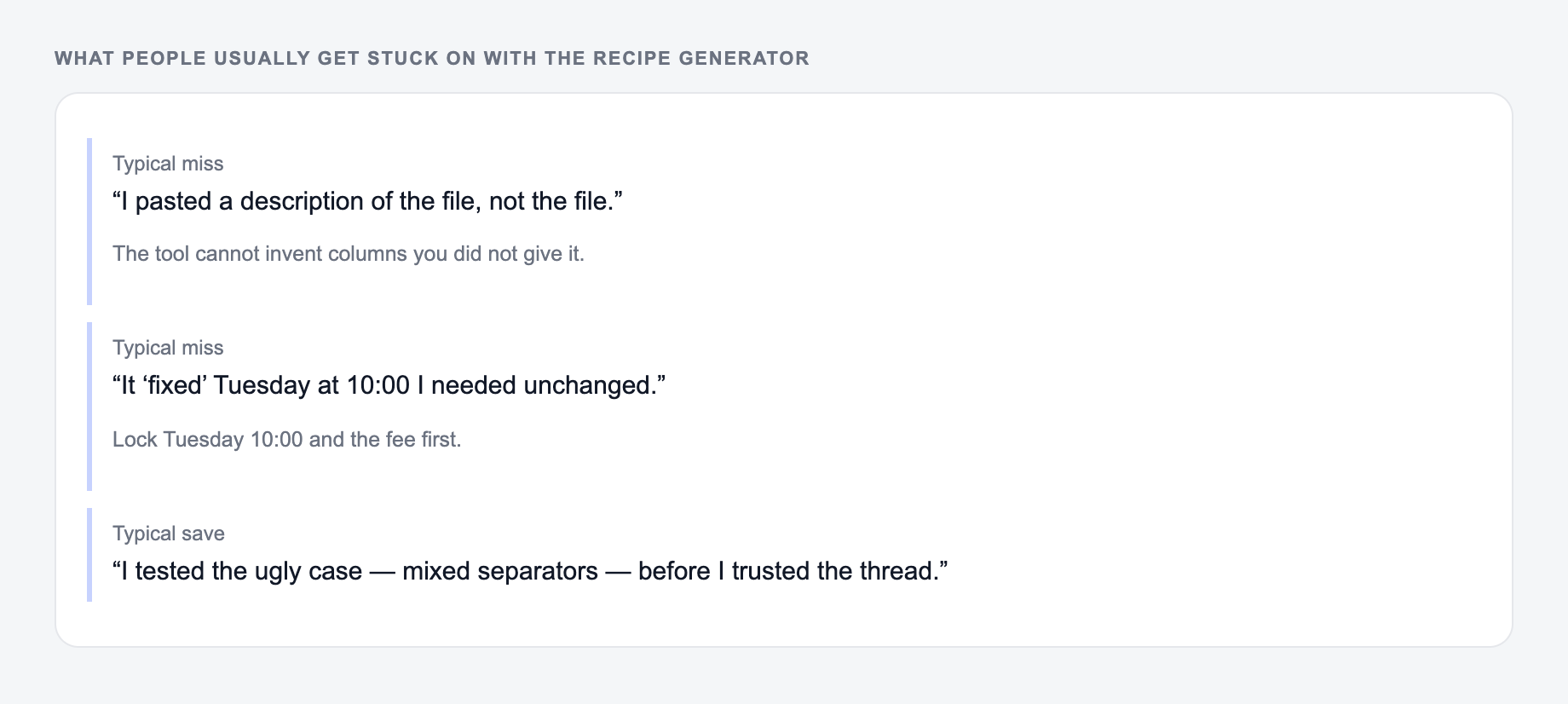
Common misses with the Recipe Generator:
- Describing the file instead of pasting it.
- Running one setting across mixed formats.
- Pasting live customer or student data “to see what happens.”
Do not leave out hard no ingredients. If you dislike mushrooms, cilantro, sesame, or heat, say so before generating.
Do not choose a cuisine and ignore your pantry. A cuisine setting works best when the generator can adapt the flavor profile to what you actually have.
Do not trust cooking times blindly. Stove heat, pan size, oven calibration, ingredient size, and frozen versus fresh ingredients all change timing.
Do not treat nutrition estimates as exact. They are useful for rough planning, not precise tracking.
Final Checklist Before Cooking
These are the complaints that show up after the first draft — they are almost always about the brief, not the model.
Before you start, confirm:
- You have the main ingredients or acceptable substitutions
- The serving size and time estimate fit your plan
- The steps are in a sensible order
- Any allergies or restrictions are clearly handled
- The recipe includes doneness cues you can verify
- Meal-prep recipes include storage and reheating guidance
Use the generator to get from “what can I make?” to a workable recipe quickly. Then adjust seasoning, texture, and timing like a cook.
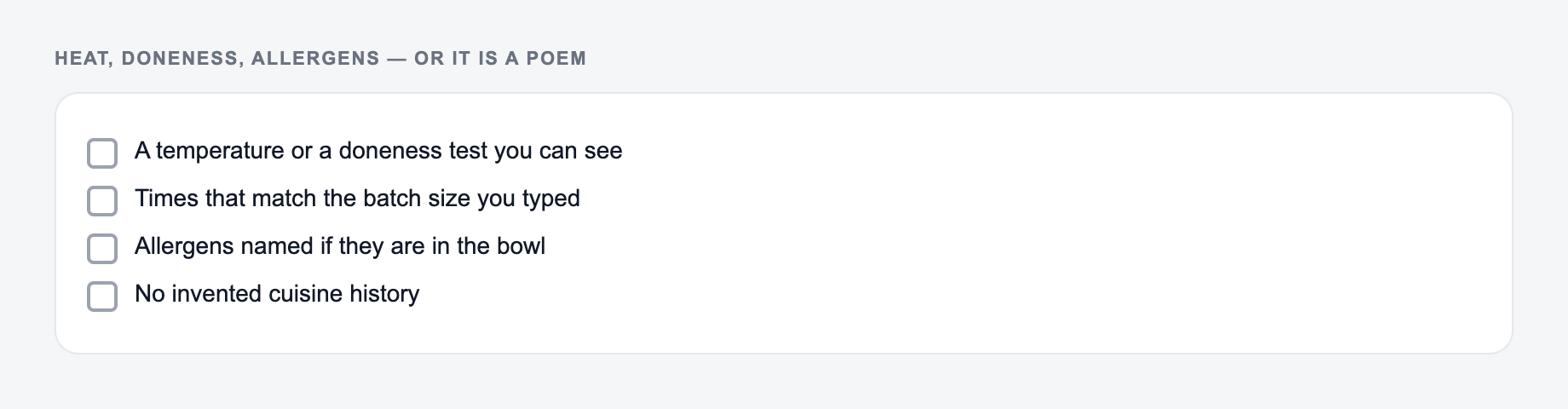
Cookability Review: Heat, Doneness, Allergens
A recipe is not “done” when the ingredient list looks balanced. Check the steps a cook can verify without trusting the model’s confidence.
The form is the pantry and the constraints. Doneness cues still need a cook, not a timer alone.
Use the AI Recipe Generator as a mechanical pass. If the output needs a judgment call (legal, medical, grading, production code), a person still owns the last look.
Worked pantry input: chickpeas, lemon, garlic, spinach, rice, olive oil. A usable output should say whether chickpeas are canned or cooked, when spinach goes in so it does not turn to sludge, and how to tell the rice is done (water absorbed, grains tender)—not only “cook 12 minutes.” Reject recipes that:
- brown garlic in a screaming-hot pan with no warning it burns fast
- treat raw flour, undercooked meat, or unheated leftovers casually
- ignore a stated allergy (nuts, dairy, gluten) by sneaking the allergen back in as a garnish
- give nutrition numbers as if they were lab values
Generated substitutions are hypotheses. Taste and doneness cues beat exact minutes. This is not food-safety certification.
Frequently Asked Questions
Is this AI recipe generator free to use?+
Yes. You can generate recipes for free. Some advanced modes (like restaurant-style) may be marked as premium depending on your plan.
Can I generate a recipe from ingredients I already have?+
Yes. Add the ingredients you want to use (even a short list) and the tool will build a recipe around them, filling gaps with common pantry staples and offering substitutions when needed.
Does it support dietary restrictions like vegan or gluten-free?+
Yes. Choose a diet or restriction and the recipe will avoid incompatible ingredients while suggesting safe alternatives (for example, gluten-free pasta or dairy-free yogurt). Always double-check labels for allergens.
Will the recipe include exact measurements and cooking times?+
It provides realistic measurements, time ranges, and doneness cues (like internal temperature guidance where relevant). Because kitchen equipment varies, treat times as guidance and adjust as needed.
Can I ask for a recipe for a specific cuisine or style?+
Yes. Pick a cuisine (Italian, Mexican, Indian, Mediterranean, and more) and the recipe will use typical ingredients, spices, and techniques while staying approachable.
Are nutrition facts included?+
Nutrition can be included as an approximate estimate when helpful. For medical or precise tracking, verify using your exact brands and measurements in a nutrition calculator.