
Best AI Product Description Generators for Ecommerce (Shopify + Bulk)

Yi
SEO Expert & AI Consultant

Introduction
I have written a lot of product pages by hand. Once the catalog passes a few hundred SKUs, the bottleneck is not "finding words." It is keeping each listing specific enough that a shopper can tell two similar items apart, and structured enough that search and merchant listings still make sense.
AI is useful here. It is also easy to misuse. A tool that can spit out 200 descriptions in an afternoon is only a win if those pages still contain real attributes, a clear buyer, and a reason to choose that SKU over the next one.
I compared these AI tools for ecommerce product descriptions on bulk workflow, brand voice control, Shopify-friendly publishing, and whether the output is actually usable after a human pass. If you also need broader catalog content beyond the product page itself, start with AI content generators built for ecommerce SEO and then come back to the description-specific picks below.
Quick Comparison: Best Tools by Use Case
Use this table to narrow the list fast before reading the full breakdowns.
| Tool | Best for | Standout strength |
|---|---|---|
| Junia AI | SEO-focused product descriptions | Brand voice + SEO-friendly copy |
| Copy.ai | Fast short-form drafts | Simple prompt-based generation |
| Jasper | Consistent brand messaging | Strong tone control across teams |
| Writesonic | Shopify-friendly workflows | Fast output with SEO support |
| Anyword | Marketing-led teams | Multiple copy formats |
| TextCortex | Workflow automation | Broader operational integrations |
| Hypotenuse AI | Bulk catalogs | High-volume product description generation |
Before you generate anything, decide whether the page should exist at all.
| Thin product page | Useful product page |
|---|---|
| Same 80 words with the SKU name swapped | Unique specs, fit, materials, and who it is for |
| Keyword stuffed title, empty body | Title + bullets + one paragraph that answers "why this one?" |
| No size, compatibility, or care details | Attributes a shopper (and Google Merchant listings) can actually use |
| 10,000 near-duplicate variants | Variants only where the difference is real |
Do not generate 10,000 thin SKUs. If the only difference between two descriptions is the product name, you did not scale a catalog. You scaled a ranking and conversion problem.
Tool Reviews
1. Junia AI's Product Description Generator
Junia AI is an innovative AI content creation platform that focuses on generating high-quality content, like really compelling product descriptions. This platform is kind of a game-changer for e-commerce businesses, since it offers a unique tool that basically takes the hassle and stress out of crafting compelling product descriptions.
Why Junia AI's Product Description Generator Stands Out
Here's why Junia AI's Product Description Generator really stands out from the crowd:
- High-Quality Descriptions: Junia AI's Product Description Generator focuses on creating really strong, high-quality product descriptions. It uses advanced language models, so each description ends up being accurate and detailed, but also pretty engaging and actually kind of persuasive too.
- SEO Focused: With Junia AI's Product Description Generator, you’re not just getting some basic description. You’re getting a carefully planned piece of content that’s built to boost your SEO ranking even without backlinks. The platform adds important SEO elements into the descriptions, which helps your products show up higher in search engine results.
- Customizable Tone and Style: While a lot of AI tools just spit out generic, same-sounding content, Junia AI's Product Description Generator gives you options to customize things so you can keep your brand's unique voice across all your product descriptions.
Benefits of Using Junia AI's Product Description Generator for Your Product Descriptions
So, when you look at the benefits, using Junia AI's Product Description Generator for your product descriptions can really make a big difference in your e-commerce business. Like, actually a big difference:
- Time Saving: Writing strong and engaging product descriptions takes a lot of time, honestly. With Junia AI, you can create multiple high-quality descriptions in just a few minutes, which means you get back time to focus on other important stuff you’ve been putting off.
- Cost-Effective: Hiring professional copywriters can get pretty expensive fast. By using an automated solution like Junia AI, you can seriously cut down those costs while still getting top-quality output. So you save money and still look professional.
- Increased Sales: A well-crafted product description can be the difference between making a sale or losing it. With Junia AI's persuasive and SEO-focused descriptions, you can look forward to an increase in traffic and conversions, which is kind of the whole point, right?
Final Verdict
Basically, whether you're a small e-commerce business trying to level up your product descriptions, or a big company wanting to make your content creation process a lot smoother, Junia AI's Product Description Generator might be exactly what you’re looking for. It mixes advanced AI technology with a pretty simple and easy-to-use interface, so it ends up giving you a really helpful solution for one of the most time-consuming parts of running an e-commerce business, which is, yeah, writing all those product descriptions.
2. Copy.ai
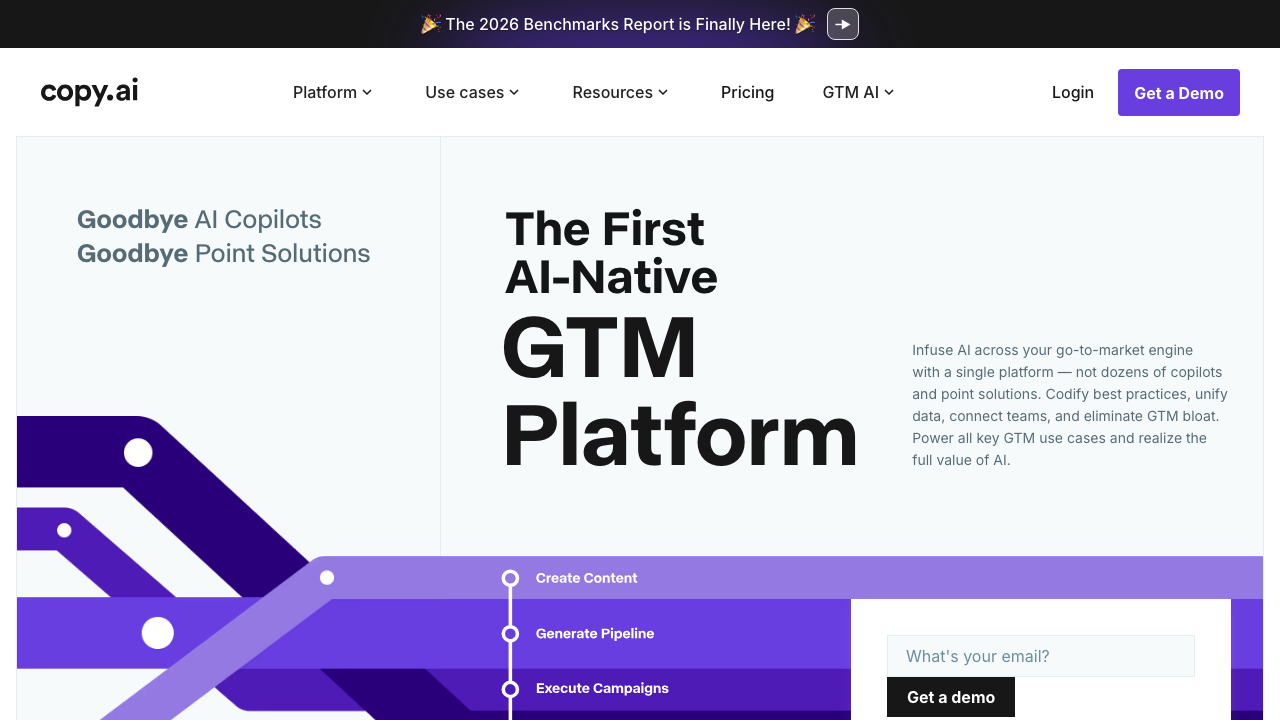
Copy.ai is another tool that really stands out for writing e-commerce product descriptions. It’s not just some ordinary tool you’d forget about, it’s more like this super helpful, flexible copywriting buddy that uses advanced machine learning to come up with persuasive product descriptions.
What sets Copy.ai apart?
Copy.ai has built a pretty solid reputation for creating content that not only grabs attention, but actually connects with your target audience too. It’s known for coming up with fast and really captivating descriptions, which kind of makes it stand out from a lot of the other tools out there for e-commerce businesses.
Key Features of Copy.ai
Here are some of the main features that kind of make Copy.ai a popular choice for copywriting:
- Versatility: Besides just product descriptions, you can use Copy.ai to write engaging social media posts, emails, blog posts, and a bunch of other stuff too. It’s pretty much like having a virtual copywriter right there at your fingertips.
- Customization: The tool gives you different ways to adjust your copy so it fits your brand’s unique style and target audience. With features like tone of voice selection, you can make sure your descriptions really match your brand identity.
- AI-Powered: By using the power of machine learning, the platform creates text that’s not just compelling but also fits the context of what you’re writing about.
The Power of Customization
One of the biggest perks of using Copy.ai is how you can customize your product descriptions to fit your exact needs. Like, you’re not stuck with some generic style. You can actually match the tone of voice in your descriptions with your brand personality, which really matters because it can change how customers see your brand and how they connect with your products.
For instance:
- If you sell eco-friendly products and your brand voice is more serious and professional, you can pick that same kind of tone in Copy.ai.
- On the other hand, if your products are for a younger audience and your brand has more of a playful and casual image, you can go with a more relaxed tone instead.
This kind of alignment between your product descriptions and your brand persona helps build trust with customers and also makes it more likely that they’ll actually buy, which is kind of the whole point.
Tips for Using Copy.ai Effectively
Here are a few things to keep in mind when using Copy.ai so you can get the best results out of it:
- Take advantage of customization: Really try to click around and use all the different customization options. That way you can shape the descriptions so they line up with your brand and actually sound like you.
- Experiment with different tones: Don’t be scared to test a bunch of different tones and styles. Just try stuff and see what your audience reacts to or, you know, what feels right for them.
- Keep your content fresh: Using Copy.ai isn’t a one time thing. It’s more like an ongoing process. Go back every so often to update and tweak your product descriptions so they stay interesting, engaging, and up-to-date.
Copy.ai is not just a tool for generating product descriptions; it's a powerful copywriting tool that offers versatility and customization for e-commerce businesses that want to create compelling content that actually stands out.
Final Verdict
Copy.ai really shows how AI is changing the world of e-commerce and copywriting in a big way. As we keep looking at different top AI tools for e-commerce product descriptions, it’s pretty clear that this kind of technology has turned into a must-have partner for online businesses.
3. Jasper
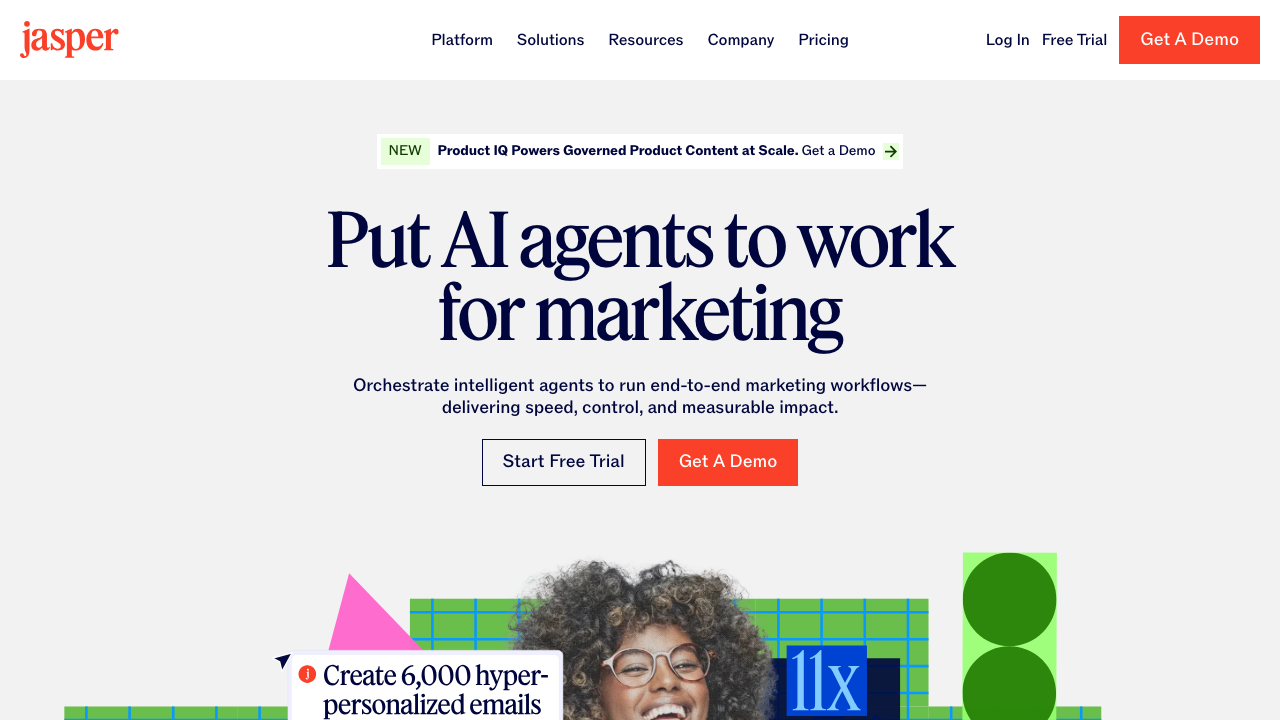
Jasper is a pretty advanced AI SEO writing platform that really does a good job at keeping things consistent, especially across a bunch of different product descriptions. It kind of just keeps that important consistency going, even when the products are all over the place.
How Jasper Helps with Brand-focused Content
When it comes to creating brand-focused content, Jasper really gets that every brand has its own voice and personality. It’s not all one-size-fits-all. By using its smart algorithms, it can pick up on your brand’s tone and style and kind of lock it in, so your product descriptions feel the same all the way through. This consistency helps build brand recognition with your customers, and it also makes the whole shopping experience feel more personal and, you know, actually made for them.
The Power of GPT-4 Language Model Integration
Jasper is more than just some ordinary AI writing tool, it actually works with the latest GPT-4 language model. Because of this integration, the quality and flow of the copy it creates gets a lot better, like way more clear and put together.
The GPT-4 language model is known for being really good at understanding context compared to older versions. It can pick up on how people normally talk and write, and then it copies those human-like text patterns. So the copy it produces ends up being engaging, and it also sounds pretty natural and conversational, like something a real person might write.
Generating High-quality and Coherent Product Descriptions
By adding this cutting-edge model into its system, Jasper can create high-quality product descriptions that are not just informative, but actually pretty compelling too. So whether you’re trying to describe all the tiny details of a handcrafted piece of jewelry, or you want to show off the high-tech features of some electronic gadget, Jasper makes sure each description is detailed and accurate and still fits your brand voice really well.
On top of that, using GPT-4 helps Jasper write product descriptions that are coherent and also stay relevant to the context. It looks at all the product information first before it writes anything, so every sentence connects with what came before it. The end result? A well-crafted product description that gives potential customers all the important details they need, while also presenting everything in a way that helps strengthen your overall brand image.
Final Verdict
Jasper really stands out as an AI writing tool that gets how important it is to keep a steady, brand-focused tone of voice across all your different product descriptions. By using the advanced GPT-4 language model, it helps you generate high-quality copy that’s coherent and actually pretty engaging, the kind of writing that talks straight to your potential customers. No matter what your brand’s style is or who you’re trying to reach, Jasper can help you create product descriptions that are compelling and not just eye catching, but also more likely to convert.
4. Writesonic
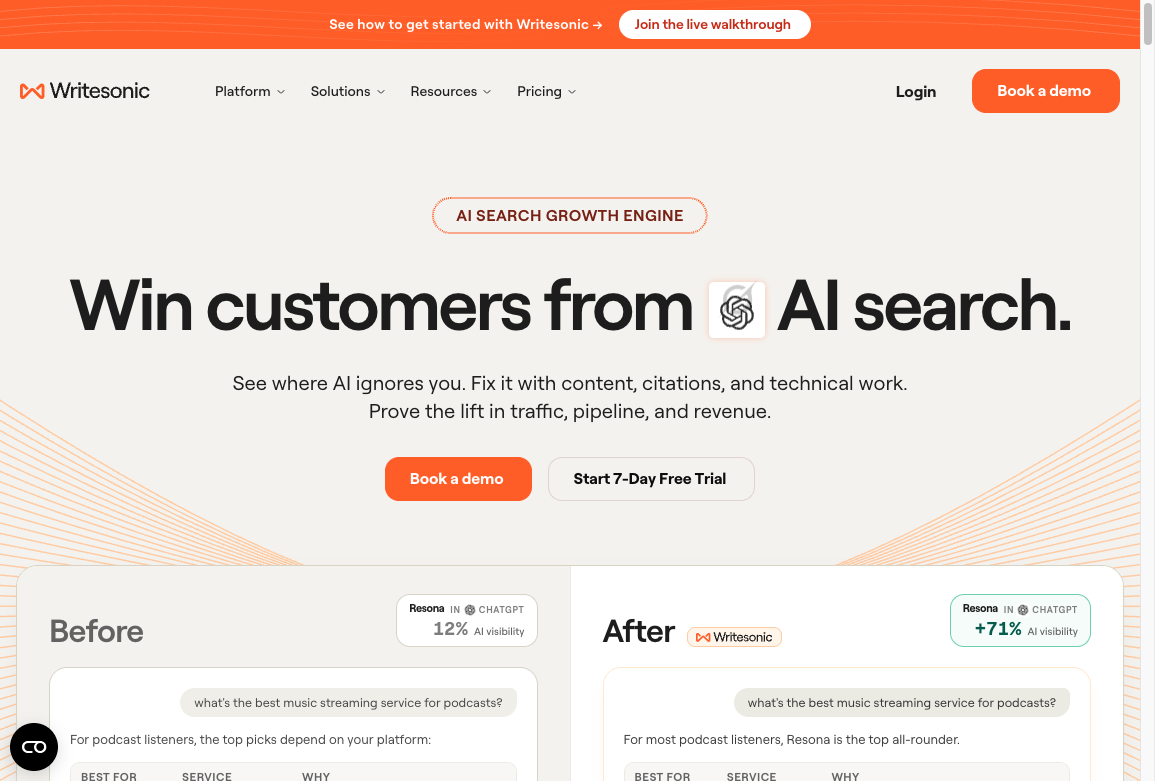
Writesonic is kind of known as one of the top AI tools for e-commerce product descriptions. It uses the latest GPT-4 technology, which is pretty advanced, and this platform has a strong reputation for creating product descriptions that feel very realistic and actually match the context of what you’re selling.
Tailored Descriptions That Capture Your Brand's Voice
With Writesonic at your disposal, you're not just getting some random AI-powered writing assistant. You're actually getting this reliable helper that kinda learns your brand's voice and adjusts to it. It can tailor descriptions so they sound like you, not like a robot or something.
- Craft engaging opening lines that actually make people want to keep reading
- Add unique details about product features so they don’t feel copy pasted
- Bring a touch of authenticity to every description it generates, so it feels more real and less generic
GPT-4: Pushing the Boundaries of Automated Content Creation
One of the main things that really stands out about this tool is how it uses GPT-4 technology, which kind of pushes the boundaries of automated content creation in a big way. GPT-4 is known for its really strong comprehension skills and its ability to create human-like text that feels rich in context and super relevant to what you actually need.
Engaging and Informative Descriptions That Convert
With GPT-4 technology, Writesonic helps you create product descriptions that are not just engaging, but also really tuned in to what your target audience actually wants. It kind of walks that fine line between being creative and being clear, so people know exactly what they’re buying, while still feeling interested and curious about the product.
SEO Optimization: A Crucial Element for E-commerce Success
But it's not just about writing catchy descriptions and hoping for the best. If you really want to stand out in today’s super competitive e-commerce world, SEO optimization is crucial, and this is actually another area where Writesonic really shines.
With Writesonic, SEO optimization isn't just some random afterthought you throw in at the end. It’s kind of built into everything, like every part of the content creation process is shaped around it.
Features Designed to Boost Your Search Engine Visibility
Writesonic's built-in SEO optimization features basically make sure every product description is ready to perform really well in search engine results. It sort of takes care of the important stuff for you, like:
- Keyword integration
- Meta tag generation
- Readability optimization
All of this is focused on improving visibility on search engine result pages (SERPs) and helping you get more organic traffic coming into your e-commerce store.
Elevate Your E-commerce Product Descriptions with Writesonic
When you use Writesonic’s SEO optimization features, you’re getting more than just catchy or attractive product descriptions. You’re actually getting a solid strategy that’s built to help you show up higher on search engines, bring in more visitors to your store, and in the end, help you drive more sales. It’s not just nice wording, it’s kind of like a whole plan working in the background for you.
Scalable Solution for Businesses of All Sizes
Another nice perk of Writesonic is how well it scales. Like, it doesn’t really matter if you only need a few product descriptions or you’re trying to write up an entire catalog, Writesonic can handle it pretty easily. This makes it a solid pick for small businesses that are just starting out and also for bigger enterprises that need to create a lot of content all the time.
5. Anyword
Anyword is an AI tool that really focuses on marketing teams. It kind of stands out for that. It gives a fresh spin on e-commerce product description generation by using list forms and paragraph forms instead of just regular plain text. This way it’s more flexible and can fit the huge variety of products you see in the e-commerce space.
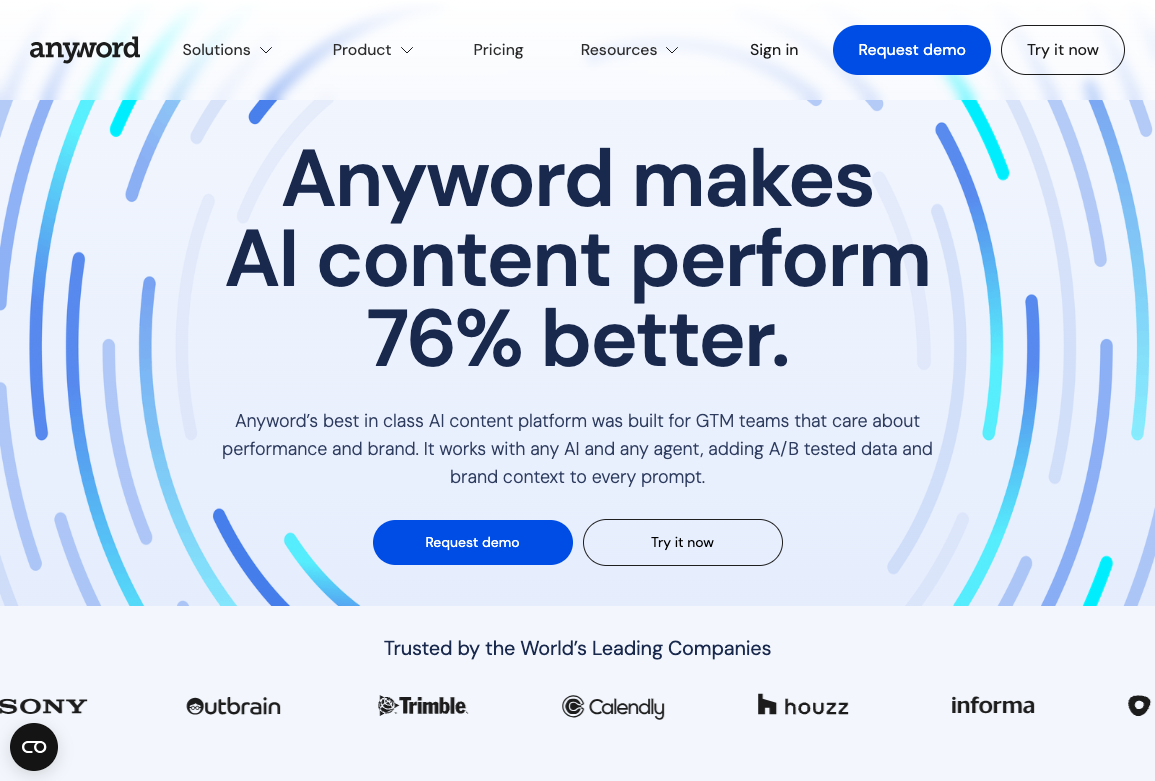
Anyword is an exceptional AI tool that kind of changes how you create product descriptions. Rather than sticking to the usual writing style, it uses a unique method that leans on list forms and paragraph forms. With these different formats, you can put together detailed and really complete product descriptions that are tailored to each specific product and the audience you’re trying to reach.
List Forms
The cool thing about list forms is how simple and clear they are. They give you a quick snapshot of the product's features without throwing a huge wall of text at you all at once.
So like, if you have an e-commerce store selling tech gadgets, a list form might look kind of like this:
- Ultra-high-definition display
- Long-lasting battery life
- Advanced noise cancellation feature
- Seamless connectivity with multiple devices Each bullet point shows one key feature of the product, so potential customers can quickly get a clear idea of what the gadget can do and what they should expect from it.
Paragraph Forms
On the other hand, paragraph forms let you go a lot deeper into the product's features or benefits. You can kind of take your time and explain more. They also make it easier to add a bit of storytelling, which makes the descriptions more interesting and a lot more persuasive too.
So, taking our tech gadget example a step further, a paragraph form might look something like this:
Experience entertainment like never before with our ultra-high-definition display tech gadget. With its long-lasting battery life, enjoy uninterrupted streaming all day long. The advanced noise cancellation feature ensures crystal clear audio quality, while its seamless connectivity options enable you to pair it effortlessly with multiple devices.
This kind of paragraph form gives you room for richer detail and really paints a vivid picture of the user experience in the reader’s mind.
Anyword's unique approach fits different types of products and target audiences really well. Whether you're selling simple or complex products, and whether you’re targeting tech-savvy millennials or older audiences, Anyword's list and paragraph forms can be adjusted to match your product and customer profile.
To show how this works, imagine your e-commerce store sells all kinds of stuff, from home appliances to fashion accessories. Anyword can create suitable descriptions for each one. For a minimalist pair of earrings, a list form might be totally enough. But for a multi-functional kitchen appliance, a more detailed paragraph form is probably better so you can highlight its multiple features and uses properly.
Anyword is more than just an AI tool; it basically becomes part of your marketing team, giving you the flexibility you need to generate compelling product descriptions that really connect with your target audience. With this tool at your disposal, you're in a great position to turn even the most casual browser into a convinced buyer.
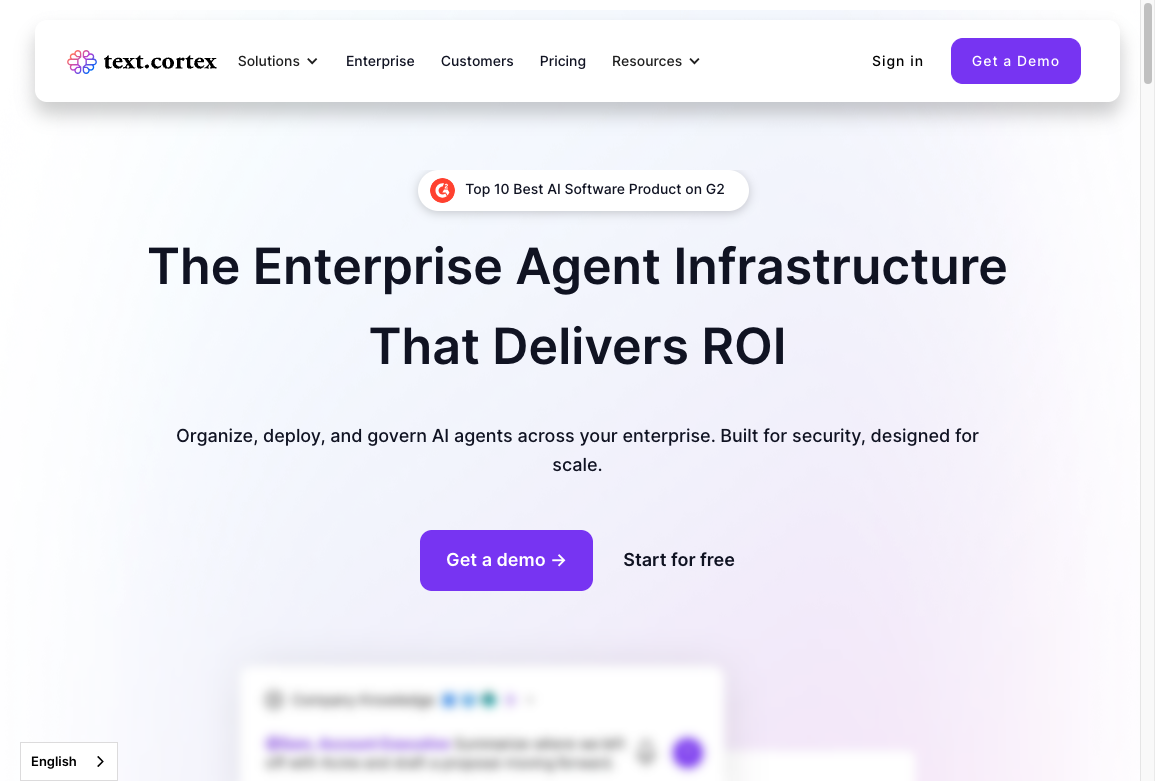
6. TextCortex
TextCortex is kind of like an all-in-one AI tool that’s made mostly for e-commerce businesses. It comes with a bunch of features that can help you automate different tasks, so you don’t have to do everything yourself. This way it can save you time and also make things run more efficiently, like overall.
Generating Product Descriptions
One of TextCortex's biggest strengths is how it can automatically generate product descriptions for you. It’s actually pretty simple to use. Here’s kind of how it works:
- Input Keywords: First, you just type in the specific keywords that are related to your product.
- AI-powered Description: Then TextCortex uses its advanced algorithms to turn those keywords into unique and engaging descriptions. It basically writes it for you, based on what you gave it.
- SEO Benefits: By using those relevant keywords inside the description, TextCortex helps boost your product’s visibility in search engine results, which is super important for getting more clicks.
This one feature by itself can honestly be a game-changer for online stores, especially if you have a huge catalog or not a lot of time and resources for content creation.
Automating Inventory Management
Keeping track of inventory levels is super important for any e-commerce business, like seriously. With TextCortex, you can pretty much automate this whole thing. The tool keeps an eye on your stock levels in real-time and updates them on its own whenever a new order comes in or an item gets restocked. So you don’t have to do it manually every time. This way your inventory data stays accurate and up-to-date, which helps a lot with preventing overselling or running into stockouts.
Streamlining Order Processing
Handling customer orders by hand can take a lot of time, especially when things get busy during peak shopping periods and you’re just trying to keep up. TextCortex makes this whole thing easier by automating order fulfillment. So when an order comes in, the tool just automatically creates all the documents you need (like packing slips and stuff) and sends them straight to your warehouse or your shipping provider. This saves you a bunch of time and also helps cut down on mistakes that usually happen with manual data entry.
Enhancing Workflow with Zapier Integration
To make things even smoother, TextCortex works really well with Zapier, which is a pretty popular automation platform. With this integration, you can connect TextCortex with a bunch of other apps and services you already use in your e-commerce stuff. Here are a few things you can actually do with it:
- Automatically update inventory: When a new order comes in, TextCortex can trigger an update to your inventory management system through Zapier, so you don’t have to do it all by hand.
- Send personalized emails: After someone makes a purchase, TextCortex can send a customized email to the customer using your favorite email marketing tool, like the one you already use.
- Create social media posts: When a new product gets added to your store, TextCortex can create a ready to publish social media post that you can share on places like Facebook or Instagram.
By using Zapier's huge library of supported apps, you can build custom workflows that fit your specific business needs, pretty much the way you want them.
Simplify Your E-commerce Operations with TextCortex
TextCortex gives you a whole set of tools that basically help you automate a lot of the boring parts of running an online store. So things like generating product descriptions, keeping track of inventory, or even processing orders can be handled way faster. This AI-powered solution helps you streamline your operations and, you know, free up more time so you can actually focus on the important stuff. Try TextCortex today and see the benefits for yourself!
7. ZenoChat
ZenoChat is TextCortex's conversational assistant, not a second vendor. There is no separate ZenoChat product site anymore. If you want that chat-style workflow, use TextCortex and talk through the SKU instead of filling a form.
How ZenoChat Works
- Conversation-based interface: So instead of that usual thing where you fill in blanks or just click random options, ZenoChat kind of talks with you in a chat-like conversation. It asks you questions and you answer, and that’s how it collects info about your product.
- Personalized output: Because it actually tries to understand your specific needs through the conversation, ZenoChat can create more personalized and accurate descriptions. It focuses on the main features and benefits of your product so they stand out more.
- Consistency across descriptions: Thanks to its conversation memory feature, ZenoChat remembers what you said before and uses that info later. This helps it keep the same tone and style across all your product descriptions, so everything feels consistent and kind of on-brand.
GPT-4 Integration
ZenoChat integrates the latest GPT-4 language model, which is known for its really strong contextual understanding and creativity. Because of this integration, ZenoChat can create product descriptions that not only give accurate information, but also feel kind of human and more fun to read for customers. Here are some key benefits of the GPT-4 integration:
- Contextual understanding: GPT-4 helps ZenoChat actually understand the context of your product and its unique selling points, so the descriptions end up more relevant, detailed, and honestly more persuasive too.
- Enhanced creativity: With GPT-4's ability to generate creative text, ZenoChat can build compelling little narratives around your product, making it stand out more and feel more appealing to potential buyers.
- Multilingual capabilities: Thanks to GPT-4's support for multiple languages, ZenoChat can help non-English e-commerce businesses create product descriptions that are properly tailored to their local markets, instead of sounding like weird auto-translations.
Who Can Benefit from ZenoChat?
ZenoChat's solution works really well for all kinds of e-commerce businesses, like for example:
- Small online boutiques that want to improve their product descriptions and actually stand out from competitors.
- Large e-commerce platforms with a huge catalog of products that need consistent and high-quality descriptions all the time.
- Non-English e-commerce businesses that want to expand their reach and grow by getting past language barriers.
So yeah, whether you're a small business owner just getting started, or you run a big e-commerce platform, ZenoChat gives you a scalable solution for your product description needs. Its conversational approach, mixed with the power of GPT-4 integration, helps you create engaging and persuasive content that can really drive customer engagement and boost sales. Try ZenoChat for yourself and see the difference it can make in how you present your products to the world.
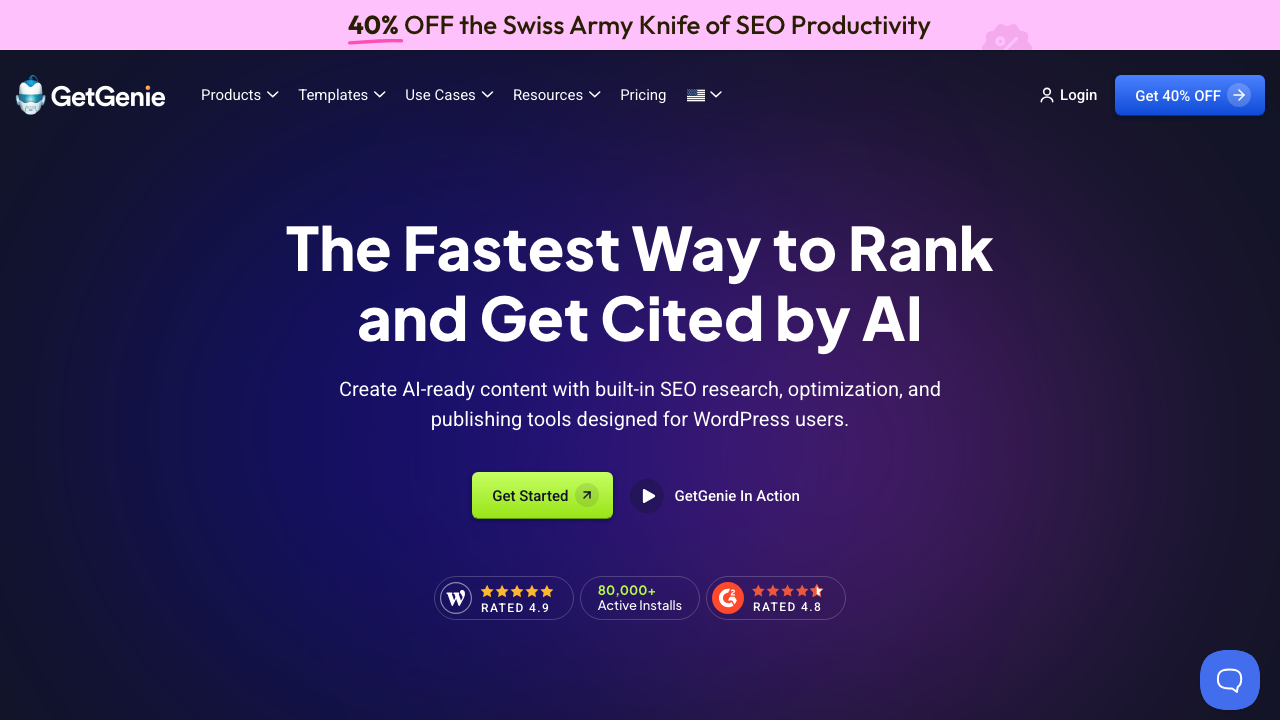
8. GetGenie
GetGenie is an AI tool that mainly helps e-commerce businesses write search engine optimized product descriptions, kind of like giving them a quick and easy way to make their products look better online.
How GetGenie Works
GetGenie is basically built to create product descriptions that not only look good to potential customers, but also grab attention from search engines at the same time. It uses these advanced algorithms to figure out your product features and then turns them into compelling narratives that clearly share the value proposition with your target audience. So yeah, it kind of connects what your product does with what people actually want to hear.
SEO Content Generation
One big thing that really makes GetGenie stand out is how much it focuses on SEO content generation. It kind of understands that organic traffic is super important, because that’s what usually leads to more conversions. So, when it’s writing your product descriptions, GetGenie uses SEO best practices right from the start. This way, your products have a better chance of ranking higher in search engine results, bringing in more traffic and, honestly, making it more likely that those views turn into real conversions.
AI Chatbot Feature
So, one big thing that really makes GetGenie stand out from a lot of other AI tools is its AI Chatbot feature. It’s basically built to make the whole customer experience on online stores feel smoother and kinda more helpful. This chatbot can do a bunch of stuff like answering customer questions, helping people step by step through the buying process, and even giving personalized recommendations based on what the user seems to like.
When you add this feature to your e-commerce platform, it can really change how you talk to your customers and how they talk back to you. Their shopping experience becomes more interactive and more personal, not just clicking around alone. It’s super useful especially when customers have questions or feel unsure about a product. Instead of getting stuck, the AI Chatbot can instantly give detailed answers or extra info about the product, which pretty much removes those little roadblocks that might stop someone from actually finishing a purchase.
Key Benefits of GetGenie for E-commerce Businesses
So basically, GetGenie works kind of like a two-in-one tool for e-commerce businesses:
- It creates SEO-optimized product descriptions that help bring in more organic traffic.
- Its AI Chatbot improves how customers interact with your store, which can lead to a better user experience and maybe even higher conversion rates.
- It combines content generation and on-site support, which can reduce friction during the buying process.
When it comes to improving SEO in the e-commerce world, smart tools like GetGenie are really changing the game, helping businesses use artificial intelligence to get the best possible results.
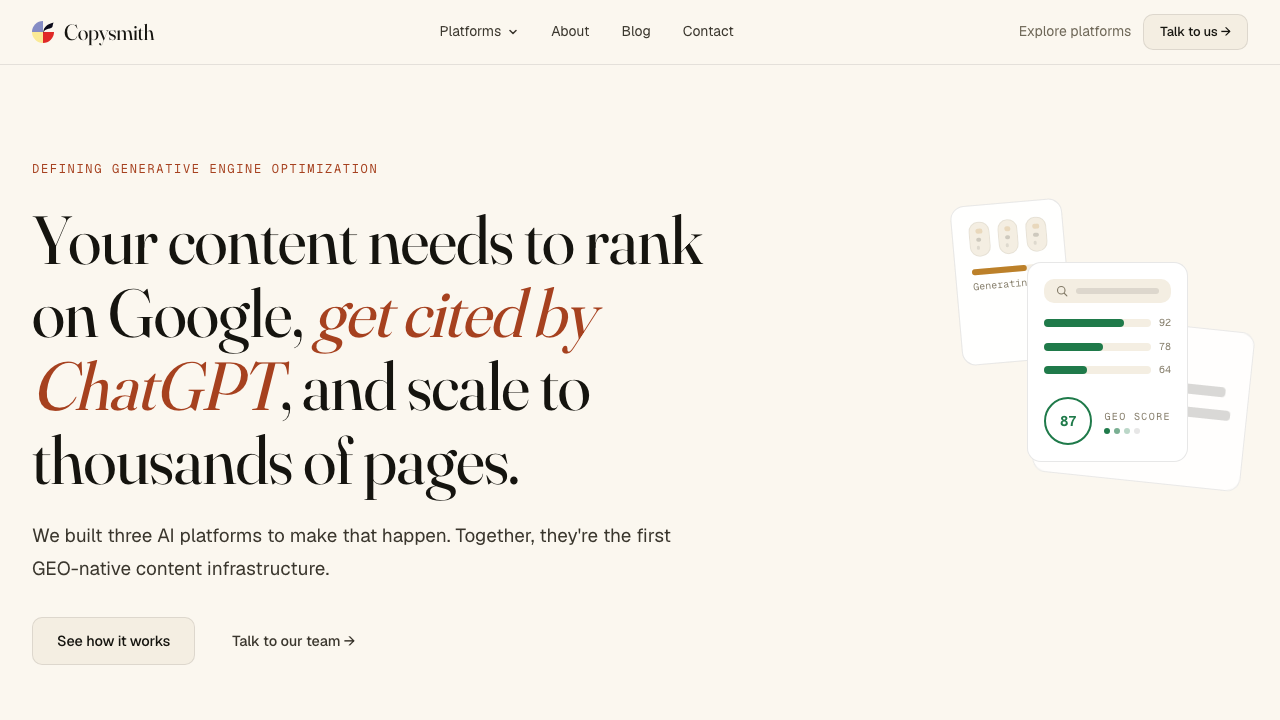
9. CopySmith
CopySmith is an innovative AI writing tool that’s built mostly for e-commerce marketers. It’s really focused on making the copywriting process easier and faster, especially when you’re dealing with big product inventories and a ton of items to write about. This tool has some pretty unique features like catalog import and integration, which kinda makes it a really strong contender in the AI writing space.
Unique Features of CopySmith
- Catalog Import/Integration: The ability to import your entire product catalog makes CopySmith really stand out. You don’t have to manually type in every single product anymore, which saves a lot of time and honestly, a lot of boring work. With this feature, it’s way easier to handle big product inventories and keep all your product descriptions updated when things change.
- Product Description Generator: CopySmith is especially good at creating high-quality and persuasive product descriptions. The AI understands your products pretty well, and then it can generate engaging descriptions that actually sound like a person wrote them. This can help increase conversions on your e-commerce platform, so more visitors turn into actual buyers.
Streamlining Your Copywriting Process
One of the biggest benefits of using CopySmith for your e-commerce business is how much it can really streamline the copywriting process. Like, if you're an e-commerce marketer dealing with hundreds or even thousands of products, it can get pretty overwhelming, honestly. Especially when every single one needs its own unique and engaging description that actually convinces people to buy.
With CopySmith, you're not just getting some random tool that creates copy, you're getting this whole efficient system that helps manage and generate content for huge product catalogs. All you really have to do is import your catalog, sit back for a second, and let the AI do its magic.
Creating Engaging Product Descriptions with CopySmith
A great product description is more than just a list of features, it’s kind of like a mini story that connects with the potential customer and actually convinces them to buy. CopySmith uses advanced AI algorithms to create these kinds of strong and really compelling narratives.
By learning from your existing content, the tool starts to understand your brand's voice and style, so it keeps everything consistent across all your product descriptions. This means the generated descriptions don’t just share information, they also keep your target audience interested and engaged, which makes it more likely you’ll see higher conversions.
Why Choose CopySmith?
- Efficiency: The catalog import feature really cuts down on the time and effort you’d usually spend, so you can kind of relax a bit and focus on other important parts of your business.
- Consistency: CopySmith helps keep your brand voice the same across all your product descriptions, so everything feels more aligned and not all over the place.
- Quality: The AI writes high-quality and engaging descriptions that can help improve conversion rates, and honestly, that can make a pretty big difference over time.
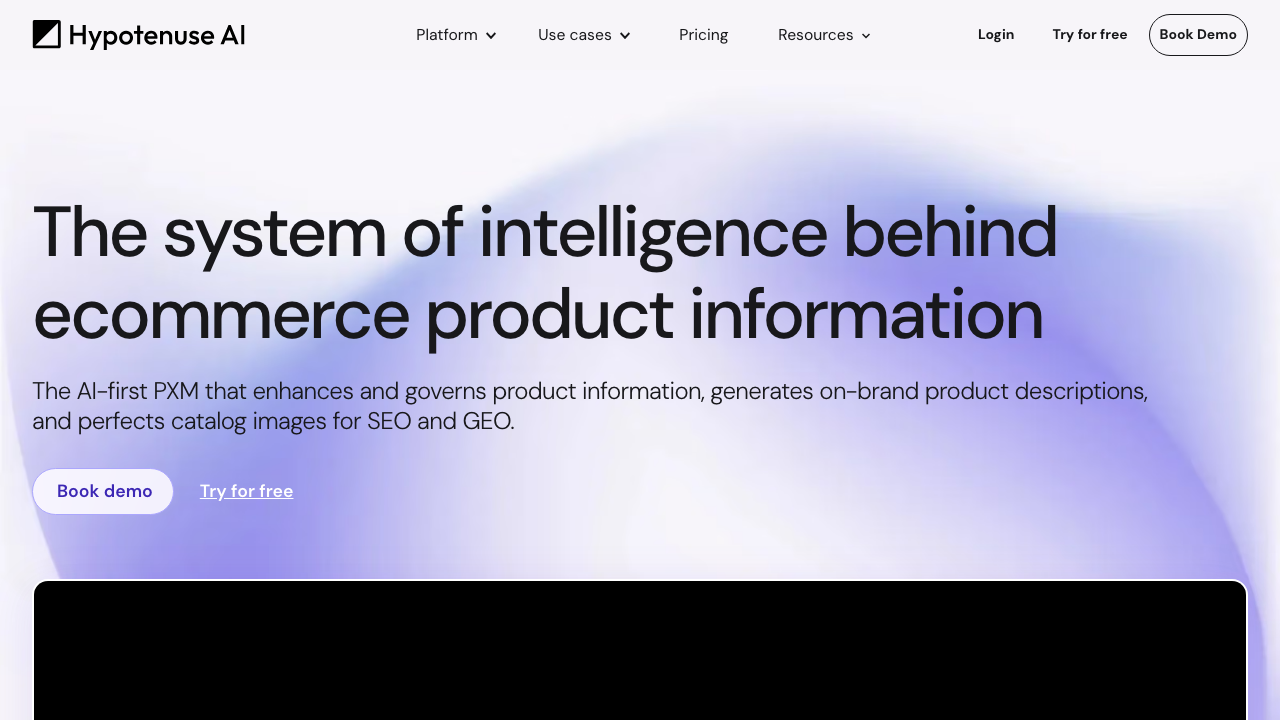
10. Hypotenuse AI
Hypotenuse AI is a tool that really stands out in the crowded world of AI-driven product description generators. Its strong SEO-focused approach and seamless integration with Shopify make it a top choice for users who care about ranking and selling at the same time. In fact, it's one of the best AI writing tools with Shopify integration, designed specifically to enhance content creation, improve SEO, and drive social media success.
How Hypotenuse AI Works
Hypotenuse AI is built to help e-commerce businesses, especially Shopify store owners, quickly generate optimized product descriptions in bulk. So yeah, instead of writing everything by hand, it kind of does the heavy lifting for you.
- Utilizes advanced machine learning algorithms: This tool uses advanced machine learning algorithms to create product descriptions that are relevant, targeted, and highly optimized. It analyzes what you give it and then turns that into something that actually sounds like a real description, not just random text.
- Generates multiple unique variations: Unlike some other tools that basically just reuse the same description for different products, Hypotenuse AI can create multiple unique variations of a single description. This is pretty important because this unique feature helps you avoid duplicate content issues, which can negatively impact your SEO ranking if you are not careful.
- Tailors each description to the specific product: The tool's sophisticated algorithms make sure every description is tailored to the specific attributes of each product, from its features and benefits to its target audience and intended use. So each one feels more specific and not just copied and pasted. It kind of knows what to focus on for each product.
- Handles bulk operations efficiently: One thing about Hypotenuse AI that really sets it apart is how well it handles bulk operations efficiently. Whether your Shopify store has just a few dozen products or literally thousands of them, this tool can quickly generate well-written, SEO-friendly descriptions for all your items in just a few clicks. It saves a lot of time, honestly.
The SEO Advantage
Another big advantage of using Hypotenuse AI is honestly the SEO focus it brings to the table.
Most e-commerce business owners already know this, but having well-optimized product descriptions is super important, not just for catching customers’ attention, but also for boosting your search engine rankings.
By building SEO best practices right into its algorithm, Hypotenuse AI makes sure that every description it generates helps your overall SEO strategy in a positive way, even if you’re not really thinking about it every single time.
Why Choose Hypotenuse AI?
With all these features and stuff, it’s pretty clear that Hypotenuse AI is a super helpful tool for e-commerce businesses that want to automate and improve their product description creation process. When you use this tool, you can really boost how effective your product listings are, and over time, like, actually drive more sales on your Shopify store.
So if you’re kind of sick of spending hours writing and editing product descriptions, or if you just want to level up your SEO game a bit, then try using Hypotenuse AI and see how it can totally change your e-commerce business!
Tips for Writing Compelling Product Descriptions with AI
The tools above will get you a first draft. They will not save a listing that is missing the facts a shopper needs.
I would keep the workflow boring on purpose:
- Feed the model real attributes, not just the product name.
- Lock one brand tone and reuse it.
- Edit the output against the actual SKU.
- Check that Google can understand the listing.
If you sell on Google Shopping or free listings, the description is only one piece. Merchant listing eligibility still depends on product data quality, identifiers, and a page that matches the offer.
Google Search Central: Merchant listing experiences eligibility
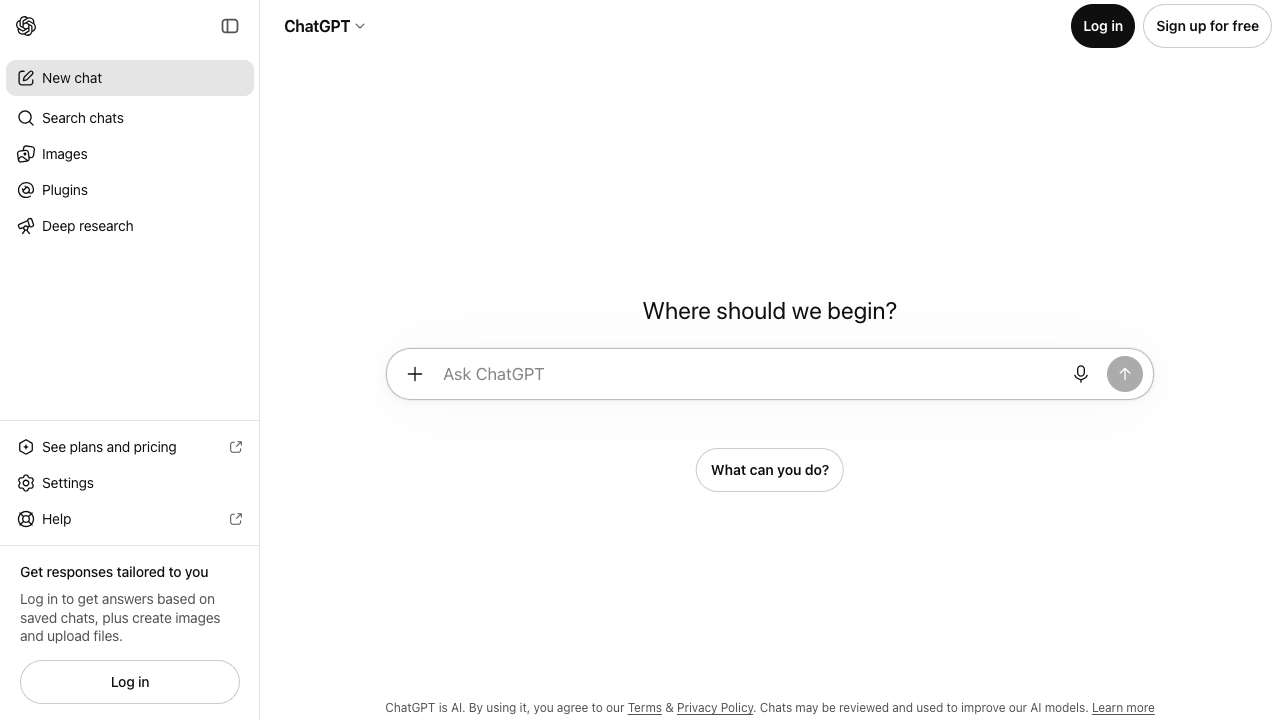
ChatGPT is fine for one-off SKUs or a messy spec sheet. I would not use it as the catalog system.
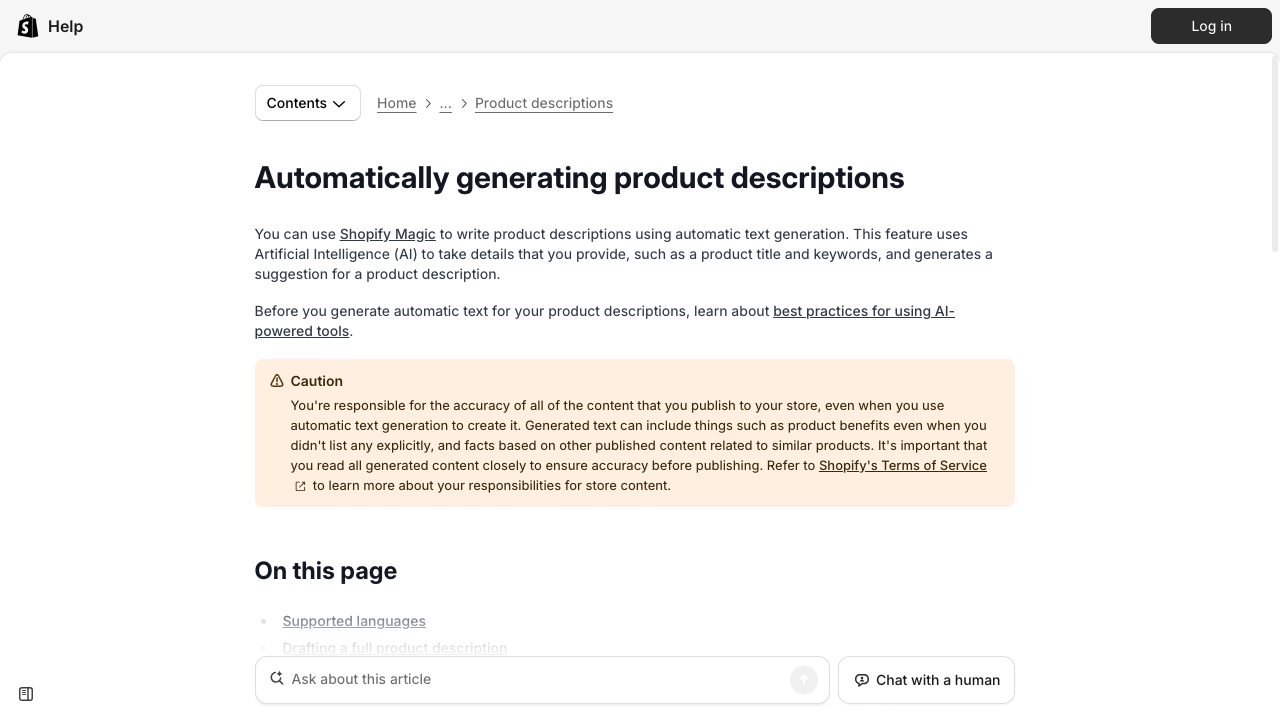
If you already live in Shopify, Magic can draft the description from the product title and keywords you already stored. It is not a bulk catalog writer, but it is the native option when you do not want another SaaS login.
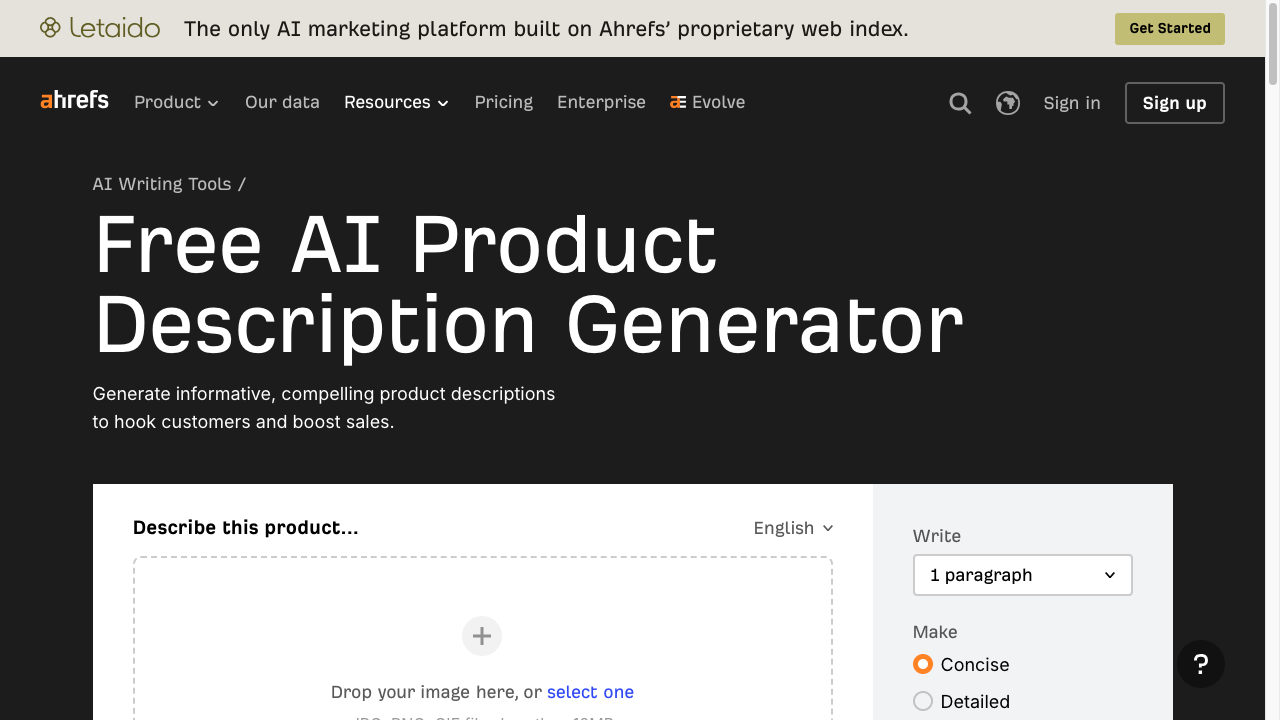
Ahrefs also has a free product description generator if you want a one-off draft from an image or a short brief. I would still edit it like a merchandiser.
Keep the tone consistent, then edit like a merchandiser
Most AI tools let you pick a tone. Use it. Then check the facts.
If the brand is playful, the description can be playful. If it is a technical catalog, keep the copy dry and specific. The bigger mistake is mixing those voices across a collection.
Human editing is the part that actually protects conversion. AI is fast, but it still misses fit notes, compatibility, and the one benefit a buyer cares about. If the draft feels generic, add a human pass before you publish. For other-language stores, edit for local phrasing too, not just translation.
Conclusion
If I had to start today, I would not buy five tools.
I would use Junia AI for SEO-aware product descriptions, Copy.ai or Jasper when brand voice across a team is the problem, and Hypotenuse or Writesonic when Shopify bulk work is the bottleneck. Anyword, GetGenie, and Copysmith are worth a look if you already have a catalog workflow and need formats, WordPress SEO, or import at scale.
The test is simple: would a shopper learn something they could not get from the title? If the answer is no, do not generate 10,000 more of the same page.
For a wider view of writing tools beyond product pages, this AI content generators roundup is the next stop. Then come back and edit the SKUs that actually sell.