
Blog Title vs Headline vs SEO Title: What’s the Difference?

Thu
AI SEO Specialist, Full Stack Developer

People often use blog title, headline, and SEO title as if they mean the same thing. They are related, but they are not identical.
That confusion causes practical problems. You end up writing one line and expecting it to handle everything at once: rank in search, look good on the page, and persuade someone to click. Sometimes one title can do all three jobs. Often, it cannot.
Once you understand the differences, it gets much easier to structure pages well, improve click-through rate, and avoid awkward title-tag decisions.
The short version
Here is the simplest way to think about it:
- A blog title is the name of the article in editorial terms.
- A headline is the on-page title readers see when they land on the article.
- An SEO title is the title tag shown in search results and browser tabs.
Sometimes those lines match exactly. Sometimes they should be slightly different.
What is a blog title?
A blog title is the working or editorial title of a post. It is the phrase you use when planning, drafting, and organizing content.
For example, if your team is creating an article about headline writing, the blog title might be:
How to Write Better Headlines for SEO
That title tells the writer and editor what the piece is about. It sets direction.
In many publishing setups, the blog title and the on-page headline end up being the same. But conceptually, the blog title is the broader editorial label for the piece.
What is a headline?
The headline is the title readers see on the page itself. In most blog posts, this is the H1.
Its main job is to confirm that the visitor landed in the right place and make the content feel worth reading.
A good headline usually needs to be:
- Clear
- Readable
- Aligned with the article
- Strong enough to keep the reader moving
If you are starting from a rough idea and want better on-page options, a headline generator can help you explore clearer or more compelling phrasing before you lock the page in.
What is an SEO title?
The SEO title is the title tag that search engines usually display in search results. It also appears in the browser tab and is often used when the page is shared across platforms.
Its job is slightly different from the H1. The SEO title needs to:
- Compete against other search results
- Include the topic clearly
- Stay concise enough to display well
- Match search intent
That is why the SEO title sometimes needs a tighter or more search-aware structure than the on-page headline. If you are specifically working on title tags, a meta title generator is often a better fit than a general headline workflow.
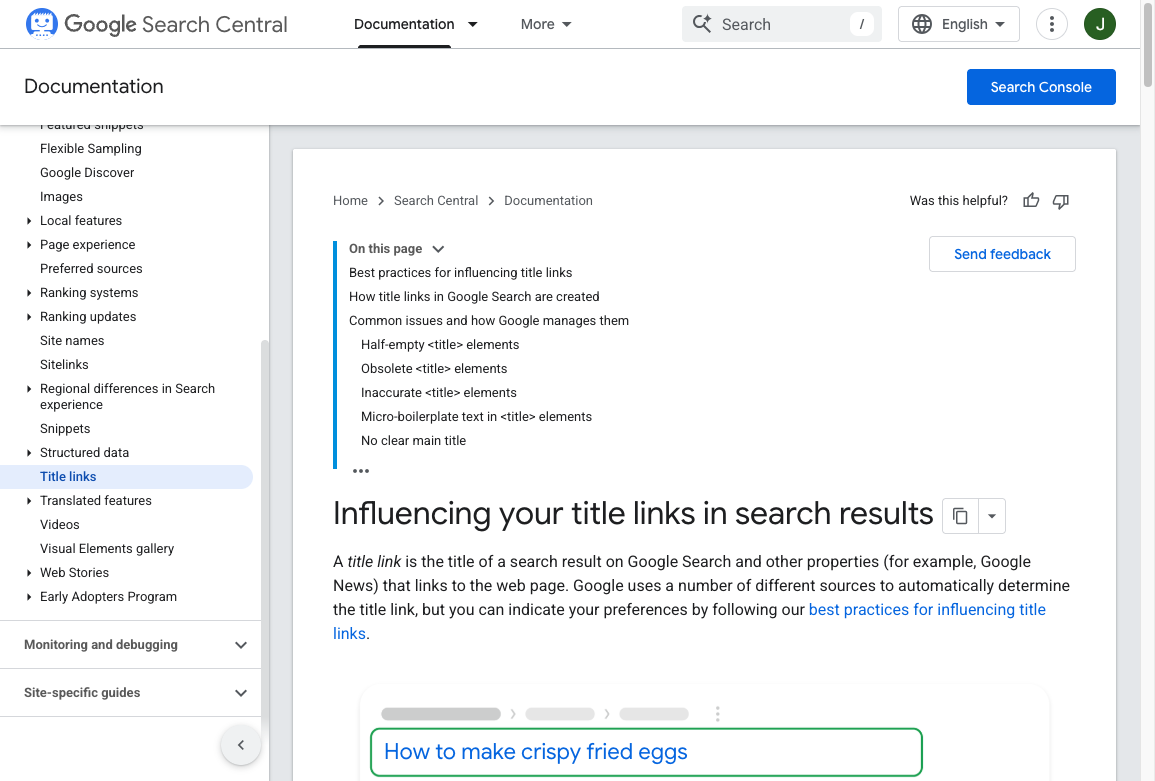
Google may still rewrite whatever you put in the title tag. The official title-link documentation is blunt about it: Search can pull from the <title> element, the visible H1, other headings, or even anchor text if the title looks weak, stuffed, or out of date.
Google's own explanation of how it chooses titles in search results is the supporting walkthrough for this section. I would watch it once, then stop treating the title tag as a guaranteed SERP string.
How does Google choose titles for search results?
Why the differences matter
When people blur these terms together, they often miss a chance to improve either readability or search performance.
Here is a common example:
- On-page headline: Blog Title vs Headline vs SEO Title: What’s the Difference?
- SEO title: Blog Title vs Headline vs SEO Title Explained
Those are close, but they are not identical. The on-page version can be a little more conversational. The search-facing version can be a little tighter.
The point is not to make them different for the sake of it. The point is to let each one do its job well.
Here is a quick comparison:
| Element | Where it appears | Main job | When to change it |
|---|---|---|---|
| Blog title | Editorial workflow, content calendar, CMS | Keeps the article organized internally | When the working name no longer matches the page |
| Headline | On the page, usually the H1 | Confirms relevance and pulls the reader in | When the H1 is vague, cute, or fights the title tag |
| SEO title | Search results, browser tab, social previews in some cases | Wins the click and signals topic clearly | When it truncates, stuffs keywords, or Google keeps rewriting it |
When they should be the same
In many cases, keeping the blog title, headline, and SEO title nearly identical is perfectly fine.
That usually works when:
- The topic is already clear
- The phrasing is concise
- The keyword fits naturally
- The title displays cleanly in search
For a straightforward tutorial or definition article, one strong title can often carry the whole page.
When they should be different
It makes sense to separate them when one line cannot do every job effectively.
Common reasons include:
- The on-page headline reads well, but the SEO title is too long
- The editorial title is accurate, but not compelling enough for search
- The SEO title needs a clearer keyword signal
- The on-page headline benefits from more natural wording
For example:
- Editorial/blog title: Headline Writing Guide for Content Teams
- On-page headline: How to Write Better Headlines for Blog Posts, Landing Pages, and Ads
- SEO title: How to Write Better Headlines for SEO and CTR
Each version stays aligned to the same topic, but the wording shifts slightly based on use.
How this affects SEO
The H1 and title tag do not need to be identical, but they should point in the same direction.
If your title tag promises one thing and the page headline suggests something else, the page can feel disjointed to both users and search engines. That does not automatically break rankings, but it creates friction you usually do not need.
That is why writing headlines for SEO is really about more than picking a catchy phrase. It is about matching the title structure to intent, readability, and snippet performance.
A simple framework to decide what to use
If you are unsure whether one title is enough, use this checklist:
- Does the headline read naturally on the page?
- Does the title tag look strong in search?
- Is the primary topic obvious in both places?
- Are the two versions aligned in meaning?
- Is either one unnecessarily long or vague?
If the answer looks good across all five, you probably do not need separate versions.
If not, create a tighter SEO title while keeping the on-page headline a little more natural.
Related elements people also mix up
This topic overlaps with a few other pieces people regularly confuse:
- Meta title vs meta description: the title tag is the clickable result title; the meta description is the short summary below it. If you need both, this guide on how to write the perfect meta description helps.
- Headline vs hook: the headline gets attention first; the opening hook keeps the reader engaged. Finished headline examples are more useful than another formula list when you are choosing an angle.
- Headline vs slug: the slug is the URL path, not the visible title. A slug generator can help when the URL starts getting too long or messy.
It helps to think of these as different layers of the same page, not interchangeable labels.
Write for the job, then check Search Console
Blog title, headline, and SEO title all describe the same page. They do not have to be the same string.
The blog title is the editorial frame. The headline is the on-page promise. The SEO title is the search-facing version that competes for the click.
Google may rewrite the title tag. If Search Console shows a title link you did not write, treat it as feedback. Align the H1, the
<title>, and the first heading so they describe the same job. Then recrawl. Do not keep stuffing synonyms into the tag and hoping the snippet stays put.
Once you separate those roles, title decisions get easier. You write cleaner headlines, tighter title tags, and pages that still make sense when Google picks its own link text.