
Multilingual Programmatic SEO (Without Duplicate Content or hreflang Chaos)

Thu
AI SEO Specialist, Full Stack Developer

Programmatic SEO for multiple languages means building repeatable page systems that can rank across countries and languages without turning into thin, translated duplicates.
That is the appeal of the model. One strong template can support hundreds or thousands of pages. The risk is that weak localization, bad keyword mapping, or sloppy hreflang can create indexation problems just as quickly as the system creates scale.
Done well, multilingual programmatic SEO combines automation with real market adaptation. The structure stays consistent, but the keyword targeting, copy, and examples change meaningfully by language and region.
Before you scale templates across languages, get the broader international search strategy for SaaS clear. Then the question becomes much sharper: does this repeatable page pattern deserve to exist in multiple languages, and can each generated page stay useful, indexable, and distinct?
The safest setups combine multilingual SEO with AI, scaled content generation, and multilingual article writing workflow with platform-level controls for hreflang, sitemaps, and QA.
This guide walks through the practical setup: choosing markets, validating localized keywords, structuring URLs, localizing on-page elements, and measuring what is actually working.
Step 1: Identifying Target Markets and Languages
Start with evidence, not assumptions. Look in your analytics and Search Console data for countries already generating impressions, clicks, or assisted conversions. Those markets often make the best first expansion targets because search demand already exists.
Then study competitors. Tools like Ahrefs or Semrush can show which languages, countries, and page patterns already drive visibility in your category. Focus on signals like:
- Markets where competitor coverage is thin or poorly localized
- High-intent keyword clusters they have not built pages for yet
- Regional query patterns that differ from the English market
Language targeting is not the same as translation. Brazilian Portuguese and European Portuguese often need different keyword sets. The same is true for Spanish in Mexico versus Spain. Before you scale, confirm how local users search and what they actually expect to land on.
Step 2: Keyword Research for Multilingual Audiences
Keyword research is where multilingual programmatic SEO usually succeeds or fails. You cannot translate an English keyword list and assume it maps cleanly to demand in another market. Search behavior changes with language, culture, and buying habits.
Understanding Regional Differences
The best keyword sets are validated by native speakers, local marketers, or customer-facing teams in that market. A translated term may be grammatically correct while still sounding unnatural or missing the dominant phrasing people really use.
The Importance of Long-Tail Keywords
Long-tail keywords are often the best fit for multilingual programmatic pages because they reveal clearer intent and lower competition. They also expose local phrasing patterns. Some languages favor longer compound terms, while others use shorter, more direct constructions.
Avoiding Pitfalls of Machine Translation
Machine translation is fine for exploration, but risky as a source of truth. A keyword can look accurate and still be low-volume, awkward, or commercially irrelevant. Validate important keyword clusters before you generate large batches of pages from them.
Leveraging AI Translation Tools
AI can still speed up the workflow. Use it to expand seed terms, group related variants, or draft localized copy for review. If you are scaling production, multilingual blog translation at scale and guides on how to bulk translate articles can help streamline the process, but they should sit inside a human-reviewed workflow.
Step 3: Choosing the Right URL Structure for International SEO
Your URL structure affects crawling, reporting, and how easy the system is to manage. In most cases, you are choosing between three common models:
| Programmatic rule | Why it matters |
|---|---|
| Unique value per template row | Stops duplicate-content clones |
| Local keyword datasets | Avoids English keyword translation |
| Hreflang + indexable URLs | Prevents serving chaos |
Templates scale mistakes as fast as pages. Fix the data and QA gates before you generate 10,000 URLs.
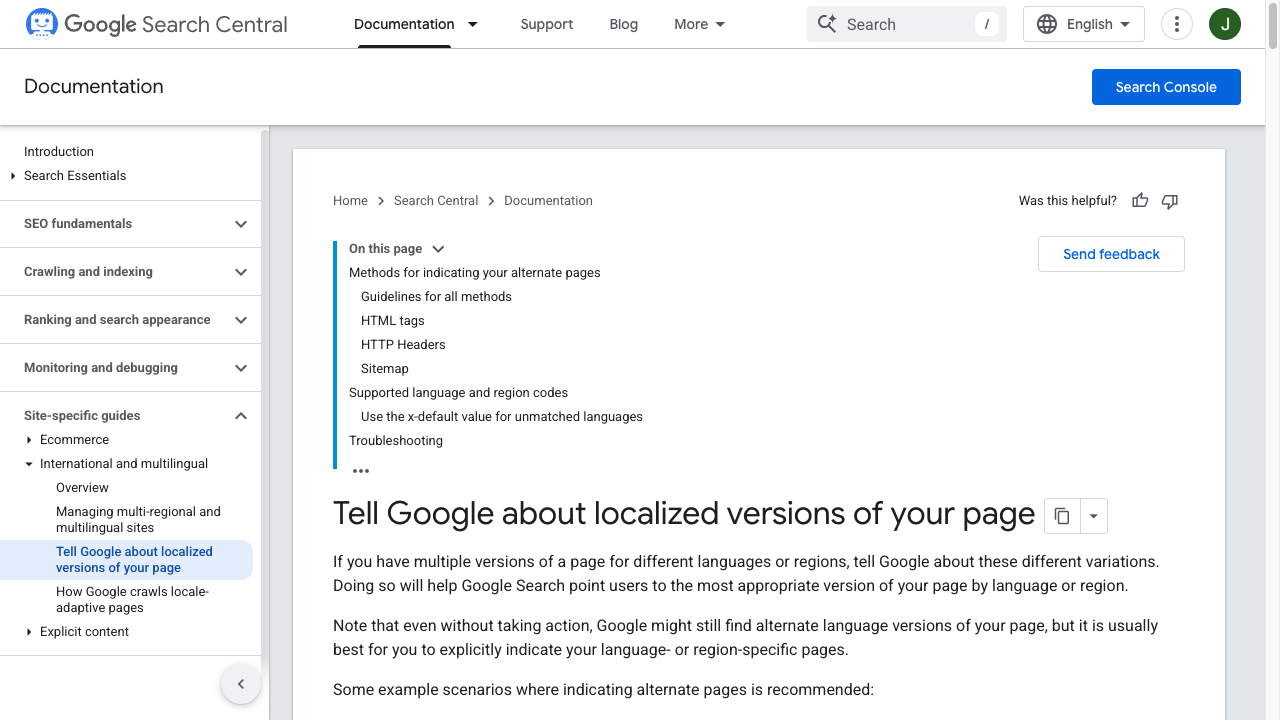
Internationalization & hreflang | Search Off the Record
1. Subfolders
example.com/fr/ and example.com/de/ are usually the simplest structure to scale. They keep authority under one domain, simplify analytics, and make template management easier.
2. Subdomains
fr.example.com and de.example.com give teams more separation. They make sense when different markets need different tech stacks, publishing workflows, or ownership.
3. Separate domains
example.fr and example.de send the strongest local-country signal, but they also create the highest operational cost because each domain needs its own authority, governance, and maintenance.
Whichever structure you choose, hreflang needs to be accurate. Add the correct language and optional region code, make alternate references reciprocal, and keep canonicals aligned with the intended page version. If your team needs a deeper implementation guide, this article on language alternate tag fixes covers the essentials clearly.
Step 4: Translating and Localizing On-page Elements
On-page localization is more than translation. The goal is to make the page feel native to the market, not merely readable in the language.
Optimizing Title Tags
Title tags should stay concise, but they should also reflect localized keyword research. Do not force the English title pattern into every language if the market phrases intent differently.
Crafting Compelling Meta Descriptions
Meta descriptions should also be rewritten for the market, not just translated. The click triggers that work in one region may sound flat or too aggressive in another. Draft at scale if you need to, but review the final versions for tone and relevance.
Describing Images with Keywords
Alt text should be descriptive first and localized where appropriate. It also helps to localize the supporting details around the page, including currencies, date formats, screenshots, measurements, and examples. Those small signals do a lot of trust-building.
Improving Low Ranking Pages
Not every template will perform equally well in every language. If a page family underperforms, compare it against stronger markets and look at the keyword set, internal linking path, and localization quality before you scale it further.
Step 5: Avoiding Common Pitfalls in Multilingual Programmatic SEO
Machine translation without review is still one of the fastest ways to publish weak multilingual pages. The wording may be technically correct while still feeling unnatural, culturally off, or commercially irrelevant.
Automatic redirection is another common mistake. If users or crawlers are forced into the wrong version based on IP or browser settings, search engines may struggle to crawl and index the full page set correctly.
Localization also goes beyond the visible headline and body copy. You usually need to adjust:
- Currency formats and payment methods
- Date and time formats
- Product availability by region
- Cultural references and imagery
- Legal disclaimers and compliance requirements
- Contact information and customer support channels
If you ignore those details, the site may scale in page count without scaling in usefulness. Hidden elements such as FAQs, schema fields, and product descriptions need the same localization discipline as the visible copy.
Case Study Spotlight: ElevenLabs' Programmatic Multilingual SEO Success
ElevenLabs is a useful example of multilingual programmatic SEO done with clear search intent. The company built a large footprint by pairing narrow use cases with localized expansion instead of publishing generic translated pages.
Its accent-specific pages targeted searches like "Irish accent storytelling" and "Australian accent voice generator." Because the intent was narrow, those pages could be genuinely useful instead of feeling like doorway pages.
The company then expanded into additional languages and adjacent page sets, including voice libraries and sound-effect searches. The lesson is not just volume. It is that each page family stayed tied to a believable query pattern and a real use case.
Key takeaways from the ElevenLabs programmatic SEO case study include:
- Specificity at scale: Build pages around narrow, repeatable search intent instead of broad generic terms
- Content depth: Add examples, use cases, and enough context to keep pages useful
- Strategic localization: Adapt the content for the market instead of cloning translated templates
- Layered targeting: Combine languages, subtopics, and use cases to expand total search coverage
You can apply the same logic by identifying repeatable query patterns, testing which ones transfer across markets, and localizing only the strongest page types first.
Measuring Success and Optimizing Continuous Growth with Programmatic SEO Techniques
Measuring multilingual programmatic SEO means segmenting performance by language, region, and template group. If you only look at sitewide growth, you can miss weak page families for months.
Start by monitoring these essential KPIs:
- Traffic by language and region: Measure which markets are actually attracting qualified visits
- Keyword rankings by market: Track target terms separately for each language and country version
- Conversion rates by market: Compare leads, signups, or revenue, not just pageviews
- Indexation rates: Check whether the right pages are being crawled and indexed
- Hreflang accuracy: Audit alternate links regularly so the correct version appears in the correct market
Use dashboards in GA4, Search Console, and rank-tracking tools to compare markets side by side. Look for mismatches between impressions, clicks, conversions, and indexation. Those gaps usually point to problems in keyword mapping, localization quality, or internal linking.
If one market underperforms, do not assume the whole model failed. Check whether the localized page really matches how that market searches. This is also where automated internal linking and structured AI-assisted blog localization workflow workflows can help tighten execution.
Conclusion
Multilingual programmatic SEO works when scale is paired with localization discipline. The system should help you publish repeatable page types faster, but every page still needs the right keyword target, the right market framing, and the right technical setup.
If you get those pieces right, the upside is substantial: broader reach, stronger long-tail coverage, and a repeatable growth model across languages. If you skip them, you usually end up with a large footprint of pages that index poorly and convert even worse. That is the boundary for this article: multilingual template scale, not one-off blog translation or general SaaS content strategy.