
AI SEO Agents vs AI SEO Tools: What’s the Difference?

Thu
AI SEO Specialist, Full Stack Developer

AI SEO tools and AI SEO agents sound similar, but they solve different problems.
An AI SEO tool usually helps with one task: keyword research, content scoring, brief creation, internal linking, metadata, or competitor analysis.
An AI SEO agent coordinates several tasks into a workflow. It can take a goal, use site context, run multiple SEO steps, and produce a more complete plan or output.
That distinction matters because many teams do not need more tools. They need fewer gaps between tools.
The Simple Difference
Think of it like this:
| AI SEO tool | AI SEO agent | |
|---|---|---|
| Job | One task: keywords, scoring, metadata, links | A connected sequence from research to publish QA |
| Control | You run the step, then move the output yourself | The system runs several steps against site context |
| Failure mode | Stops at its own output. You forget the next step | Scales a weak decision across many pages |
| When to use | The task is narrow and you already know the job | The workflow is repeatable and the quality bar is clear |
If you need keyword ideas, use a focused AI keyword research tool. If you need the system to research a topic, build a brief, draft, optimize, and suggest links, an AI SEO agent is the better fit.
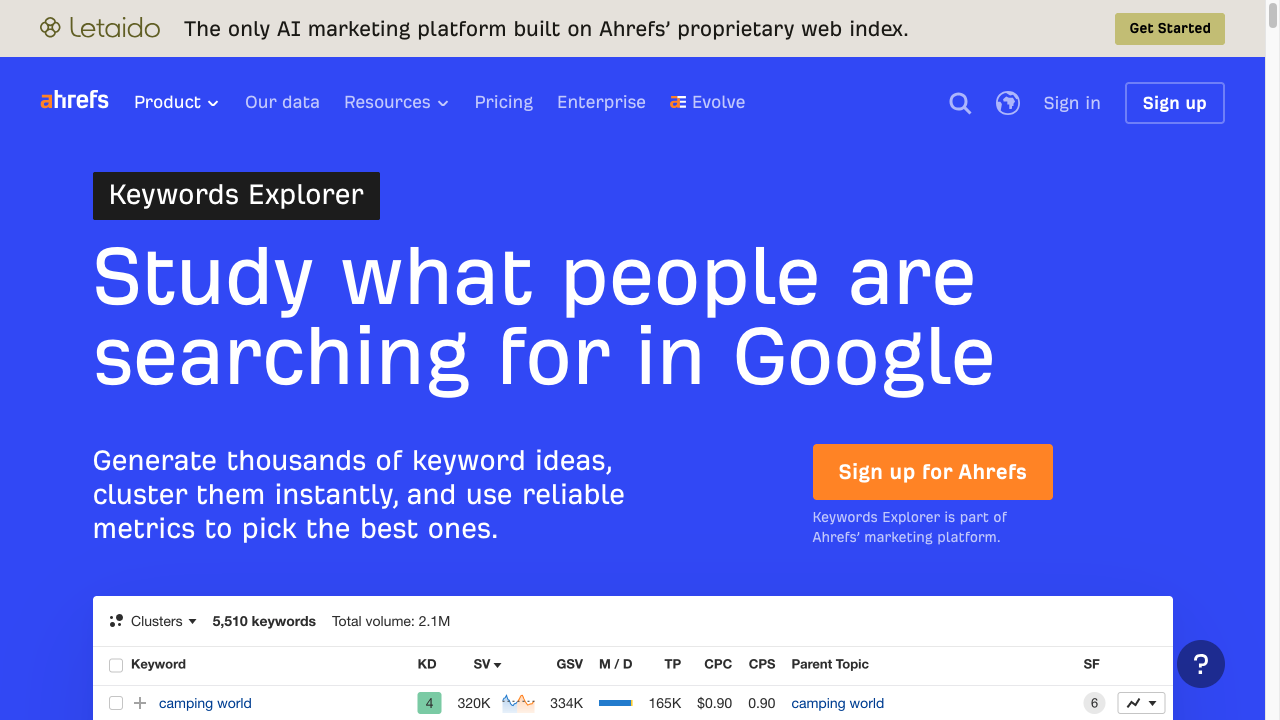
That is a tool. It is very good at one job: keyword ideas and metrics. It will not write the brief, add the internal links, or tell you the page should not exist.
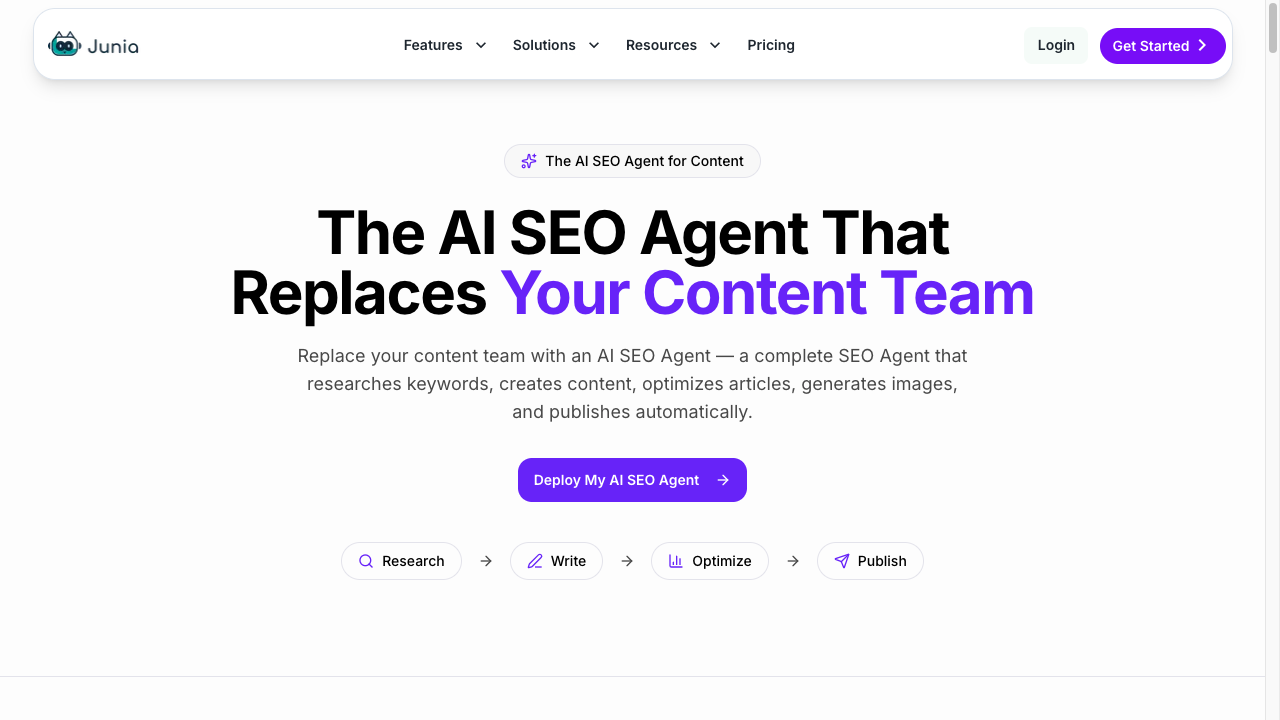
That is an agent. Research, write, optimize, publish. The useful question is not "which is smarter." It is "how many handoffs am I still doing."
- What is stuck?
- Start with a tool
- Write the standard, then use a tool
- Start with an agent, review the output
- Move the output to the next step yourself
- Human approves angle, claims, and CTA
- One task
- A sequence
- No
- Yes
View diagram source
flowchart TD
    A[What is stuck?] --> B{One task or a sequence?}
    B -->|One task| C[Start with a tool]
    B -->|A sequence| D{Do you have a quality bar?}
    D -->|No| E[Write the standard, then use a tool]
    D -->|Yes| F[Start with an agent, review the output]
    C --> G[Move the output to the next step yourself]
    F --> H[Human approves angle, claims, and CTA]
If the vocabulary is still fuzzy, Jeff Su's explainer is the useful version of this section. It is about agents as a pattern, not another SEO platform demo.
What AI SEO Tools Are Good At
AI SEO tools are useful because SEO has a lot of narrow tasks.
For example, one tool might help you:
- find long-tail keywords
- cluster related terms
- score a draft against competing pages
- write meta titles and descriptions
- generate FAQs
- suggest internal links
- summarize competitor pages
- identify missing subtopics
The weakness is that point tools often stop at their own output. A keyword tool gives you keywords. A brief tool gives you a brief. An internal linking tool gives you link suggestions.
You still have to connect the work.
What AI SEO Agents Are Good At
An AI SEO agent is built for the connected version of the job.
Instead of generating one output, it can work through a sequence:
- Analyze the site and topic.
- Find keyword opportunities.
- Decide the page type.
- Build a content brief.
- Draft or improve the page.
- Recommend internal links.
- Prepare metadata and FAQs.
- Flag review items before publishing.
That makes agents especially useful for teams with repeatable SEO workflows: content refreshes, cluster builds, product-led articles, ecommerce category optimization, agency reporting, or programmatic content QA.
The agent is not magic. It still depends on the quality of the inputs, rules, and review process. But it reduces the manual glue work between tools.
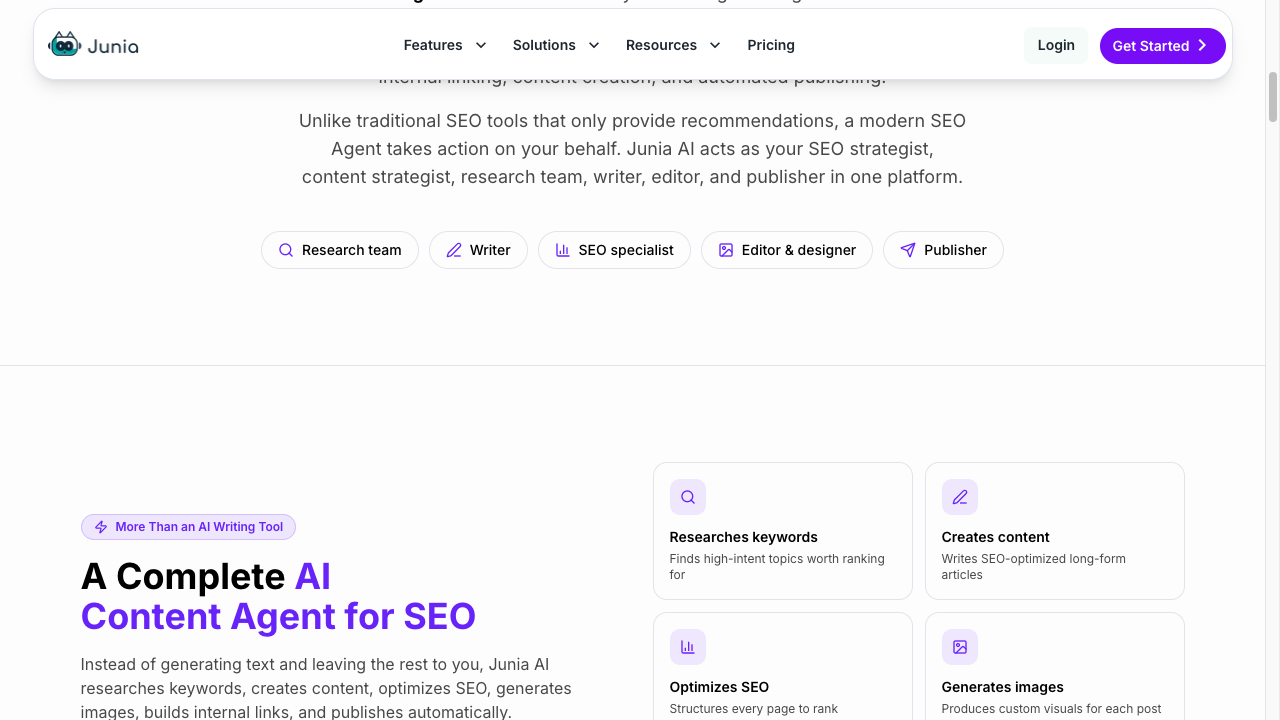
That is the contrast in one screen: a complete sequence, not a keyword table. If you buy it as a writer, you will be disappointed. If you buy it as a workflow, you can get the first pass off your plate.
A Practical Example
Imagine you want to publish a page targeting "AI SEO agent workflow."
With separate tools, the process might look like this:
- use a keyword tool to find related queries
- use a SERP tool to check search intent
- use a brief generator to outline the article
- use an AI writer to draft
- use an optimization tool to improve coverage
- use an internal linking tool to find links
- manually update metadata and FAQs
With an agent, those steps can live in one workflow. The agent can use keyword research, generate the brief, draft the page, suggest links, and produce a review checklist.
That does not remove the editor. It gives the editor a better first pass.
When a Tool Is Enough
Use an AI SEO tool when the task is narrow and you already know what you need.
For example:
- You need 50 keyword ideas for a topic.
- You need internal link suggestions for one article.
- You need a meta description for a finished page.
- You need a brief for a writer.
- You need to improve one underperforming page.
In those cases, a full agent workflow may be unnecessary. A focused tool is faster and easier. I would rather open Keywords Explorer for 20 minutes than wait for an agent to "research the topic" when I already know the page type.
For example, if the only problem is internal links, use an AI internal linking tool and keep the work simple.
When an Agent Makes More Sense
Use an AI SEO agent when the task involves multiple steps and repeated decisions.
Agents are stronger when you need to:
- build a full topic cluster
- refresh many articles with the same QA standard
- create briefs and drafts across a content calendar
- connect keyword research to product-led CTAs
- prevent orphan pages after publishing
- prioritize which pages deserve attention first
- keep SEO execution consistent across a team
The more coordination the workflow needs, the more useful an agent becomes. This matters most when three people would otherwise pass a spreadsheet between keyword research, briefing, and publishing.
The Risk With Both
Automation without judgment is the failure mode for both. A tool can make a weak page look optimized. An agent can ship that same weak page 40 times before anyone notices. Neither one will save a vague positioning problem, a thin product page, or a keyword list your buyers do not search.
I have watched teams score a draft at 85 and still publish something no human would quote. The score moved. The page did not.
Before using either one, define:
- who the page is for
- what the reader should understand or do next
- what makes your page more useful than the current results
- which internal links genuinely help the journey
- where human review is required
That keeps automation useful instead of noisy.
Which Should You Choose?
Choose AI SEO tools if you need help with specific SEO tasks.
Choose an AI SEO agent if you need a connected system that can move from planning to execution.
For many teams, the best setup is both: focused tools inside an agentic workflow. The tools handle specialized jobs. The agent coordinates the sequence. Humans make the final calls.
If you want to see that sequence as a product, Junia’s AI SEO Agent is the connected version. Use a point tool when the job is already named.
That is the practical difference. Tools help you do SEO tasks faster. Agents help you run SEO workflows with less manual handoff.