
Best AI Productivity Apps to Save Time in 2026

Yi
SEO Expert & AI Consultant

The best AI productivity app is not the one with the longest feature list. It is the one that removes a real bottleneck from your week. After trying a lot of these tools in real workflows, I care much less about flashy demos and much more about whether the app still feels useful on a normal Tuesday afternoon.
For some people, that bottleneck is writing. For others, it is meetings, calendar chaos, scattered documents, repetitive admin, or creative work that takes too long to get from idea to usable asset. That is why a good AI productivity stack usually includes a few focused tools instead of one app pretending to do everything.
The payoff is real, but it is easy to exaggerate. The St. Louis Fed's 2025 analysis found that generative AI users saved an average of 5.4% of work hours, or about 2.2 hours per week for a 40-hour worker. Gallup's 2026 workplace data also found that half of employed U.S. adults now use AI in their role at least a few times a year, with daily and weekly use still rising.
So the better question is not "Should I use AI?" It is "Which AI app saves enough time to justify adding one more tool to my workflow?"
TL;DR: Best AI Productivity Apps in 2026
If you only want the shortlist, start here:
| AI productivity app | Best for | Why it is worth using |
|---|---|---|
| Junia AI | SEO content production | Turns briefs, drafts, optimization, and publishing prep into one workflow |
| ChatGPT | General assistant work | Handles brainstorming, rewriting, analysis, planning, and quick problem-solving |
| Notion AI | Notes and team knowledge | Summarizes docs, turns notes into action items, and answers workspace questions |
| Otter | Meetings and transcription | Records, transcribes, summarizes, and makes conversations searchable |
| Reclaim | Calendar protection | Automatically schedules tasks, habits, breaks, and focus blocks |
| Zapier | Workflow automation | Connects apps so repetitive handoffs happen without manual copying |
| PDF.ai | Document research | Lets you ask questions about long PDFs instead of manually searching them |
| Grammarly | Writing quality | Improves clarity, correctness, tone, and consistency across everyday writing |
| Canva | Fast visual work | Helps non-designers create presentations, graphics, and brand assets faster |
| Runway | Video and creative production | Speeds up editing, generation, and media transformation |
| Surfer SEO | Content optimization | Gives search-focused content briefs and on-page SEO feedback |
| Copy.ai | Marketing copy workflows | Helps create repeatable campaign, email, and sales copy |
| Midjourney | Concept visuals | Generates strong creative visuals from prompts |
| Slidesgo | Presentation templates | Speeds up slide creation when you need a polished deck quickly |
| Wix | Website building | Uses AI and templates to help create sites without coding |
My practical advice: do not buy all 15. Pick one general assistant, one tool for your biggest workflow problem, and one automation or quality-control tool if you do repetitive work every week.
How I Would Choose an AI Productivity App
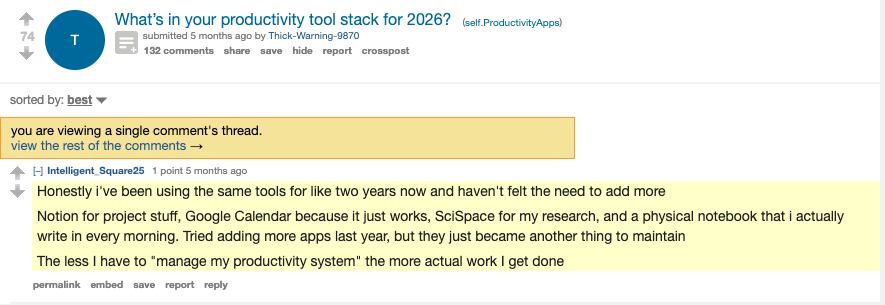
Before comparing tools, decide what kind of time you are trying to save.
| If your bottleneck is... | Start with... | Avoid buying first... |
|---|---|---|
| Writing SEO articles at scale | Junia AI | A generic chatbot with no SEO workflow |
| Drafting, research, and everyday thinking | ChatGPT | Five niche tools before you know your use cases |
| Meeting overload | Otter | Another note-taking app you will not open |
| Calendar overload | Reclaim | Manual to-do apps that still require constant planning |
| Repetitive app-to-app admin | Zapier | A new dashboard that does not automate anything |
| Long reports and PDFs | PDF.ai | Copy-pasting pages into a chatbot by hand |
| Polishing emails and docs | Grammarly | A full content platform when you only need editing help |
| Visual content | Canva or Runway | A complex design suite if you only make simple assets |
The common pattern is simple: the best tools sit inside a workflow you already use. If an AI app requires you to change everything about how you work, it had better save a serious amount of time. In my experience, the tools people keep are rarely the most impressive ones in a demo. They are the ones that quietly remove a task you used to avoid.
Buy for one bottleneck, not a stack. I would rather keep three tools I open every week than fifteen logins I resent.
If calendar chaos is the actual problem, time blocking is the habit. The app is just the enforcement layer. This is a clear walkthrough of how that looks in Google Calendar:
1. Junia AI
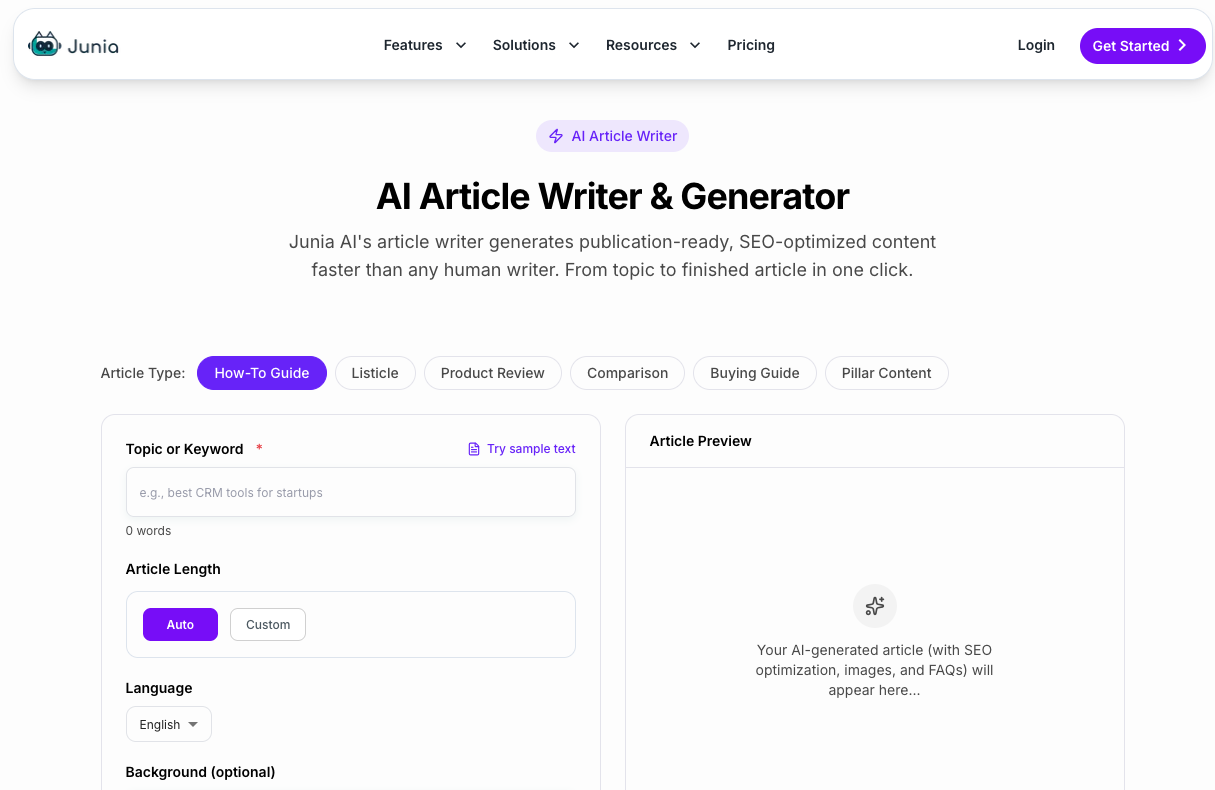
Junia AI is the best fit if your productivity problem is content production, especially SEO content. A general AI chatbot can help you draft a paragraph. Junia is more useful when you need the whole workflow: topic planning, article generation, content optimization, internal linking, readability, and publishing preparation.
That matters because content work usually breaks down in the gaps between tools. You outline in one place, write in another, check SEO somewhere else, edit in a doc, then move everything into a CMS. Junia reduces that friction by putting the article workflow in one environment.
The strongest use case is producing search-focused content without turning every article into a pile of disconnected prompts. I like Junia most when the job is not just "write something," but "turn this keyword, brief, and angle into a draft an editor can actually shape." Start with a structured first draft, then tighten headings and fill the gaps an editor would still notice.
Junia is also useful for adjacent content tasks: a content calendar generator for messy ideas, a blog post generator for repeatable drafts, and a readability pass before publish. If the real goal is writing more content in less time, that end-to-end workflow beats a blank chatbot window.
Best for: bloggers, SEO teams, agencies, affiliate publishers, SaaS marketers, and content operations teams.
Where it saves time:
- Turning briefs into structured drafts
- Creating SEO-focused long-form content
- Improving readability and flow
- Building repeatable content workflows
- Reducing tool-switching between writing and optimization
Where it is not enough: You still need editorial judgment. AI can produce a draft quickly, but the best results come when a human checks facts, sharpens examples, and adds a point of view. This is especially important if you are publishing in a competitive niche where generic AI content will not stand out.
2. ChatGPT
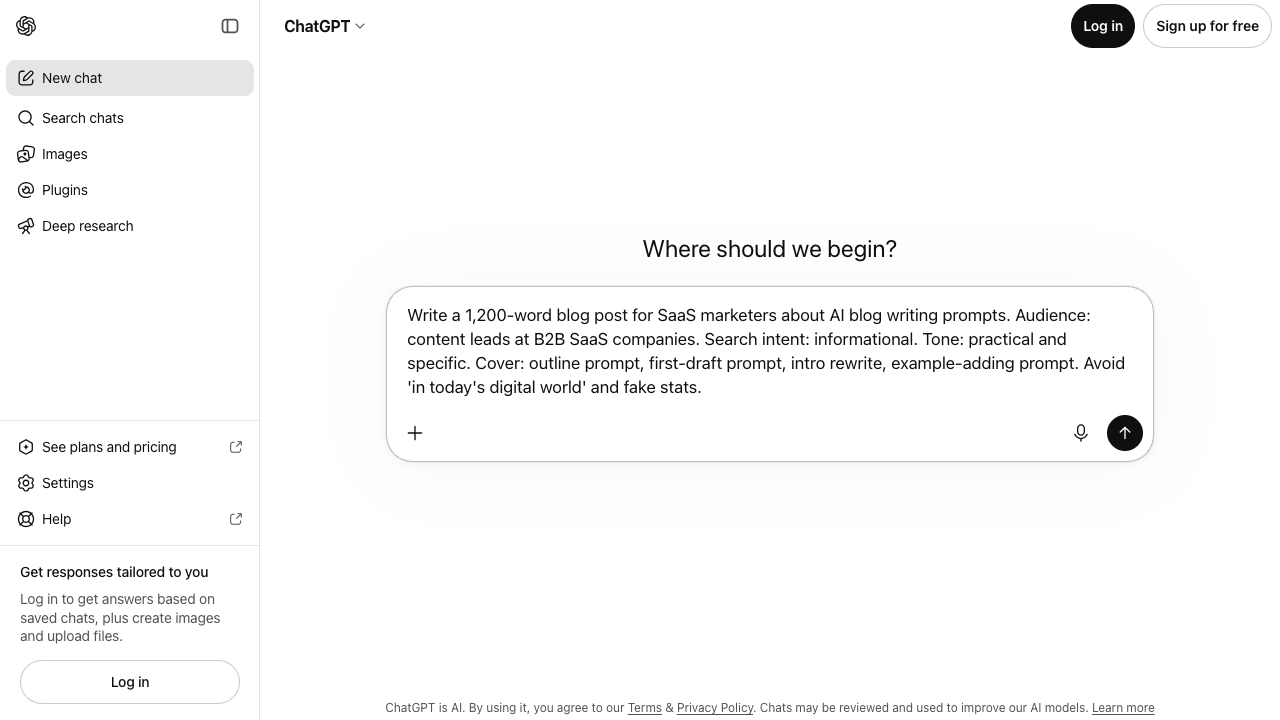
ChatGPT is the most flexible AI productivity app on this list. It can help with writing, analysis, planning, brainstorming, research synthesis, code explanations, customer replies, meeting prep, and dozens of small tasks that do not justify buying a specialized app.
I would use ChatGPT as the default "thinking partner" in a productivity stack. It is especially useful when the task is undefined: turning scattered notes into a plan, rewriting a messy email, comparing options, building a checklist, or explaining a concept quickly.
The mistake is treating it like a perfect answer machine. ChatGPT works best when you give it context, constraints, examples, and a clear output format. A vague prompt like "write a marketing plan" usually gives you a vague plan. A better prompt includes the audience, product, goal, channel, budget, deadline, and what you already tried.
Best for: general knowledge work, solo operators, marketers, founders, students, analysts, support teams, and anyone who needs a flexible assistant.
Where it saves time:
- Drafting and rewriting emails, briefs, reports, and outlines
- Summarizing notes or long pasted text
- Generating options before you make a decision
- Creating checklists, SOPs, scripts, and templates
- Explaining technical or unfamiliar topics in plain English
Where it is not enough: It can hallucinate, flatten nuance, and sound generic when the prompt is weak. For SEO content, I would pair it with a dedicated content tool or at least run the final draft through a clear editorial and fact-checking process. For sensitive business data, use a plan with the right privacy and admin controls.
3. Notion AI
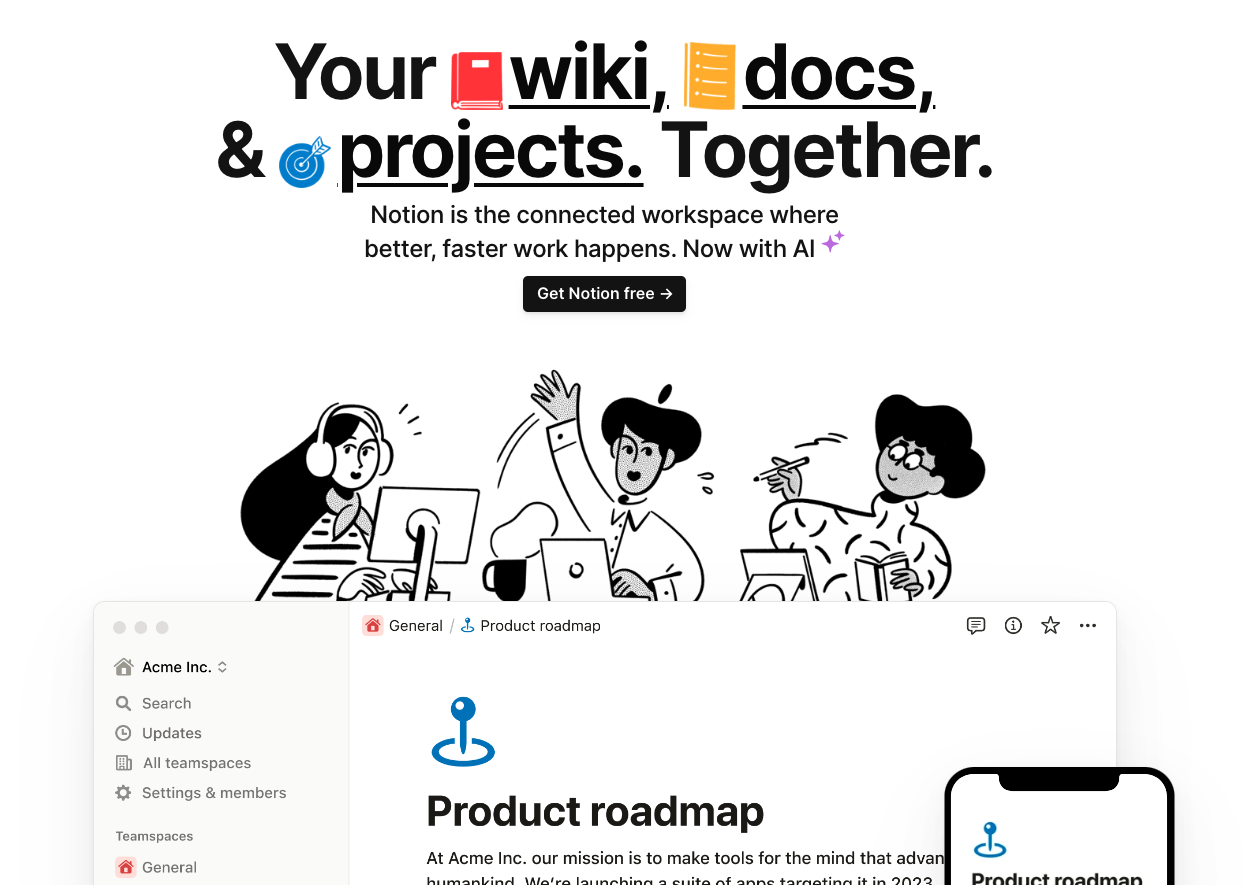
Notion AI is useful when productivity depends on finding, organizing, and reusing knowledge. It sits inside Notion, so the AI can help with notes, wikis, project docs, meeting summaries, and planning pages instead of living in a separate tab.
The best use case is turning messy information into something usable. You can paste rough meeting notes and ask for action items. You can summarize a long project page. You can draft a launch checklist from previous documentation. You can ask questions about workspace content when the answer is buried across pages. Personally, I think Notion AI is strongest when it is cleaning up after real work, not when it is asked to invent a process from scratch.
That makes Notion AI a strong fit for teams that already use Notion as their operating system. If your workspace is clean, the AI becomes genuinely helpful. If your workspace is cluttered, outdated, and poorly structured, the AI mostly helps you find clutter faster.
Best for: project teams, content teams, product teams, remote teams, students, and founders who already live in Notion.
Where it saves time:
- Summarizing long notes and documents
- Turning meeting notes into tasks
- Drafting project briefs and status updates
- Searching workspace knowledge
- Organizing ideas into tables, outlines, and checklists
Where it is not enough: It is not a full replacement for project management discipline. Someone still has to keep the workspace clean, archive stale docs, name pages clearly, and decide which information is worth preserving.
4. Otter
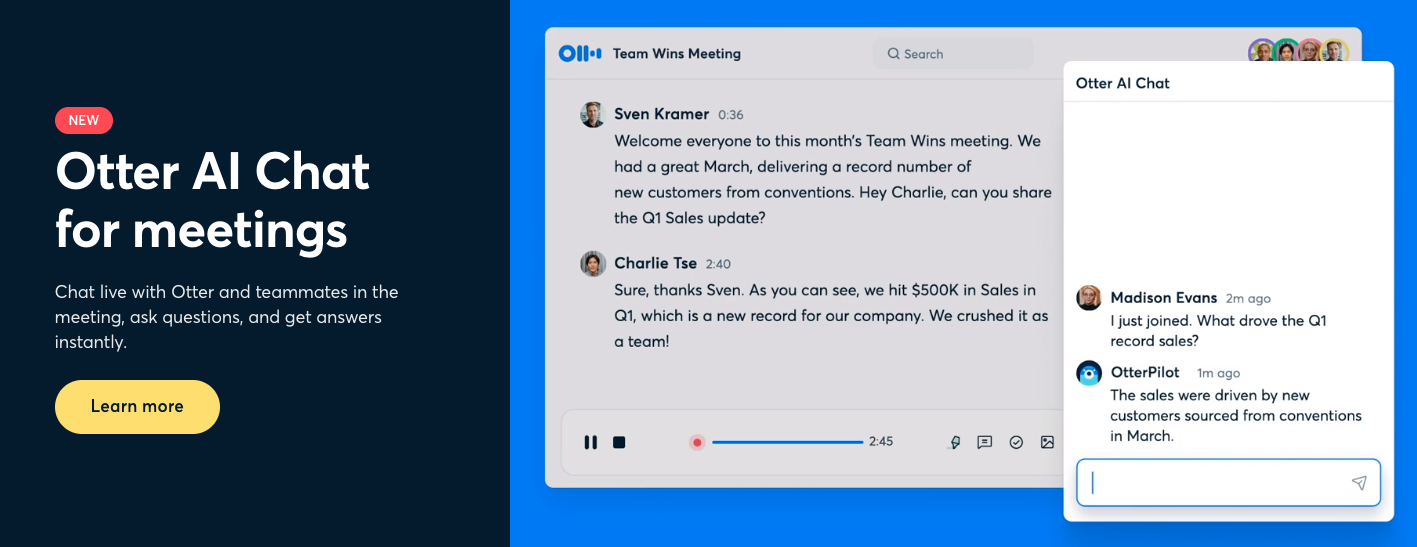
Otter is one of the clearest AI productivity wins because the problem is obvious: meetings create information, but most teams lose that information unless someone takes good notes. I am usually skeptical of "meeting productivity" tools, but transcription is one place where the value is easy to see.
Otter records conversations, transcribes them, identifies speakers, generates summaries, and makes the transcript searchable. That means you can stay present in the meeting instead of typing the whole time. It also helps teammates who missed the call catch up without asking someone to recap everything.
The bigger value appears over time. A searchable meeting archive lets you find the exact decision, customer quote, feature request, or next step that would otherwise disappear in someone's notebook. That is the part I would pay attention to: not the neat summary right after the call, but the ability to recover context three weeks later.
Best for: sales teams, customer success teams, consultants, recruiters, journalists, podcasters, students, and remote teams.
Where it saves time:
- Taking meeting notes automatically
- Creating summaries and action items
- Searching past conversations
- Turning interviews into usable transcripts
- Sharing meeting context with people who could not attend
Where it is not enough: Transcripts still need review. Names, technical terms, accents, and poor audio can create errors. For sensitive meetings, make sure attendees know recording is happening and that the storage settings fit your privacy requirements.
5. Reclaim
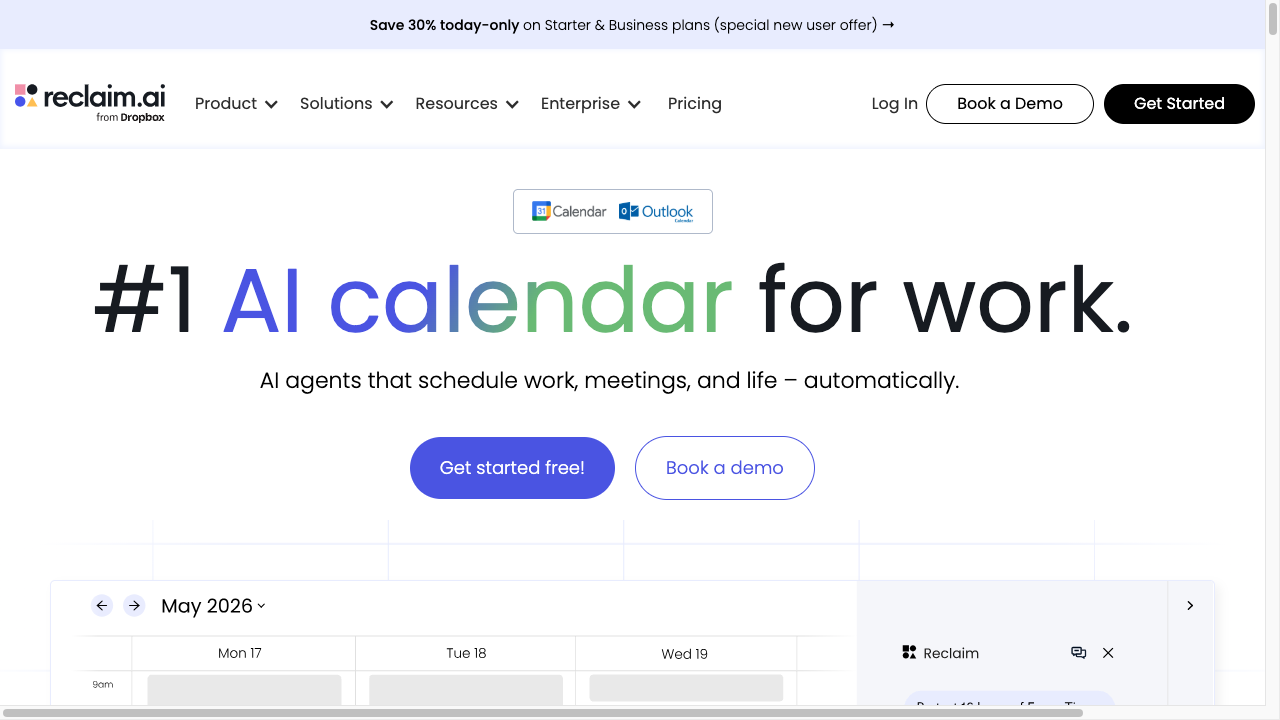
Reclaim is for people whose calendars look organized but still do not protect actual work time. It automatically schedules tasks, habits, breaks, and focus blocks around your meetings, then adjusts when priorities change. I see this problem constantly: the calendar is full, the task list is full, and somehow the important work still has no protected slot.
This is different from a normal to-do list. A to-do list tells you what exists. Reclaim tries to find where that work can realistically happen. That makes it useful for managers, freelancers, founders, and anyone whose day gets eaten by meetings and small obligations.
The most practical use is defending deep work. If you have a writing task, planning block, or recurring admin task, Reclaim can place it on the calendar and move it when conflicts appear. You still choose priorities, but you do not have to manually rebuild your week every time a meeting moves.
Best for: entrepreneurs, managers, freelancers, executives, consultants, and busy individual contributors.
Where it saves time:
- Scheduling tasks into open calendar slots
- Protecting focus time
- Automatically moving flexible work when meetings change
- Building recurring habits into the calendar
- Reducing back-and-forth around availability
Where it is not enough: It cannot decide what matters. If everything is marked high priority, the calendar becomes noisy again. Reclaim works best when you are honest about deadlines, task sizes, and what can move.
6. Zapier
Zapier is not glamorous, but it can save more time than many flashy AI tools. It connects apps and automates repetitive handoffs: form submission to CRM, email attachment to cloud folder, lead to spreadsheet, ticket to Slack alert, invoice to accounting workflow.
The AI layer makes this easier because you can describe a workflow in plain English and get help building it. But the real value is still the automation itself. If you do the same copy-paste task every week, Zapier is usually worth investigating.
I would use Zapier after identifying a repeated workflow, not before. Start with the task you hate doing manually, then automate that specific task. Otherwise it is easy to build clever workflows that nobody actually needs.
Best for: operations teams, marketers, founders, agencies, support teams, and anyone managing several SaaS tools.
Where it saves time:
- Moving data between apps
- Triggering notifications and follow-ups
- Routing leads, tickets, and form responses
- Creating simple no-code automations
- Adding AI steps to existing workflows
Where it is not enough: Automations can break when app fields change, permissions shift, or edge cases appear. Keep important workflows documented and review them regularly. Also watch task limits because heavy automations can get expensive.
7. PDF.ai
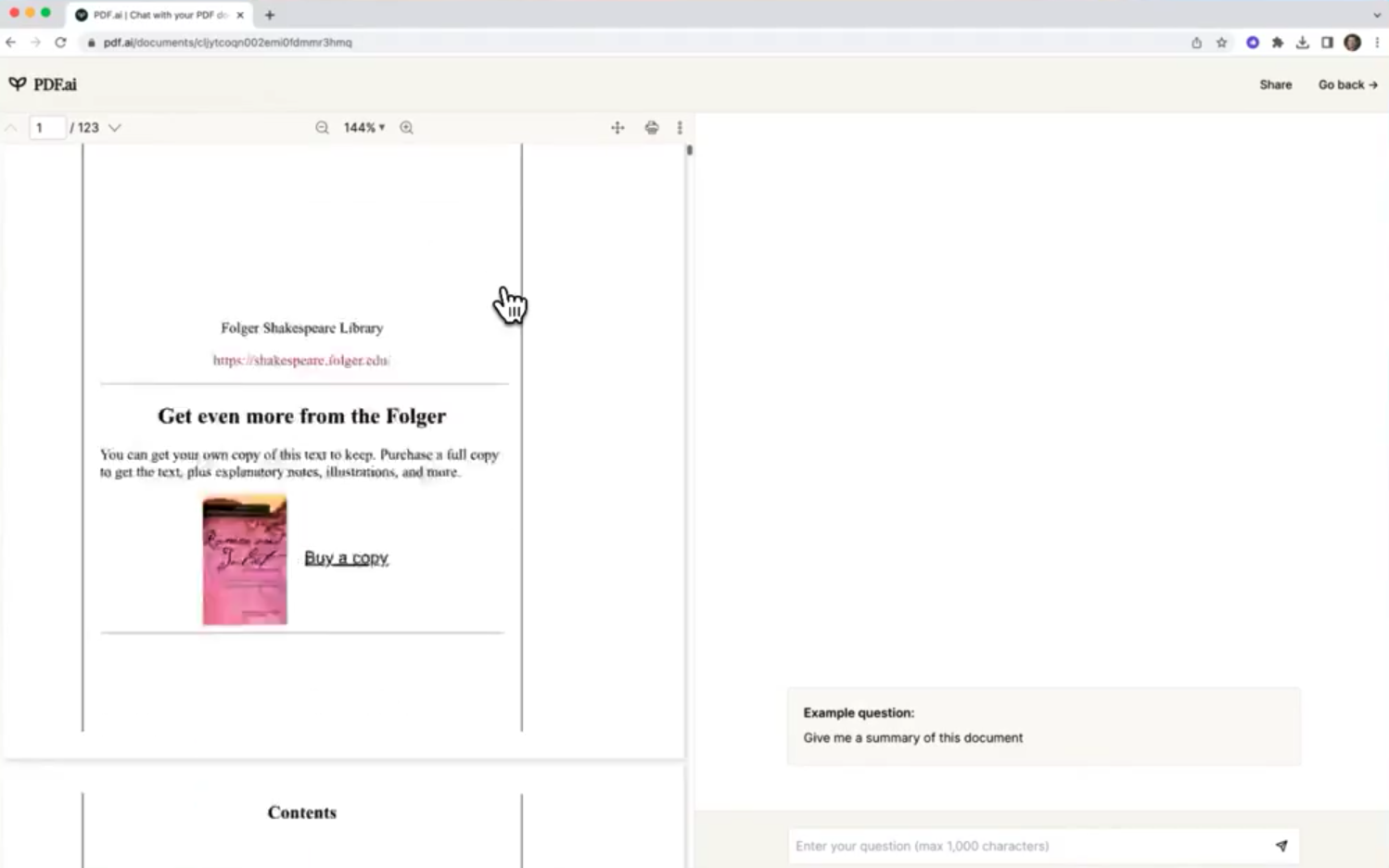
PDF.ai is useful when the work is trapped inside long documents. Instead of scrolling through a report, contract, research paper, ebook, or manual, you upload the PDF and ask questions about it.
This is especially helpful for research-heavy tasks. You can ask for key points, extract definitions, find a specific clause, compare sections, or summarize a chapter. For marketers, it can speed up report analysis. For students, it can make long reading assignments easier to navigate. For writers, it helps pull useful quotes and references from source material.
The main productivity gain is not that it "reads for you." It helps you find the parts worth reading carefully. I would still read the source before quoting it or making a serious decision, but PDF.ai can quickly tell you where to spend that attention.
Best for: researchers, writers, students, analysts, marketers, consultants, and anyone who handles long PDFs.
Where it saves time:
- Searching long documents
- Summarizing reports and papers
- Finding clauses, quotes, tables, and definitions
- Turning PDF content into notes
- Comparing sections inside a document
Where it is not enough: Always verify important details against the original document. AI can summarize the wrong passage or miss context, especially in legal, medical, financial, or technical documents.
8. Grammarly
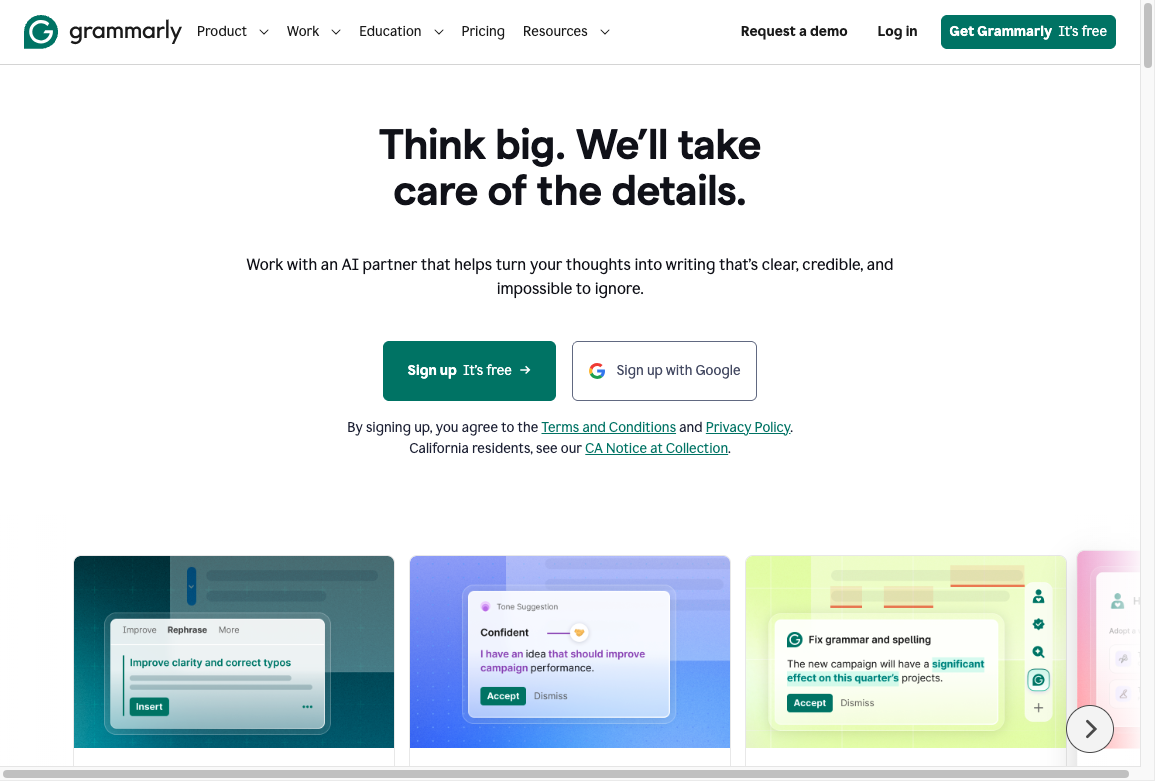
Grammarly is still one of the fastest ways to improve everyday written communication. It catches grammar mistakes, spelling issues, punctuation problems, awkward phrasing, and tone mismatches across many places where people write. I find it most useful as a second set of eyes, not as the final authority on style.
That makes it a productivity app, not just a writing app. Bad writing creates rework. Unclear emails create follow-up questions. Weak client messages create friction. Grammarly helps reduce those small communication costs.
It is most useful for teams that send a lot of external communication: sales emails, support replies, proposals, reports, help docs, and leadership updates. It is also useful for individual writers who want a quick quality-control pass before sending something important.
Best for: sales teams, support teams, marketers, students, executives, writers, and non-native English writers.
Where it saves time:
- Catching mistakes before sending
- Improving clarity and concision
- Adjusting tone for the audience
- Keeping team writing more consistent
- Reducing editing time on everyday documents
Where it is not enough: Grammarly can over-smooth writing. Do not accept every suggestion blindly. Sometimes a sentence should sound direct, informal, or brand-specific even if the tool wants to make it more generic.
9. Canva
Canva is the easiest design productivity app for people who need visuals but are not full-time designers. It helps create social graphics, presentations, posters, simple infographics, thumbnails, brand assets, and marketing materials from templates. My honest take: Canva is at its best when the design task is common and low-risk, and weaker when the work needs a strong original visual system.
Its AI features make the process faster: text generation, image generation, background removal, design suggestions, resizing, and brand kit support. For small teams, that can remove the delay of waiting on a designer for every small graphic.
The best use case is not replacing design strategy. It is speeding up simple, repeatable visual work that would otherwise take too long.
Best for: marketers, founders, teachers, creators, social media managers, and small businesses.
Where it saves time:
- Creating quick branded graphics
- Building presentations from templates
- Resizing designs across channels
- Removing image backgrounds
- Drafting simple visual assets without a designer
Where it is not enough: Canva can make everything look templated if you rely too heavily on default layouts. Keep brand rules tight, simplify designs, and avoid using every decorative element available.
10. Runway
Runway is a creative AI productivity app for video, image, and media workflows. It is especially useful when editing or producing visual content would otherwise take hours of manual work. I would treat it as a way to explore and accelerate ideas, not as a shortcut around taste.
Creators use it for generative video, background removal, video editing, image expansion, cleanup, style exploration, and fast concept development. For marketing teams, it can speed up the journey from idea to usable creative asset. For video creators, it can shorten tedious editing steps.
Best for: video creators, designers, marketers, agencies, artists, and creative teams.
Where it saves time:
- Generating video concepts
- Editing and transforming media
- Removing or changing backgrounds
- Creating visual variations
- Testing campaign creative quickly
Where it is not enough: Creative AI still needs taste. Runway can produce impressive assets, but you still need to decide what fits the brand, message, platform, and audience. It is a production accelerator, not a creative director.
11. Surfer SEO
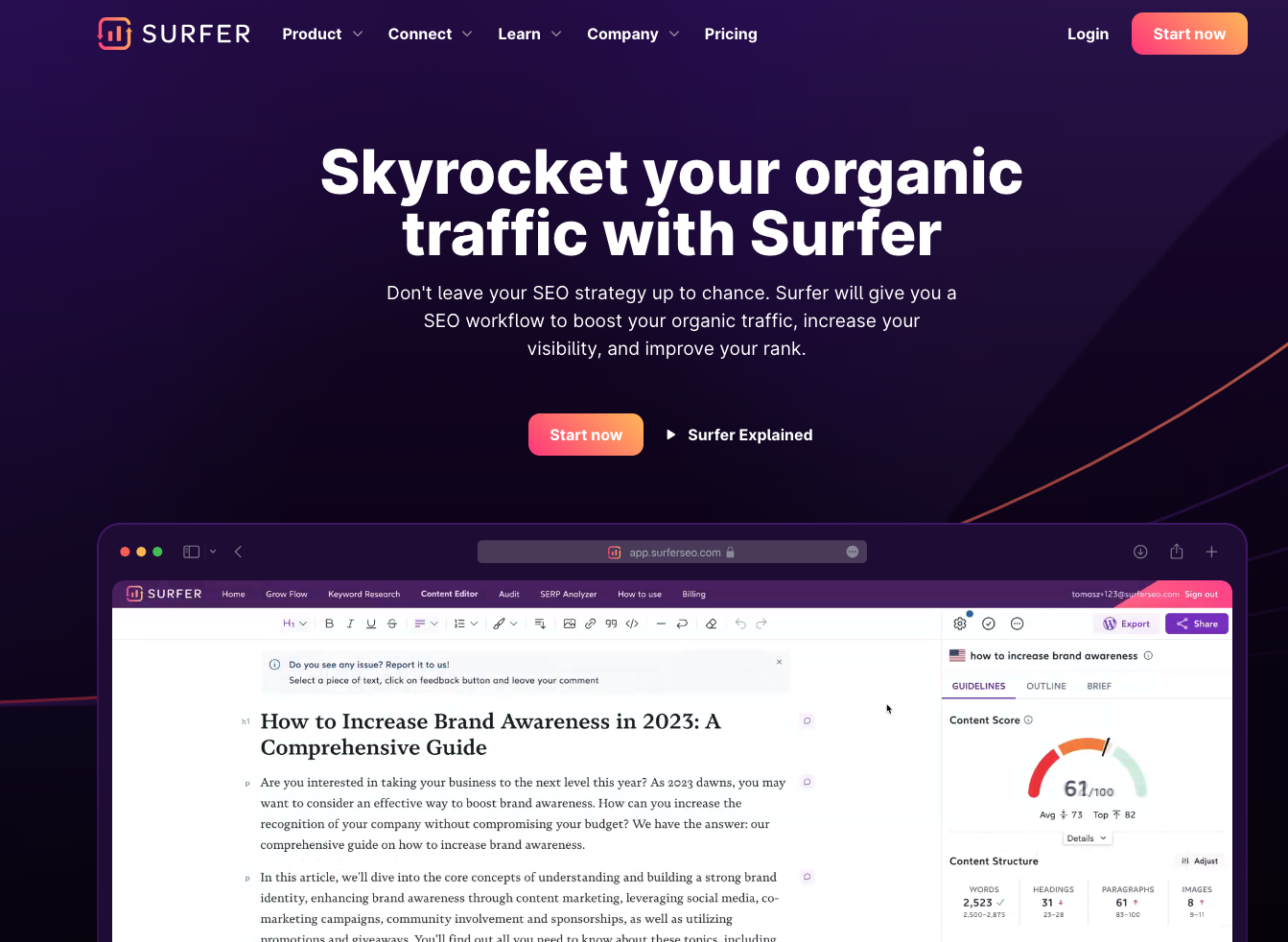
Surfer SEO is built for people who want to make content more competitive in search. It analyzes top-ranking pages, suggests terms and topics to cover, and gives real-time content optimization feedback.
The productivity gain is straightforward: it reduces the manual work of checking search results, extracting patterns, and building a content brief from scratch. For content teams, that can save time during briefing and editing.
I would use Surfer when the article already has a clear keyword target and the goal is on-page optimization. I would not use it as the only source of editorial direction. A high content score does not automatically mean the article is useful, original, or persuasive.
Best for: SEO writers, content editors, agencies, affiliate marketers, and bloggers.
Where it saves time:
- Building SEO content briefs
- Checking topical coverage
- Optimizing headings and body copy
- Comparing drafts against ranking pages
- Catching missing related terms
Where it is not enough: It can push writers toward sameness if they chase every recommendation. Use it for coverage gaps, then add examples, experience, and original judgment so the article is not just a remix of the current SERP.
12. Copy.ai
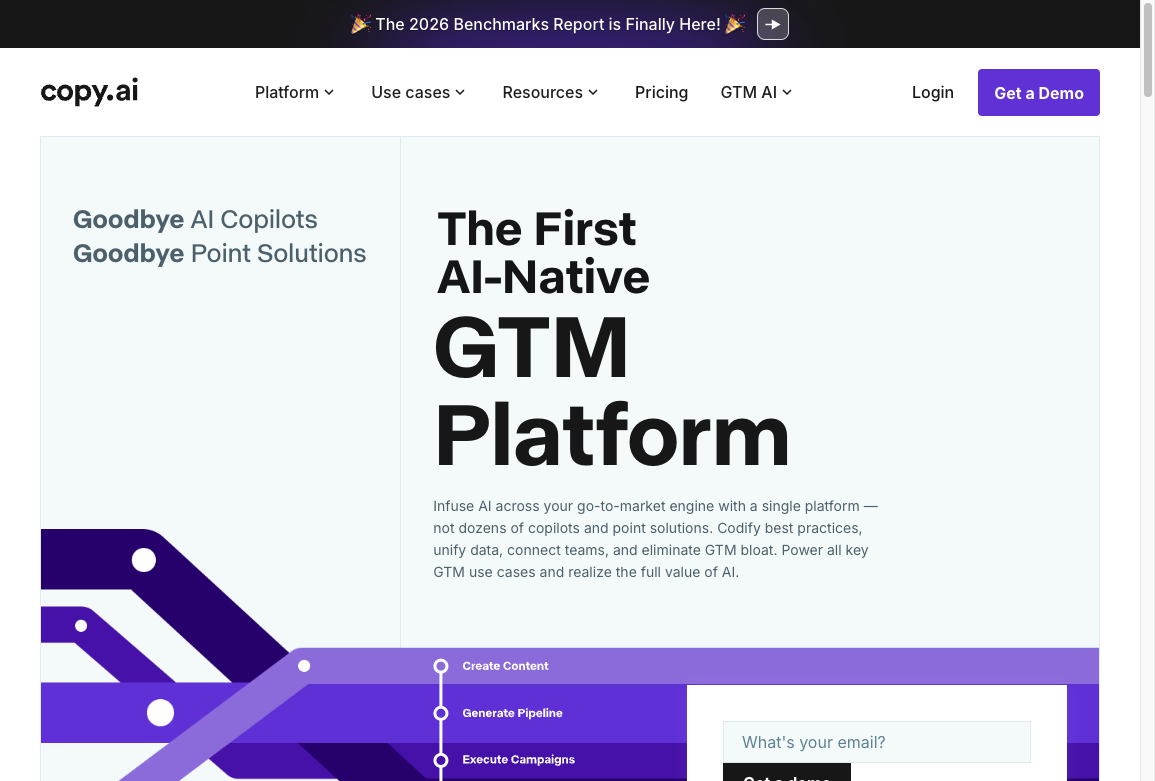
Copy.ai is best for repeatable marketing and sales copy. It can help generate campaign copy, social posts, email sequences, product descriptions, ad variations, and outbound messages.
The useful part is workflow repeatability. If you need five versions of a cold email, ten ad angles, or a batch of product descriptions, Copy.ai can get you to a workable first draft faster than starting from a blank page.
It is less compelling for deep strategy or highly original long-form writing. The output still needs editing, especially if your brand voice is specific or your audience is skeptical of generic marketing language.
Best for: marketers, sales teams, agencies, ecommerce teams, founders, and content teams.
Where it saves time:
- Drafting campaign copy
- Creating ad and landing page variations
- Repurposing content across channels
- Generating email and outbound sequences
- Producing short-form copy at scale
Where it is not enough: It can sound generic if the inputs are thin. Give it audience details, product proof, objections, examples, and tone notes. Then edit the best output instead of publishing the first one.
13. Midjourney
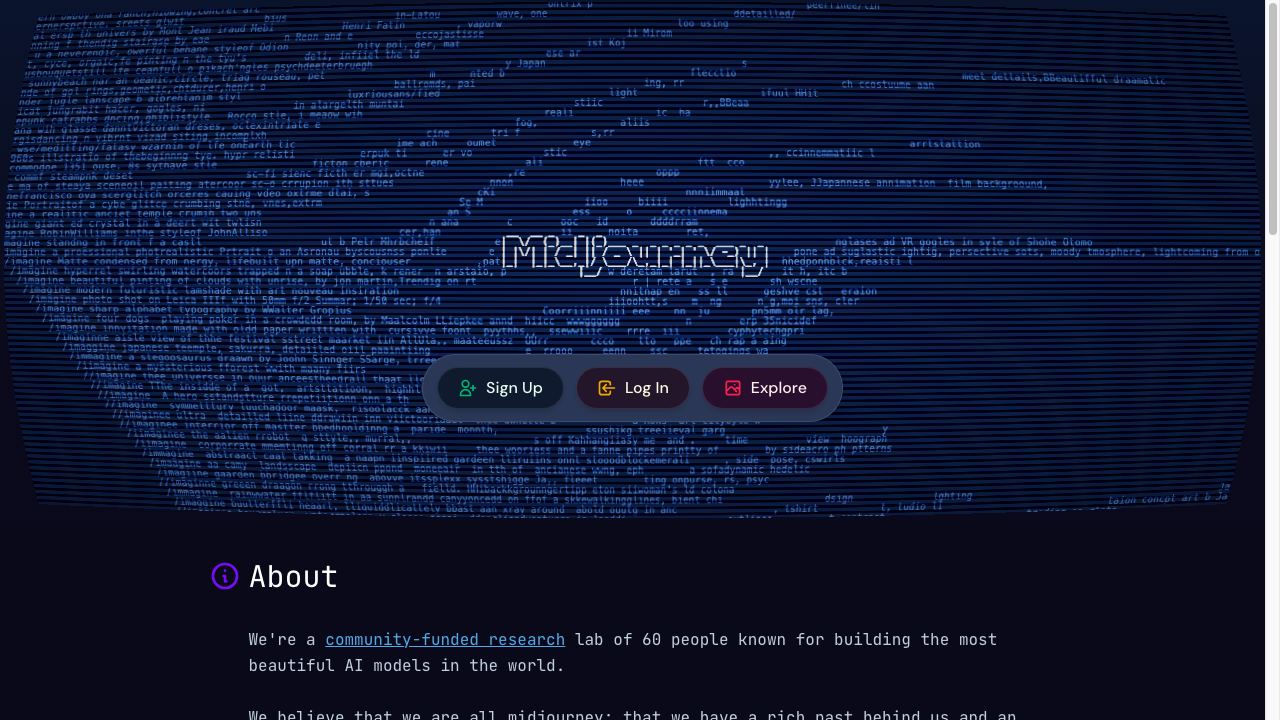
Midjourney is one of the strongest AI tools for generating stylized images and concept visuals from prompts. It is not a personal growth app; it is a creative image-generation tool.
That makes it useful for moodboards, campaign concepts, creative direction, thumbnails, visual exploration, fictional scenes, and early-stage design inspiration. It saves time when you need to see a direction before committing budget to a full shoot, illustration, or design process.
Best for: artists, creators, designers, marketers, game teams, authors, and visual storytellers.
Where it saves time:
- Creating concept art
- Exploring visual styles
- Building moodboards
- Generating campaign imagery ideas
- Testing creative directions quickly
Where it is not enough: Generated visuals still need rights review, brand review, and often design cleanup. For product pages, documentation, or proof-heavy articles, real screenshots usually work better than generated imagery.
14. Slidesgo
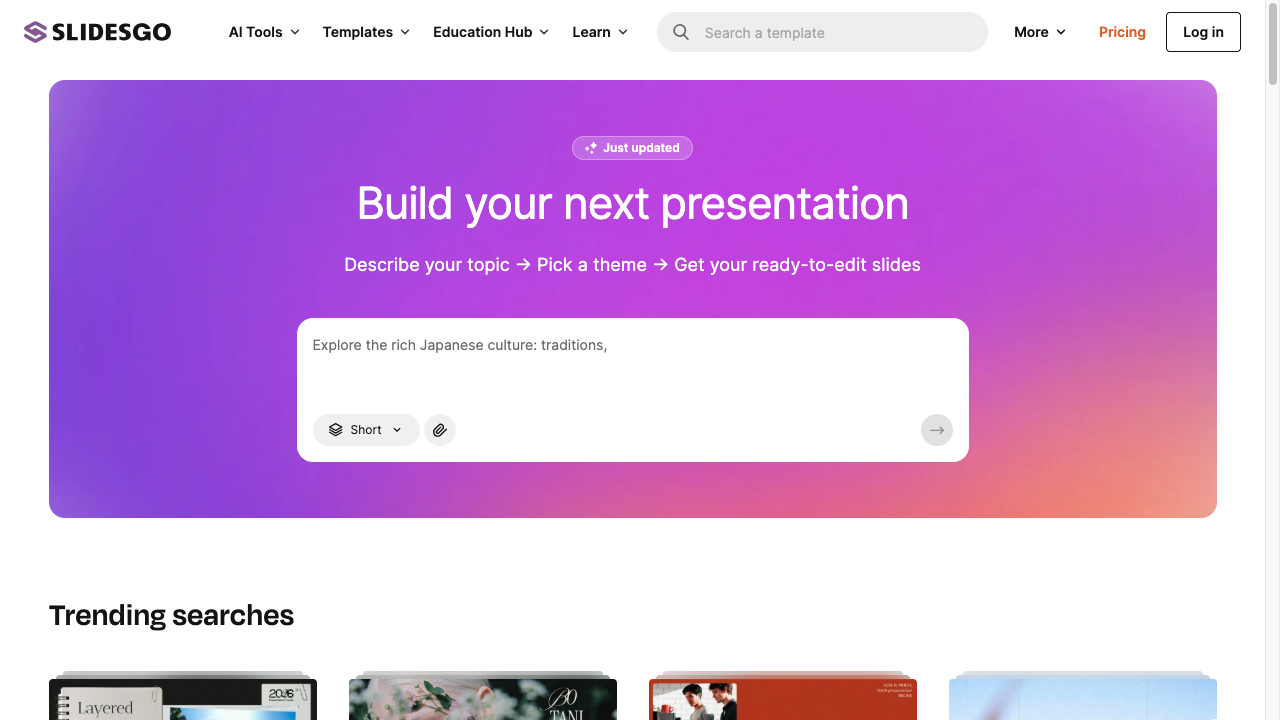
Slidesgo is a practical productivity app for presentations. It gives you ready-made PowerPoint and Google Slides templates so you are not designing every deck from scratch.
This is useful for teachers, students, marketers, consultants, and internal teams that need a clean deck quickly. Templates can include layouts for timelines, charts, diagrams, portfolios, reports, and lessons.
The AI angle is less important than the time saved by starting from a structured slide system. If a presentation does not need custom art direction, a good template can save hours.
Best for: educators, students, consultants, marketers, trainers, and business teams.
Where it saves time:
- Creating decks quickly
- Finding structured slide layouts
- Improving visual polish without custom design
- Building educational or business presentations
- Reusing presentation formats
Where it is not enough: Templates do not fix weak thinking. Start with the message, then choose a template that supports it. Otherwise the deck looks polished but says very little.
15. Wix
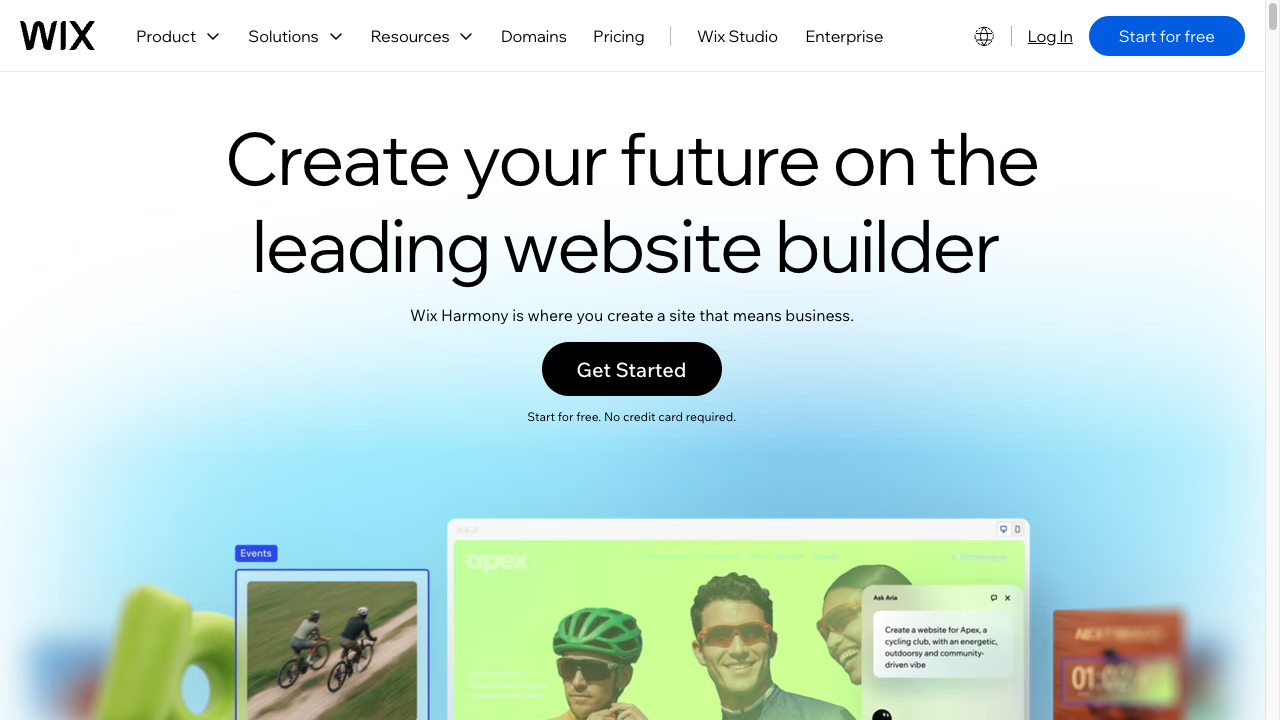
Wix is useful when the productivity problem is building a website without hiring a developer for every change. Its templates, drag-and-drop editor, website AI features, SEO settings, ecommerce tools, and app marketplace make it easier for non-technical users to publish a site.
For small businesses, creators, and solo operators, that can save a lot of time. You can create a basic site, landing page, portfolio, or store without waiting on a custom development cycle.
Best for: small businesses, freelancers, creators, local service providers, and early-stage projects.
Where it saves time:
- Building a website without code
- Starting from templates
- Creating landing pages quickly
- Managing basic SEO settings
- Updating pages without a developer
Where it is not enough: Wix is not always the best fit for complex, custom, or performance-sensitive sites. If you need deep technical control, custom backend logic, or highly specialized SEO architecture, a more flexible setup may be better.
The Best AI Productivity Stack for Different Users
Here is how I would build a lean stack instead of collecting tools randomly:
| User type | Recommended starter stack | Why |
|---|---|---|
| Solo creator | ChatGPT + Canva + Otter | Covers writing, visuals, and meetings/interviews |
| SEO content team | Junia AI + Surfer SEO + Grammarly | Covers drafting, optimization, and editing quality |
| Small business owner | ChatGPT + Reclaim + Zapier | Covers planning, calendar control, and automation |
| Agency team | Junia AI + Notion AI + Zapier + Canva | Covers content workflows, knowledge, handoffs, and creative |
| Sales team | ChatGPT + Grammarly + Otter + Zapier | Covers messaging, call notes, and CRM/admin handoffs |
| Student or researcher | ChatGPT + PDF.ai + Notion AI | Covers understanding, document analysis, and organized notes |
| Creative team | Runway + Midjourney + Canva | Covers concepting, generation, and production assets |
If I had to choose only three tools for most knowledge workers, I would start with ChatGPT, Reclaim, and either Otter or Zapier depending on whether meetings or repetitive admin waste more time.
If the goal is publishing more content, I would start with Junia AI instead of trying to force a general chatbot into a full content operations role.
Common Mistakes When Using AI Productivity Apps
The first mistake is buying too many tools. Every app adds another login, dashboard, notification stream, and subscription. If the tool does not replace a task you already do often, it is probably not a productivity tool yet.
The second mistake is using AI only for drafting. Drafting is useful, but AI often saves more time in summarizing, organizing, extracting, scheduling, routing, and reviewing. A text expander, for example, can save more time on repetitive support replies than a sophisticated writing tool that nobody uses consistently.
The third mistake is skipping quality control. AI can make weak writing sound polished. That is dangerous because polished mistakes are harder to spot. For content, I would always run a final pass for facts, examples, structure, brand voice, and originality. Tools like a grammar checker help, but they do not replace human review.
The fourth mistake is ignoring workflow fit. If your team already works in Google Workspace, Microsoft 365, Notion, Slack, or a specific CMS, choose tools that fit that environment. Productivity drops when every task requires copying information between disconnected apps.
The fifth mistake is expecting AI to create strategy. It can summarize options and suggest next steps, but you still need to decide what matters. That is why the best AI workflows usually pair automation with human judgment.
Final Recommendation
The best AI productivity apps in 2026 are the ones that remove a real weekly bottleneck.
For content and SEO, I would start with Junia AI. For general knowledge work, ChatGPT is the most flexible first pick. For meetings, Otter is easy to justify. For calendar overload, Reclaim is more useful than another task list. For repetitive handoffs, Zapier is where the real time savings often hide.
My rule is simple: test one tool against one workflow for two weeks. If it saves time without creating a new mess, keep it. If it only feels exciting because it is new, cancel it and move on.