
How to Write Catchy Headlines Without Sounding Like Clickbait

Thu
AI SEO Specialist, Full Stack Developer

Writing a catchy headline is not the same thing as writing a manipulative one.
The best headlines get attention because they are clear, specific, and easy to care about. They make a real promise. Clickbait, on the other hand, usually hides the point, exaggerates the benefit, or creates curiosity that the content cannot satisfy.
If you want stronger titles without crossing that line, this guide will help. You will learn how to write headlines that pull readers in, stay credible, and still feel natural enough to support SEO, social, and email performance.
What makes a headline catchy in the first place?
Catchy headlines usually do one or more of these things well:
- They make the topic obvious
- They hint at a result
- They add specificity
- They create clean curiosity
- They sound like something a real person would say
That last point matters more than people think. A headline can be technically optimized and still feel dead on arrival if it sounds generic.
When you need ideas fast, a catchy headline generator can help you explore angles. You can also run strong candidates through a headline analyzer to compare clarity, emotional pull, and balance before you publish. But the real skill is still knowing which options feel compelling and which ones feel cheap.
The line between catchy and clickbait
Catchy headlines are honest about the value inside the piece.
| Catchy | Clickbait |
|---|---|
| Specific promise the page keeps | Hype the page can’t deliver |
| Clear audience or outcome | Curiosity with no payoff |
| Tension rooted in a real problem | Fake urgency |
Clarity first, clever second. If the first four words are vague, polish won’t save it.
Clickbait or Catchy Hook? How To Write Headlines That DON’T Suck
Clickbait headlines overplay the value or hide the actual topic behind a vague tease.
Here is the difference:
- Catchy: 9 Headline Tweaks That Make Blog Posts Easier to Click
- Clickbait: This Weird Trick Will Make Everyone Click Your Content
- Catchy: How to Write Stronger Headlines for Beginners
- Clickbait: You Have Been Writing Headlines Wrong Your Whole Life
The second version in each pair tries too hard. It creates drama instead of clarity.
If you want to avoid AI clickbait writing, the fix is usually simple: reduce the hype, increase the specificity, and make sure the headline matches what the article actually delivers.
Start with clarity, then add interest
A lot of weak headlines come from reversing that order. People chase cleverness first, then try to force clarity into the sentence afterward.
A better process is:
- State the topic clearly.
- Add the outcome or angle.
- Tighten the phrasing.
- Add a small curiosity trigger if it still feels flat.
For example:
- Basic: How to Write Better Headlines
- Better: How to Write Better Headlines for Blog Posts
- Stronger: How to Write Better Headlines for Blog Posts Without Sounding Generic
The final version is more specific and more interesting, but it still tells the truth.
7 practical ways to make headlines more catchy
1. Add a concrete outcome
Readers click because they expect a result. If the result is vague, the headline becomes forgettable.
- Weak: Tips for Better Headlines
- Better: Headline Tips That Improve Click-Through Rate
2. Use numbers when they genuinely help
Numbers make a title easier to scan and give the reader a sense of scope.
- 11 Headline Formulas That Work for Blog Posts
- 7 Ways to Make Ad Headlines More Specific
Do not force numbers into every title, but when the structure is list-based, they help.
3. Add the audience or use case
This makes the headline feel more relevant right away.
- Better Headlines for SaaS Landing Pages
- Catchy Email Subject Lines for Product Launches
- YouTube Title Ideas for Tutorial Channels
4. Use a real constraint
Constraints make a headline more believable and more distinctive.
- How to Write Catchy Headlines Without Sounding Like Clickbait
- Better SEO Titles Without Keyword Stuffing
- Create Strong Hooks Without Overwriting the Intro
5. Use contrast
Contrast creates tension without needing hype.
- Clear Headlines Beat Clever Ones Most of the Time
- Catchy Does Not Have to Mean Misleading
- Shorter Titles Often Perform Better Than “Ultimate Guides”
6. Focus on the first few words
If the beginning is weak, people may never reach the rest. Lead with the topic or benefit, not filler.
- Better: Blog Headline Examples That Actually Work
- Worse: A Complete and Helpful Collection of Blog Headline Examples
7. Rewrite bland verbs and nouns
Specific language is often the fastest fix.
- “Improve” can become “lift clicks”
- “Create” can become “draft”
- “good headlines” can become “clearer SEO headlines”
If you want more inspiration, studying catchy headline examples is often more useful than staring at a blank page.
A simple headline workflow you can reuse
If you want a repeatable process instead of guessing, use this:
| Step | What to do | What to avoid |
|---|---|---|
| Start with the topic | Say what the piece is about in plain language | Opening with a vague tease |
| Add the payoff | Name the result, audience, or use case | Generic benefits like "better results" |
| Add one constraint | Use words like "without," "for beginners," or "for SaaS teams" when true | Forcing drama just to create tension |
| Check the search angle | Make sure the headline still matches the query behind the page | Clever wording that hides the topic |
| Compare title roles | Align the blog headline, SEO title, and meta promise | Treating them as if they all do the same job |
If that last step is fuzzy, this guide on blog title vs headline vs SEO title helps clarify what each version is supposed to do.
Headline formulas that feel strong without sounding fake
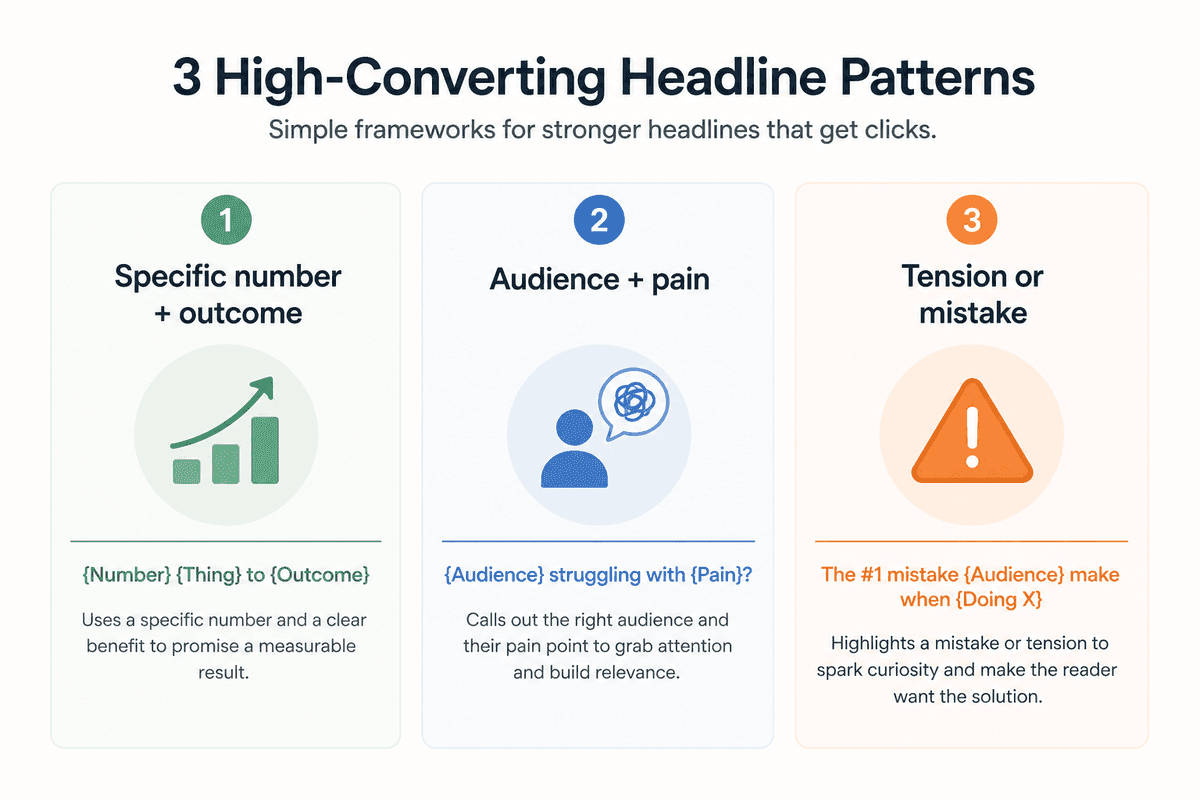
You do not need dozens of formulas. A few reliable ones cover most situations.
How-to formula
How to [achieve outcome] without [common pain]
Example: How to Write Better Headlines Without Resorting to Clickbait
List formula
[Number] ways to [improve result]
Example: 12 Ways to Make Blog Headlines More Click-Worthy
Mistake formula
[Number] mistakes that [negative outcome]
Example: 8 Headline Mistakes That Make Good Content Easy to Ignore
Comparison formula
[Option A] vs [Option B]: what works better for [goal]
Example: Questions vs Lists: Which Headline Style Gets More Clicks?
Benefit-plus-audience formula
[Outcome] for [specific audience]
Example: Better Headline Ideas for Freelancers and Solo Marketers
If you want to spin these structures into faster first drafts, use the formulas as prompts inside a headline generator instead of asking for random ideas.
How to make catchy headlines work for SEO too
SEO headlines need one extra layer of discipline. They have to be appealing, but they also need to line up with search intent and include the main topic clearly.
That usually means:
- Putting the keyword in naturally
- Making the page purpose obvious
- Avoiding vague teaser language
- Matching the query type
For example, someone searching for “how to write catchy headlines” probably wants tips, formulas, and examples. They do not want a mysterious opinion piece with a cryptic title.
That is also why the headline, SEO title, and meta description should work together. The on-page headline can carry a little more personality, while the SEO title and snippet need to confirm relevance fast. If you are refining the full search result, it helps to pair this with guidance on writing meta titles for SEO and how to write the perfect meta description.
If you want a deeper breakdown of search-focused structure, this guide on how to write headlines for SEO covers that side in more detail.
A quick editing checklist for better headlines
Before you publish, ask:
- Is the topic obvious?
- Is there a real benefit or angle?
- Does it sound like a human wrote it?
- Would the headline still make sense without dramatic wording?
- Does the article actually deliver on the promise?
If the answer to the last question is no, the headline is the wrong headline.
Final takeaway
Catchy headlines work because they help the reader make a fast decision. They signal relevance, promise a useful outcome, and create enough interest to justify the click.
That does not require exaggerated language. It requires sharper thinking.
Start with clarity. Add specificity. Use curiosity carefully. Then edit until the headline feels both strong and honest.