
9 Meta Title Templates That Boost Rankings + CTR

Yi
SEO Expert & AI Consultant

Meta titles are the clickable headlines people see in search results. They help search engines understand the page, but they also do something just as important: they shape whether a real person decides to click.
That is why title tags deserve more attention than they usually get. A strong meta title can improve relevance, lift click-through rate, and make the page’s value obvious before the visit even happens. A weak one can bury a good page behind vagueness, truncation, or generic wording.
This guide covers the practical rules that matter most: length, keyword placement, uniqueness, intent matching, and measurement. If you want to write meta titles that rank and get clicked, start with those fundamentals.
Understanding Meta Titles and Their Impact on SEO
How to perform a technical SEO audit — Google Search Central
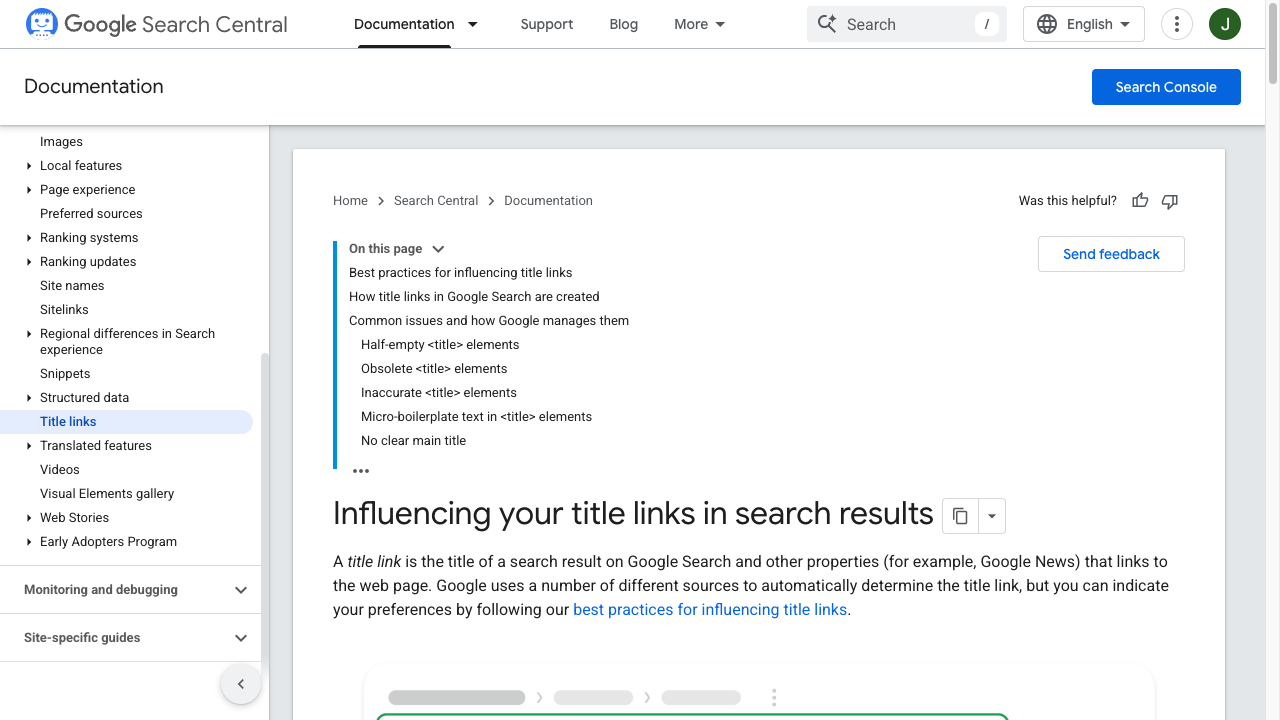
Google may rewrite titles. Your job is still to write a clear, unique, intent-matched title — then verify how it displays.
Search engines use meta titles as one of the main signals to figure out what your webpage is about. When Google’s crawlers scan your site, they look at the meta title first so they can categorize your content and match it to user search queries. This tiny piece of HTML is like a direct message from you to the search algorithms, telling them exactly what your page offers.
The meta title SEO impact goes way beyond just simple categorization. Search engines treat this element as a big deal among their search engine ranking factors when they decide where your page should appear in results. A well-optimized meta title that has the right keywords and clearly describes your content sends really strong relevance signals to search algorithms.
You can use tools like the Meta Title Generator from Junia AI to create highly clickable and SEO-optimized titles for your articles. This can help lower your bounce rate, improve your SEO, and increase click-through rates at the same time.
The relationship between meta titles and performance metrics is actually pretty clear and measurable:
- Click-through rates increase when titles are interesting and match what users are looking for
- Rankings improve when titles use strategically placed keywords that line up with search queries
- User engagement rises when visitors get exactly what they expected from the title they clicked
You can see this connection in real numbers. Pages with optimized meta titles almost always beat pages with boring or badly written ones. A title like "Best Running Shoes 2024 | Expert Reviews & Buying Guide" will usually get more clicks than something like "Running Shoes - Homepage" because it offers specific value and uses keywords people actually type into Google.
The title tag you write doesn’t just help search engines figure things out. It’s also the very first impression real visitors get of your content in search results. To make sure that first impression actually counts, you might want to use advanced AI tools like the ones from Junia AI. They’re built to help generate in-depth, plagiarism-free content that ranks on Google and even gets cited by LLMs like ChatGPT, which can really help you win the whole SEO game.
Best Practices for Writing SEO-Optimized Meta Titles
| Template idea | Example shape | Use when |
|---|---|---|
| Primary KW + promise | “Meta Title Templates That Improve CTR” | Guides |
| KW + year | “Wordtune Alternatives (2026)” | Comparisons |
| KW + audience | “SEO Headlines for SaaS Landing Pages” | Niche intent |
| Brand last | “Indexing Tools | Junia AI” |
Meta title checklist
- Unique across the site
- Primary keyword near the front when natural
- Matches page intent (not bait)
- Readable if truncated
- Not duplicated from the H1 blindly
Start with length. Most title tags display best when they stay roughly within the 50 to 60 character range, though Google measures in pixels rather than raw character count. The goal is not to hit a magic number. It is to keep the core topic visible before the title gets truncated.
A few practical rules help:
- Aim for a title that is concise enough to display well on both desktop and mobile
- Put the most important words early so they survive truncation
- Cut filler before you cut the actual search intent
- Use preview tools when the title is close to the limit
If you publish at scale, tools like Yoast, AIOSEO, and Screaming Frog make this easier by flagging titles that are too short, too long, or duplicated. But even without them, one habit matters most: write the title so the first half can stand on its own.
1. Strategic Keyword Placement
Where you put your keywords in the title has a big impact on how search engines understand what your page is about. Your main keyword should show up close to the beginning of the meta title, ideally within the first 5 to 10 characters, to get the most SEO value out of it. Search algorithms pay more attention to words that appear earlier in the title tag and treat them as stronger signals of what the page covers.
When you’re figuring out how to write SEO-optimized meta titles that actually rank, try to think of keywords as normal, natural descriptions. Not like something you’re just stuffing in there. For example, "SEO Guide: Keyword Research Tips for Beginners" sounds way more natural than "Keyword Research SEO Tips Guide Beginners Tutorial." The first one uses the keyword smoothly and is still easy to read.
You want to balance having the keyword there with making it readable for actual people. Putting your target keyword in the title once is usually enough. If you repeat it a bunch of times, it starts to look like keyword stuffing, which search engines don’t like, and it just looks spammy so users probably won’t click. Focus on writing titles that answer what the searcher is looking for, while still including your keyword in a way that sounds normal and conversational. That way you’re keeping both the algorithms and real people happy.
To help with this, tools like Essay Extender can be really helpful. They generate extra content to expand your essay or article in a natural way, so you can go deeper into topics without making the writing weird or hard to read.
Also, using a Text Expander can make your writing process faster. This AI-powered tool lets you expand your text or sentences into fully written content that’s more complete and in-depth, while also saving time and cutting down on mistakes.
2. Ensuring Uniqueness Across Pages
Unique meta titles work kind of like ID tags for every page on your site. Search engines see duplicate titles as a problem, because it can confuse crawlers about which page should rank for which queries. If several pages all share the same title, it’s like you’re making them compete with each other in the search results.
Think of your website like a library. Every book needs its own title so people can actually find what they’re looking for. It’s the same with your web pages. A homepage, a product page and a blog post are all doing different jobs, so they each need a title that matches their specific content.
Problems Caused by Duplicate Titles
Duplicate titles usually cause three main issues:
- Diluted ranking potential
- Search engines don’t know which page should be shown first
- Poor user experience
- People can’t tell the difference between your pages in the search results
- Wasted crawl budget
- Search engines waste time trying to figure out how similar pages are different
How to Find and Fix Duplicate Titles
You can check your site for duplicate titles using Google Search Console or SEO crawling tools like Screaming Frog. These tools quickly show you which pages share the same titles, and then you can rewrite them with unique ones that clearly describe each page’s specific value and what makes it different.
3. Clarity and Relevance to User Intent
Clear meta titles are kind of like a promise to people searching. They give a quick idea of what they’ll actually get when they click your page. So if someone types "best running shoes for flat feet" into Google, they’re expecting results that talk about that exact thing, not some random, super general titles about athletic footwear.
You really have to match the searcher's intent pretty closely. If your page is a buying guide, your title should say that clearly: "Best Running Shoes for Flat Feet: 2024 Buying Guide." If it’s more of a comparison, just spell that out: "Nike vs. Adidas Running Shoes for Flat Feet Compared."
But vague titles like "Running Shoes Information" or "Everything About Footwear" kind of flop. They don’t tell users or search engines what you’re offering. You’re basically making both of them guess, and honestly, no one has time for guessing.
The most effective titles answer these three questions right away:
- What is this page about?
- Who is it for?
- What value does it provide?
When you write titles with this kind of clarity, you’re showing search engines that your content really matches what users are searching for. And you also get more clicks because people can quickly see your page is actually the solution they’re looking for.
4. Incorporating Branding Without Compromising SEO
Putting your brand name in meta title tags isn’t just random. You kinda have to think it through. You should look at how well-known your brand is before deciding.
When to include your brand name:
- Your business already has solid brand recognition and people are actually searching for your company
- You’re going after branded search queries where users are specifically looking for your products or services
- Your brand adds that extra bit of trust or credibility that might improve click-through rates
Best practices for brand placement:
Most of the time, put your brand at the end of the title tag, not at the start. That way your main keywords come first, while your brand still shows up:
Primary Keyword - Secondary Keyword | Brand Name
If your brand is not really well-known yet, you can usually skip branding on most pages. Your homepage and a few key landing pages should probably include your brand, but product pages and blog posts should stick to focusing on keywords and user intent. This helps you make the most of the limited character space for How to Write SEO-Optimized Meta Titles That Actually Rank.
Use a separator like a pipe (|) or a dash (-) to clearly separate your brand from the main descriptive part of your title.
5. Using Actionable Language to Boost CTR
Actionable language helps, but only when it stays believable. A title like “Project Management Software” is clear but flat. A title like “Best Project Management Software for Small Teams” is still clear, but it gives the searcher a better reason to click.
In practice, the best title tags use action indirectly through specificity:
- numbers that promise a scannable list
- modifiers like “best,” “guide,” or “template” when they match the page
- time or audience qualifiers that narrow the promise
Be careful with overcooked verbs like “unlock,” “skyrocket,” or “discover the secret.” Those can lift curiosity, but they can also make the result look generic or clickbaity. If you want a stronger title, clarity usually beats hype. The same principle shows up in strong SEO headlines, not just title tags.
6. Avoiding Common Pitfalls Like Keyword Stuffing
It’s really tempting to cram a bunch of keywords into your meta title, but that can totally backfire on your rankings. Search engines are smart enough now to notice when you’re trying too hard with titles like "Best SEO Tools | SEO Software | SEO Solutions | Top SEO Programs."
Signs your title is over-optimized:
- You repeat the same keyword over and over
- You shove keywords into spots where they don’t sound natural
- The title feels awkward or doesn’t even sound like proper English
- You’re sacrificing readability just to get more keyword density
You should avoid keyword stuffing by focusing on one main keyword and maybe one related term. A natural title like "Best SEO Tools for Small Business Owners in 2024" works way better than something like "SEO Tools Best SEO Software SEO Solutions."
Try reading your title out loud. If it sounds robotic or weird, you’ve probably gone too far with optimization. Your meta titles should sound natural to real people first, and then work for search engines second.
Leveraging SEO Tools for Meta Title Optimization
Writing SEO-optimized meta titles gets a lot easier when you’re using the right SEO tools. Yoast SEO and All in One SEO (AIOSEO) are basically the two big WordPress plugins everyone uses for meta title optimization, and yeah, I’ve used both a lot across different websites.
Yoast SEO: Visual Snippet Preview and Real-Time Feedback
Yoast SEO meta title help comes with this visual snippet preview, so you can literally see how your title will look in search results before it goes live. While you type, the plugin gives real-time feedback using a traffic light system. Green means your title length is good, orange means it’s kinda okay but could be better, and red means something’s off and you should fix it right away.
You also see the character count update as you type, which saves you from that super annoying moment where you write the perfect title then realize it’s too long.
AIOSEO: TruSEO Score and Keyword Analysis
AIOSEO has similar features but uses its TruSEO score to break things down for you. It analyzes your meta titles for stuff like:
- Keyword placement and density
- Character length optimization
- Readability metrics
- Duplicate title detection across your site
So you get a pretty clear idea of what’s working and what’s not.
AI-Powered Features in Yoast SEO and AIOSEO
Now both plugins also have AI-powered features that suggest different title variations based on your content. These AI tools scan your page content and then generate multiple title options that are optimized for search engines and also for user engagement.
You don’t have to copy them exactly. You can just use those AI suggestions as a starting point, then tweak and customize them so they match your brand voice.
The Advantage of Using SEO Tools
The real advantage of these tools? They pretty much remove the guesswork. You don’t have to sit there manually counting characters or wondering if your keyword placement is good enough. The plugins handle all the technical stuff, so you can focus on writing meta titles that are actually interesting and compelling.
Integrating Other Powerful Tools into Your Workflow
Meta titles work best when they are part of a larger on-page system. A good title tag should line up with the headline, meta description, and page intent instead of being optimized in isolation.
That is why adjacent tools matter too. A meta description generator can help you draft a supporting snippet, while this guide on how to write the perfect meta description covers how to keep the promise consistent. If the page itself still feels bloated, improving readability usually does more for long-term CTR and engagement than endlessly tweaking title verbs.
Measuring the Effectiveness of Your Meta Titles
Writing optimized meta titles is really just half the job. You also need to track how they perform so you know what’s working and what kinda flops. Google Search Console is your main tool for this. It gives you detailed data on how your titles perform in real searches.
Tracking CTR from Meta Titles
To track CTR from meta titles, go to the Performance report in Search Console. Here’s what you should keep an eye on:
- Average CTR percentage for each page
- Impressions versus clicks to see which titles underperform
- Position rankings to check if your titles help keep or improve rankings
- Query data showing which search terms actually trigger your pages
You can filter results by certain pages or specific queries to look at each title more closely. If you spot a page that has a lot of impressions but a low CTR, that’s a pretty clear sign your meta title probably needs some work.
Using Third-Party Tools for Additional Analysis
Third-party tools like SEMrush, Ahrefs, and Moz give extra layers of analysis too. They track how your rankings change over time, compare your CTR with industry benchmarks, and help you find spots where your competitors are doing better than you in search results.
Setting Up Regular Monitoring Schedules
It’s a good idea to set up regular monitoring schedules. Maybe weekly for your high-priority pages and monthly for the rest. Export your data so you can track trends and spot patterns over time.
When you change a meta title, note the date in your analytics. That way you can see what kind of impact that update had. This kind of data-driven approach lets you keep refining your strategy using real performance metrics instead of just going off guesses.
Conclusion
Writing SEO-optimized meta titles that actually rank means putting in real effort to create titles that are compelling, keyword-rich, and matched to user intent. You’ve seen how things like smart keyword placement, the right length, and using actionable language can boost both rankings and click-through rates.
The benefits of optimized meta titles go beyond just better visibility in search. They’re also that first impression that can turn someone scrolling past into an actual visitor. Every title you write is a chance to stand out, beat your competitors, and grab more organic traffic.
So yeah, start using these strategies now. Go through your current meta titles, apply what you’ve learned, and then keep an eye on the results in your analytics tools. Over time, your focus on writing effective meta titles will show up as real improvements in your site’s search performance and steady traffic growth.