
The 1-Post Translation Strategy to Multiply Blog Traffic (Multilingual SEO)

Thu
AI SEO Specialist, Full Stack Developer

So you’ve spent hours putting together what feels like the perfect blog post. You’ve edited it, optimized it for search engines, shared it on your social media and maybe even emailed it out. All that work. But what if translating that one single article could actually multiply your traffic by ten times? Yeah, from the same post.
Multilingual blogging isn’t just some optional extra anymore, it’s honestly a huge game changer if you’re serious about reaching people around the world. When you use it to expand blog traffic globally through translation, you’re not just talking to more readers. You’re stepping into totally new markets that your competitors are probably not even paying attention to.
Here’s the thing a lot of people forget. Most content creators only focus on English-speaking audiences. Which means there are billions of potential readers just kind of left out. By taking one high-performing article and translating it into multiple languages, you can grow website traffic globally in a way that almost feels unfair, like you’re getting this secret shortcut.
In this article, you’ll see exactly how turning a single piece of content into different languages can bring in up to ten times more blog visitors. You’ll go through the strategies, tools and simple tactics that make that kind of transformation actually possible.
Why Translating One Article Can Multiply Blog Traffic
When you translate blog content into multiple languages, you’re not just converting words, you’re kind of opening up totally new markets. Like, a single article in English might reach around 1.5 billion English speakers worldwide. But then, when you use advanced tools like AI article writers, you can pretty easily translate that same article into Spanish, Mandarin, and French. And suddenly your content can be seen by more than 3 billion extra people. Which is kind of wild when you think about it.
The numbers really tell the story here. Research keeps showing that websites with content in multiple languages usually see about a 30% traffic increase for every new language they add. Some businesses even see way bigger jumps, like traffic surges of 70% to 100% when they smartly translate their top performing content instead of everything at once.
The multilingual content benefits aren’t just about getting more visitors:
- Search engines index each translated version separately, so you get way more chances to rank for different keywords. This is where using a Google indexing tool can really boost your visibility.
- You start catching organic traffic from region-specific search queries that your competitors aren’t even targeting
- International audiences usually spend more time on your site when the content is in their native language
- Bounce rates drop a lot when visitors can read and understand content comfortably
Think about this for a second: around 60% of online users avoid websites that are only in English, even if they technically understand English. They just prefer reading stuff in their mother tongue because it feels more trustworthy and honestly just easier to read. When you translate your articles using tools like ChatGPT for language translation, you’re basically removing this invisible wall in their head that keeps them from engaging with your content.
Search visibility also gets a big boost with translated content. Google and other search engines really try to show results in the user’s preferred language. So every translated article becomes another opportunity to rank in local search results. It’s like multiplying your presence in different geographic markets, without you having to write totally new content from scratch each time.
Understanding the Role of Localization in Multilingual Blogging
Translation is basically just turning words from one language into another. But Content localization is more than that, it kind of reshapes your message so it actually fits a specific culture. It helps create a real and authentic local user experience that feels natural and builds trust and, yeah, better engagement too.
For example, you could translate "break a leg" literally into Spanish, but that would sound weird. With localization, it gets changed to "mucha mierda" which is what Spanish-speaking people actually say in that situation. So this difference is what decides if your content feels foreign and awkward, or if it feels native and familiar to the audience.
Cultural adaptation goes way beyond just swapping out idioms, and kind of stretches out to things like:
- Currency and measurements: Changing dollars to euros, or like, miles to kilometers so it actually makes sense for people
- Date and time formats: Switching MM/DD/YYYY to DD/MM/YYYY for European markets so it doesn’t look confusing or wrong
- Visual elements: Tweaking or replacing images that might be culturally inappropriate or just totally irrelevant
- Color symbolism: Knowing that white can mean mourning in some Asian cultures, but in Western contexts it usually stands for purity
- Social norms: Adjusting humor, how formal you sound, and your communication style so it fits what local people expect
When you localize content for Japanese audiences, you’ll usually need to shift your tone a bit, or a lot, to match their preference for more indirect communication and pretty formal language. But the same article localized for Australian readers might sound way more casual and direct, with more slang and colloquial expressions thrown in.
Local references matter a lot too. If you mention Thanksgiving in content for Brazilian audiences, it just won’t really land. Instead, you’d probably talk about Carnival or other local holidays. And product examples should use brands that your target market actually knows, instead of super region-specific companies your international readers have never even heard of.
The investment in proper localization usually pays off with higher engagement rates, longer time-on-page metrics, and better conversion rates. Your translated content turns into kind of a bridge that connects more authentically with readers in their own cultural context, so they actually feel understood and, like, genuinely valued.
Optimizing Translated Content for Multilingual SEO Success
You can't just translate your content and then, like, expect search engines to instantly rank it high in every country. It doesn’t really work that way. Multilingual SEO needs more of a real strategy, where you treat each language version as its own thing and a new chance to expand blog traffic globally. Also, leveraging AI for Efficient Multilingual SEO Strategies can really boost what you’re already doing and make the whole process a lot more effective.
Conduct Keyword Research
Start by doing keyword research for each target market separately. Like, really treat each one on its own. The keywords that perform well in English won't always work the same way in Spanish, German, or Japanese, even if they look like they should. You have to understand how your audience actually searches in their own language, in real life. For example, "running shoes" might be a high-volume keyword in English, but in Spanish, "zapatillas para correr" or "tenis para correr" might have different search volumes depending on the region and how people talk there. It’s not always obvious. Use tools like Google Keyword Planner, SEMrush, or Ahrefs with language-specific settings turned on so you can see what your target audience really types into search engines.
Implement Hreflang Tags
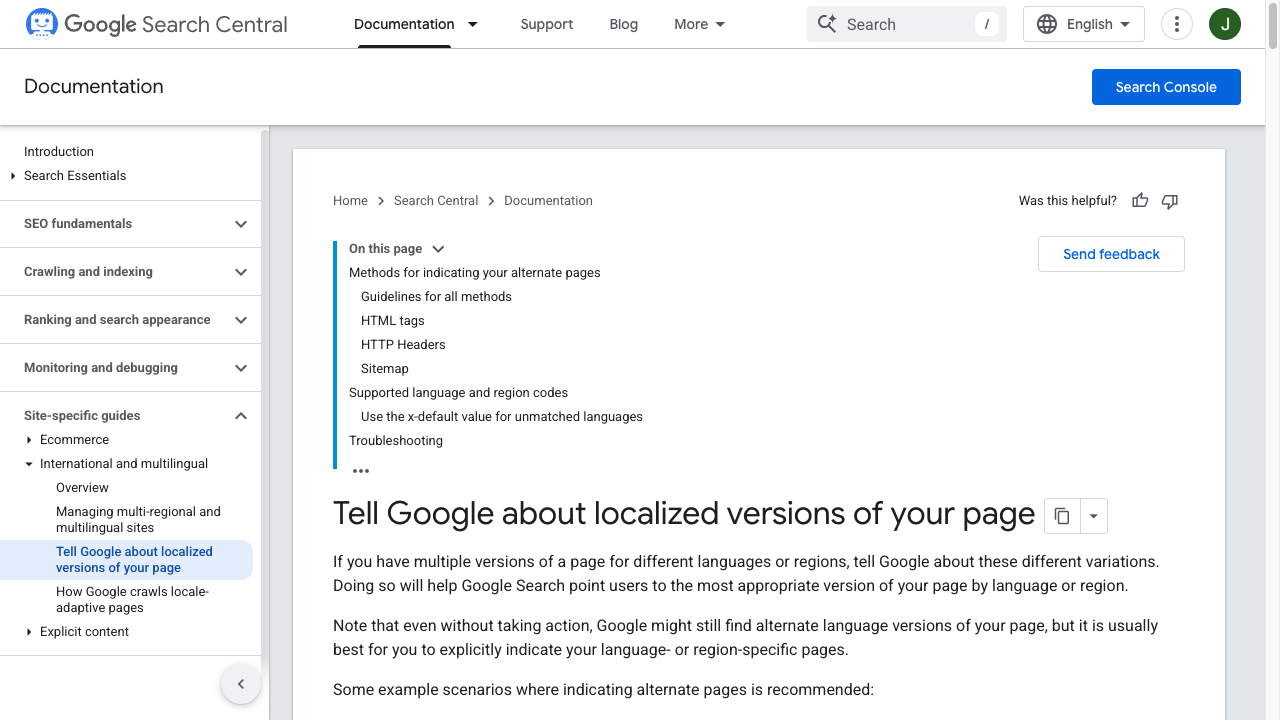
Hreflang tags are basically a must-have for multilingual content. These HTML attributes tell search engines which language version of a page to show people, depending on their location and language settings. If you don’t set up hreflang correctly, you might end up with duplicate content issues and search engines might get confused about which version to rank. The tag usually looks like this: <link rel="alternate" hreflang="es" href="https://yoursite.com/es/article" />. You should add these tags to every translated page so there’s a clear connection between all the different language versions.
| Multiply traffic when… | Don’t expect 10x when… |
|---|---|
| Source post already performs | Source is thin or outdated |
| Local keywords differ enough | You only machine-translate and ship |
| Hreflang + unique local proof exist | All languages target the same SERP intent poorly |
One great post localized beats ten mediocre clones. Pick winners first.
Expanding your site to more languages
Use Localized URLs
Localized URLs are super helpful for making your multilingual SEO strategy stronger. So, instead of using basic stuff like ?lang=es, it's better to set up clean URL structures, like yoursite.com/es/article-title or es.yoursite.com/article-title. URLs like these kind of tell search engines and people that you actually made dedicated content for specific markets. That usually helps with crawlability and also makes users trust your site more.
Consider Long-Form Content
Also, you might want to think about adding some long-form content into your strategy. This kind of content can really help your SEO a lot, since it can bring in more web traffic and, you know, give more helpful value and info to your audience.
Explore AI Text Generators
Lastly, using AI text generators can kind of totally change how you create content. These tools don’t just help bring in more traffic, they also help keep your brand looking and sounding the same across different languages and regions, which is honestly pretty cool.
Leveraging Technology for Efficient and Quality Translations in Multilingual Blogging
With the right tech stack, multilingual blogging goes from feeling super overwhelming to something you can actually handle day to day. AI-powered translation tools like DeepL and Google Translate have gotten way better over the years. They use neural machine translation now, which picks up on context and little nuances way more accurately than the old stuff did. These tools can give you instant first drafts that still keep your original article's structure and formatting pretty well.
But honestly, the best results usually come when you mix automated translation with human translation services. This hybrid kind of setup lets you move fast and still keep that cultural accuracy that only real native speakers have. Professional translators catch subtle mistakes, adjust jokes that don’t really work in another language, and make sure your brand voice sounds like you, in every language.
If you want to make the whole thing smoother from start to finish, it really helps to use CMS multilingual support. WordPress plugins like WPML or Polylang, plus platforms like Webflow Localization, let you control all your different language versions from one simple dashboard. You can:
- Assign different translators to specific language pairs
- Track translation progress in real-time
- Update all language versions at once when you edit the source content
- Maintain separate SEO settings for each locale
The speed boost from bringing AI into your translation process is honestly huge. Where manual translation might take weeks, AI-powered human translation services can get you solid quality in just a few days. You’re basically saving around 70-80% of the time and still keeping translation costs something like 40-50% lower than traditional agency rates.
On top of that, using an AI text generator can make content creation even easier by generating coherent and plagiarism-free text without much effort. This is especially helpful when you have to produce a lot of content in a short amount of time and you’re kind of on a deadline.
Translation memory features in platforms like Smartling or Lokalise remember phrases you’ve already translated, which keeps your blog consistent and saves you from doing the same work over and over. By the time you’re on your second, third, or tenth article, the whole translation process gets way faster because your translation database just keeps growing.
Additionally, using AI content generators can really change how you handle content creation for multilingual blogging. These advanced tools don’t just help you write high-quality content more easily. They also support your SEO by helping with internal linking strategies that actually make sense.
When you add AI-powered internal linking to your multilingual blog, you can boost domain authority, improve SEO performance, and make the user experience smoother by adding natural anchor links throughout your content.
Lastly, if your blog has pages with low rankings or weak traffic, our Page Rank Improver tool can help fix that. You just enter the URL of the page you want to improve, and let our AI handle the rest for you. Simple, but surprisingly effective.
Promoting Multilingual Content Effectively to Maximize Global Reach
So you’ve already put in all this time and money into translating your content with advanced AI translation tools, and now the big thing is actually getting it in front of the right people. Region-specific social media promotion is super important here. You really need to know where your audience actually hangs out online. Like, Facebook and Twitter are huge in Western countries, sure, but in other places, it’s totally different. VKontakte in Russia, WeChat in China, or LINE in Japan are massive, and yeah, you really can’t just ignore those.
It helps a lot to create separate social media accounts for each language market, so you can share your translated articles with messaging and visuals that actually feel right for that culture. You’ll want to post during the peak hours in each region, not just your own time zone, and try to reply to comments in the native language too. That kind of thing makes the connection feel a lot more real for people.
To really get the most out of your multilingual content, you might want to try things like bulk content creation and multilingual bulk translation. These approaches can seriously speed up the whole process of creating high-quality, localized articles that are actually tailored for each language market instead of just quickly translated and forgotten.
Segmented email marketing campaigns let you send personalized content straight to people based on their language and where they live. You can set up your email lists by things like:
- Language preference they chose during signup
- Geographic location data from user profiles
- Previous engagement patterns with multilingual content
- Time zone so you can pick the best send times
So for example, you send a Spanish article to your Spanish-speaking subscribers, and at the same time, the English version goes out to your English-speaking audience. Same content idea, just different versions. It feels way more personal and usually leads to better open rates and more click-throughs.
Influencer collaborations can really boost your reach fast in new markets. Local influencers and bloggers already have their audience’s trust, which is something that takes a long time to build on your own. You can team up with them to share your translated content, write guest posts, or even co-create region-specific content that links back to your multilingual blog.
To make these collaborations actually work well, it’s important to know how to write and localize articles in multiple languages. When you do this right, these partnerships make your brand feel more legit in new markets and help introduce your content to engaged communities that already care about your niche.
Measuring the Impact of Multilingual Blogging on Traffic Growth and Engagement Metrics
You really need some solid data if you want to see if your multilingual strategy is actually doing anything to help expand blog traffic globally. This is where your Website traffic analytics tools kind of become your best friend, honestly, because they let you track how your translated content performs in different language markets and compare what’s working and what’s not.
Tracking Visitor Increases with Google Analytics
Google Analytics is still kind of the go to tool for keeping track of visitor increases from translated pages. You can break down your traffic by language, by location, and even by specific URLs, so you can actually see which translated articles are getting the most engagement. It’s pretty helpful. You can also set up custom dashboards that show metrics for each language version of your content, and that way you get really quick visibility into which markets are responding the best to your multilingual efforts.
Monitoring International SEO Performance with SEMrush
SEMrush gives you some pretty strong tools for watching your international SEO performance. You can keep an eye on keyword rankings in different countries, check out backlink profiles for each language version, and spot new chances to boost visibility in certain markets. Plus, the platform's position tracking feature lets you compare how your translated content ranks against local competitors, which is super helpful when you’re trying to see what’s actually working.
Revealing Business Impact through Conversion Rate Tracking Methods
Conversion rate tracking methods basically help you really see the actual business impact of your multilingual content. When you look at the numbers, you start to notice what’s actually working and what’s kinda just there. You should keep an eye on things like:
- Form submissions by language preference, so you can see which language people actually use when they’re ready to sign up
- Newsletter sign-ups from different regional audiences, because different areas react in different ways and it’s not always what you expect
- Time on page for translated versus original content, to check if people stick around longer on one version than the other
- Bounce rates across language versions, since a high bounce rate might mean something feels off or confusing in that language
- Click-through rates on calls-to-action in each language, so you know which CTAs really make people click and which ones just kind of sit there
Understanding User Behavior with Hotjar
Hotjar and similar tools give you heatmaps and session recordings, so you can actually see how users from different regions move around and interact with your translated content. You can spot navigation issues, weird or confusing elements, or even cultural mismatches that might be hurting engagement without you realizing it. All this behavioral data kind of becomes a guide, helping you adjust and refine your localization approach so you can create content that really connects and actually resonates with each target audience.
Conclusion
Multilingual blogging is actually a really powerful strategy to increase blog traffic worldwide, but a lot of people kind of ignore it or just forget about it. The thing is, the proof is pretty clear. When you translate your content, you can reach totally new audiences and turn one really good article into a steady traffic source in a bunch of different markets.
So yeah, you’ve seen how this whole strategy for global blog growth works. By mixing smart localization, good SEO techniques, some planned promotion, and actually tracking your results, you can get some pretty big outcomes. And the benefits of multilingual blogging are not just about numbers on a screen. You’re also reaching people from different cultures who honestly just appreciate reading content in their own language.
Start small. Seriously. Just pick your best performing article and translate it into two or three languages that actually matter for your target audience. Make sure you add hreflang tags properly, focus on local keywords, and then promote the article through channels that people in those regions actually use.
You don’t need a huge budget or some super complicated system to increase website traffic globally. What you really need is to just, you know, start. Take action. Your next big traffic boost might be just one translated article away.