From 1 Language to Global: Multilingual Content Marketing for SaaS Growth

Thu Nghiem

Thu

AI SEO Specialist, Full Stack Developer

multilingual content marketing for SaaS

Your SaaS product might be amazing, honestly, but if you’re only talking to customers in one language, you’re pretty much leaving a lot of money just sitting there. Multilingual content marketing isn’t just some nice extra thing anymore, it’s actually a really important growth lever for SaaS companies that want to grow beyond their home market and, you know, not stay stuck in one place.

The numbers kind of say it all. SaaS businesses that go for global expansion usually grow faster than the ones that stay in just one market. When you localize your content and focus on international SEO, you’re not just translating words at all. You’re opening the door to whole new groups of customers who like to research, compare, and buy software in their own language. Which makes sense if you think about it.

Here’s what a lot of SaaS founders don’t really realize: multilingual content SEO needs a totally different approach than just throwing your website into Google Translate and hoping for the best. You need to figure out how people search for solutions in different languages, what cultural stuff changes how they make decisions, and which channels they actually trust when they’re looking for information. It’s not just the same thing copy pasted.

This article walks you through how to build a full multilingual content strategy that actually drives real SaaS growth. You’ll see how to do keyword research in multiple languages, use technology to manage content more efficiently, and track what really makes a difference in each market. The whole point is to create localized experiences that feel natural and almost native to every audience, while still keeping your brand’s main message and values the same everywhere.

To pull this off, understanding how to write and localize articles in multiple languages is super important. Once you know how to do that, you can expand your reach more confidently and connect with people all over the world in a way that actually feels personal.

Understanding Multilingual Content Marketing for SaaS

Multilingual content SEO is basically a full, kind of all-in approach to creating, optimizing, and sharing content in more than one language and in different markets. It’s not just about putting your product out there for the whole world and hoping for the best. Instead, it means actually building experiences that talk directly to users in their own native language, and also, like, keeping their culture and local habits in mind while you do it.

The Importance of Localization in Content Strategy

The difference between localization vs translation is actually a pretty big deal for your content strategy. So, like, translation is mostly just changing text from one language to another, kind of word-for-word. But localization goes further than that. It’s more about changing the whole message so it actually feels natural and real for each target market. That means tweaking the tone, idioms, visuals, currency formats, date structures, and even little cultural references so they fit.

For example, if you translate "Sign up for free trial," the basic idea is still there. People will probably get it. But when you localize it, you have to think a bit more. Like, does your German audience prefer formal language or something more casual. Or for your Spanish-speaking markets, you might need different versions for Spain and Latin America, since they don’t always say things the same way. All that stuff kind of matters more than it seems at first.

Enhancing Localization Efforts with AI Translation Tools

In this kind of situation, using advanced AI translation tools can really boost your whole localization process. These tools don’t just give you accurate translations, they also help you tweak and adjust your content so it actually fits local cultural nuances and feels more natural to people there.

The Need for Tailored Multilingual Strategies in SaaS Internationalization

SaaS internationalization really needs customized multilingual strategies, because your product lives in the cloud and, like, it’s serving people in different countries all at the same time. Just using generic translations usually isn’t enough, especially when you’re trying to explain complex features or walk users through tricky onboarding processes.

Your pricing pages need localization that actually considers stuff like local purchasing power, the payment preferences people have, and how your competitors are positioned in each market. And on top of that, the whole subscription model itself needs culturally adapted messaging around ideas like commitment and value perception and trust-building. Those things can feel really different from one region to another, sometimes even more than you’d expect.

Building a Strong Global Content Strategy

Your global content strategy really starts with getting your primary language content right before you try going international. Like, you need a solid content base that already works in your home market. Stuff like messaging that’s proven, value props that are actually clear, and SEO elements that are tuned to drive conversions. Once you have that, it kind of becomes your main template that you can tweak for different regions.

When you’re ready to grow and scale a bit more, then you start building region-specific multilingual content that actually speaks to local pain points and how people search in that area. A German SaaS buyer will research things in a different way than a Brazilian buyer, for example. So your content needs to show those differences in search intent, industry words they use, and how they make decisions. You can’t just copy your English blog layout into every country and think it’ll magically get the same results. It just doesn’t really work like that.

Regional content adaptation means lining up your messaging with local culture and what each market likes. For instance, Japanese audiences usually prefer really detailed, more formal content, with a lot of product specs and explanations. But Australian markets tend to react better to chill, conversational stuff that focuses on benefits. You’ll also see that pricing sensitivity can be super different between regions. Something that sells fine in the US might totally turn off more cost-conscious markets.

Your international SEO strategy has to think about these differences from the beginning. You’re not just translating a bunch of keywords, you’re digging into how people in different places talk about their problems and how they search for answers. A project management tool might be called "collaboration software" in English-speaking markets, but maybe it’s a "teamwork platform" or "project coordination system" somewhere else. Every market needs its own content style, keyword plan, and messaging setup that fits the local business culture and how people normally communicate there.

Keyword Research and SEO Optimization Across Languages

Multilingual keyword research needs a totally different approach compared to just translating your existing keywords. Like, if you search for "project management software" in English, the equivalent phrase in German might be "Projektmanagement-Software," but in real life German users might actually type in "Projektverwaltungstool" or "Aufgabenmanagement-Software" more often. So yeah, you really have to understand how your target audience actually searches in their own language, not just what the direct translation looks like.

Conducting Multilingual Keyword Research

To get started, you should use native-language keyword research tools, like Google Keyword Planner, and set it to the country and language you want to target. This helps a lot. Tools like Ahrefs and SEMrush are also really useful because they let you check search volumes and competition levels in different regions, so you can kinda compare things side by side. You should also take some time to look at local competitors' websites and see which keywords they're ranking for in each market, because honestly, that gives you a pretty clear idea of what’s working for them.

SEO Optimization for Multiple Languages

SEO optimization for multiple languages is not just about tossing in some keywords. It actually affects pretty much every technical part of your site too:

  • Your meta titles and descriptions should sound natural in each language, while still using the keywords you researched. So yeah, it has to feel like something a real person would actually click on.
  • URLs should use language-specific slugs that make sense to local users, not just English URLs with some random language stuff added at the end. People should be able to kind of guess what the page is about just from the URL.
  • Using AI-Powered Internal Linking can really boost your SEO by automatically adding anchor links that fit naturally into your content, which helps improve domain authority and also makes the user experience smoother and less confusing.

The Importance of Hreflang Tags

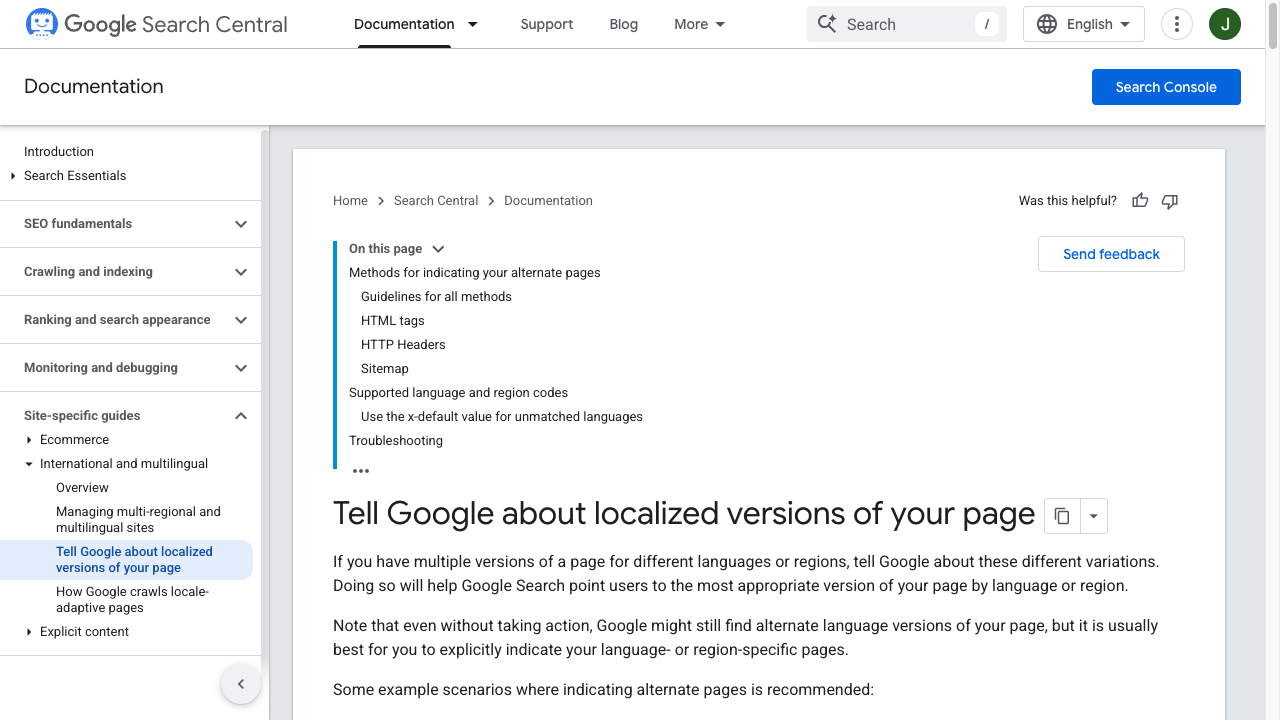
Hreflang tags are super important for solid multilingual content SEO. Like, they are basically not optional if you care about this stuff. These HTML attributes tell search engines which language and regional version of your page should show up for different users. You usually add them in your page header or in your XML sitemap, and they kind of explain how all the different language versions of a page are connected:

html

If you don’t set up hreflang properly, search engines might show the wrong language version to people, which is super annoying for users and can hurt both your user experience and your search rankings too.

The Benefits of Long-Form Content

If you really want to improve your SEO strategy, you should think about using long-form content. This kind of content has been shown to significantly boost SEO, which can bring in more web traffic and, over time, help grow your business a lot.

Managing Your Website's Indexing

On top of everything else, managing your website's indexing with a solid and reliable tool can really make things easier. It kind of speeds up the whole process of getting your web pages or backlinks noticed and recognized by search engines. With over an 80% success rate, our Google Indexing Tool can help you bulk submit URLs so you can get better visibility in search results, and honestly, that’s pretty huge if you care about traffic.

Leveraging Technology for Efficient Multilingual Content Management

Managing content across multiple languages can get pretty complicated, so you really need the right technology stack to keep everything consistent, high quality, and efficient, especially when things grow bigger. Multilingual CMS platforms like WordPress with WPML, Contentful, or Webflow give you the main setup you need to organize and publish content in different languages all from one single dashboard. With these platforms, you can make language-specific versions of your pages while still keeping one main, unified content structure. This makes it a lot easier to follow updates, compare stuff, and keep your brand looking and sounding the same across different markets.

The Role of Translation Management Systems

Translation management systems basically work like the main control center for your whole localization workflow. Smartling, for example, can plug right into your CMS and pretty much automates a lot of the translation process for you, while also giving you tools so translators, reviewers, and content managers can all work together without things getting too messy. You can see what’s going on in real time, like translation progress, quality scores, and even version control stuff. The system also keeps a translation memory, which is kind of like a big library of phrases and terms that were already translated before. This helps lower costs and makes sure the terminology stays consistent across all your content, so things don’t start sounding random or off.

The Power of AI in Translation

Using AI-powered translation tools has come a really long way, but honestly, they still work best when you mix them with real human skills. So what you can do is use AI to get quick first drafts of translations with advanced AI Article Writers or an AI Text Generator. Then, after that, you send those translations to native-speaking reviewers, who go through and fix things, add cultural nuance, and make sure everything actually makes sense in context. This kind of hybrid setup gives you the fast speed of automation but still keeps the accuracy and cultural sensitivity that only human translators can really bring.

Enhancing Multilingual Content Strategy with AI

Also, using AI content generators can really level up your multilingual content strategy. These tools are kind of changing how marketers create content, since they let you mass-generate ready-to-rank articles in bulk, and even auto-schedule publishing through an AI Bulk Content Generator. So in the end, you get localized content that actually sounds natural and feels real to your target audience. And you can do all that without getting stuck in the slow, annoying bottlenecks that come with only using manual translation workflows.

Promoting Multilingual Content Through Regional Channels

Creating really good localized content doesn’t matter much if it never actually reaches the people you made it for. It sounds obvious, but yeah, you have to go where your audience already is. Social media preferences are super different from region to region. Facebook and Instagram are huge in North America and Europe, but then you look at China and it’s all about WeChat. In Japan, people are mostly on LINE, and VKontakte is big with Russian-speaking audiences. So your SaaS company should actually sit down and map out the regional social media platforms for every target market, then build a real presence on the ones where your potential customers are already hanging out.

Localized email marketing is not just taking your English emails, translating them, and calling it a day. That almost never works well. You need to segment your email lists based on language preferences and regional traits, then write campaigns that fit local communication styles. Like, Spanish-speaking audiences in Mexico don’t react the same way as people in Spain, even though they speak the same language. So your email timing, subject lines, and calls-to-action should match those differences. Try testing send times using local time zones and typical daily habits. The schedule that works for a B2B audience in Germany probably won’t click with decision-makers in Singapore, and that’s important to keep in mind.

Influencer partnerships can boost your credibility in new markets way faster than pretty much any paid advertising campaign. You should look for local industry experts, bloggers, and thought leaders who already have your target audience’s trust. When you work with regional publications and media outlets too, it adds another layer of legitimacy to your brand. These partnerships feel like real, authentic endorsements, something paid ads usually can’t really copy. That helps you build authority in markets where people don’t know your brand yet and might not pay attention otherwise.

Measuring Performance and Refining Strategies

Multilingual analytics are super important if you want your international content strategies to actually work. If you want to see which markets react the best to your localized content, you’ve gotta track your organic traffic sources and split them up by language and region. With Google Analytics 4, you can set up custom segments that filter traffic by language settings and geographic location, so you get a really clear view of how each market is performing on its own, kind of like its own little world.

Key Metrics to Track

Here are some key metrics you should keep an eye on if you want to really see how your localized content is doing:

  1. Organic traffic sources segmented by language and region
  2. Conversion goals for each language version of your site
  3. Bounce rates across different languages
  4. Keyword rankings for different language versions
  5. A/B testing results for localized elements

If you check these metrics on a regular basis, you’ll start to see what’s actually working and what’s not. This helps you understand how effective your localization efforts are and lets you make smarter, more data-driven decisions to improve things over time.

Tools for Analysis

So, besides just using Google Analytics 4, there are a few other tools you can check out to see how your multilingual content is doing:

  • SEMrush: This tool lets you track keyword rankings and look at the SEO performance of your localized pages. Pretty useful if you want to see what’s working and what isn’t.
  • Ahrefs: Kind of similar to SEMrush. Ahrefs gives you insights into keyword rankings and backlink profiles, so you can spot new chances for optimization and stuff like that.
  • Page Rank Improver: This AI-powered tool can help improve low ranking or low traffic pages by analyzing them and giving you suggestions on what to fix or change.

All of these tools can work together with your main analytics and give you a more complete picture of how your localized content is performing overall.

Continuous Improvement

Localization is not really a one time thing. It’s an ongoing process, and it’s important to keep tweaking and improving your strategies based on the data you collect over time. So yeah, here are some ways you can improve your localization efforts:

  • Optimize underperforming pages: Use the Page Rank Improver tool to find pages that have low ranking or low traffic, and then actually apply the suggested optimizations. Even small fixes can help a lot sometimes.
  • Test different approaches: Try A/B tests on localized headlines, CTAs, and different content formats to see what really connects with your target audience. Sometimes what you think will work just doesn’t, so testing is super helpful.
  • Seek feedback from native speakers: Talk with native speakers of the languages you’re targeting and ask for honest feedback on your localized content. This can help you spot any cultural misalignments, awkward wording, or other areas that need improvement.

By consistently measuring performance, looking at the data, and making the right adjustments, you can slowly but surely improve how effective your international content strategies are and drive better results in each market.

The Impact of Multilingual Content Marketing on SaaS Global Growth

Personalized multilingual experiences create powerful competitive advantages in today's crowded SaaS marketplace. When you share content that actually talks to people in their own language, with real cultural references and locally relevant examples, it feels more honest and real. It shows you’re actually serious about their success, not just selling to everyone the same way. This kind of authenticity builds trust way faster than any English-only approach ever could. SaaS companies that put real effort into proper localization usually see customer retention rates go up a lot, because users feel understood and valued instead of feeling like an afterthought or some random extra.

International brand visibility expands exponentially when you use culturally relevant SEO practices across different markets. Your SaaS solution might show up on page one in English-speaking countries, sure, but without localized content that’s optimized for how people search in other regions, you’re basically invisible to a huge group of potential customers searching in Spanish, German, or Japanese. Every properly localized page becomes a fresh entry point for organic discovery, kind of like a new door to your product. This multiplies your chances of getting high-intent prospects who like to research solutions in their own language first.

This is where leveraging AI for efficient multilingual SEO strategies really starts to matter. By using advanced AI tools, you can optimize your website for multiple languages with pretty accurate translations and better cultural sensitivity, which can seriously boost your global reach and visibility without you having to rewrite everything from scratch.

Market entry timelines compress dramatically when you get localization right. Instead of spending months or even years trying to build brand recognition from zero in new regions, you can reuse your existing content assets and adapt them for local audiences. This faster approach to SaaS global expansion helps reduce customer acquisition costs while pushing conversion rates higher. Localized landing pages almost always perform better than simple translated ones, often by 50% or more. Revenue growth kind of becomes a natural result once you remove language barriers that were stopping qualified prospects from really understanding your value proposition in the first place.

To further enhance your content creation process, you might want to check out the best AI text generators of 2025. These tools are changing how people handle content creation and SEO by making things more efficient, driving more traffic, and keeping brand consistency, all while helping you make content that actually resonates with diverse audiences in different parts of the world.

Conclusion

Investing in multilingual content SEO really isn’t optional anymore for SaaS companies that want global dominance, it’s actually pretty essential. The multilingual SEO benefits you’ve seen throughout this guide turn straight into real-world advantages. Stuff like higher search rankings in different regions, stronger customer relationships, and honestly just faster revenue growth.

SaaS international marketing success takes serious commitment, not just a quick campaign and you’re done. You need solid localization that actually respects cultural differences, and you have to pair that with very careful technical SEO. You can totally start small if you have to. Just pick one high-potential market, get your process right there, fix what doesn’t work, and then slowly scale things out from there.

The companies that are really winning internationally aren’t just translating words on a page. They’re building real relationships with people through content that actually talks to each market in its own language, literally and culturally. In the end, your global growth basically depends on how well you connect with customers in their preferred language, and honestly, on their terms too.

Frequently asked questions
  • Multilingual content marketing basically helps SaaS companies connect with all kinds of international audiences by giving them content that actually fits their language and culture. When you do this, it builds more customer trust, makes the localized user experience feel more natural and easier, and honestly helps drive SaaS growth by speeding up how fast you can enter new markets and boosting international brand visibility.
  • Translation is basically when you take text from one language and turn it into another. Localization is a bit more than that though, it’s about changing the content so it fits cultural stuff, local habits, regional preferences, and like, specific markets. For SaaS businesses, localization helps your message actually connect with people, not just through plain language conversion, but in a way that really feels right to the target audience. So yeah, it ends up being super important for any kind of effective multilingual strategies.
  • A strong global content strategy really starts with having solid content in your main language first. Like, get that part right and clear, then you can move on to creating region-specific multilingual content that actually fits local cultural stuff and what people in those markets like and expect. When you add international SEO practices into the mix, it helps your content show up better in all kinds of different markets, so your brand can reach people globally more easily and, yeah, actually make that global outreach work.
  • Doing multilingual keyword research that actually fits each target language and region is super important. You really can’t just copy the same stuff everywhere. When you optimize meta tags, descriptions, and URLs for international SEO, it helps search engines aim your pages at the right people. Also, when you set up hreflang tags correctly, it tells search engines which language version of your pages to show users, so they see the right one, and your organic traffic quality and relevance usually gets better.
  • When you use multilingual CMS platforms that are built to handle lots of different language workflows, it makes updating content way easier and smoother. And if you integrate translation management systems like Smartling, it helps keep quality control in place during all the localization processes, so stuff doesn’t go off track. When you combine AI-powered translation tools with human review, you get a pretty good mix of speed and accuracy, plus it helps keep everything culturally relevant too.
  • Figuring out which social media platforms people like in each region, like WeChat vs Facebook, really helps you talk to the right crowd in a more targeted way. Also, when you run localized email marketing campaigns and split them up by language preferences, you usually see better open rates and more conversions too, which is pretty great. And then, when you start collaborating with local influencers and publications, it makes you look more credible and also kind of boosts your reach inside those specific markets.