

The problem wasn't traffic. It was who the traffic represented.
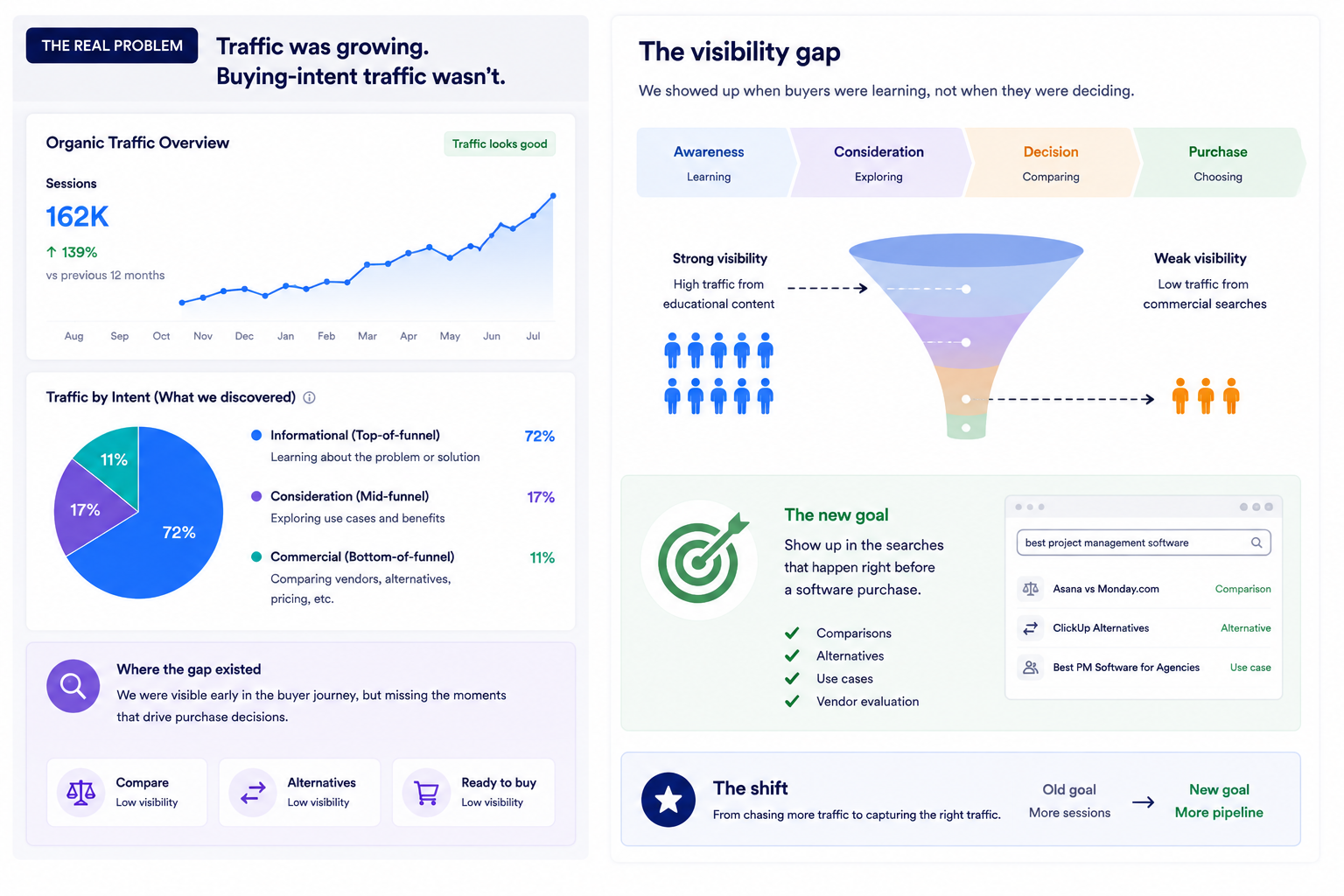
The SaaS company already had an active content program.
Educational articles were bringing people into the site, and organic traffic looked healthy in monthly reports. But when the team looked beyond sessions, the weakness became obvious.
Too little of that traffic came from buyers actively evaluating software.
The company was visible while people were learning about the category, but much less visible when those same people started comparing vendors, researching alternatives, and deciding which product belonged on their shortlist.
So the SEO goal changed.
Instead of maximizing traffic, the team focused on appearing in the searches closest to a software purchase.
Finding the searches that signal buying intent
Using Junia AI, the team researched the questions prospects searched once they had moved beyond general category education.
These searches looked very different from traditional blog keywords.
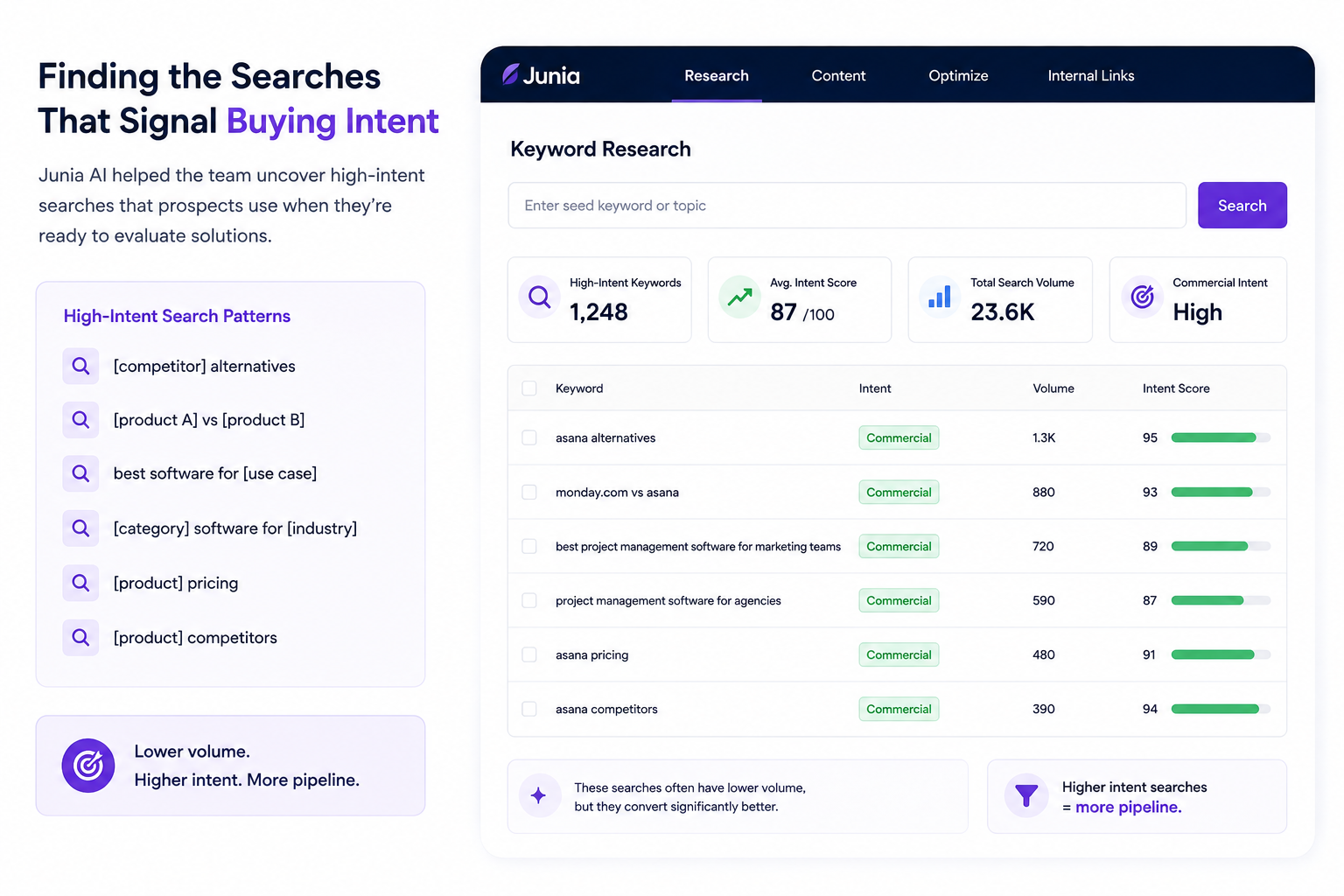
They included patterns such as:
- [competitor] alternatives
- [product A] vs [product B]
- best software for [use case]
- [category] software for [industry]
- [product] pricing
- [product] competitors
Search volume was sometimes lower than broad educational terms.
But the commercial intent was significantly stronger.
Someone searching for an alternative to an established product doesn't need to be convinced that the software category exists. They're already evaluating solutions.
That made these searches disproportionately valuable.
46 pages built around the decision stage
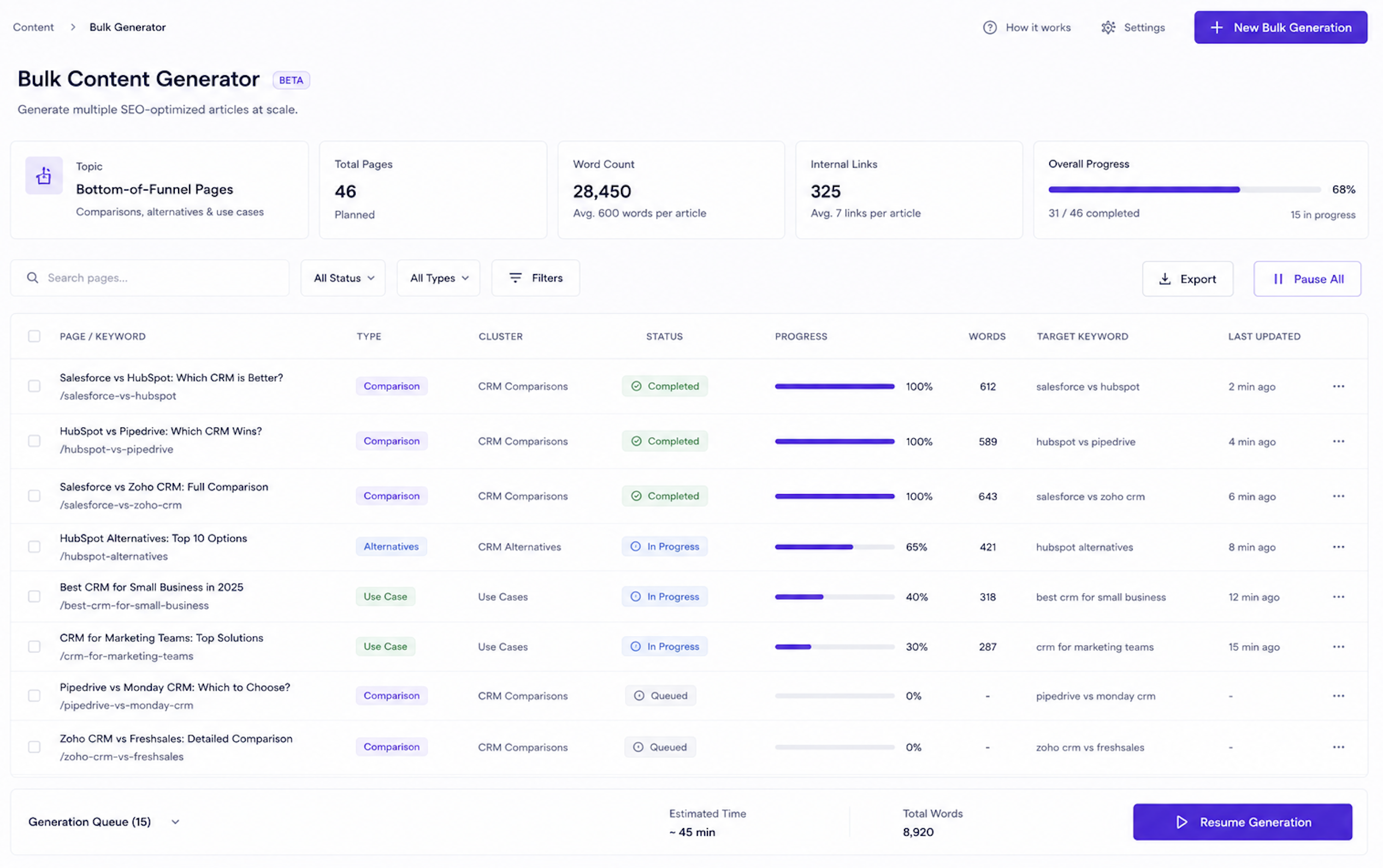
The team concentrated its effort on 46 bottom-of-funnel pages covering comparisons, alternatives, and high-intent use cases.
Rather than creating near-identical templates, each page was built around the decision a buyer was trying to make.
Comparison pages addressed meaningful differences between products.
Alternative pages explained why different types of buyers might consider another solution.
Use-case pages connected the software's capabilities to specific problems, teams, and workflows.
Junia AI helped accelerate the research and first-draft process while the SaaS team retained control over positioning, product claims, and competitive messaging.
The result was a focused library of pages designed for people already moving toward a purchase.
Commercial pages became part of the wider content journey
Creating 46 pages wasn't enough on its own.
The company's existing educational content already attracted relevant audiences. The next step was connecting that traffic with pages closer to the product.
Internal links were added where a reader's next question naturally became commercial.
A visitor could move from:
Learn about a problem → explore a use case → compare solutions → evaluate the product
Educational articles stopped functioning as isolated traffic destinations.
They became entry points into a broader buyer journey.
Existing content was reworked around commercial intent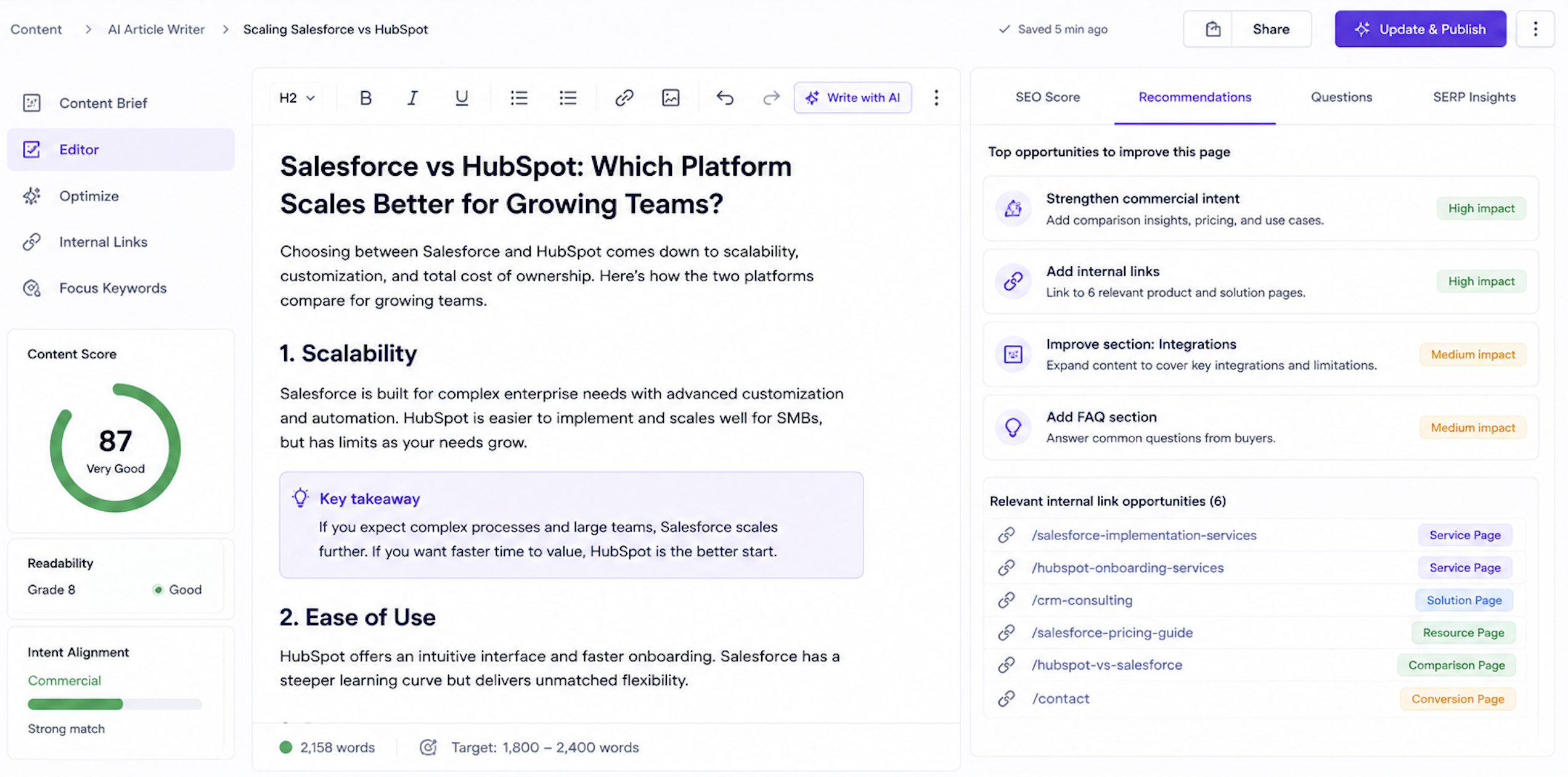
The team also revisited content that ranked but wasn't contributing enough to pipeline.
Some pages attracted the right audience but didn't provide a clear next step. Others targeted broad keywords even though the underlying search results had become increasingly commercial.
Rather than replacing everything, the strongest existing pages were updated.
Junia AI helped identify opportunities to strengthen relevant sections, improve search-intent alignment, add internal links, and create clearer routes toward product and solution pages.
This allowed the company to extract more value from traffic it had already earned.
SEO started showing up in pipeline reporting
As the bottom-of-funnel library gained visibility, organic search began reaching more prospects during active vendor evaluation.
Traffic still grew—by 143%—but traffic was no longer the most important result.
The SEO program generated $1.2 million in SaaS pipeline.
The campaign produced:
- 46 bottom-of-funnel pages
- +143% organic traffic
- $1.2M in attributed SaaS pipeline
- Stronger visibility across comparison, alternative, and use-case searches
The value of organic search became easier to communicate because SEO performance could be discussed alongside commercial outcomes rather than sessions alone.
Why bottom-of-funnel SEO worked
The strategy didn't depend on finding the biggest keywords in the category.
It focused on the moments where search behavior revealed that a prospect was getting closer to a decision.
Broad educational content answered:
“How does this problem work?”
Use-case content answered:
“Can software solve this for my situation?”
Alternative and comparison content answered:
“Which solution should I choose?”
Those final questions may generate fewer searches, but each visitor can be considerably more valuable.
Junia AI helped the team build enough high-quality content around those decision-stage searches to create a meaningful organic footprint.
For this SaaS company, the result was a shift from SEO as a traffic channel to SEO as a pipeline channel—with 46 strategically chosen pages contributing to $1.2 million in pipeline.
What the team used
What they did with Junia
- Built 46 competitor and alternative pages
- Created bottom-of-funnel use-case content
- Connected educational articles to product pages
- Updated content around commercial intent


