

The challenge: strong reputation, limited organic discovery
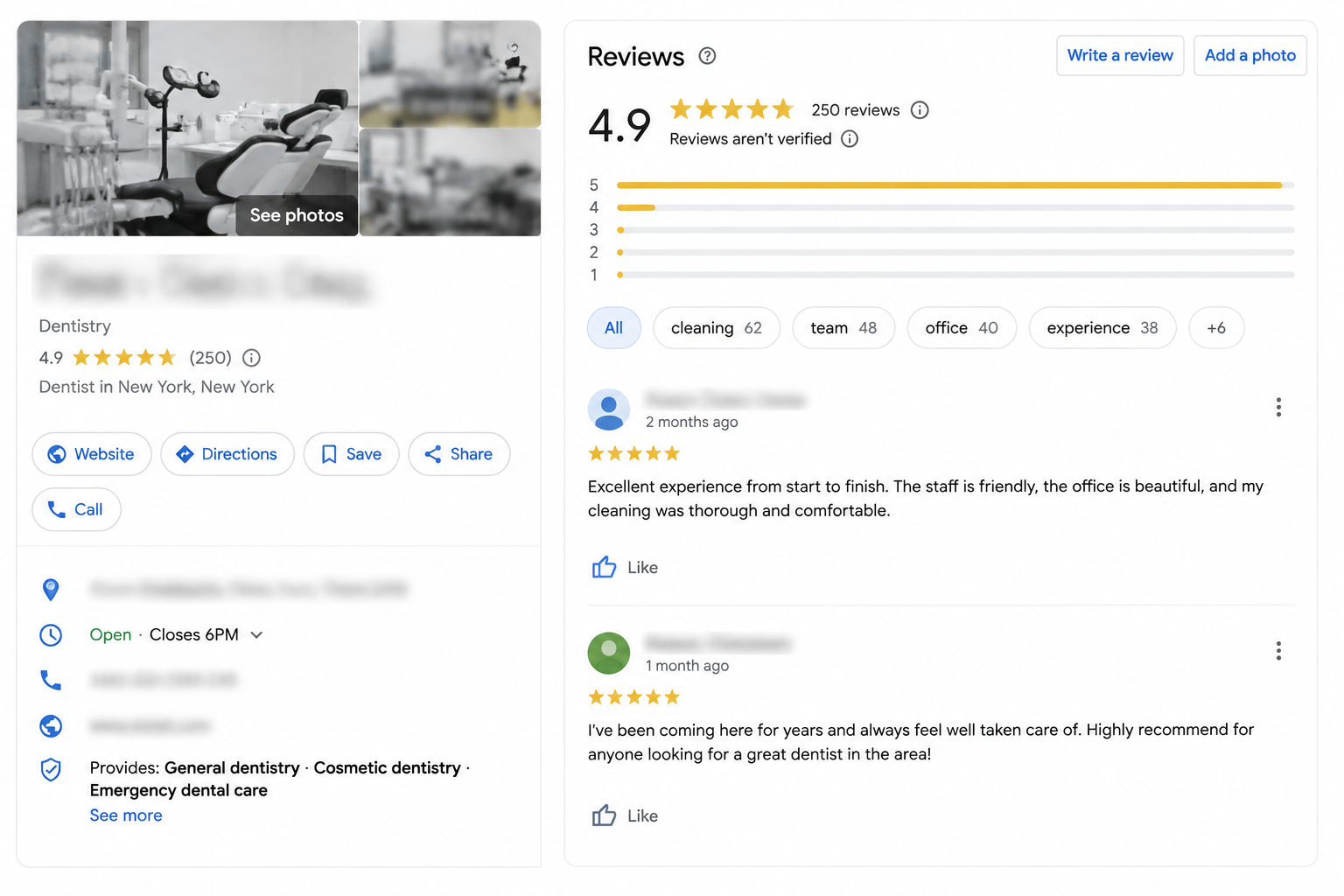
The dental practice already had strong patient reviews and an established local reputation. The problem was that most of its search visibility came from people who already knew the practice.
Prospective patients searching for treatments, symptoms, or a nearby dentist were much harder to reach.
The opportunity was to build organic visibility around the way patients actually search: by treatment, location, and problem.
Expanding beyond branded searches
Using Junia AI, the team mapped search demand across treatments, neighborhoods, and common patient questions.
Instead of expecting a handful of service pages to rank for everything, the practice created dedicated entry points for different types of searches.
Treatment-specific pages targeted people already looking for services. Neighborhood pages strengthened local relevance. Educational content reached patients who were still researching symptoms or trying to understand which treatment they might need.
This expanded the practice beyond branded and map-based discovery.
Building the content workflow with Junia AI
Junia AI helped the team research opportunities, organize keywords into relevant clusters, create content, optimize pages, and connect related resources through internal links.
Rather than treating every keyword as a new article, searches were grouped according to patient intent and mapped to the right type of page.
For example, a core dental implant page could be supported by content about cost, recovery, eligibility, and common patient questions.
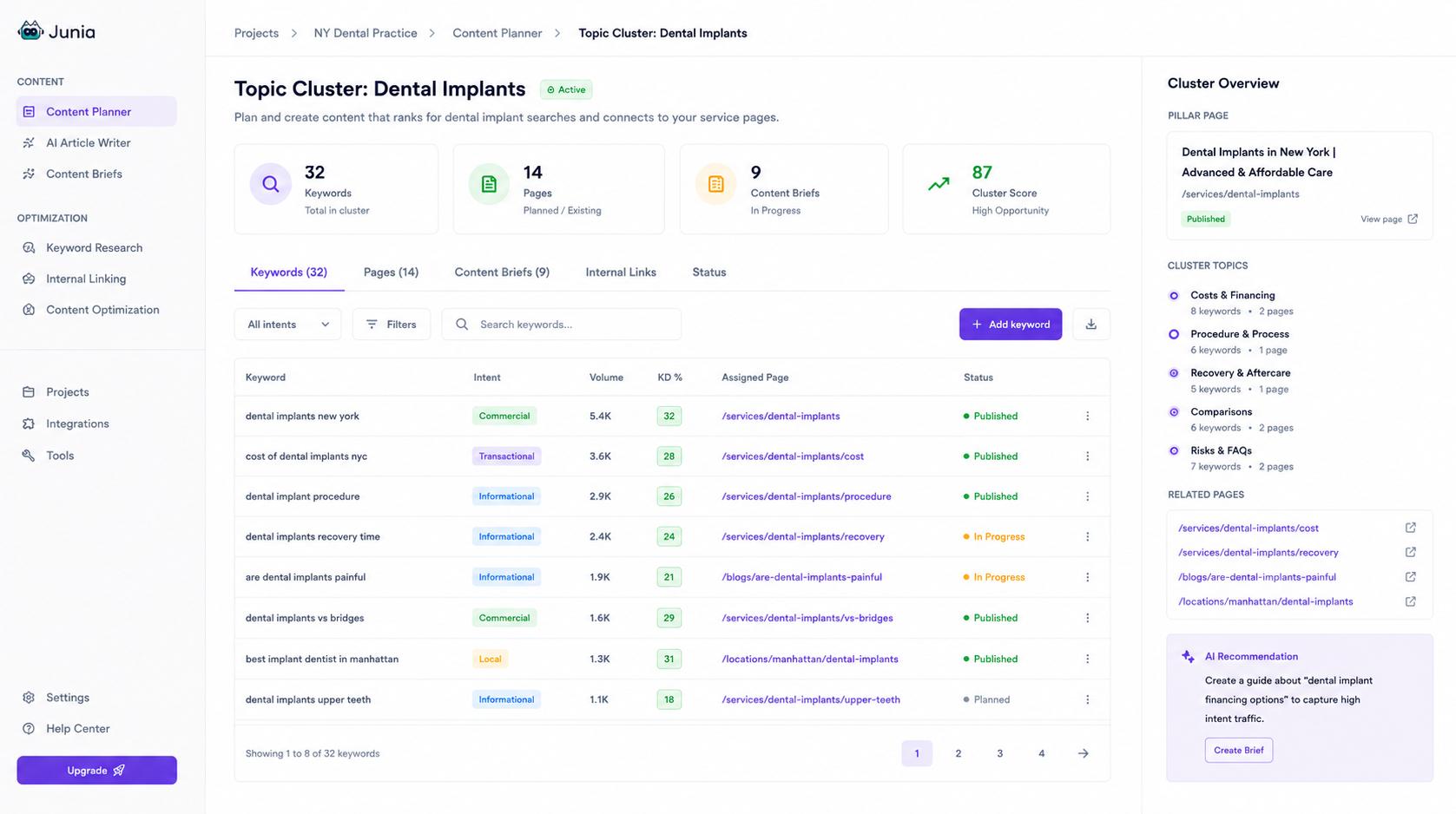
The result was a more connected content structure built around actual patient journeys.
Reaching patients before they knew which treatment they needed
One of the biggest opportunities came from searches that didn't mention a specific dental procedure at all.
Patients often begin with questions about tooth pain, sensitivity, damaged teeth, bleeding gums, or cosmetic concerns.
The practice published patient-focused content around these searches and connected those resources to relevant treatment pages.
That created a natural path:
Patient question → educational content → treatment page → practice
Instead of waiting for someone to know exactly which procedure they needed, the practice could become useful earlier in the decision process.
Strengthening treatment and neighborhood pages
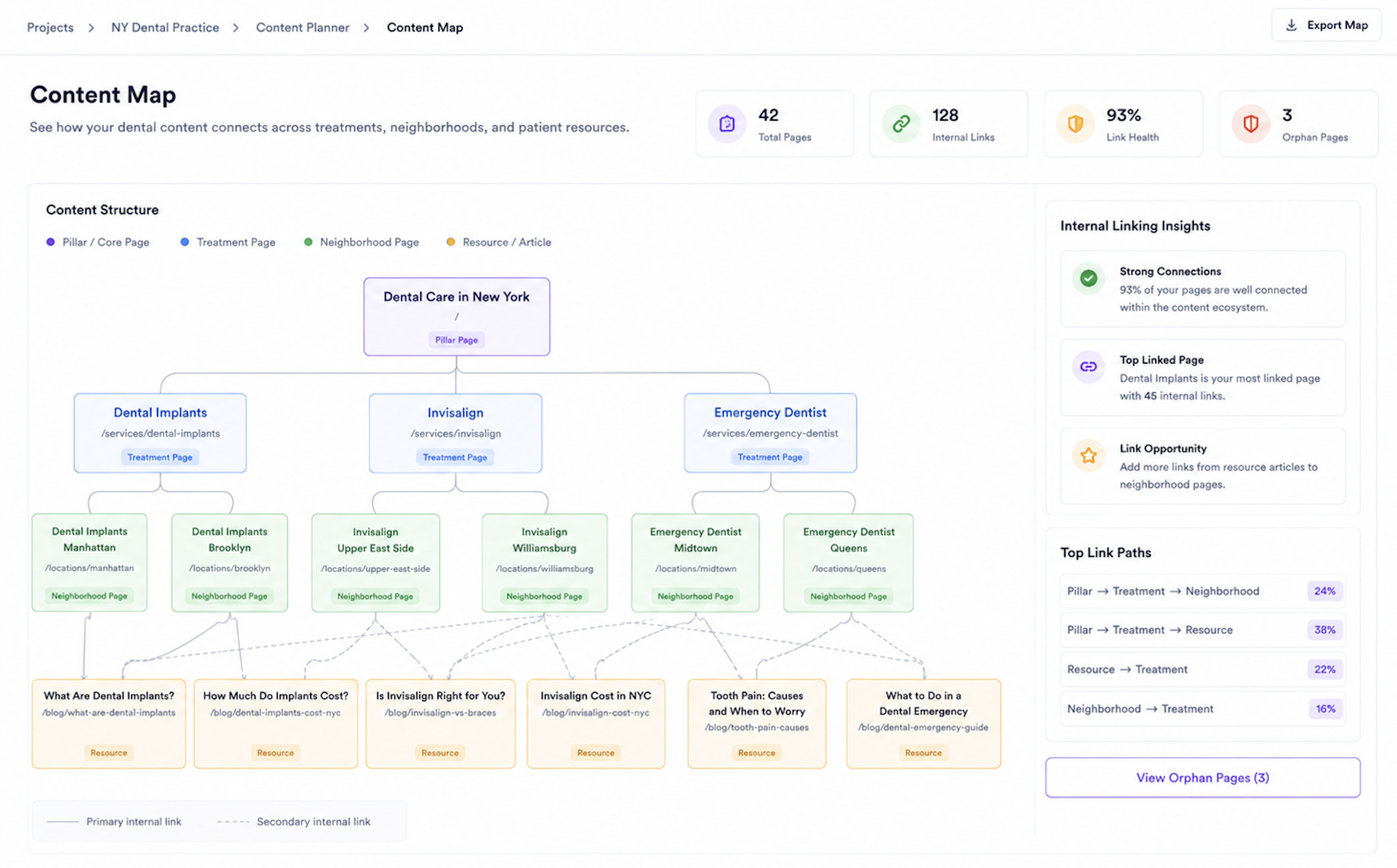
Treatment pages were expanded to answer the questions patients commonly have before choosing a dentist, while remaining focused on helping visitors understand the service and take the next step.
Neighborhood landing pages added another layer of local relevance.
Rather than creating large numbers of nearly identical location pages, the practice focused on useful pages connecting specific areas with relevant dental services.
Internal links then connected educational resources, treatments, and neighborhood pages into one local search ecosystem.
The results: from 11 to 470 organic leads per month
As the new structure matured, the practice began appearing for a much broader range of non-branded treatment, local, and patient-question searches.
Organic traffic increased 216%.
More importantly, organic leads increased from just 11 to 470 per month.
The campaign produced:
- +216% organic traffic
- 470 organic leads per month
- Broader visibility across treatments, neighborhoods, and patient questions
The practice was no longer dependent on someone already knowing the dentist's name before discovering the website.
Why it worked
The strategy matched content to the different ways patients search.
Some patients knew the treatment they wanted. Others searched for a nearby provider. Many started with nothing more than a symptom or question.
Junia AI helped the practice build content for each stage and connect those pages into a coherent patient journey.
Instead of treating SEO as a collection of blog posts, the practice built an organic discovery system around the problems its patients were already searching for.
What the team used
What they did with Junia
- Built treatment-specific service pages
- Created neighborhood landing pages
- Published patient-focused question content
- Optimized local entity and service signals


