

The challenge: reaching clients before they search for a law firm
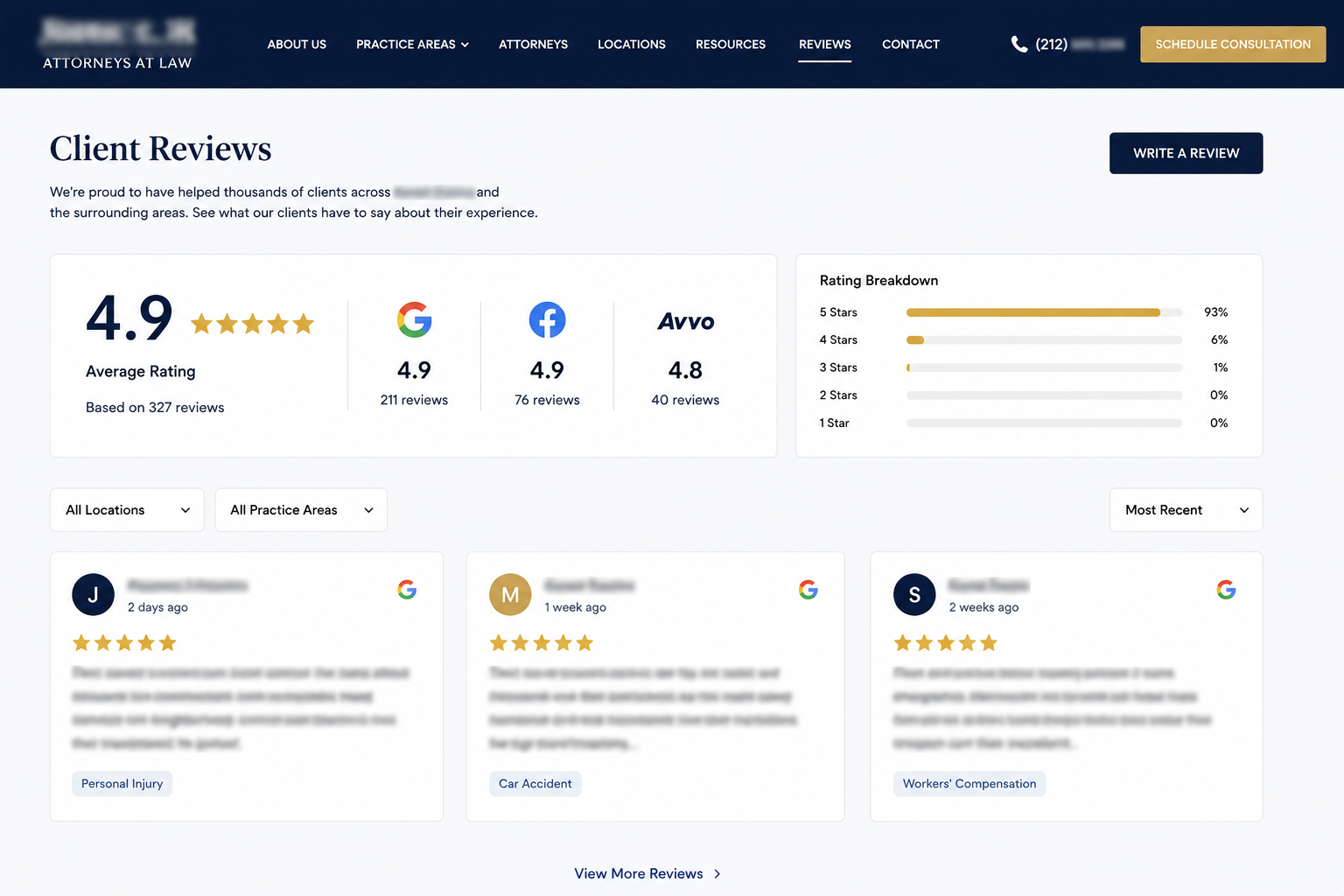
The firm already had established practice areas and a strong regional presence. The problem was that much of its organic visibility appeared too late in the client journey.
Prospective clients rarely begin by searching for a specific law firm. They search for the problem in front of them:
- What happens after a car accident?
- How long do I have to file a claim?
- Do I need a lawyer for this situation?
- What should I do before speaking with an insurance company?
The opportunity was to make the firm visible during those earlier searches while still creating a clear path toward a consultation.
Building the SEO strategy around real client questions
Using Junia AI, the firm mapped common client questions to relevant practice areas, locations, and stages of the legal journey.
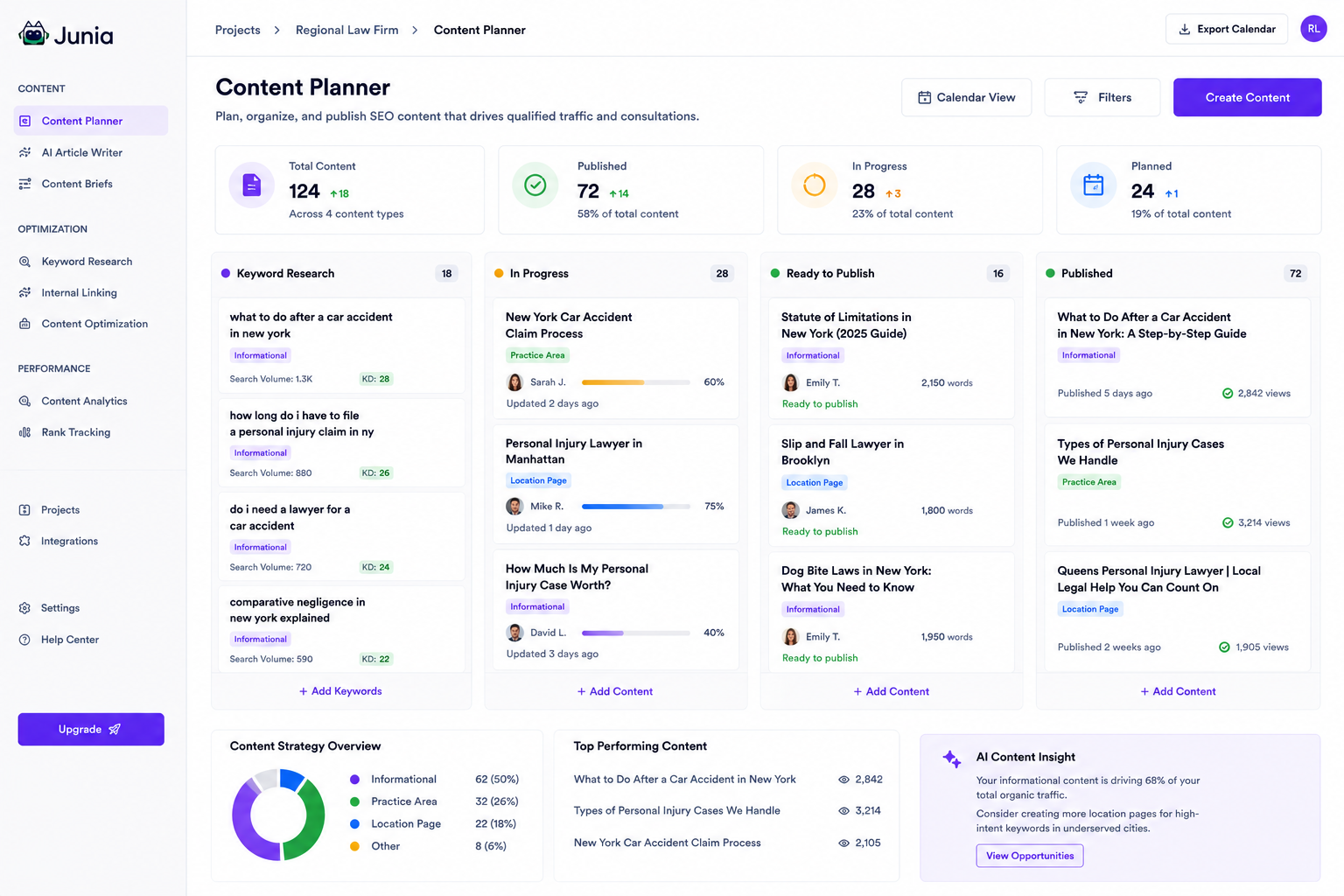
Instead of treating informational articles and service pages as separate strategies, they were organized into connected search clusters.
For example, an informational article answering a specific legal question could lead naturally to a related practice-area page, which could then direct a prospective client toward a consultation.
This gave the firm more opportunities to appear before someone was explicitly searching for a lawyer.
Expanding practice-area and city visibility
The firm also strengthened its core commercial pages.
Practice-area pages were expanded around the specific problems prospective clients were trying to solve, while city-specific pages helped establish relevance across the firm's service area.
Junia AI helped the team research topics, create content, optimize pages, and build internal links between related resources.
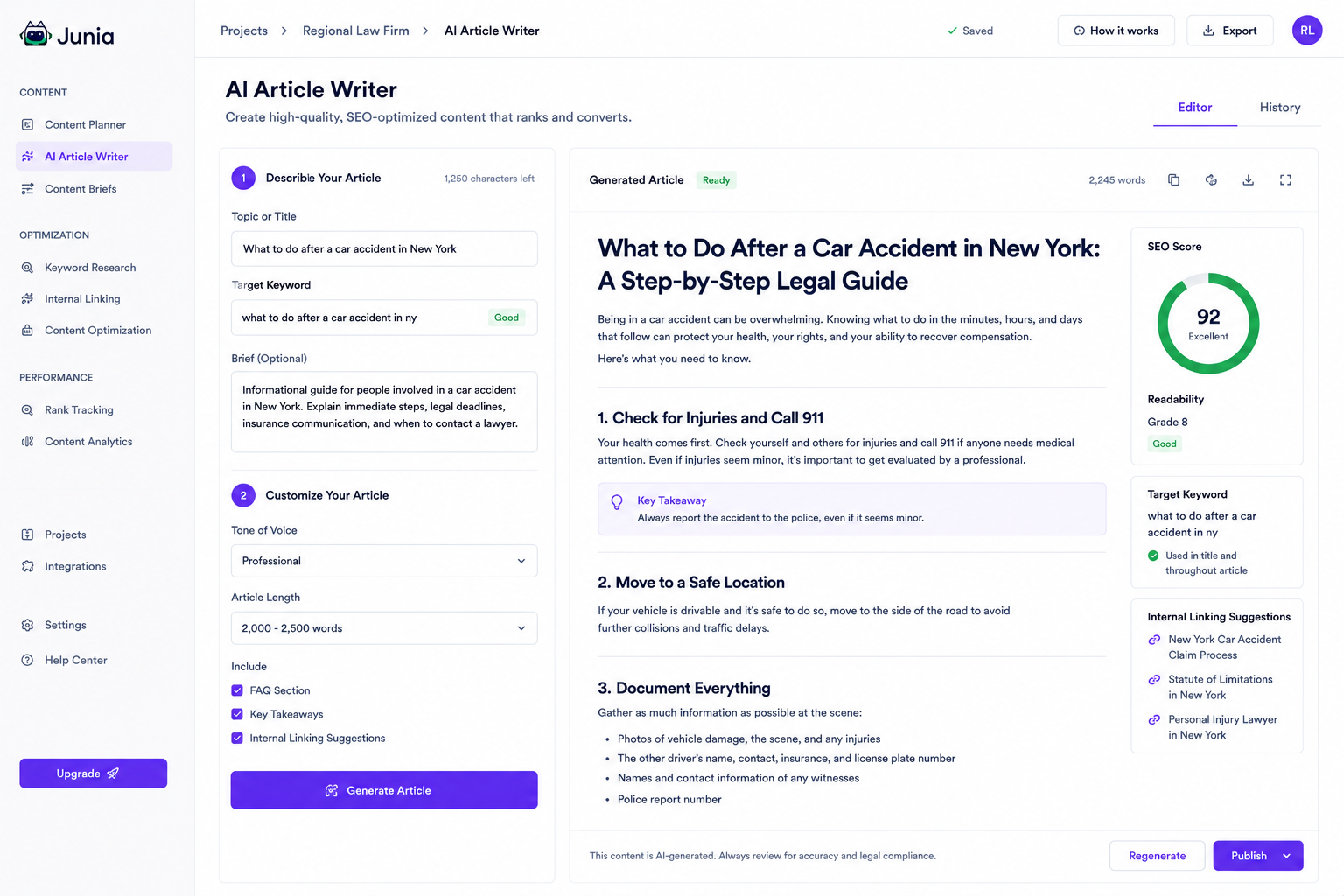
The result was a structure connecting:
- Client questions
- Legal guides
- Practice-area pages
- City-specific pages
- Consultation paths
Rather than publishing isolated articles, each new page supported a broader part of the firm's organic search strategy.
Connecting informational searches to consultations
Generating informational traffic was only useful if prospective clients could understand what to do next.
Relevant legal resources were therefore connected directly to the firm's practice-area and consultation pages.
Someone researching a legal problem could first find an educational resource, understand how the issue applied to their situation, explore the appropriate legal service, and then contact the firm.
This allowed the firm to target earlier-stage searches without separating SEO traffic from its actual business objective: generating qualified enquiries.
The results: 356% more qualified organic traffic
As the new content structure expanded, the firm gained visibility across a broader range of legal questions, practice areas, and local searches.
Qualified organic traffic increased 356%.
More importantly, the growth came from searches closely connected to the legal problems the firm actually handled.
The strategy produced three important outcomes:
- +356% qualified organic traffic
- Broader visibility across practice-area and local searches
- Clearer paths from informational content to consultations
Why the strategy worked
The firm stopped treating SEO as a collection of keywords and started organizing it around the questions prospective clients ask before hiring a lawyer.
Junia AI made it practical to research those questions, turn them into useful content, connect them with relevant practice areas, and maintain internal links across the growing site.
That created a simple organic journey:
Legal question → useful answer → relevant practice area → consultation
By becoming useful earlier in the decision process, the firm could reach prospective clients before they had chosen which law firm to contact.
What the team used
What they did with Junia
- Created practice-area pages
- Built city-specific legal pages
- Published legal question content
- Improved consultation conversion paths


