
Black Friday SEO Checklist: What to Fix Before BFCM

Thu
AI SEO Specialist, Full Stack Developer

What to fix before BFCM, in order
Black Friday SEO is a calendar problem. Shoppers search earlier every year, paid clicks get more expensive, and the stores that already have a sale hub, Merchant listings, and a working Google Business Profile pick up the easy rankings while everyone else is still arguing about banner copy.
I would not try to "dominate" Black Friday from a blank site in the last 72 hours. I would pick the pages that can actually convert, get them indexed, and stop inventing extra URLs.
Work in this order:
- Keywords: Map deal, category, and gift queries to pages you already have (or one hub you can finish).
- On-page: Titles, H1s, offer terms, and snippets that match what the SERP already shows.
- Feeds and local: Merchant listings and Google Business Profile details, if you sell products or have stores.
- Tech: Speed and mobile on those money pages, not a homepage redesign.
- Measurement: Search Console and analytics set up before the spike, so you can read the week after.
| Window | Do this | Skip this |
|---|---|---|
| 6–8 weeks out | Keyword map, one BFCM hub, Merchant feed audit | A new blog for every SKU |
| 4 weeks out | On-page titles, internal links, GBP hours and posts | Rewriting every product description |
| 2 weeks out | Speed, mobile, crawl/index checks in Search Console | Last-minute site migrations |
| 1 week out | Stock language, shipping cutoffs, CTA tests | Publishing 50 thin “deal” URLs overnight |
| Event week | Update prices and hours; watch GSC coverage | Inventing new landing pages the night before |
1. Map Black Friday keywords to pages you can rank

A solid BFCM SEO strategy helps you show up before shoppers are ready to buy, not after paid campaigns have already driven costs up. Organic visibility matters here because Black Friday pages, category pages, and gift-focused content often compete for the same buyers at the same time.
When you target terms like "Black Friday deals Canada" or more specific product queries, you give shoppers a clear path from search results to your offer pages. That means better-qualified traffic and less reliance on last-minute discounts alone.
The core work usually comes down to two things: choosing the right keywords and making sure your most important pages deserve to rank for them.
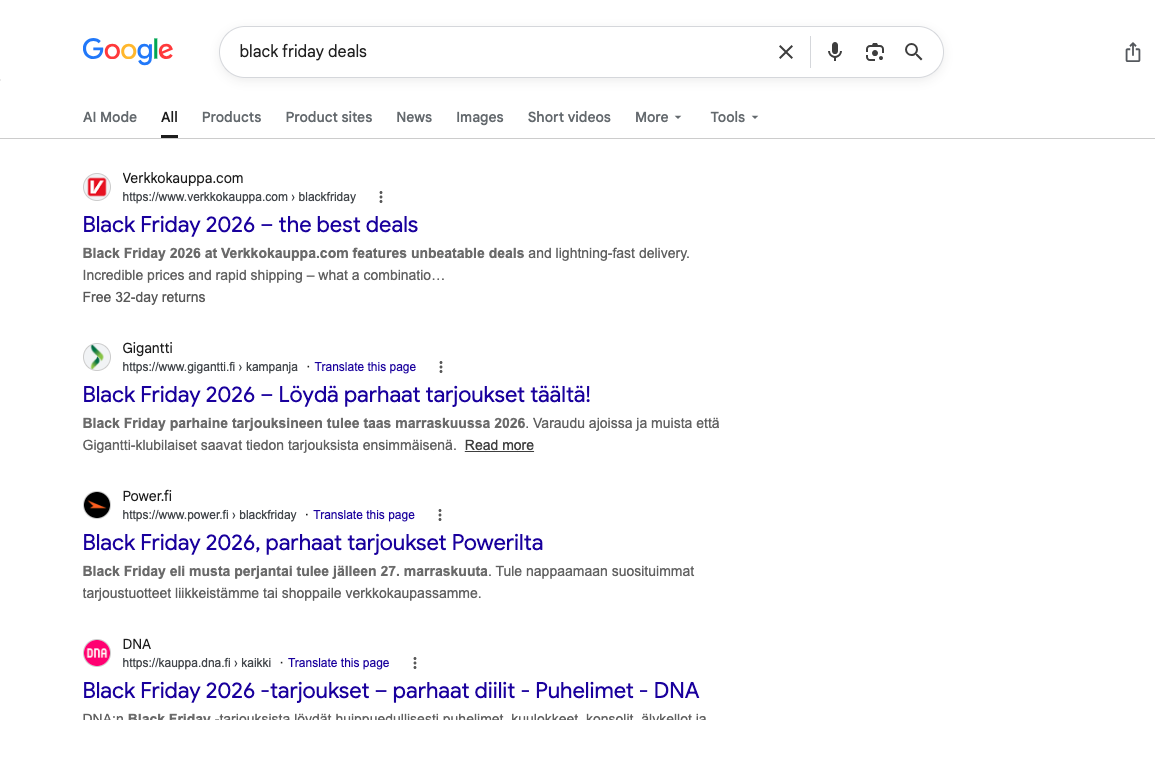
Retailers that rank here usually did the work weeks earlier: a dedicated /blackfriday hub, clear sale language in the title, and a page Google can recrawl as prices change.
Keyword Research and Optimization
Keyword research is the foundation of any strong SEO strategy. For Black Friday campaigns, the goal is to find terms with clear buying intent, then map them to the pages most likely to convert. In practice, that usually means balancing broad seasonal terms with product-specific and category-specific queries.
- Identify high-intent terms: Use Junia AI's AI keyword research tool, Google Keyword Planner, SEMrush, or Ahrefs to find seasonal phrases tied to deals, product categories, and shopping urgency.
- Separate broad and specific keywords: Broad terms like "Black Friday deals" can support hub pages, while more specific searches such as "men's jackets Black Friday sale" belong on category or product-focused landing pages.
- Check competition and timing: Some seasonal keywords are difficult to rank for late in the cycle. Publishing and updating pages early gives you more time to get indexed and build momentum.
- Trim the list to pages you can actually support: Focus on the keywords that fit your strongest categories, best offers, and available inventory instead of chasing every seasonal variation.
On-Page SEO Optimization
On-page SEO helps search engines understand what each Black Friday page offers and why it should rank. It also helps shoppers confirm, quickly, that they landed on the right promotion.
- Title tag: Put the main keyword near the front and make the offer specific. If you need help tightening titles, review these tips on writing meta titles for SEO.
- Meta description: Use the snippet to explain the offer, timing, or category focus in one clear sentence. This guide on how to write the perfect meta description is useful when your snippets feel generic.
- Headings and page structure: Use headings to separate deals, categories, shipping details, deadlines, and FAQs so the page is easy to scan.
- Body copy: Work keywords into the copy naturally, especially near the top of the page, but keep the language shopper-focused rather than repetitive.
- URLs and image alt text: Keep URLs short and descriptive, and use alt text that describes the image clearly instead of stuffing terms.
The goal is not just to mention Black Friday keywords everywhere. It is to make each page easier to understand, easier to click, and easier to convert.
Creating Dedicated Landing Pages for BFCM Promotions
Dedicated Black Friday and Cyber Monday landing pages give you one clear place to rank, update offers, and drive conversions. Instead of scattering seasonal promotions across multiple pages, build a focused BFCM hub that matches the search intent behind your target keywords.
Use AI Website Builders to Move Faster

Using an AI website builder can speed up the process of creating and iterating on campaign pages, especially when you need multiple variants for different product categories or offers.
What Strong BFCM Landing Pages Should Include
A high-converting Black Friday page usually needs a few basics:
- A headline that makes the offer obvious
- Clear discount language and sale terms
- Product or category links close to the top of the page
- Strong visuals that support the offer
- A visible call to action
- Mobile-friendly layout and fast load times
You should also work your target keywords into the title, headings, copy, and metadata without making the page sound forced.
Optimizing Landing Pages for Performance and Conversions
Optimization is more than just adding a few keywords. Focus on the basics that affect both rankings and sales:
- Clear call to action: Make the next step obvious.
- Fast load time: Compress images, reduce unnecessary scripts, and test page speed before launch.
- Mobile usability: Make sure offer banners, filters, and CTA buttons work well on phones.
- Metadata: Use a descriptive title and meta description that match the offer and search intent.
Done well, dedicated landing pages can support both rankings and revenue throughout the BFCM period.
Do not publish 50 thin deal pages the night before. Google still has to crawl and understand them. I have watched teams dump near-duplicate “TV deal / laptop deal / headphone deal” URLs on Wednesday and then wonder why none of them ranked on Friday. Update the hub, the category pages, and the feed. Leave the URL explosion for next year, when you have time to make each page distinct.
Content Promotion Strategies for Maximum Visibility
Content Marketing: Driving Organic Traffic
For a successful Black Friday SEO strategy, content promotion matters almost as much as the content itself. Publishing a deal page is only the start. You also need a distribution plan that helps search engines discover the page early and helps shoppers revisit it as offers change. That usually means combining organic content, internal linking, and social promotion instead of relying on one channel.
Content marketing is a powerful tool in your SEO arsenal. When you regularly publish useful, well-structured content, you give search engines more relevant pages to index and shoppers more reasons to stay engaged. During BFCM, that content should support the offers you want to rank, not sit separately from them.
- Blog posts: Highlight your best deals in supporting articles, then add internal links to your sale hub, category pages, and product pages. Keep the writing scannable; blog readability improvements matter more here than another 800-word gift roundup.
- User-generated content: Ask customers to share what they bought or picked up. Real photos and short reviews do more for trust during BFCM than another brand graphic.
- Videos: Product demos, unboxing clips, and pickup walkthroughs often explain an offer faster than a wall of sale copy.
Promoting Content Through Social Media Channels
Social media is honestly one of the best places for promoting your Black Friday content. It lets you reach a bigger audience and talk directly with potential customers, kind of in real time. Having a well-planned Black Friday social media strategy is super important if you want to get the most out of your holiday marketing efforts.
- Create Shareable Content: Make posts that people will actually want to share with their friends. Stuff that’s helpful, funny, or just really appealing. This way your reach goes way beyond just your own followers.
- Use Relevant Hashtags: Popular Black Friday hashtags like #BlackFridayDeals or #BFCM can help your posts get seen by more people who are already searching for deals. It’s a small thing but it really helps visibility.
- Engage With Your Audience: Reply to comments and messages as quickly as you reasonably can. It shows you care, and it can improve customer relationships and build long-term brand loyalty. People like feeling heard.
- Schedule Your Posts: Use scheduling tools like Hootsuite or Buffer to plan your content ahead of time. This keeps your posting consistent and lets you match your posts with the most important dates in your holiday marketing calendar.
If you are running store events, early-access promos, or limited-time launches, an event promotion generator can also help you create supporting copy faster. The key is to keep the messaging aligned across search, email, and social so shoppers see the same offer wherever they find you.
2. How to Use AI Writing Tools for Better Content Creation during Black Friday
.png?token=eyJhbGciOiJIUzI1NiIsInR5cCI6IkpXVCJ9.eyJ1cmwiOiJ1c2VyLWdlbmVyYXRlZC1pbWFnZXMvMThkMzIyMTQtYWZlNC00YmVjLTg2NTItOGU2ZDFiMDYyZTE5L1NjcmVlbnNob3QgMjAyMy0xMi0xNiBhdCAyMi4yMi40MCAoMSkucG5nIiwiaWF0IjoxNzA5OTM4OTQ0LCJleHAiOjIwMjUyOTg5NDR9.Afns2gWiFRnLHGoDvKVCwF9MmFCFYpjsfUuvPzxKjg8)
In the world of SEO, AI writing tools have pretty much become a must have for creating content that both your audience and search engines actually like. Especially around Black Friday, AI is kind of changing how content creation works. It helps brands put out strong, persuasive copy that really matches the vibe of their campaigns and also keeps people interested while they’re scrolling through lots of offers.
One big trend right now is using AI-generated copy that really connects with specific target audiences. So the messages feel more personal and fit their usual preferences and shopping habits. On top of that, automated keyword research makes it way easier for marketers to quickly find trending search terms related to Black Friday deals, so their content has a better chance of ranking higher in search engine results.
Also, AI tools help a lot with campaign personalization. They analyze consumer data and create dynamic content that kind of talks directly to what each person needs or is curious about. This level of customization doesn’t just improve the user experience, it also tends to boost conversion rates, since shoppers are more likely to click and buy when the offers feel actually relevant to them.
Why You Should Consider Using AI Writing Tools
- They help you draft campaign copy, FAQs, and supporting content much faster.
- They make it easier to keep keyword coverage natural instead of forcing phrases into every paragraph.
- They scale better when you need variants for multiple categories, audiences, or landing pages.
- They surface optimization ideas while you edit, which speeds up review cycles before launch.
What AI Writing Tools Can Do for Your Black Friday Strategy
- Generate optimized articles: Tools like Junia.ai and Writesonic can put together pretty detailed articles for you. They add your targeted keywords in the right spots, like in headers, meta tags, and all through the content body. So you don’t have to worry as much about where to place things and all that.
- Optimize your existing content: AI SEO tools like SurferSEO and Frase look at your text and compare it with top-ranking pages. Then they give you suggestions on how to boost its SEO performance. Kind of like a checklist of what you’re missing or what you can tweak a bit.
- Save time and effort: When you use AI writing tools, you can automate a bunch of the boring parts of content creation, like keyword research and optimization. That way you can focus on other important tasks you’ve been putting off. For example, Junia's paraphrasing tool can rephrase your existing content to make it more engaging and more SEO-friendly, without you having to rewrite the whole thing from scratch.
How to Make the Most of AI Content Creation Tools for Black Friday
- Plan your content: First, just sit down and decide what kind of topics and keywords you actually want to talk about for Black Friday. Think about what your audience cares about, what you’re selling and, yeah, what might get clicks.
- Use the right tool: Pick an AI content creation tool that really fits your needs and your budget too. Some tools do a lot, some are simpler, so take a bit of time to compare before you jump in.
- Customize the output: Adjust the generated content according to your brand voice and style guidelines. Don’t just copy and paste it as is. Tweak the wording, tone and little details so it actually sounds like you and not just some robot.
- Review and optimize: Go back and read everything carefully. Fix any weird sentences, add missing info and make small improvements so the content is clear, helpful and kinda interesting. Maybe run through it one more time, just to be sure.
- Publish and promote: After you’re happy with how it looks, publish the content on your website. Then share it around through different channels like email, social media or wherever your audience hangs out, so people can actually see it.
Where AI actually saves time on BFCM copy
- Efficiency: AI writing tools like ChatGPT help you crank out content way faster and more efficiently, so you can actually focus on other important parts of your Black Friday campaign instead of just writing all day.
- Quality: Because of their advanced algorithms and all that smart stuff, these tools such as Claude can create high-quality content that fits SEO requirements and still makes sense for real users reading it.
- Scalability: If you’ve got a huge inventory of products or services to promote and it feels like too much, AI tools like Gemini can help you generate content for each item without totally overwhelming your team.
- Competitiveness: By using AI writing tools, you can stay ahead of your competitors by putting out better content that has a higher chance of ranking well in search results.
Incorporating AI writing tools into your Black Friday strategy can give you a pretty big advantage for content creation and optimization. So, honestly, why not try them out and see what kind of positive impact they can have on your campaign?
3. Ensure Smooth Performance During Black Friday Rush with Technical SEO Optimization
Technical SEO matters more during BFCM because traffic spikes expose weak pages fast. If your store is slow, hard to navigate on mobile, or difficult for search engines to crawl, rankings and conversions both suffer.
Optimizing Site Speed for Better User Experience
Site speed affects both rankings and revenue. During a competitive shopping window, even small delays can reduce product-page engagement and make it harder for seasonal landing pages to perform.
- User experience: Slow pages increase bounce risk, especially when shoppers are comparing multiple stores.
- Search visibility: Google considers page experience and performance signals when evaluating which pages deserve more visibility.
Before Black Friday goes live, focus on the fixes that usually have the fastest payoff:
- Compress images: Reduce the weight of banners, product images, and promotional graphics.
- Trim unnecessary scripts: Review popups, countdown timers, and third-party tags that slow down seasonal pages.
- Enable caching and CDN delivery: These changes usually help repeat visits and traffic surges the most.
- Test the actual landing pages: Homepages are not enough. Check the collection, product, and promotion pages you expect to rank.
If new BFCM pages are not appearing in search quickly enough, it is also worth checking your internal linking and using website indexing tools to speed up discovery.
Prioritizing Mobile Optimization for the Growing Number of Mobile Shoppers
Mobile optimization is not optional for Black Friday. A large share of seasonal traffic comes from phones, and shoppers will not fight through broken filters, hidden CTAs, or unreadable layouts just to claim a discount.
Here are some tips to make sure your site is mobile-friendly:
- Responsive Design: Make sure your website's layout adjusts smoothly to different screen sizes, so it looks good and is easy to use on any device. Big screens, tiny screens, whatever.
- Touch-Friendly Navigation: Buttons and links should be spaced out enough and large enough so people can tap them without zooming in or hitting the wrong thing. Nobody likes that.
- Fast Mobile Load Times: Mobile users often have less reliable internet connections than desktop users, so pages that load slowly can really hurt you. Aim for lightning-fast mobile load times to keep these customers on your site instead of backing out.
The same mobile fixes that help during BFCM usually improve your conversion path all year, especially for category pages and landing pages that already attract search traffic.
Quick Mobile SEO Checklist Before BFCM
Before Black Friday traffic spikes, review your money pages on mobile and check these basics:
- Layout: Product grids, filters, sticky banners, and checkout buttons should work cleanly on smaller screens.
- Speed: Compress images, defer non-essential scripts, and test your top landing pages on a real phone connection.
- Navigation: Keep menus simple and make category, deal, and cart paths easy to reach in a few taps.
- Readability: Use short paragraphs, clear headings, and buttons large enough to tap without zooming.
- Conversion elements: Test coupon fields, countdown timers, and shipping offers so they help rather than distract.
If your Black Friday landing pages are struggling on mobile, it is worth reviewing dedicated SEO for landing pages practices before launch.
4. Local SEO Strategies to Attract Nearby Shoppers on Black Friday
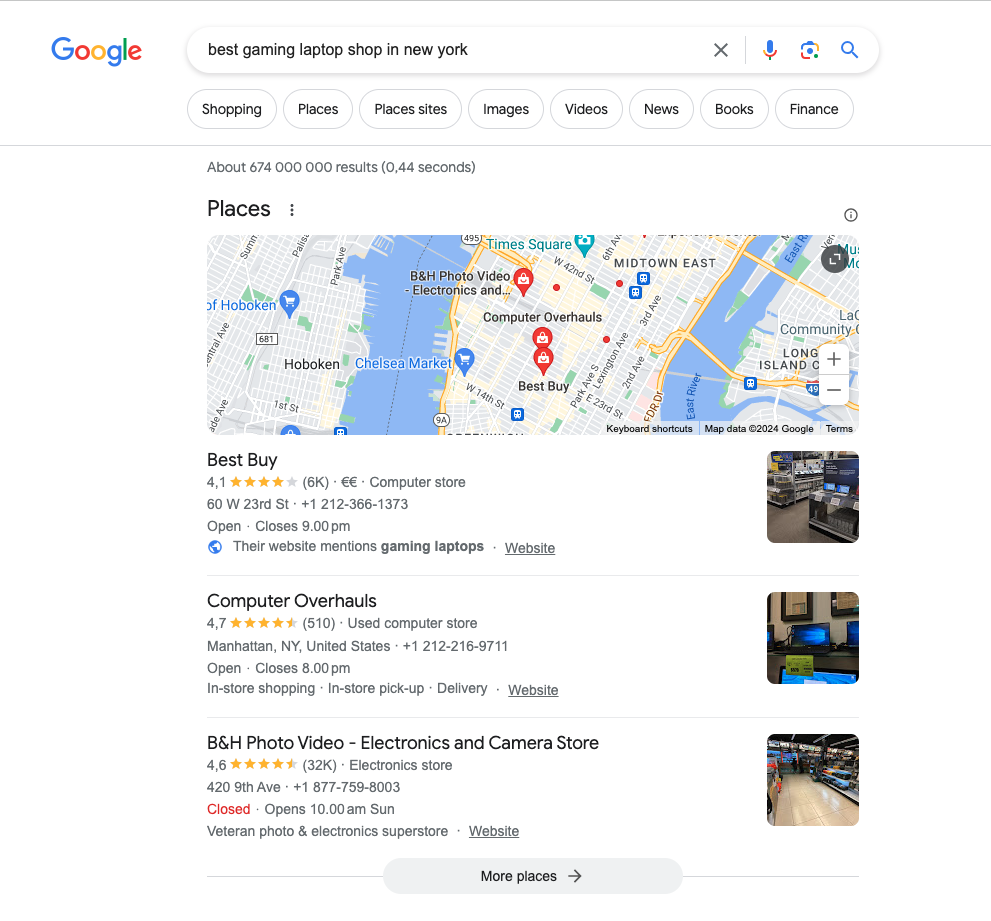
Effective local SEO strategies matter even more during Black Friday when shoppers want nearby inventory, faster pickup, or store-specific promotions. If you operate physical locations, local visibility can support both sales and convenience-driven searches such as "Black Friday pickup near me" or "same-day deals in [city]."
The goal is not just to appear in local results. It is to connect each store, deal page, and service area with the keywords shoppers actually use when they are close to making a purchase.
Optimizing Your Google My Business Listing for Black Friday Promotions
One of the highest-leverage assets here is your Google Business Profile. It controls how your store appears in Search and Maps, and it often becomes the first touchpoint for nearby shoppers comparing Black Friday options.
To optimize your Google Business Profile for Black Friday promotions, focus on the details that help nearby shoppers act fast:
- Update core business details: Confirm hours, phone numbers, landing-page URLs, and pickup or delivery information.
- Publish promotion posts: Highlight sale timing, popular categories, or store-specific offers with clean visuals and clear wording.
- Refresh photos: Add recent storefront, product, or in-store display photos so the listing looks active.
- Manage reviews and Q&A: Respond quickly and answer common questions about returns, pickup windows, or stock availability.
By keeping your listing current, you make it easier for nearby shoppers to see that your store is active, trustworthy, and worth visiting during the BFCM rush.
Incorporating Location-Based Keywords in Your Website Content
Your business profile is only one part of the picture. You also need location-based keywords in your site content so your landing pages, collection pages, and store pages reinforce the same local intent.
Geo phrases shoppers actually type
Start with the phrases shoppers already use when urgency and location matter, such as "your city Black Friday deals," "product category near me," or "same-day pickup in your city." The best local terms usually combine geography with a real purchase need.
Ways to Integrate Location-Based Keywords
Here are practical ways to work those phrases into your site content:
- Title Tags & Meta Descriptions: Update your title tags and meta descriptions with location-centric keywords to boost local visibility in SERPs (Search Engine Results Pages). Doing this helps show search engines and users that your business has real geographical relevance.
- Website Content: Try adding local keywords naturally into the main body of your site's copy, like in blog posts and product descriptions. When you do this right, search engines can recognize that your content has a local focus and are more likely to show it to nearby shoppers.
- URLs: If it makes sense, think about putting geo-specific terms in your URLs too. This can help your visibility and also make it easier for users to understand where they’re going on your site, kind of like a clearer path.
- Image Alt Text: Don’t forget your images when you’re working on local SEO. Adding location-based descriptors in image alt text gives you another way to show up in search and get a little extra visibility.
This works best when your local terms support real pages with real value. A store page that only repeats a city name in the title will not outrank a page that lists hours, pickup rules, and what is actually in stock.
5. Tracking and Analyzing Your Black Friday SEO Efforts
Tracking matters because Black Friday SEO only becomes useful when you can connect rankings and traffic to real sales outcomes. After BFCM, review what drove discovery, what converted, and which pages deserve to stay live for next year.
Monitoring Performance with Google Analytics: Key Metrics to Track
Google Analytics can surface a lot of noise, so focus on the metrics that explain both search visibility and commercial impact:
- Organic traffic: Measure whether your seasonal pages actually brought in more search visits.
- Landing-page performance: Check which deal pages, category pages, and gift guides served as the main entry points.
- Conversion rate: Separate traffic growth from actual business impact by reviewing purchases, signups, or offer clicks from organic sessions.
- Mobile behavior: Compare bounce, engagement, and conversion rates on phones versus desktop.
- Revenue and assisted conversions: Look beyond last-click attribution to see whether SEO helped introduce or support high-value purchases.
Those numbers become much more useful when you compare them with pre-sale baselines and last year's seasonal performance.
If you sell products, pair Search Console with Merchant Center. Free listings only help if the products are eligible and the feed matches the live page. Google's own eligibility notes are the checklist I use before I trust Shopping or product results for BFCM traffic.
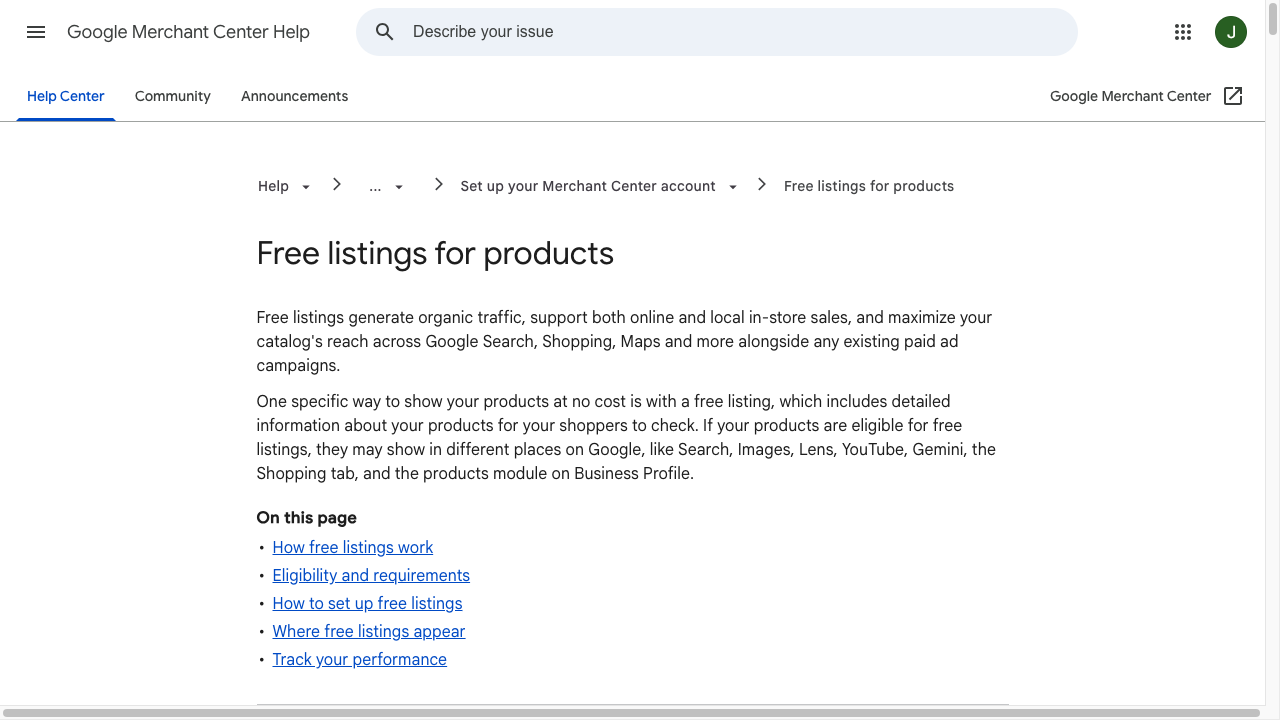
Google's Search Central walkthrough of Merchant listing eligibility is the supporting version of that same point: if the feed is incomplete, the landing page will not save you.
Google Search Central: Merchant listing experiences eligibility
Analyzing the Impact of Your SEO Efforts on BFCM Sales
One really important part of any Black Friday SEO strategy is actually tracking what you’re doing and looking at the results, so you can see how it affects your sales. Google Analytics is super helpful for this, since it gives you a ton of metrics and data that show how your website is doing and, like, what’s working and what’s just kind of there.
Tracking Conversions
One of the main metrics you want to pay attention to is conversions. You can track conversions for specific organic search efforts, so you can link real revenue back to your SEO strategies. For example, you can set up goals in Google Analytics to track when a user does something you want, like actually buying something after they click through from a certain landing page that’s optimized for Black Friday deals. Stuff like that gives you clear data about how successful your optimization work really is.
Revenue attribution after the sale
Revenue attribution is another big part of checking what happened after the event. A feature like Google Analytics’ Multi-Channel Funnels report helps you see the path people take before they buy. You can see if they first found your website through organic search and which exact search terms helped them convert in the end.
But also, just keep in mind, ongoing measurement and refinement in any SEO strategy is super important. The data you collect during the Black Friday period is not only for checking how you did right away, it should also be used to improve and tweak your future strategies too.
Recommended Tools and Metrics
Here are some recommended tools and metrics to keep an eye on:
- Google Search Console: Shows you how Google sees your site and how it’s performing in organic search results.
- SEO-specific metrics: Organic traffic, bounce rate, average session duration, pages per session, and top-performing content.
- Conversion-focused metrics: Conversion rate, total conversions, cost per conversion, and value per conversion.
These tools let you dig deeper into how your site is doing and give you useful insights that can guide how you plan your next campaigns.
Remember: SEO is not just a one-time thing. It’s more like an ongoing process where you keep adjusting based on performance data. Even when the Black Friday rush is over and things calm down, your work of tracking, analyzing, and improving your SEO strategies keeps going. That’s what really helps support the long-term success of your online business.
After BFCM: keep the pages that earned their keep
Voice search, AR try-ons, and “the future of e-commerce” are not your Thursday checklist. The useful leftover work is simpler: which pages still deserve to live in January, which Merchant attributes were missing, and which local hours you forgot to revert.
If you want one forward-looking task, it is conversational queries. People still ask phones and assistants for “cheap wireless headphones near me tonight.” Long-tail, specific product copy, and structured data help those answers more than a blog post titled “The Future of Black Friday.”
Consider these tactics:
- Long-tail, spoken phrasing: Match how people ask, not how marketers slogan.
- Complete product data: Title, price, availability, shipping, and returns in the feed and on the page.
- Structured data: Help Search understand products, FAQs, and local business details without inventing markup the page does not show.
AI personalization and AR demos can wait until the crawl errors are gone. Social commerce is useful when the offer, URL, and inventory already match. It is a distribution layer, not a replacement for the hub page.
A realistic BFCM SEO week
You do not need a new strategy. You need a short list you will actually finish: one hub, clean titles, a working feed or GBP, fast mobile money pages, and measurement you can read on Monday.
Take the checklist, cut it to the pages that can convert, and stop publishing thin deal URLs because a calendar reminder said “SEO.” That is the version of Black Friday SEO that still works when everyone else is shouting.