
Best Jasper AI Alternatives in 2026 (20+ Tools Tested)

Thu
AI SEO Specialist, Full Stack Developer

The best Jasper AI alternative depends on why you are leaving Jasper.
If the problem is long-form SEO content, I would start with Junia AI. If you want a flexible writing assistant without another marketing platform, ChatGPT is the simplest swap. If your team mostly needs short-form campaign copy, Copy.ai or Writesonic may fit better. And if your main issue is SEO optimization rather than writing, Frase or Surfer SEO makes more sense than another generic AI writer.
That distinction matters because Jasper is no longer just a blank-page writing tool. It is a marketing AI platform with brand voice, campaign workflows, knowledge assets, and team features. So a good replacement should not be judged by "Can it generate paragraphs?" Almost every AI tool can do that now.
The better question is: which tool gives you better output, workflow, SEO support, pricing, and control for your actual content process?
We reviewed more than 20 tools and narrowed the list to the Jasper alternatives that still make sense in 2026.
Quick Picks
| Best Jasper AI alternative | Best for | Why pick it over Jasper? |
|---|---|---|
| Junia AI | Long-form SEO and blog growth | Built around SEO-first articles, content workflows, brand voice, and publishing support |
| ChatGPT | Flexible drafting and research | Lower-friction, highly adaptable, and not locked into templates |
| Copy.ai | GTM and short-form marketing copy | Strong for sales copy, campaign ideas, and repeatable workflows |
| Writesonic | AI search visibility and multi-channel content | Useful if you want writing plus GEO/AI-search tracking in one platform |
| Frase | SEO briefs and content planning | Better for SERP research, outlines, and optimization than pure generation |
| Surfer SEO | On-page SEO optimization | Strong content scoring and SERP-based optimization layer |
| Rytr | Low-cost short-form writing | Cheap, simple, and good enough for lightweight copy tasks |
| Notion AI | Editing inside a workspace | Good if your team already plans, drafts, and organizes content in Notion |
| AI-Writer | Citation-backed article drafts | Useful for source-led drafts and simple publishing workflows |
| Anyword | Performance copy | Better fit for ads, landing pages, and conversion messaging |
| DALL-E 3, Midjourney, Leonardo AI | Image generation | Better image-focused options than Jasper's built-in image workflow |
Why People Look For Jasper Alternatives
Jasper is not a bad tool. It is fast, polished, and useful for teams that need on-brand campaign assets. The problem is fit. Many users do not need a full marketing AI platform; they need one of three things:
- better long-form SEO content
- lower monthly cost
- more control over prompts, research, editing, and publishing
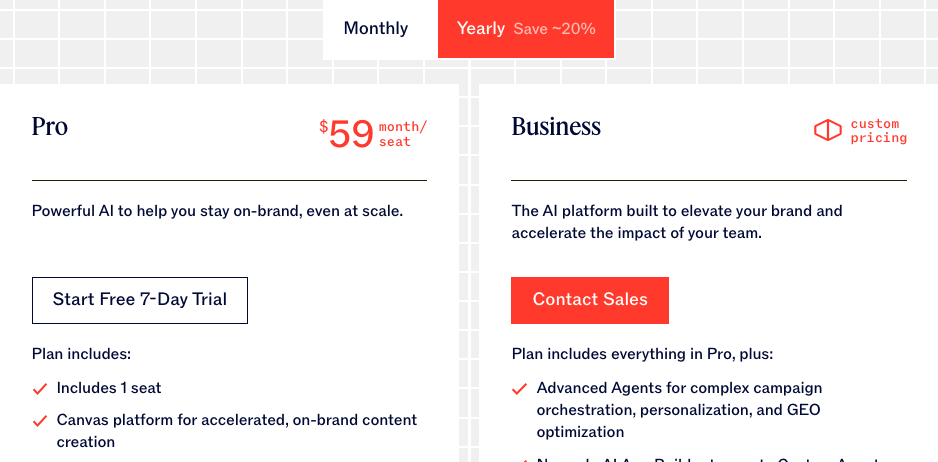
Jasper's current pricing page positions Pro as a per-seat plan with brand voice and knowledge asset limits. That can be perfectly reasonable for a team using Jasper every day, but it can feel expensive if you only need blog drafts, outlines, rewrites, or SEO content.
There is also the editing problem. AI-generated content still needs a human pass. Google says its systems reward helpful content made for people, not content made primarily to manipulate search rankings. If a tool gives you generic drafts that need heavy editing anyway, paying extra for a branded interface is hard to justify.
For SEO teams, the bigger question is whether the tool helps with search intent, content depth, internal links, structured outlines, and post-publish updates. If you are building a blog strategy, a general AI copywriter is often less useful than a dedicated AI article writer or a workflow built around search.
| Before switching from Jasper, check... | Why it matters |
|---|---|
| Long-form article depth | Some tools write short copy well but struggle with complete SEO articles. |
| Research and SERP support | The replacement should help with intent, competitor coverage, and source quality. |
| Internal linking and publishing | A lower-cost writer can still create more manual work if it does not fit your workflow. |
| Editing effort | The cheapest output is not cheaper if every draft needs a full rewrite. |
How We Chose The Alternatives
I looked at each tool through the lens of a real content workflow, not just the feature list. A long list of templates does not matter much if the draft still needs to be rebuilt before publication.
| Choose this if… | Better pick | Skip if… |
|---|---|---|
| Long-form SEO publishing | Junia AI | You only need chat experiments |
| Brand governance at team scale | Stay on Jasper / similar | Budget is the constraint |
| SEO optimization layer | Surfer / Frase | You still lack writers/editors |
| Cheap short-form | Rytr | You need full article ops |
Don’t switch tools to skip editing. A cheaper plan that ships thin pages is not a strategy.
Does Google see automatically generated content as a bad thing?
The main criteria were:
- Output quality: Does the draft need a normal edit or a full rewrite?
- SEO fit: Does the tool help with search intent, headings, entities, internal links, and optimization?
- Workflow fit: Is it better for blogs, ads, emails, product descriptions, research, or editing?
- Pricing: Is the starting price fair for what most users actually get?
- Control: Can you steer tone, structure, brand knowledge, and sources?
- Scalability: Can teams reuse the process without rebuilding every prompt manually?
Best Jasper AI Alternatives At A Glance
| Tool | Best for | Starting price signal | Main strength | Main limitation |
|---|---|---|---|---|
| Junia AI | SEO content teams | Lower-cost plans available | Long-form SEO content and publishing workflows | Less relevant if you only need short ad copy |
| ChatGPT | Flexible writing | Free tier, paid plan available | Open-ended prompting and research support | Needs manual workflow setup |
| Copy.ai | GTM copy | Chat plan from $29/month | Sales and marketing workflows | Big jump to higher workflow tiers |
| Writesonic | AI search and content | Starter pricing from $79/month annually | GEO and AI-search visibility features | Expensive if you only need article drafts |
| Frase | SEO briefs | Plans from $39/month | SERP briefs and optimization | Writing still needs polish |
| Surfer SEO | SEO scoring | Paid plans | Content score and SERP optimization | Not a full Jasper replacement |
| Rytr | Budget copy | Low-cost/free tiers | Fast short-form output | Weak for deep long-form content |
| Notion AI | Workspace editing | Notion add-on pricing | Drafting inside existing docs | Not SEO-first |
| AI-Writer | Citation-led drafts | Paid plans | Source-backed article generation | Less flexible brand workflow |
| Anyword | Performance marketing | Paid plans | Predictive copy scoring | Not ideal for SEO blog scale |
1. Junia AI
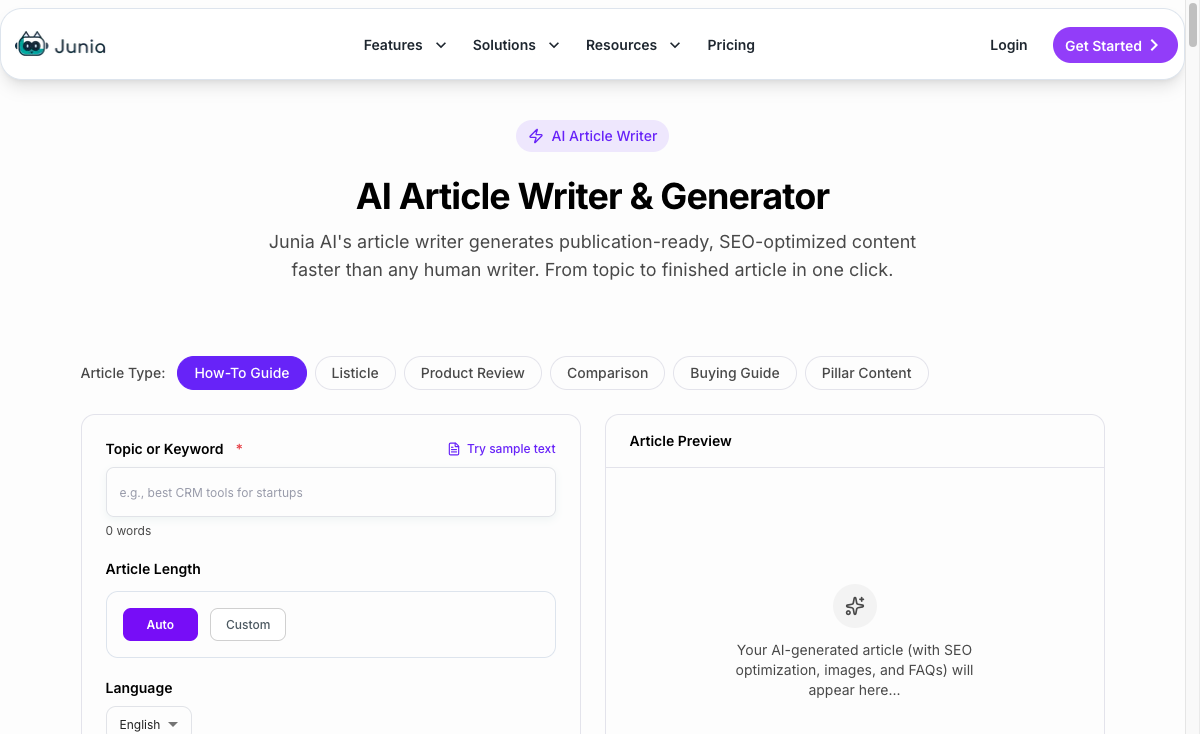
Junia AI is the best Jasper AI alternative if your main goal is publishing long-form content that can compete in search.
Jasper can write campaign copy, social posts, product descriptions, and blog drafts. Junia is more focused on the full SEO content process: generating long-form articles, improving topical coverage, handling content structure, and supporting publishing workflows. That makes it a better fit for bloggers, SaaS teams, affiliate publishers, and SEO teams that care more about organic traffic than generic marketing templates.
The biggest difference is intent. Jasper starts from marketing content. Junia starts from the job of building a page that can rank, answer the query, and support a broader site strategy. That focus matters when the goal is not just producing a draft, but producing a page worth editing, linking, updating, and publishing.
Junia is strongest when you need:
- SEO-focused blog posts and guides
- long-form content that does not stop after a shallow intro
- brand voice and knowledge inputs
- content workflows that connect writing, editing, and publishing
- internal linking support across a growing content library
If Jasper feels too broad, a more focused long-form AI writing tool can be a cleaner choice. For most search-led teams, I would rather have a tool that helps build a complete article than a template library that still leaves research, structure, optimization, and linking mostly on the editor.
When Junia AI fits
- SEO content teams, bloggers, niche sites, SaaS blogs, and anyone replacing Jasper mainly for long-form articles
When to skip it
- Teams that only need quick ad copy, one-off captions, or internal brainstorming
This matters most when you're choosing a tool for seo content teams, bloggers, niche sites, saas blogs, and anyone replacing jasper mainly for long-form articles.
2. ChatGPT
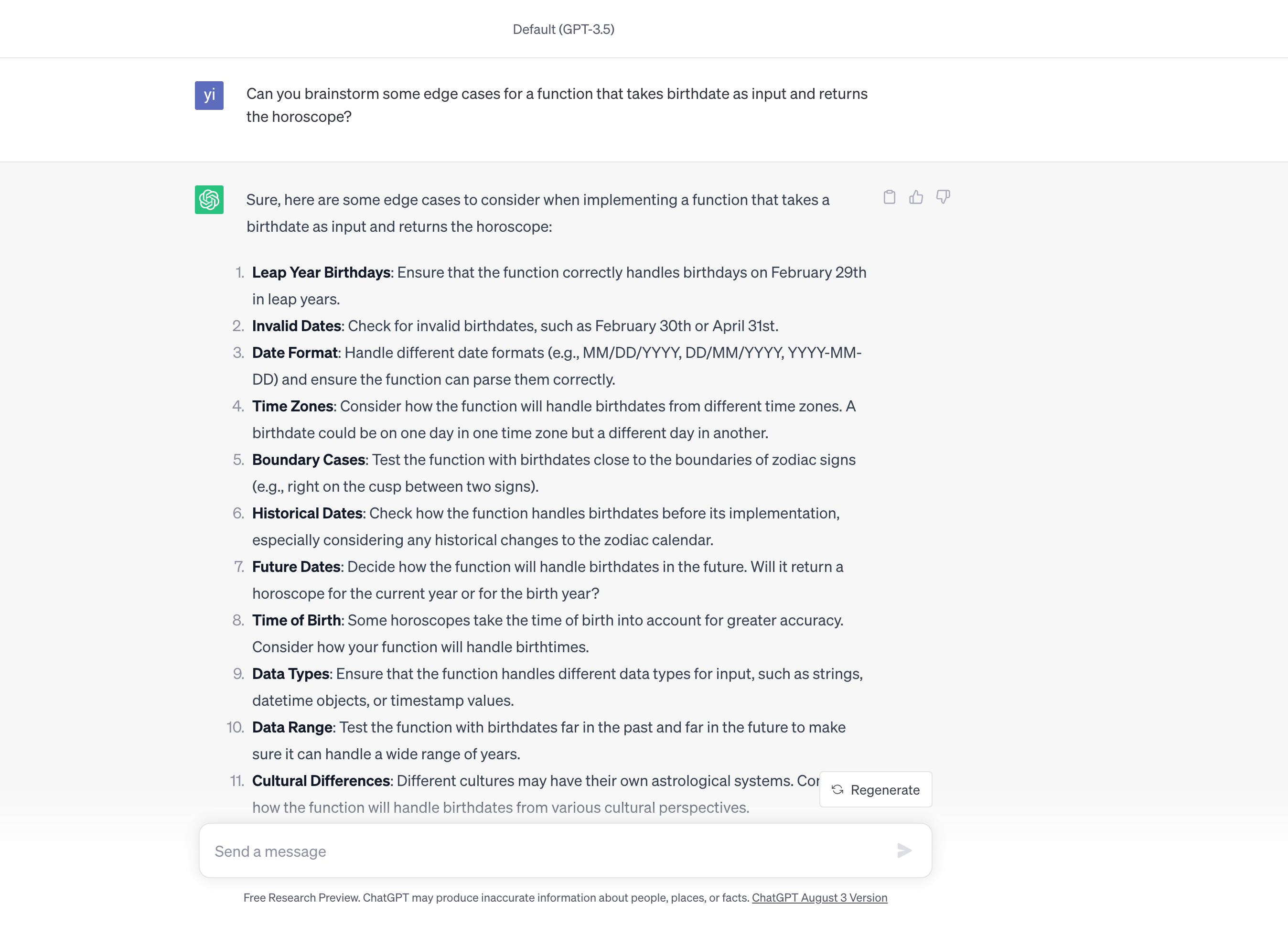
ChatGPT is the most obvious Jasper alternative for people who do not actually need another content platform.
It is flexible, fast, and good at following detailed prompts. You can use it for outlines, rewrites, brainstorming, research questions, interview preparation, content briefs, landing page drafts, social posts, email sequences, and content repurposing. Unlike Jasper, it does not force you into prebuilt templates.
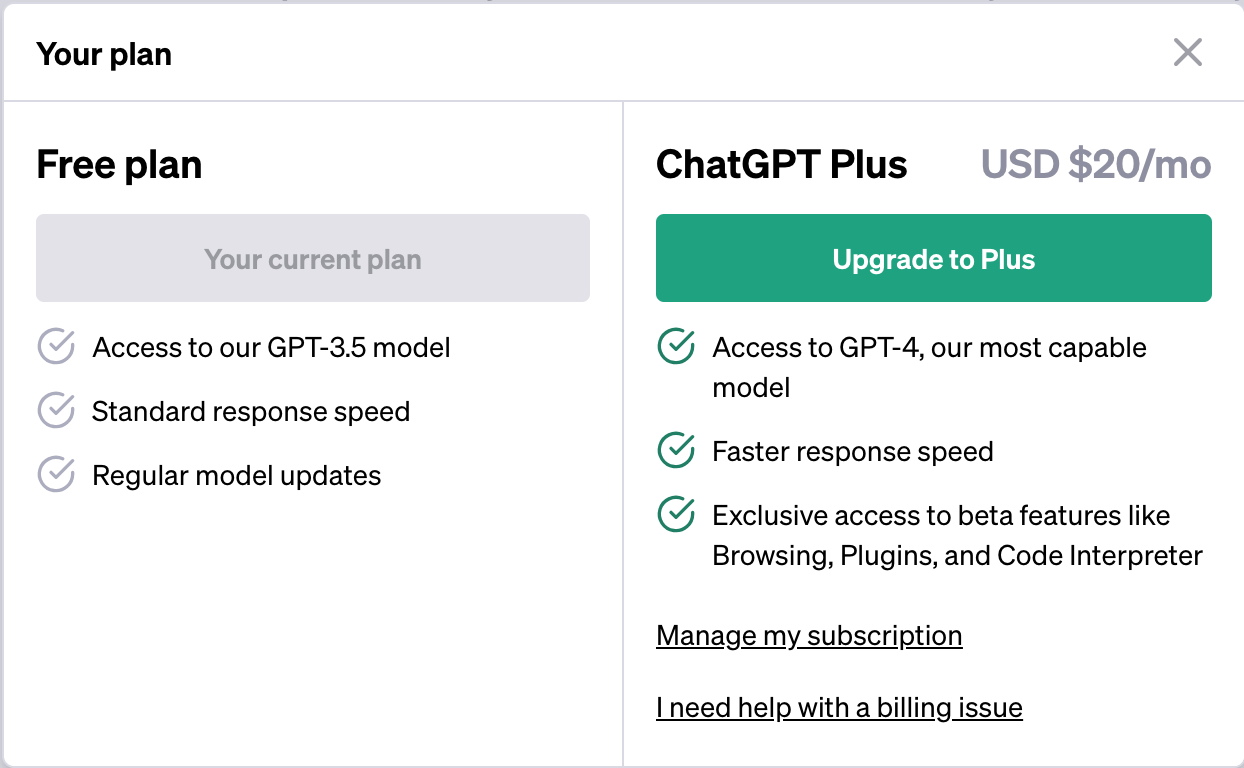
The tradeoff is workflow. ChatGPT does not automatically give you a content calendar, SEO scoring layer, campaign dashboard, or built-in publishing flow. You have to design the process yourself.
That can be a strength. A good prompt with clear context often beats a template that asks for a topic and spits out a generic first draft. If you already have an editor, SEO brief, and brand guidelines, ChatGPT can be enough. If you do not, the flexibility can become extra setup work.
ChatGPT is strongest when flexible writing, research support, rewriting, ideation, and teams comfortable building their own workflow. Skip it if teams that need built-in SEO, approvals, publishing, and brand governance in one place.
3. Copy.ai
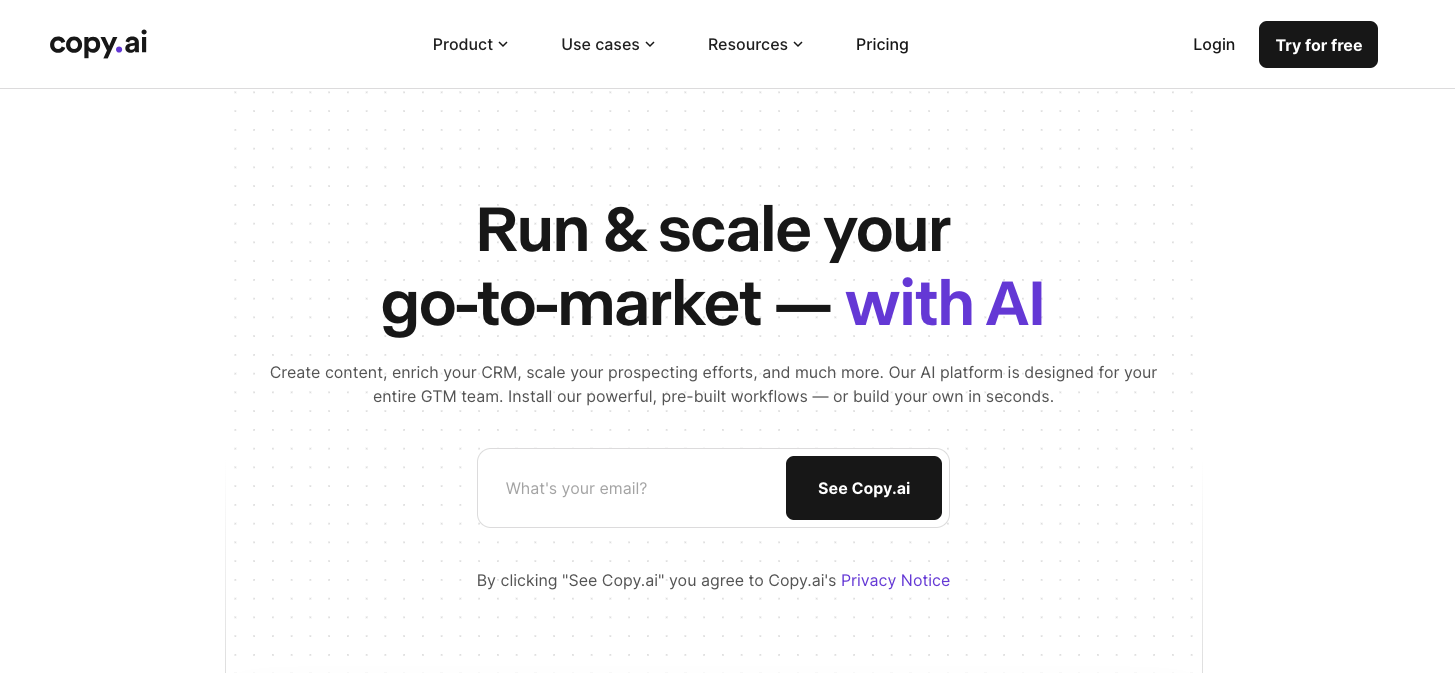
Copy.ai is a strong Jasper replacement for go-to-market teams.
It works best when the content is short-form, repeatable, and tied to sales or marketing workflows: cold emails, ad variants, product messaging, launch copy, campaign ideas, social posts, and landing page copy. It is less convincing as a standalone long-form SEO platform.
The newer Copy.ai positioning is more workflow-heavy than the old "AI copywriting tool" angle. That can be useful if your team wants to turn a repeatable task, like a webinar recap becoming an email sequence, into a reusable process. According to Copy.ai's pricing page, the self-serve Chat plan starts at $29/month, while larger workflow plans jump much higher.
That pricing shape matters. Copy.ai can be cheaper than Jasper for simple chat-style copy generation. The advanced workflow product is a different commitment.
Good fit
- sales copy, GTM workflows, short-form marketing content, campaign ideation, and teams that value speed
Poor fit
- SEO teams that need deep research, SERP planning, and long-form publishing at scale
The biggest mistake I see is choosing Copy.ai when you really needed seo teams that need deep research, serp planning, and long-form publishing at scale.
4. Writesonic
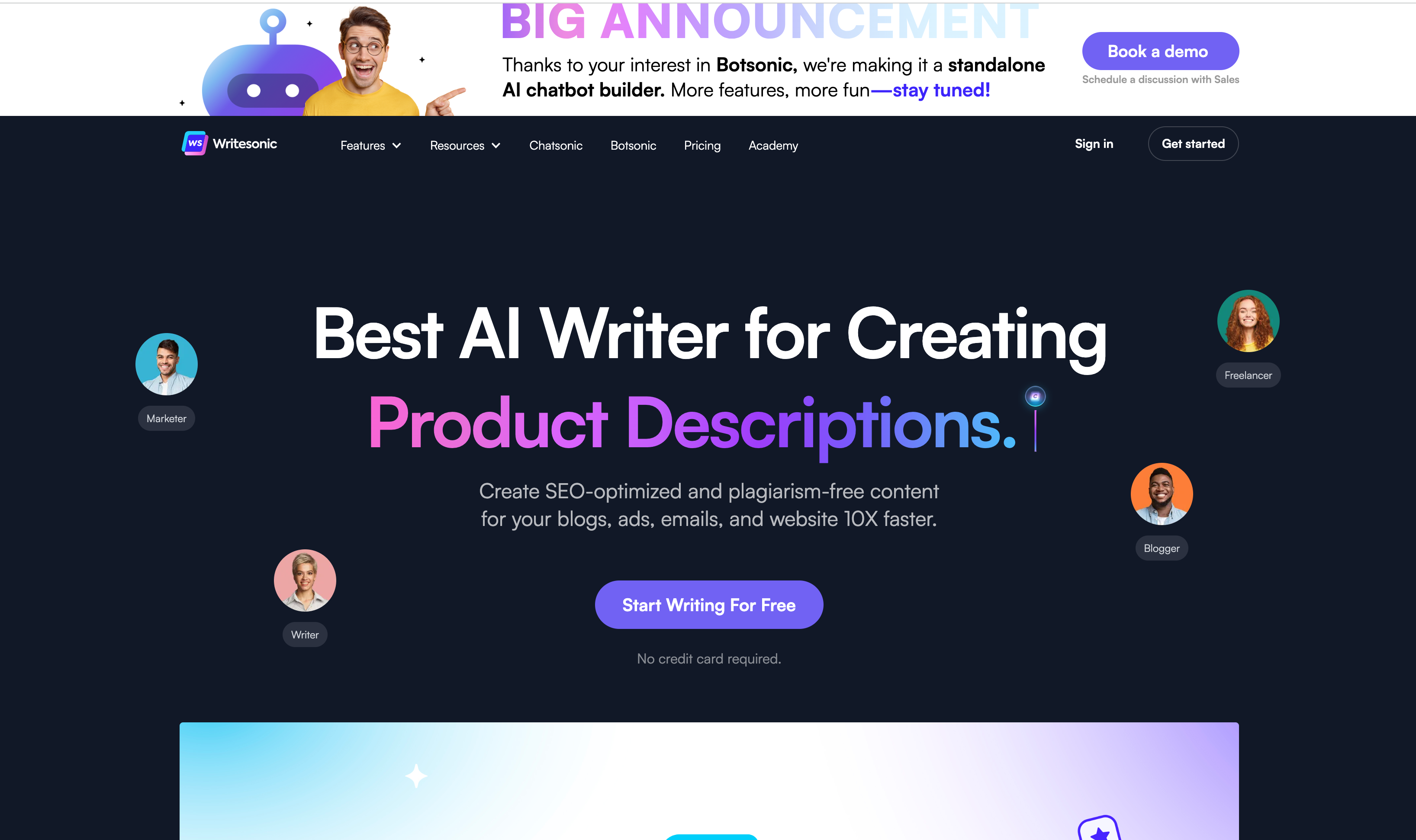
Writesonic is one of the more direct Jasper competitors because it covers many of the same jobs: blog writing, marketing copy, AI chat, landing pages, and brand content.
Where Writesonic has become more interesting in 2026 is AI search visibility. Its current product positioning is less "write me a blog post" and more "help my brand appear in AI search results." That makes it relevant for teams thinking about Google AI Overviews, ChatGPT, Perplexity, and other answer engines.
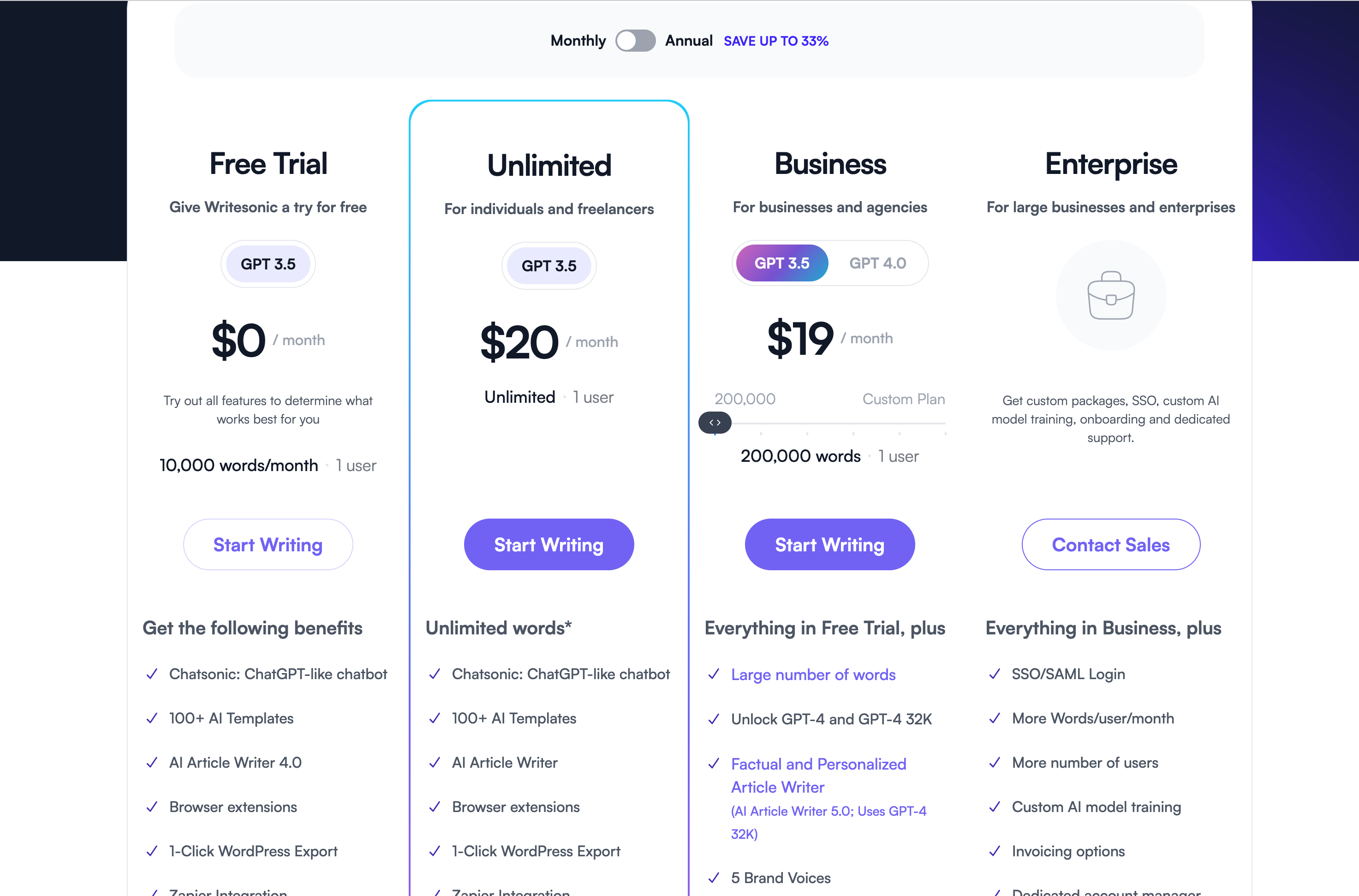
The downside is price. Writesonic's pricing page now emphasizes higher-value AI search plans, with starter pricing shown at $79/month when billed annually. If you only want a cheaper Jasper-style writer, that may be too much. If you want content creation plus AI visibility tracking, the price is easier to defend.
Tradeoff
Pick Writesonic when teams that want writing plus GEO/AI-search visibility features. Look elsewhere when users who just need cheap blog drafts or simple template copy. I would avoid this approach if a different job is the real bottleneck.
5. Frase
Frase is not the flashiest Jasper alternative, but it is one of the more practical options for SEO content planning.
Instead of trying to be a general marketing assistant, Frase helps you analyze search results, build briefs, identify questions, structure outlines, and optimize content. That is often more useful than another AI writer if your drafts are already decent but your pages are not ranking.
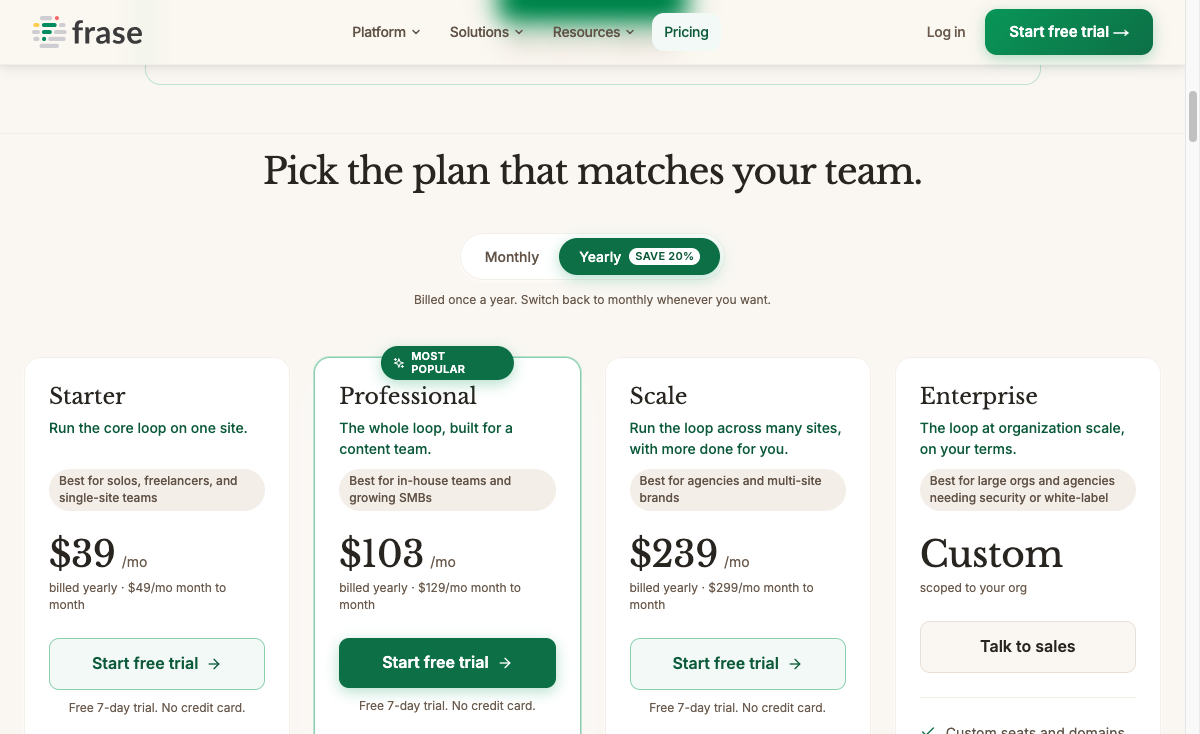
The best use case is simple: use Frase before writing, not after. It can help you see what subtopics the page should cover, which questions belong in the brief, and where the content is thin compared with ranking competitors. Frase says its current plans start at $39/month and include access to SEO and AI visibility features.
When Frase fits
- SEO briefs, content planning, question research, and optimization
When to skip it
- teams that want polished brand copy without much editing
Prefer Frase for seo briefs, content planning, question research, and optimization — not when teams that want polished brand copy without much editing.
6. Surfer SEO
Surfer SEO is best understood as an SEO optimization layer, not a full Jasper replacement.
If your Jasper workflow already gives you a draft but the draft does not rank, Surfer can help you diagnose structure, coverage, entities, and on-page optimization. It scores content against the live SERP and gives recommendations for headings, terms, and content depth.

The risk is over-optimization. If you follow every suggestion blindly, the article can turn into keyword soup. The better approach is to use Surfer as a map, then let a human editor decide what actually belongs on the page.
If Surfer feels too rigid or expensive, compare it with other Surfer SEO alternatives before committing. The right optimizer should support your editorial process, not turn every section into a checklist of terms.
Surfer SEO is strongest when sEO teams improving existing content or optimizing drafts before publication. Skip it if creative writing, brand campaigns, or teams that need an all-in-one content generator.
7. Rytr
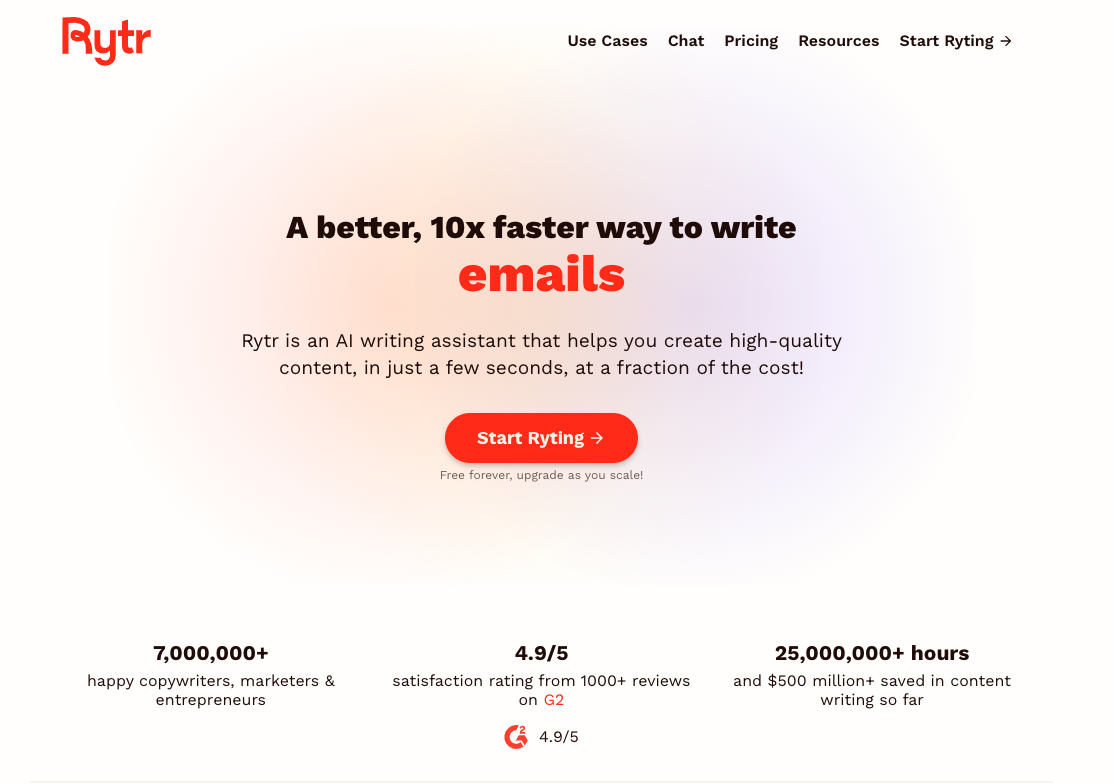
Rytr is the budget pick.
It is not the tool I would choose for serious long-form SEO content, but it is useful for lightweight writing tasks: email drafts, captions, short product descriptions, outlines, rewrites, and quick variations. If Jasper feels too expensive for basic copy tasks, Rytr can handle many of those jobs at a much lower cost.
The limitation is depth. Expect to edit heavily if the topic is technical, strategic, or search-led. Rytr is a helper, not a content operation.
If you like Rytr's price point but need stronger output, compare it with other Rytr alternatives before settling for the cheapest plan.
Good fit
- freelancers, students, small businesses, and quick copy tasks
Poor fit
- expert content, SEO strategy, or high-volume publishing teams
This matters most when you're choosing a tool for freelancers, students, small businesses, and quick copy tasks.
8. Notion AI
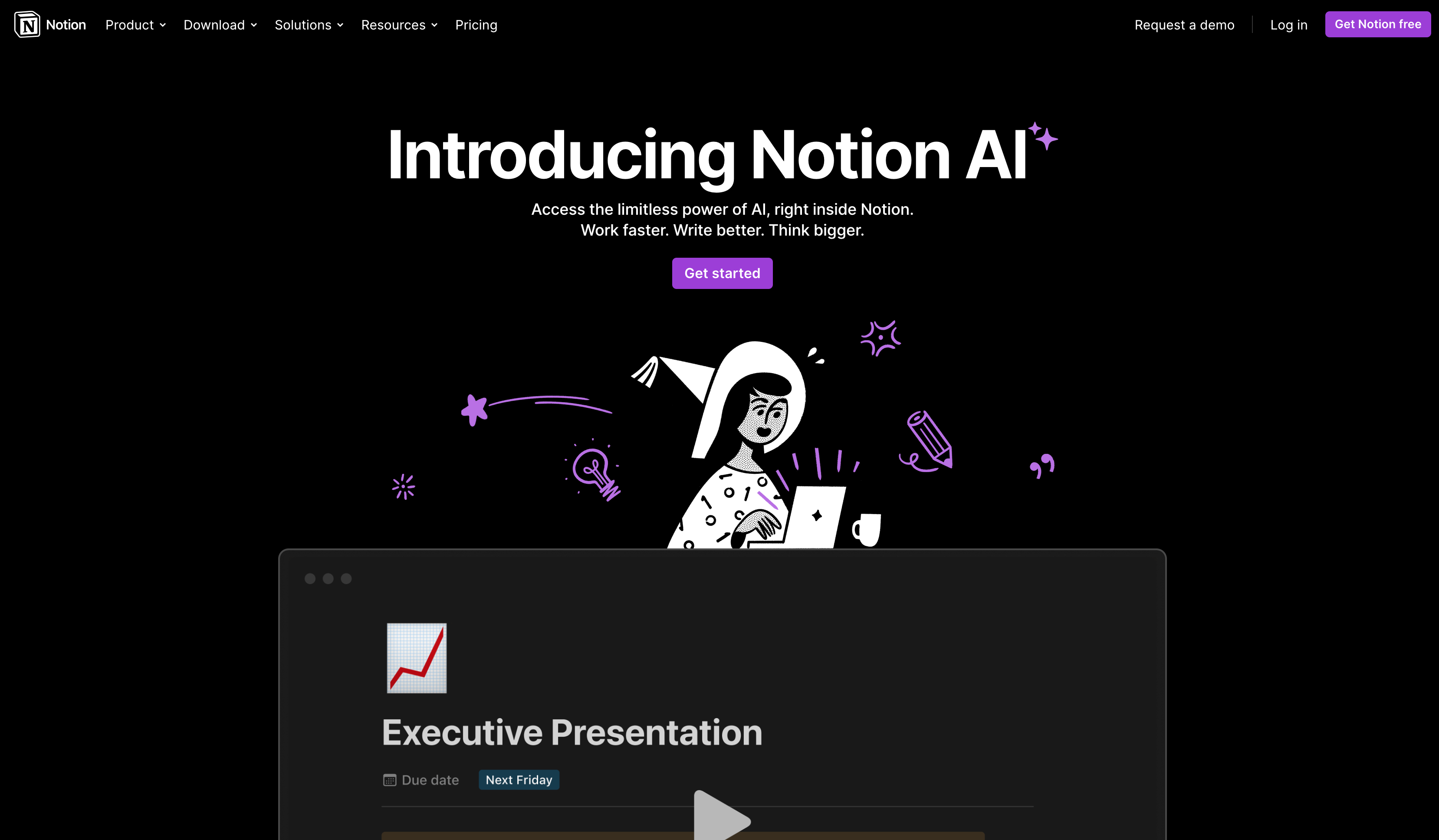
Notion AI is a good Jasper alternative only if your team already works in Notion.
Its strength is not advanced SEO content generation. Its strength is convenience. You can summarize notes, rewrite sections, brainstorm ideas, turn rough bullets into drafts, and clean up internal documents without leaving your workspace.
That makes Notion AI helpful for editorial planning, meeting notes, content calendars, research organization, and first-pass writing. It is weaker when you need a complete SEO article, publishing workflow, or brand-led campaign system.
If Notion is already where your briefs, notes, and drafts live, its AI features can reduce tool switching. If not, a dedicated writer or AI text generator is usually more direct.
Tradeoff
Pick Notion AI when teams already using Notion for planning and documents. Look elsewhere when sEO-first blog production or specialized marketing workflows. The biggest mistake I see is choosing Notion AI when you really needed a different job is the real bottleneck.
9. AI-Writer
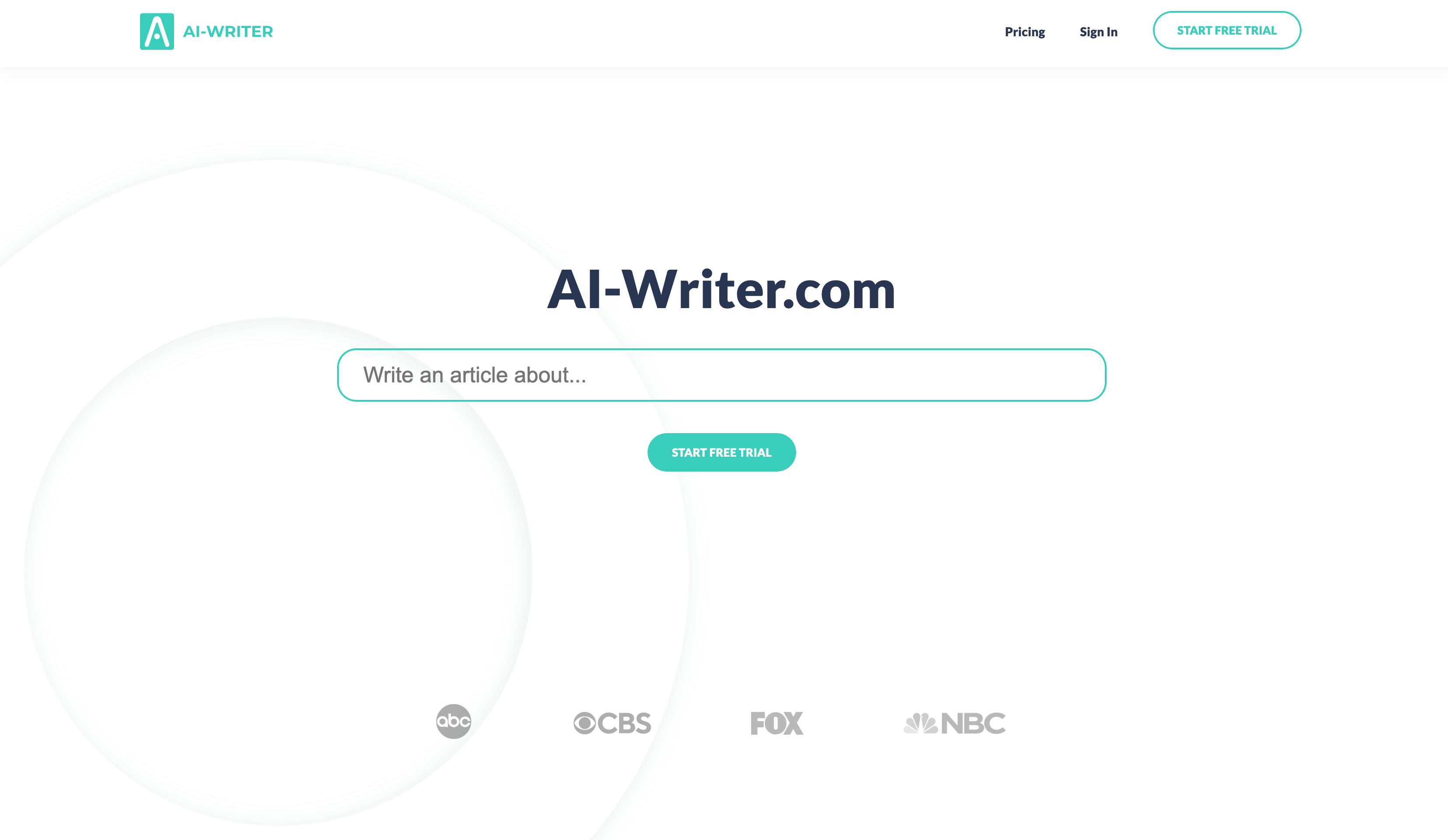
AI-Writer is a practical option if you want source-backed article drafts.
Its best feature is not personality or brand voice. It is the ability to produce drafts with citations and sources attached, which can help editors check claims faster. That makes it useful for teams that care about evidence but do not need a heavy marketing platform.
The tradeoff is polish. AI-Writer can give you a workable starting point, but the final article still needs structure, examples, voice, and editorial judgment. It also feels less flexible than ChatGPT or Jasper for multi-format marketing work.
When AI-Writer fits
- citation-supported drafts, simple articles, and source-led writing workflows
When to skip it
- brand voice, campaign assets, or polished long-form content without editing
I would avoid this approach if brand voice, campaign assets, or polished long-form content without editing.
10. Anyword
Anyword is worth considering if Jasper is being used for performance copy rather than blog content.
Its key angle is predictive performance scoring. That makes more sense for ads, landing pages, email subject lines, and conversion-focused copy than for informational blog posts. If your team cares about click-through rate, conversion rate, audience segments, and message testing, Anyword may be more useful than a general AI writer.
For long-form SEO, it is not my first choice. You would still want a separate brief, research process, and optimization layer.
Anyword is strongest when ads, landing pages, email copy, and conversion-focused teams. Skip it if sEO blogging and content libraries.
11. Image Generation Alternatives: DALL-E 3, Midjourney, And Leonardo AI
Jasper includes image generation, but if image quality is the main job, I would use a dedicated image tool.
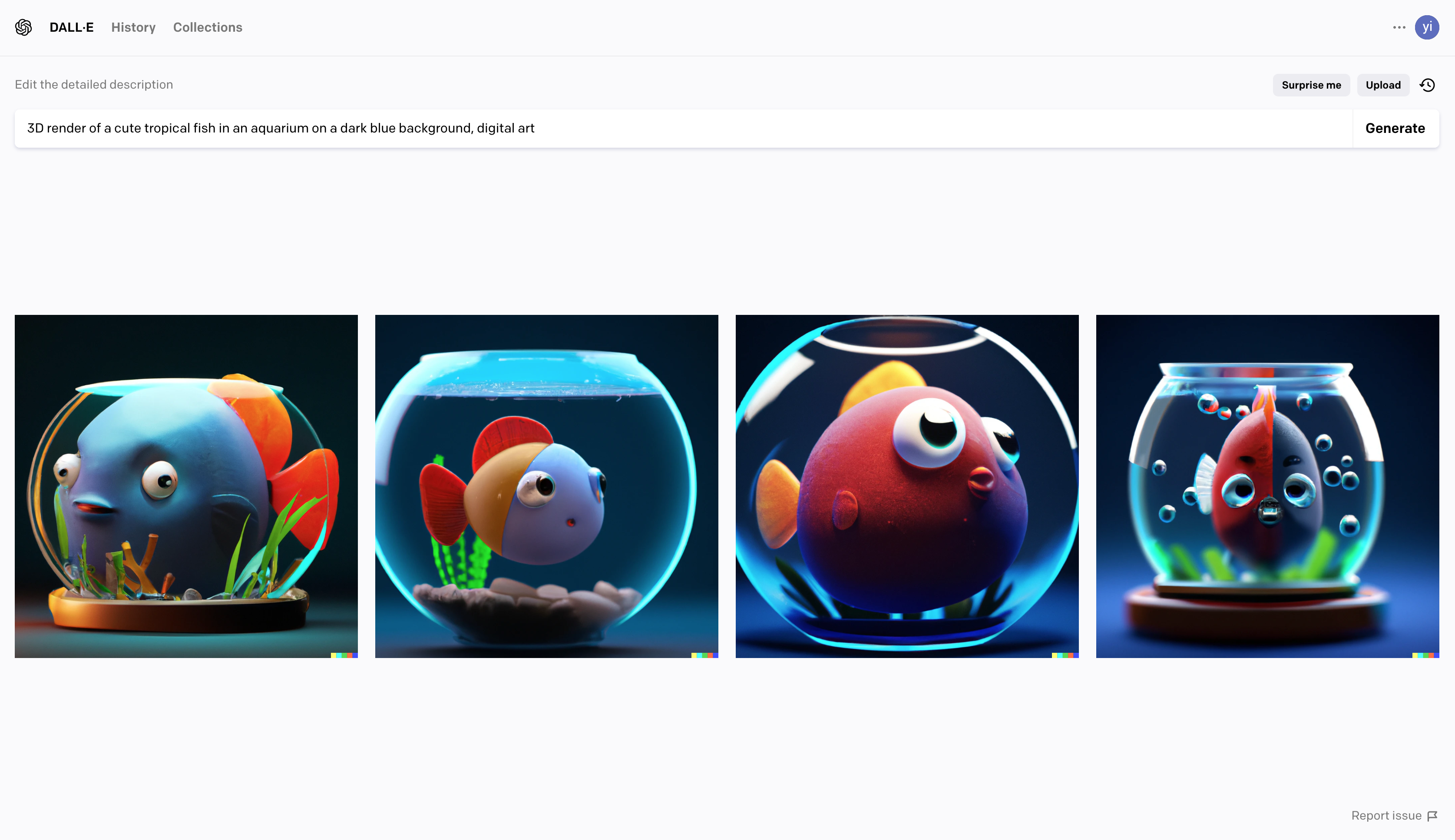
DALL-E 3 is strong for prompt-following and practical image creation, especially when you need editable, instruction-led visuals. It is a better fit than Jasper when the image itself needs iteration.

Midjourney is still one of the strongest choices for polished, stylized, high-quality visuals. It is especially good when art direction matters more than exact UI-style editing.
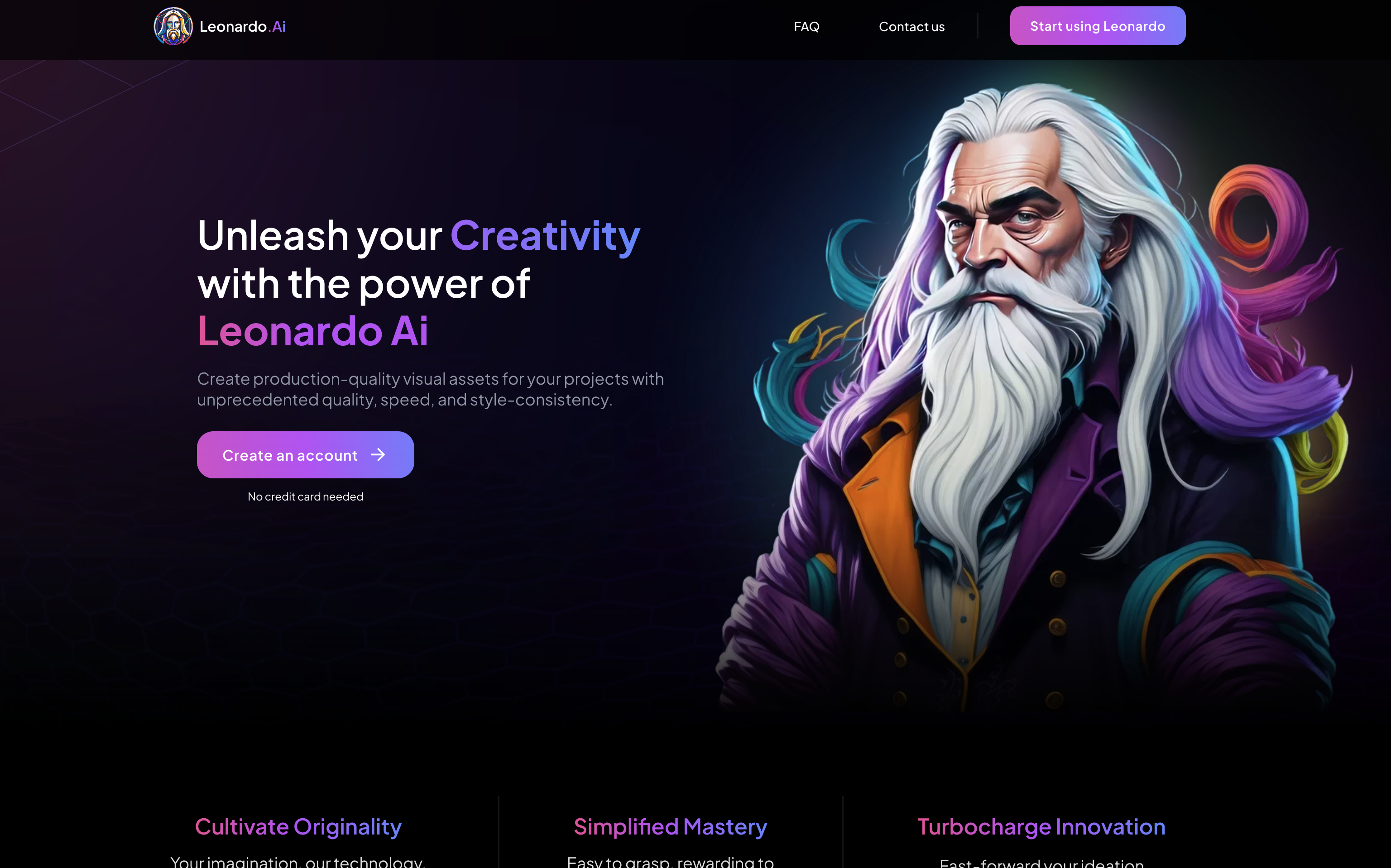
Leonardo AI is useful for creators who want style control, image variations, and production-friendly visual workflows.
For blog images, the most important thing is not the tool name. It is whether the image helps explain the section. If the visual is just decorative, skip it. If you need a specific prompt for a blog graphic, Junia's prompt generator can help turn a loose idea into a clearer image prompt with subject, style, constraints, and output details.
How To Choose The Right Jasper Alternative
Do not choose based on the longest feature list. Choose based on the bottleneck you are trying to fix.
| If your main problem is... | Choose... | Reason |
|---|---|---|
| Long-form SEO articles | Junia AI | Better fit for search-led publishing |
| Flexible writing and editing | ChatGPT | More control and fewer template constraints |
| GTM and sales copy | Copy.ai | Stronger workflow fit for campaign and sales tasks |
| AI search visibility | Writesonic | Built around GEO and AI-search tracking |
| SEO briefs | Frase | Better for research and content planning |
| On-page optimization | Surfer SEO | Stronger scoring and SERP comparison |
| Cheap short-form copy | Rytr | Low-cost helper for simple writing tasks |
| Workspace drafting | Notion AI | Convenient inside existing docs |
| Citation-led drafts | AI-Writer | Better for source-backed starting points |
| Conversion copy | Anyword | Performance scoring and audience-based messaging |
If you are replacing Jasper because it feels expensive, do not automatically pick the cheapest tool. Cheap tools often cost more in editing time. If you are replacing Jasper because the content is too generic, choose a tool that gives you better control over research, structure, brand context, and examples.
My Final Recommendation
For most people searching "Jasper AI alternatives," the best choice is not another Jasper clone.
If you publish SEO content, use Junia AI. It is built closer to the actual job: creating long-form articles that answer search intent, support internal links, and fit into a publishing workflow.
If you mainly want a flexible writing assistant, use ChatGPT with strong prompts and a clear editing process. It is cheaper and more adaptable than most template-based writing tools.
If your team needs campaign copy, sales workflows, and repeatable GTM assets, Copy.ai is probably the closest Jasper-style alternative.
And if you are trying to rank, do not ignore the SEO layer. A focused content workflow with good briefs, internal links, and human editing will usually beat another generic AI draft. The tool matters, but the process matters more.